Justice · Calgary bus safety
Calgary keeps 347 natural-gas buses as fatal crash triggers safety review
Three passengers died after a collision ignited a bus's natural-gas tanks. Calgary Transit is reviewing its operations without withdrawing the CNG fleet, while the crash and ignition causes remain unknown.
Transcript · LOADING
Story trackerDay 3
1 report15 outlets21 sources3 videos
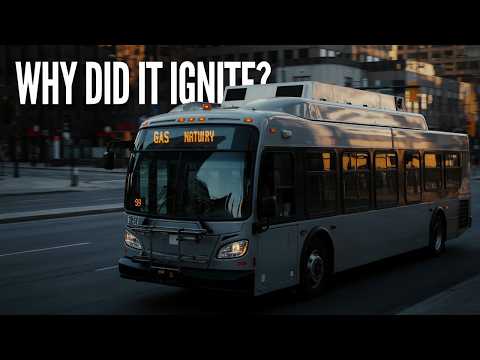
The natural-gas tanks on the second bus ignited, triggering an explosion and a large fire. All three people killed in the Calgary collision were passengers aboard that bus. Investigators know the tanks burned; they have not yet established why. 2 3
Calgary Transit will review its compressed-natural-gas operations, but it is not withdrawing that fleet while investigators work. In a statement reported by CTV News, the agency said its 347 CNG buses would remain in the fleet during the investigation. The review will determine whether additional safety measures are needed for passengers and drivers. 1 2
That leaves a consequential gap between the response announced and the answers still required. A review is a commitment to examine safety, not a new protection already in place. Keeping the buses available is an operating decision, not a completed finding about why this particular bus burned.
Two buses, two unanswered causes
The collision happened at approximately 1:10 p.m. local time on Thursday, October 15, 2026, in the 800 block of Saddletowne Circle N.E. A Calgary Transit bus was travelling northbound. Police recorded their response at approximately 1:11 p.m.—a response time, rather than a competing account of when the collision occurred. 4 7
CTV reported that eight vehicles were involved, including two city buses and a truck. The first bus was diesel-powered; the second used compressed natural gas. According to the collision sequence reported by CBC, the first bus struck a truck and subsequently struck the second transit bus. The second bus's tanks ignited. The driver of the first bus suffered life-altering injuries. 1 3
That sequence matters because it separates two questions that can easily become blurred by the fire: what started the chain of collisions, and what allowed the second bus's fuel system to ignite afterward. Police have not determined whether speed, impairment, distraction or a medical emergency contributed to the initial collision. Those are possibilities under examination, not findings against the driver. 1
Nor does confirmation that the natural-gas tanks ignited establish a defective tank, a failed connection or a design fault. It does not show that the fuel system caused the initial crash. The ignition gives investigators a specific system to examine; it does not, by itself, explain how that system behaved under the collision and fire conditions. 2 3
Fire investigator Kevin Wedick, identified in CBC's interview material as working with Ken West Fire Investigations, said the fire appeared to spread rapidly. His observation is not a completed technical reconstruction. The examination will need to address fuel lines, bus design, maintenance records and any recent work on the vehicle. His discussion of fuel-line connections did not establish a proven failure mechanism. 3
The transit union has stressed that finding the reason for the ignition is critical to the safety of passengers and drivers. That is a distinct task from explaining the first impact: an answer to one will not necessarily settle the other. 2
The toll is not fully reconciled
The accounts agree that three passengers died. The injury count is less settled. CBC and CTV reported 16 injured, as did Canadian Press, whose October 16 report explicitly included an injured police officer. Associated Press reported 19 injured on October 15, and People also reported 19 on October 16. No supported explanation or correction reconciles those totals; it would be premature to attribute the difference to counting methods. 1 3 18 10 17
The first police notice, issued on October 15, said at least 10 people were injured. It separately described one person with life-altering injuries, one with serious injuries and an officer with minor injuries. Those descriptions cannot safely be added to the preliminary total as extra casualties. They were early information, not a final accounting. 7
The October 16 police release confirmed three fatalities while the Traffic Section continued investigating. An update said the third deceased passenger had been identified and their next of kin notified. That confirmed identification; it was not a public release of the passenger's name. 4
What the review changes—for now
Calgary Transit says its buses receive regular maintenance and safety checks. Those checks were already part of its operations before the crash. The announced review is intended to decide whether more measures are necessary; the available announcements identify no new fleet-wide inspection requirement, operating restriction or passenger-safety procedure. 1 2 6
The fleet count also needs a clear attribution. The 347 figure comes from the agency statement reported by CTV. Calgary Transit's undated CNG webpage instead lists 246 forty-foot natural-gas buses, approximately 20 percent of the fleet, and an expectation of about 399 CNG units by 2027. Without a date for that webpage's count, it cannot establish the fleet's size or share at the time of the crash. The 399 figure is a projection, not an achieved total. 1 13
Wedick's earlier interview estimate of at least 70 natural-gas buses was expressly tentative and subject to checking against available data. It should not displace the later, more specific agency statement. None of these figures establishes how many CNG buses were carrying passengers simultaneously when the collision happened. 3 1
Known
Unknown
- The initiating collision cause and the fuel-system ignition mechanism remain unresolved. No completion date has been announced for the investigations or operational review.
Next
- Watch for a technical explanation of the ignition and a specific decision on additional protections—not merely another assurance that the review continues.
For passengers and drivers, the immediate position is therefore unchanged equipment availability with an unresolved safety question. The review's value will depend on whether it explains what happened and turns any lessons into concrete protections. Neither the fire alone nor the decision to retain the fleet supplies that answer.
As aired 16 lines
- Three passengers died after a collision ignited a transit bus's natural-gas tanks. Calgary Transit is reviewing safety while keeping its natural-gas buses in the fleet. Passengers and drivers are waiting to learn what caused the ignition and whether that review will bring new protections.
- Calgary Transit says its 347 compressed-natural-gas buses will remain in the fleet during the investigation. The agency's review will examine its operations and decide whether additional safety measures are needed for passengers and drivers.
- The agency says its buses receive regular maintenance and safety checks. Those checks were already part of its operations before the crash. The review could lead to further measures, but Calgary Transit hasn't announced a new fleet-wide safety requirement.
- The collision happened in the 800 block of Saddletowne Circle Northeast in Calgary. A city bus was travelling northbound at about one-ten in the afternoon on Thursday, October fifteenth. Police responded shortly afterward.
- The collision reportedly involved eight vehicles, including two city buses and a truck. The two buses used different fuels, and their roles in the chain of events are central to the investigation.
- The diesel-powered bus struck a truck, then struck a second transit bus. That second bus used compressed natural gas. Its tanks ignited, producing an explosion and a large fire. All three people killed were passengers aboard that second bus.
- Police are investigating whether speed, impairment, distraction or a medical emergency contributed to the first collision. They also need to determine why the second bus's fuel system ignited. Finding the cause of the collision and finding the ignition mechanism will require separate work.
- The first bus's driver suffered life-altering injuries. The injury toll ranges from sixteen to nineteen, and nobody has explained the difference. The total of sixteen includes an injured police officer.
- Police initially counted at least ten injured on October fifteenth. Their early descriptions included one person with serious injuries and an officer with minor injuries. Those were preliminary figures as emergency crews dealt with the aftermath.
- Police later confirmed that the third passenger who died had been identified and their next of kin notified. The Traffic Section continued investigating the collision after confirming the three fatalities.
- The tank ignition gives investigators a specific part of the bus to examine. They'll need to work through how the fuel system behaved during the collision and fire, including whether the bus's design or condition contributed.
- Fire investigator Kevin Wedick, of Ken West Fire Investigations, said the fire appeared to spread rapidly. Investigators will need to examine the fuel lines and bus design, along with maintenance records and any recent work on the vehicle.
- Wedick's observation describes how the fire appeared to develop. A technical reconstruction still has to explain what happened inside the fuel system. The transit union says finding the reason for the ignition is critical to passenger and driver safety.
- Calgary Transit's latest statement gives 347 natural-gas buses. Its undated website lists 246 forty-foot natural-gas buses and projects about 399 by 2027. Without a date for the website's count, those figures can't tell us how the fleet changed.
- That webpage also puts natural-gas buses at about twenty percent of the fleet, but its undated figures don't establish today's share. Wedick's earlier estimate of at least seventy buses was expressly tentative. The agency's later statement supplies the more specific fleet count.
- Calgary Transit is keeping the buses available while it reviews whether more protection is needed. Police still have to explain the first collision, and investigators still have to explain the tank ignition. No completion date has been announced for either investigation or the operational review.
Sources
21 sources15 outlets3 videos
calgaryheraldcalgaryherald.com2
CTVNewsctvnews.ca2
Police respond to serious bus firecalgary.ca2First
calgarytransit.com1
Canada News Mediacanadanewsmedia.ca1
- First reported
- Calgary Transit to review safety of natural gas buses
CBC News11 video
- First reported
- How did a Calgary bus burst into flames, killing 3 people? | Hanomansing Live · video
CTV News11 video
Global News11 video
L’actualitélactualite.com1
People.compeople.com1
Western Standardwesternstandard.news1
Source map
Follow the evidence behind this report. The map shows its connections; the links below open the sources cited in this article.
Source map loads as you read.
Revision log
- r1First published.