Politics · Alberta referendumContinuing story · report 2 of 2
Alberta’s 1.2 Million Early Voters Set Up a Ten-Ballot Counting Test
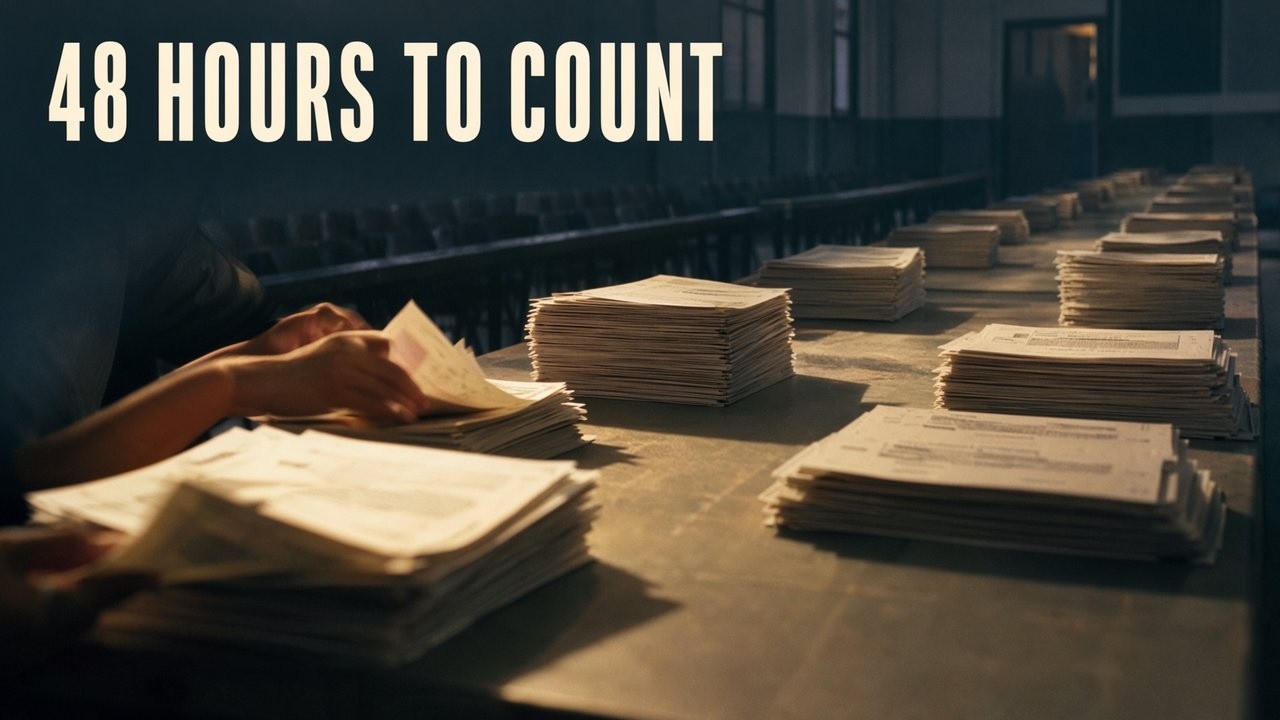
Reported early participation has reached 1.2 million ahead of Monday’s vote. Ten separate ballot papers per voter now put the stated 48-hour counting window under pressure.
Transcript · LOADING
Continuing storyDay 12
2 reports158 outlets392 sources40 videos
Full story

What changed since our last report
4 days later
Now
Reported early participation has reached 1.2 million ahead of Monday’s vote. Ten separate ballot papers per voter now put the stated 48-hour counting window under pressure.
When HeyDay News reported on October 14 that Alberta’s referendum voting had opened, the immediate questions were who would participate and what a preliminary separation vote could mean. Now, with a reported 1.2 million people having voted before referendum day, another test has become urgent: whether Elections Alberta can complete ten separate hand counts within its stated 48-hour window. 3 19
Advance voting ended Saturday, October 17. Monday’s vote presents ten questions on separate papers, creating a workload far larger than the voter total alone suggests. Elections Alberta hopes to have results within 48 hours after polls close; former British Columbia chief electoral officer Keith Archer warns that may be unlikely unless recruitment of counting workers has gone better than reported. 1
Key facts
Those figures describe participation and administration, not results. Global News reported more than 703,000 advance voters and 1.2 million when special ballots were included. Adding the advance figure to the combined total would count people twice. Neither figure establishes final turnout or support for any proposal. 3
A deadline is not a forecast
The distinction between a rule and the capacity to meet it matters. Elections Alberta spokesperson Michelle Gurnie told CBC that legislation requires completion within 48 hours and that legislative changes ruled out tabulators—the machines used to count ballots. CTV’s later account described results within that period as the agency’s hope. Archer’s warning challenges its staffing capacity, not the existence of the requirement Gurnie described. 19 1
Voting is scheduled to close at 8 p.m. Alberta daylight time on Monday, October 19. Forty-eight hours later is Wednesday, October 21, at 8 p.m. That is the stated counting horizon, not a guarantee. The separation question will be counted first, with results withheld until every polling station has closed; reporting is then expected as counting proceeds. 19 1
The available accounts do not establish how many counting jobs remain unfilled or what remedy would follow a missed deadline. A slow count can reflect the work required and the staffing available. Speed alone does not establish whether ballots were counted correctly.
Heavy demand was evident early. More than 174,000 people voted on the first advance day and 186,000 on the second, against roughly 151,000 on an average advance day in the 2023 provincial election. Twenty locations stayed open late on opening day because people were waiting. 19 25
The administrative categories still need reconciliation. Special-ballot processing updates rose from 454,000 to more than 490,000. Our October 14 report’s application and mailing figures described different stages: Elections Alberta’s September 29 update recorded over 652,000 packages approved and sent. Issued packages are not votes cast, and no final breakdown connects applications, deliveries, returns and accepted votes. The 45 million ballot papers printed likewise measure production, not participation. 19 6 45
Access problems before the final day
Some Calgary voters waited more than 90 minutes. High winds cut power to an Athabasca advance station for several hours, with Elections Alberta promising extra opening time to replace the hours lost. Those disruptions demonstrate pressure on access, but do not establish which side lost participation. 22 25
A spreading fire closed the Wainwright Communiplex advance station on October 17. Elections Alberta named Border Inn in Lloydminster and Vermilion Elks Hall as alternatives within Electoral Division 86. Crucially, those were advance-voting arrangements, not replacement locations announced for Monday. 386
Election Day voters must use their assigned polling place unless officials issue a reassignment. The Wainwright closure notice did not waive that rule or establish Monday arrangements for displaced voters. Saturday’s alternatives should not be assumed to apply. 46 386
Completed special-ballot packages had to arrive by 5 p.m. Alberta time on October 16; mailing them that day was insufficient. Under the procedure we described October 14, an elector not marked received and voted by 5 p.m. October 18 could vote in person, with a later-arriving special ballot rejected. Individual receipt status remains important; the new totals do not resolve it.
Space constraints also kept some scrutineers representing registered third-party advertisers out of some locations. That limits observation, but is not evidence of tampering. Earlier concerns about unavailable seniors’ residence polls and transport barriers likewise remain questions about access, not proof of a changed outcome. 19
What Monday can actually decide
Two reporting errors deserve explicit correction. CBC’s October 15 roundtable account gave “Monday, October 20”; CTV’s October 16 rally report gave October 19. Elections Alberta confirms Monday, October 19, 2026. October 20 is Tuesday. 18 15 41
Global News’s October 16 account described the current referendum as binding, while CBC’s October 16 report described it as non-binding. Our October 14 report also explained its preliminary status. The verified government wording distinguishes Monday’s choice from a possible later binding separation referendum: Question 10 asks whether Alberta should remain in Canada or commence the constitutional legal process to hold that further vote. 17 12 364
The operative non-binding provision was not independently recovered for this update, but nothing here establishes automatic separation or an automatic obligation to hold another vote. A process majority could supply a political mandate; it would not turn Alberta into another country. No date for a further separation vote is established. 12 364
The other nine decisions matter independently. Five questions concern immigration, including greater provincial control, possible health and education charges for some temporary residents, waiting periods for some benefits and eligibility tied to an undefined “Alberta-approved immigrant” category. Smith’s floated $1,900 annual health premium is a proposal, not an adopted bill for residents. 12
The fiscal case is unresolved. The province estimates temporary residents pay $150 million annually in taxes and receive more than $1 billion in services. A University of Calgary economist challenged the comparison because average Albertans also receive services worth more than the taxes counted this way. That comparison does not establish net savings from exclusions. The practical stakes are new bills or delayed access to care, schooling and support, depending on eventual rules. 12
Question nine proposes constitutional change giving provincial laws precedence over conflicting federal laws in provincial or shared areas. The stated threshold requires seven provinces representing half Canada’s population. Senate abolition, addressed in question seven in our earlier report, also requires constitutional change and unanimous provincial agreement. An Alberta majority cannot deliver either alone. 25
Treaty rights cannot simply be left for later. Siksika Nation Chief Samuel Crowfoot says First Nations were excluded from early, meaningful engagement; he also reported threats to members and said buses were arranged for voting. His affiliation is Siksika, not Six Nations as the CBC account described it. The threats remain his reported account. 12 375
An earlier separation petition was quashed on May 13; May 20 was the date of legal commentary, not a second confirmed judgment. That petition and Monday’s Question 10 are separate legal tracks. Our previous report described a partial appellate stay allowing signature verification and reporting while other restrictions remained. No new evidence establishes the appeals’ final resolution. 295 380
Campaigning has moved beyond the plans we reported October 14: Carney’s Calgary unity rally took place October 15, followed by an Edmonton EXPO Centre event. Carney, Smith and Poilievre have urged Alberta to remain in Canada. But unity masks disagreement: Smith backs questions one through nine; Carney urges their rejection. 10 6 9 17
An Ipsos survey of more than 800 Albertans, reported by Global News, found 70% wanted to remain and 23% supported a binding separation referendum. Its field dates and full methodology were not supplied, so it cannot be treated as an update of the different September Ipsos sample we previously discussed—or as a result. 2
Some Diamond Valley residents who prefer remaining nevertheless described choosing the process option to pressure Ottawa. Independence advocates Corey Morgan and Keith Wilson say campaigning will continue regardless of the result. That complicates any claim that every process vote expresses a settled wish for independence. 12 5
Ports, borders, trade, debts and treaty rights would require negotiation in any eventual secession; Monday’s preliminary choice leaves existing borders and export routes in place. The immediate task is less speculative: give eligible voters access to their assigned polls, then complete and explain ten hand counts without confusing a process choice with independence.
As aired 44 lines
- On October 14 we reported voting opened. Now early voting tops one million. Alberta's ten-question referendum requires ten separate ballot papers, all counted by hand. The immediate question is whether officials can deliver the count within forty-eight hours.
- The latest combined advance and special-voting figure is reportedly 1.2 million, including more than 703,000 advance voters. That's participation before referendum day. Each voter can generate ten papers for workers to sort, check and count.
- Advance voting ended Saturday, October 17. Monday's vote closes at eight in the evening, Alberta time. Elections Alberta hopes to produce results within forty-eight hours, taking that counting horizon to Wednesday evening.
- Elections Alberta described forty-eight hours as a legal completion requirement. Its later promise to aim for that window leaves a practical problem. Former British Columbia election chief Keith Archer warns that staffing could make it difficult to meet.
- Archer says completion may be unlikely unless recruitment has gone better than described. Elections Alberta says legislative changes ruled out tabulators, the machines that count ballots. Workers will count the separation question first, and release results only after every polling station closes.
- Results are then expected to arrive as counting proceeds. A slow count can reflect the workload and staffing. Speed alone doesn't tell voters whether ballots were counted correctly.
- Referendum day is Monday, October 19. October 20 is Tuesday. That date error matters for anyone still planning to vote, especially people whose local advance station closed or whose special ballot hasn't reached election officials.
- More than 174,000 voted on the first advance day, followed by 186,000 on the second. An average advance day in the 2023 provincial election drew around 151,000. Twenty locations stayed open late on opening day because people were still waiting.
- Earlier cumulative advance totals passed 360,000, then 518,000, before topping 703,000. Those are successive snapshots. The 1.2 million combined figure already includes advance voters, so adding them again would double-count people.
- The special-ballot processing update rose from 454,000 to more than 490,000. Our earlier application and mailing figures described different stages. Elections Alberta still hasn't provided a final breakdown connecting applications, packages sent, returned ballots and accepted votes.
- The agency printed forty-five million ballot papers. That production figure reflects the ten-question workload. Officials describe more than one million early voters as roughly a third of eligible voters, but can't predict final participation.
- Some Calgary voters waited more than ninety minutes. In Athabasca, high winds knocked out power at an advance station for several hours. Officials promised extra opening time to replace the hours lost.
- A spreading fire closed the Wainwright Communiplex advance station on October 17. Elections Alberta named Border Inn in Lloydminster and Vermilion Elks Hall as alternatives within the electoral division. Those arrangements applied to advance voting.
- Monday voters must use their assigned polling place unless officials issue a reassignment. The Wainwright closure notice didn't provide a replacement for Monday. Displaced voters still need their actual Election Day arrangement confirmed.
- Elections Alberta operated 310 advance locations. Space constraints kept some third-party advertisers' scrutineers, the observers who watch voting, out of some locations. Earlier concerns also involved seniors' residence polls and transport. The new disruptions don't show which side lost participation.
- Completed special-ballot packages had to arrive by five on October 16. Mailing them that day wasn't enough. Under the previously announced procedure, someone still unmarked as received and voted at five on October 18 could vote in person. A later-arriving special ballot would then be rejected.
- Question ten offers a choice between remaining in Canada and starting the constitutional process toward a later binding separation referendum. The word binding describes that possible future vote. Monday's process choice leaves Alberta inside Canada.
- The current result is advisory. A process majority could give the government a political mandate, but wouldn't automatically compel another referendum. Our October 14 report described that preliminary status. No date has been set for a further separation vote.
- Question one concerns immigration control. The separation choice is question ten. Five questions address immigration, while nine questions sit alongside the separation choice. Those counts describe different parts of the same ten-question ballot.
- Question one seeks greater provincial control over immigration, lower immigration to sustainable levels and employment priority for Albertans. The government hasn't put a number on sustainable levels or defined how its proposed Alberta-approved immigrant category would work.
- Other proposals would charge some temporary residents for health care and education, delay some social benefits for a year, or tie access to provincial approval. Smith has floated a nineteen-hundred-dollar annual health premium. It's a proposal awaiting policy decisions.
- More than 43,000 temporary residents from Ukraine could have a stake in those service rules. Alberta's population reportedly grew by roughly 600,000 over five years. About twenty percent of that growth came from other provinces, and two-thirds from international migration.
- The province estimates temporary residents pay 150 million dollars in annual taxes and receive more than a billion dollars in services. A University of Calgary economist challenges that comparison because average Albertans also receive services worth more than the taxes counted this way.
- That leaves the claimed savings unresolved. Residents could face new bills or delays in schooling, care and support, depending on the rules governments eventually adopt.
- A September survey found fifty-four percent supported greater provincial immigration control. About forty-five percent supported limiting free health and education access. The stated margin of error was 2.8 points, nineteen times out of twenty. Those responses don't settle every proposed rule.
- Former premiers Rachel Notley, Ed Stelmach and Alison Redford urged voters to reject the immigration proposals. They warned Alberta could become less attractive to the talent it needs. Smith is asking for yes votes on questions one through nine.
- Question nine seeks constitutional changes allowing provincial laws to prevail over conflicting federal laws in provincial or shared areas. That requires support from at least seven provinces representing half Canada's population. Alberta can't make that change by voting alone.
- Federal authority has also protected routes important to Alberta, including against British Columbia's unsuccessful effort to obstruct the original Trans Mountain project. Question seven's Senate abolition proposal would likewise need constitutional change, including agreement from every province.
- Concordia professor Brooke Jeffrey calls the nine questions deliberately misleading and too complex. She argues they suggest options that require reopening the Constitution. Her criticism is a political assessment. Courts haven't invalidated the ballot on that basis.
- Samuel Crowfoot is chief of Siksika Nation. He says First Nations were excluded from early, meaningful engagement, and treaty rights must be addressed before separation proceeds. He says members received hateful calls and threats, and his nation arranged buses for voters.
- Crowfoot also says the nation sought help from the prime minister's office. A court quashed an earlier separation petition on May 13. May 20 was the date of legal commentary, rather than a second confirmed judgment. That earlier petition and Monday's question follow separate legal tracks.
- The later partial stay allowed signature verification and public reporting while other restrictions remained. The appeals' final outcome is still unresolved. First Nations consultation and treaty impacts remain part of the legal dispute surrounding the earlier petition.
- Carney and Smith have campaigned together for Alberta to remain in Canada. Smith says she marked her own ballot that way. Poilievre has also urged Albertans to stay. Carney wants voters to reject the other nine proposals, putting him at odds with Smith.
- Carney's Calgary rally took place October 15, followed by the Edmonton EXPO Centre event. Thousands attended the unity events. Those appearances have moved beyond the plans we described October 14, but their effect on voters will emerge only through the vote.
- Carney tied unity to economic projects, including the proposed Pacific Link pipeline. He projected more than 140,000 jobs in one speech. A separate description referred to thousands of Alberta jobs, with a different apparent scope. These are employment projections.
- The West Coast project was described as the first national-interest project designated under the Building Canada Act. That designation supports Carney's campaign argument, while construction, costs and the assumptions behind the employment forecast still need decisions and explanation.
- Seventy percent of those surveyed wanted Alberta to remain in Canada. Twenty-three percent supported a binding separation referendum. Seven percent were undecided or wouldn't vote. That survey measures intentions about Alberta's future, while actual ballots will decide Monday's result.
- The poll surveyed more than 800 Albertans. Its field dates and full methodology weren't supplied, so it can't be treated as an update of the different September Ipsos sample we discussed earlier.
- Support for moving toward separation was twenty-nine percent outside Edmonton and Calgary, twenty percent in Edmonton, and twenty-one percent in Calgary. Those geographic differences describe the survey. They don't reveal how many supporters will actually cast ballots.
- Hundreds attended a Let Alberta Decide independence rally outside the legislature. Corey Morgan says the movement will continue whatever the result. Keith Wilson also describes this vote as a step in a longer campaign, rather than its final decision.
- Some Diamond Valley residents who prefer staying in Canada say they'd choose the process option to pressure Ottawa. Others fear damage to economic and social ties. A process vote can therefore express different intentions, complicating claims about an independence mandate.
- Farmers and businesses rely on trade across provincial boundaries, including British Columbia ports and pipeline routes. Any eventual separation would require negotiations over those arrangements. Monday's preliminary vote leaves existing borders and export routes in place.
- The Supreme Court's 1998 secession ruling requires negotiation after a clear majority supports a clear secession question. The Clarity Act sets no fixed percentage. Borders, debts, assets, minority protections and Indigenous and treaty rights would all need to be addressed.
- Smith has promised to avoid a binding separation vote after a remain result while she's premier. Her promise is political and limited to her tenure. Monday's ten decisions still await voters, followed by ten hand counts within the stated forty-eight-hour window.
Sources
392 sources155 outlets40 videos17 wire copies
cbc.ca23
- Q&A: Elections Alberta on special ballots, polling security and voting integrity | CBC News
- The biggest issues rural farmers can't control
- Michael Solberg - Freelance contributor | CBC
- Everything you need to know about the 10 questions in Alberta's Oct. 19 referendum | CBC News
- Albertans are voting on Oct. 19. Here’s the simple version of what you need to know | CBC News
- 'Ridiculous, racist' remark leads to member’s exit from Alberta Prosperity Project events | CBC News
- Carney’s Thanksgiving message directed at Alberta ahead of separation referendum | CBC News
- The National | Carney’s Thanksgiving message to Albertans
- ‘Not as long as I’m premier’: Danielle Smith rules out 2nd separation referendum if Albertans vote to remain | CBC News
- Danielle Smith shuts door on 2nd referendum if Albertans reject separation
- Prime Minister Carney to attend 2 Forever Canadian rallies in Alberta ahead of Oct. 19 referendum | CBC News
- Alberta premier says ‘ridiculous’ for separatists to offer royalties, water to Americans | CBC News
- The Alberta question: How separatists took hold of the province’s governing party | CBC News
- 'Rock solid' majority opposed to Alberta independence: Abacus Data poll | CBC News
- Vote on Alberta’s future brings together former premiers who once sparred in legislature | CBC News
- With time running out, new poll suggests Alberta separatism support is slipping | CBC News
- Alberta separatists remain motivated in face of poll suggesting dip in support | CBC News
- Poll suggests slight majority of UCP voters favours separation as party stares down ‘tough days’ ahead | CBC News
- More than 650,000 requests to vote by mail in referendum: Elections Alberta | CBC News
- Alberta Referendum special ballots are processed and in the mail
- Alberta Court of Appeal says Ottawa's Impact Assessment Act is still unconstitutional | CBC News
- Alberta premier, cabinet formalize wording of Oct. 19 separation question | CBC News
- First Nation chief vows to 'fight for the Constitution, for treaty rights'
CTV News2020 videos
- First reported
- Alberta military base explosion causes injuries | CTV National News for Sat., Oct. 17, 2026 · video
- Rallies for and against Alberta Separation · video
- Man accused in fatal fire blames cat for blaze | CTV News Edmonton at 11:30 for Oct. 16, 2026 · video
- Carney coming to Edmonton to campaign for Canadian unity · video
- Alberta clarifies infill expectations for Edmonton | CTV News Edmonton at 11:30 for Oct. 15, 2026 · video
- PM Carney, Smith and Poilievre face political test as Alberta referendum vote nears · video
- 'Let Alberta lead, not leave': Carney speaks at Forever Canadian rally in Calgary · video
- Smith casts referendum vote · video
- Flu vaccination campaign begins in Quebec | CTV News Montreal at Six for Tuesday, Oct. 13, 2026 · video
- Poilievre pushes for tariff-free auto sector trade | CTV Your Morning Saskatchewan, Oct. 14, 2026 · video
- New e-scooter rules for 2027, Giant Tiger closure | CTV Your Morning Winnipeg October 14, 2026 · video
- AI video misinformation ahead of referendum: analysts | CTV News Edmonton at Six for Oct. 14, 2026 · video
- Streams of voters lineup in Fort McMurray, Alta., to cast their referendum question vote · video
- Trump using Canada as a punching bag for political points | CTV National News for Oct. 14, 2026 · video
- Advance voting now open for Alberta referendum | CTV Your Morning Calgary for Oct. 13, 2026 · video
- Albertans begin casting ballots in historic separation vote · video
- Separatists will 'not be placated by anything': senator | Alberta Primetime · video
- Federal leaders make case for Alberta to stay in Canada |CTV National News for Monday, Oct. 12, 2026 · video
- ‘There would be real consequence to Alberta leaving’: Moore as Alta. referendum vote nears · video
- OSAP freeze worries career college health care students | CTV National News for Sun., Oct. 11, 2026 · video
Elections Albertaab.ca18
- First reported
- 2026 Provincial Referendum
- Important Referendum Information – May 2026
- Referendum Advance Voting Now Open
- Referendum
- Referendum Information Updates
- Where Do I Vote?
- Special Ballot Requests Now Open for October 19 Referendum
- Voters Reminded of Changes to the Voting Experience as Referendum Special Ballot Mailing Begins
- Alberta Colleges Athletic Conference
- Special Ballots
- Deadline to Apply for Special Ballots Changed to September 25, 2026
- www.elections.ab.ca
- Press Releases Archives
- Ballot Count – for in-person voting
- Referendum Information Updates
- Advance Voting Location in Wainwright Closed
- High Winds Disrupt Multiple Advance Voting Locations
- Elections Alberta | Office of the Chief Electoral Officer
Unnamed channel15
- Prime Minister focuses on Alberta in Thanksgiving message
- Low voter turn out could swing Alberta referendum to separatists: Former premier
- Danielle Smith rules out 2nd separation referendum if Albertans vote to remain
- Smith Vows No Further Referendum if Remain Side Wins | Your Morning
- Will There Be ANOTHER Referendum? Danielle Smith Responds
- Danielle Smith shuts door on 2nd referendum if Albertans reject separation
- Western Standard News Update | Alberta independence plan outlines path to nationhood | 18 Sep 2026
- The Alberta question: The road to referendum | the fifth estate
- Danielle Smith takes questions after Alberta separation referendum announced
- Separatist group pitches independence vision | CTV News Calgary at 6 for August 21, 2026
- Alberta referendum: What happens next?
- New poll suggests 'softening' of separatist sentiment ahead of Alberta's referendum
- Premier Kenney discusses referendum results – October 26, 2021
- As referendum looms, 70% of Albertans want the province to remain in Canada
- Danielle Smith is ready for Alberta’s referendum — no matter the result
X (formerly Twitter)x.com14
- First reported
- That headline is a little torqued out of context. Here's the actual exchange: Vassy: "Just over a week away from this, what's keeping up at night? My answer: "Concern about turnout, because the lower the turnout, the better for the separatist side. If turnout is forty percent or below, I think they could actually win, because it's not impossible for them to get twenty percent of the eligible population out, partly because there's more intensity on the separatist side. "The hard core separatists, which I estimate are about ten per cent of the population, will crawl over broken glass to vote. Plus there are some frustrated federalists who want to use this to 'send a message.' "On the other hand a lot of federalists see the polls and think, 'well, this isn't really a competition, it's three or four to one against separation.' "Also, the ten complex questions on the ballot may mean long wait times, which will disadvantage federalists. Their support tends to be in the most densely popula...
- Alberta’s strongest future is within Canada. Join Forever Canadian in Calgary on October 15 and Edmonton on October 16 to show Prime Minister Mark Carney that we are proud Albertans—and forever Canadians. We hope to see you there! Learn more and register: https://t.co/SydyLBZQzX
- I invited Prime Minister, Mark Carney to our #ForeverCanadian rallies. I can’t wait to receive his RSVP. I know he’s a busy guy, but I also know that you would love to see him. Join us in Calgary on October 15, and in Edmonton on October 16. Please register. #cdnpoli #ableg
- 🚨 BREAKING: Pierre Poilievre is heading to Calgary on October 16 to make the case for Canadian unity ahead of the referendum.
- https://x.com/MarkJCarney/status/2109633871923019924?s=20
- Thanksgiving is a chance to pause and give thanks for who and what we value most. It’s a chance to give thanks for our country — for the rights, freedoms, and opportunities we enjoy because we are Canadian. Happy Thanksgiving, Canada. My statement: https://www.pm.gc.ca/en/news/statements/2026/10/12/statement-prime-minister-carney-thanksgiving
- On that note, here’s a little satire…. https://x.com/markjcarney/status/2109633871923019924?s=46&t=Q5Llke59MTPfOPr3xQemcw
- Prime Minister Carney announces landmark investment to retrofit one million homes, cutting energy costs and emissions: https://www.pm.gc.ca/en/news/news-releases/2026/10/08/prime-minister-carney-announces-landmark-investment-retrofit-one
- X User @CanadianPM
- Learn more about our new $1.2 billion investment to protect our oceans: https://www.pm.gc.ca/en/news/news-releases/2026/09/29/prime-minister-carney-announces-historic-investment-protect-canadas
- Live from Sherbrooke, Québec: Prime Minister Carney announces new measures to deliver clean, affordable, and reliable energy to more Canadians. Tune in: https://ow.ly/i0g750ZVWTM
- Can a province vote to leave Canada? In the 1998 Reference re Quebec Secession, the Supreme Court said that a referendum does not, by itself, make a province independent. But a clear majority voting on a clear question for secession creates a constitutional duty to negotiate.
- Do not let the U.S. sway you. The Oct. 19 vote will not automatically make Alberta leave Canada. It is only the first step in determining whether Alberta wants to hold a binding referendum on separation. Justice Shaina Leonard tossed out Stay Free Alberta’s separation petition earlier this year. She ruled that the chief electoral officer erred in approving it and that splitting off would violate First Nations treaty. #Unity #CanadaStrong
- 5. How is ballot secrecy maintained while all of that identity verification is taking place? At what point are the voter’s name, identification and declaration separated from the sealed envelope containing the actual ballots? Elections Alberta says the accepted inner ballot envelope contains the electoral-division number but no information identifying the elector. A: The steps involved in the special ballot process can be found here: https://t.co/oWynZqchzI For accepted special ballots, the elector’s electoral division number is written on Envelope A (the smaller sealed envelope containing the ballots) and the envelope is placed in a separate container for collection by ballot box clerks. (There is no information on this envelope identifying the elector). This ensures that no vote can be linked to a specific elector.
CBC News1111 videos
- First reported
- Political Pulse: Carney makes an appeal for a 'decisive' referendum vote | Power & Politics · video
- Will Alberta stay in Canada? | The Current · video
- Politics! Carney in Alberta, Stelco showdown | Front Burner · video
- Reporter Roundtable: Will Carney's pitch for unity land in Alberta? | Power & Politics · video
- Integrity of referendum vote is a top priority: Elections Alberta | Power & Politics · video
- Get out the vote campaigns for the Alberta referendum are underway | Power & Politics · video
- 'It's important that citizens remain vigilant' on foreign interference: minister | Power & Politics · video
- What does Alberta’s referendum separation question even mean? | About That · video
- What does Alberta’s referendum separation question even mean? | About That · video
- Why some Alberta MPs are 'nervous' about the referendum vote | The House · video
- Win or lose, is Alberta separatism here to stay? | West of Centre · video
The Globe and Mailtheglobeandmail.com11
- First reported
- Advance polls open for Alberta’s separation referendum
- What about Alberta’s nine other referendum questions?
- Alberta referendum campaigns enter homestretch with speeches and rallies
- How some Alberta separatists are courting U.S. support for independence
- Alberta separatists’ talks with GOP spark outcry, call for legislative change
- Alberta’s separatists would sell us out to the Americans
- The Alberta referendum: a pointless, futile stunt, just like the last one
- Alberta Next Panel recommends referendums on leaving Canada Pension Plan, immigration
- Alberta judge throws out petition for separation referendum
- Elections Alberta notifies thousands of referendum voters about invalid mail-in ballot packs
- Alberta formalizes separation question ahead of October referendum
Western Standardwesternstandard.news9
- First reported
- Sylvestre endorses Calgary-Shaw UCP nomination candidate
- Pierre Poilievre
- Poll shows 70% of Albertans oppose independence, 22% support
- Nenshi vows no more Alberta independence referendums, accusing Smith of changing the law
- MACLEOD: A new independence party — or a fight inside the UCP
- Binding referendums and official independence position: Interesting policy resolutions proposed for UCP AGM
- UCP MLA confirms support for binding Alberta independence referendum
- UCP AGM 2026
- More than 652,000 special ballots approved for Alberta referendum
CTVNewsctvnews.ca8
- First reported
- Alberta separation: Concerns rise over agricultural exports, trade
- What could Alberta independence mean for the province’s agricultural industry?
- From soggy fields to skyrocketing diesel, Prairie farmers ...
- Alberta referendum: Carney urges unity in Thanksgiving message
- Alberta referendum: Low Turnout may favour separatists, Kenney says
- Low voter turn out could swing Alberta referendum to separatists: Former premier
- Smith won't hold separation referendum if remain side wins fall vote
- Edmonton infill: Smith defends policy roll backs
Global News88 videos
- First reported
- 70% of Albertans support remaining in Canada ahead of referendum: Ipsos · video
- Global National: Oct. 17, 2026 | Protests across France, Europe turn violent · video
- 1.2 million Albertans have now voted in referendum: Elections Alberta · video
- Alberta referendum: Expert calls multi-question ballot "deliberately misleading" · video
- Former premiers urge “no” vote on Alberta immigration questions · video
- Global National: Oct. 15, 2026 | PM Carney begins 2-day unity push ahead of Alberta referendum · video
- Global National: Oct. 13, 2026 | Advance polls open for Alberta referendum · video
- Global National: Oct. 12, 2026 | Russia strikes Ukraine despite Trump's "energy ceasefire" · video
albertareferendum2026.ca7
Canada News Mediacanadanewsmedia.ca7
- First reported
- How to vote in Alberta's Oct. 19 referendum
- Alberta polls put separation support at 20 to 26 per cent
- Alberta separatists dispute U.S. meeting report before vote
- Alberta Referendum Oct. 19: How and Where to Vote
- Alberta court says Impact Assessment Act still invalid
- Elections Alberta Apologizes for Special Ballot Errors With 19 Days Left to Apply for a Mail-In Referendum Package
- Over 1 million ballots cast in Alberta referendum
globalnews.ca7
- Carney addresses Alberta separation referendum in Thanksgiving message
- Mark Carney to attend ‘Forever Canadian’ rallies ahead of Alberta referendum
- Pierre Poilievre | News, Videos & Articles
- Poilievre to campaign for Canadian unity in Alberta next week ahead of referendum
- Read the full transcript of Poilievre’s speech to Conservative convention
- Alberta Premier Smith calls out federal interference in Edmonton housing rules
- What Albertans need to know about voting in the referendum
scc-csc.ca7
- Reference re Secession of Quebec
- IN THE MATTER OF Section 53 of the DANS L’AFFAIRE DE l’article 53 de la Loi
- Reference re Senate Reform - SCC Cases
- News release of August 20, 1998 - SCC Cases
- Reference re Senate Reform - SCC Cases
- News release of August 20, 1998 - SCC Cases
- Reference re Senate Reform - SCC Cases
calgaryheraldcalgaryherald.com6
- First reported
- Over 300 advance polls open across Alberta ahead of referendum | Calgary Herald
- Could Albertans return to polls next spring for separation referendum? | Calgary Herald
- Bell: Separatist leader says fight not over with referendum vote | Edmonton Journal
- Alberta referendum: A breakdown of all 10 questions and what you need to know before voting | Edmonton Journal
- Poll suggests remain campaigns gaining traction as referendum nears | Calgary Sun
- Alberta separatists' blueprint for independent nation draws scrutiny | Toronto Sun
edmontonjournaledmontonjournal.com6
- First reported
- Brace for lineups, Alberta referendum advance voting begins Tuesday | Edmonton Journal
- 'Canada can work': Premier Smith pushes 'remain' in Alberta referendum | Edmonton Journal
- Gunter: Alberta separatists, premier, take biggest hits in latest poll | Edmonton Journal
- Lorne Gunter: Alberta separatists seek help from south of border | Edmonton Journal
- How some UCP members are seeking to oust Alberta's premier | Edmonton Journal
- More than 700,000 votes registered at advance polls: Elections Alberta | Edmonton Journal
CityNews Torontocitynews.ca5
- First reported
- Alberta separation petition quashed in favour of First Nations
- More than 300 advance polls open across Alberta in historic referendum on separation
- Carney to attend 'Forever Canadian' rallies in Alberta days before referendum
- Alberta is to vote on holding a separation referendum. A timeline on how we got here
- What Albertans need to know before advance referendum voting locations open this week
Yahoo Newsyahoo.com5
- First reported
- Carney to attend 'Forever Canadian' rallies in Alberta days before referendum - Yahoo News Canada
- Two-thirds of Albertans would vote to stay in Canada or lean that way, new survey suggests - Yahoo News Canada
- More than 650,000 requests to vote by mail in referendum: Elections Alberta - Yahoo News Canada
- Two sides in Alberta separation debate entrenched, with majority wanting to remain in Canada: poll - Yahoo News Canada
- Ipsos poll on Alberta referendum initiatives shows the majority plan to vote to remain - Yahoo News Canada
canlii.org4
- Reference re Secession of Quebec, 1998 CanLII 793 (SCC), [1998] 2 SCR 217
- Reference re Senate Reform, 2014 SCC 32 (CanLII), [2014] 1 SCR 704
- An Act to Give Effect to the Requirement for Clarity as Set out in the Opinion of the Supreme Court of Canada in the Quebec Secession Reference, SC 2000, c 26
- 2014 SCC 32 (CanLII) | Reference re Senate Reform | CanLII
Centre for Constitutional Studiesconstitutionalstudies.ca4
nationalpostnationalpost.com4
- First reported
- Poilievre appoints Edmonton MP to lead party's pro-unity campaign ahead of Alberta separatism referendum | Edmonton Journal
- Canada 'stronger together' than apart, Carney says in Thanksgiving message ahead of Alberta visit | The Province
- Danielle Smith's dream: A post-uncertainty Alberta - Yahoo News Canada
- Clarity Act will not apply to Alberta referendum question, says Carney | Fort Saskatchewan Record
uaconnect.ca4
- First reported
- Advance Polls Open Across Alberta as Voters Prepare for Key Referendum on Provincial Separation | Calgary News
- Alberta's Separation Referendum Vote Set for October 2026: A Closer Look at the Road to this Decision | Calgary News
- Surge in Mail-in Ballot Applications for Alberta Referendum Hits 658,000 | Calgary News
- Alberta Sets Date for Separation Referendum Vote: Key Events Leading to October 2026 Decision | Edmonton News
Prime Minister of Canadagc.ca3
Rocky Mountain Outlookrmoutlook.com3
St. Albert Gazettestalbertgazette.com3
338canada.ca2
Alberta Civil Liberties Research Centre (ACLRC)aclrc.com2
APTN Newsaptnnews.ca2
BBC Newsbbc.co.uk2
Bloomberg.combloomberg.com2
cba-alberta.org2
Dane Lloyd, MPdanelloyd.ca2
Newsweeknewsweek.com2
School of Public Policyucalgary.ca2
ualberta.ca2
vLexvlex.com2
- First reported
- Reference Re Secession of Quebec ((1998), 228 N.R. 203 (SCC),228 NR 203,1998 CanLII 793 (SCC),[1998] ACS no 61,JE 98-1716,161 DLR (4th) 385,[1998] 2 SCR 217,[1998] SCJ No 61 (QL),55 CRR (2d) 1,81 ACWS (3d) 798) - vLex Canada
- Athabasca Chipewyan First Nation v. Alberta (Chief Electoral Officer) (2026 ABKB 375) - vLex Canada
ACIC-CACIacic-caci.org1
Airdrie City Viewairdriecityview.com1
Alberta Constitution Projectalbertaconstitution.org1
Alberta.ioalberta.io1
albertapolitics.ca1
Australiaeuropesays.com1
Before You Votebeforevoting.ca1
Beritajaberitaja.com1
Budget Reality Checkalbertataxpayers.ca1
C.D. Howe Institutecdhowe.org1
- First reported
- Whither Exports in a Sovereign Alberta?
calgarychamber.com1
canadashaws.ca1
canliiconnects.org1
CBS News11 video
- First reported
- Canada could face division if these Alberta separatist voters have their way · video
Cedar Newscedarnews.net1
Centre for Media, Technology and Democracymediatechdemocracy.com1
CFJC Today Kamloopscfjctoday.com1
CJWE Southern Albertacjwe.ca1
CourtDocketcourtdocket.org1
CP24cp24.com1
EBSCOebsco.com1
Ecojusticeecojustice.ca1
- First reported
- Court asked to overturn Mine 14 permits - Ecojustice
El-Balad.comel-balad.com1
EverythingGPeverythinggp.com1
federalcorporation.ca1
Forever Canadianforever-canadian.ca1
Gauntletthegauntlet.ca1
- First reported
- Explaining the 10 Referendum Questions
globalhire.ca1
- First reported
- AAIP October 2026 Update: Alberta PR Planning
imdb.com1
Internet Archivearchive.org1
Ipsosipsos.com1
JSS Barristersjssbarristers.ca1
jurist.org1
LawyerInfo.calawyerinfo.ca1
legal500.com1
LegalClaritylegalclarity.org1
- First reported
- The Clarity Act: Canada’s Rules for Quebec Secession
legalviews.com1
Legerleger360.com1
- First reported
- Alberta Referendum Poll: 70% want to remain in Canada
Lethbridge News Nowlethbridgenewsnow.com1
livewirecalgary.com1
Loonie Politicslooniepolitics.com1
McGill Law Journalmcgill.ca1
meridiansource.ca1
mitchsylvestre.com1
My Lethbridge Nowmylethbridgenow.com1
My Lloydminster Nowmylloydminsternow.com1
New West Public Affairsnewwestpublicaffairs.ca1
newswire.ca1
- First reported
- Statement by Prime Minister Carney on Thanksgiving
Open Data Canadaopendatacanada.ca1
parklandconference.ca1
Penticton Heraldpentictonherald.ca1
play 103.7 | Harvard Mediaplay1037.ca1
reddeeradvocate.com1
RTE.ierte.ie1
- First reported
- Will Alberta vote next week to leave Canada?
samcrowfoot.com1
seniorcarepath.ca1
separationfacts.ca1
SHIFT Media Strategiesshiftmedia.co1
Siksika Nationsiksikanation.com1
South China Morning Postscmp.com1
StayOrGoABstayorgoab.ca1
The Canadian Wirethecanadianwire.com1
- First reported
- Alberta Referendum Advance Polls Hit by Winds and Fire
the Guardiantheguardian.com1
The Hubthehub.ca1
The Immanent Framessrc.org1
The Walrusthewalrus.ca1
- First reported
- thewalrus.ca
thenationpost.ca1
thewrit.ca1
- First reported
- Alberta Referendum Poll Tracker - by Éric Grenier
TopNation Immigration Servicestopnation.ca1
- First reported
- AAIP Processing Times 2026: All Alberta Streams | TopNation
Toronto Starthestar.com1
- First reported
- I fact checked the dubious claims of Alberta’s separatists
torontosuntorontosun.com1
unimelb.edu.au1
UVic.cauvic.ca1
VOR Newsvornews.com1
voterview.ca1
westlawcanada.com1
WestNet Newswestnet.ca1
Wild Mountain Immigrationwildmountainimmigration.com1
yorku.ca1
Your Sunset Countryyoursunsetcountry.ca1
Source map
Follow the evidence behind this report. The map shows its connections; the links below open the sources cited in this article.
Source map loads as you read.
Revision log
- r1First published.