Disasters · Colombia mine collapse
Chambero mine rescue ends, but the missing-person count remains unresolved
Authorities report 14 dead and seven injured at a rural Colombian gold mine, but have not reconciled the toll with an early estimate of 12 to 15 missing.
Transcript · LOADING
Story trackerDay 1
1 report28 outlets39 sources
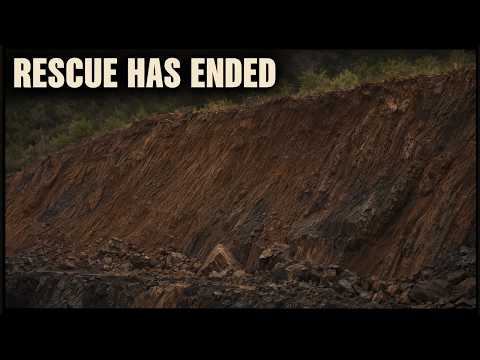
Search and rescue is over at a collapsed gold mine in southwestern Colombia. The accounting for the people caught there is not. Authorities reported 14 deaths and seven injuries, but have not publicly explained how that toll relates to the 12 to 15 miners initially reported missing. Governor Luis Alfonso Escobar’s announcement that operations had concluded leaves that consequential gap unresolved. 1 36
The collapse struck on the morning of October 19, 2026, in Chambero, a rural sector of Santa Bárbara de Iscuandé in Nariño. Earth, mud and rock buried part of an open-pit gold operation described in reports as illegal and informal. Difficult access and poor communication complicated the emergency response. 3 8 1
Key facts
The missing-person estimate cannot safely be added to the death toll. Nor can the end of rescue be taken as proof that everyone initially unaccounted for was found. Neither conclusion is established by the available reports.
The numbers describe one unfolding emergency
The rising toll reflects successive stages of the same disaster. El Tiempo first reported the recovery of six bodies. UPI and an initial Noticias Caracol report put the preliminary number killed at at least nine. Later, Noticias Caracol, citing departmental peace and security secretary Álex González, reported 14 dead and seven injured; Reuters reported the same figures. The earlier counts were superseded, not additional groups of victims. 34 7 16 15 4
The missing estimate is harder to interpret. Al Jazeera attributed to Nariño disaster-response official Jorge Tovar Castillo an account of 12 to 15 additional miners reported missing. Earlier Noticias Caracol reporting described 12 to 15 people who might have been buried beneath the debris, without establishing that they were separate from those later counted among the dead. Those formulations leave the overlap uncertain. 1 16
Reuters subsequently reported that Escobar said search-and-rescue operations had concluded. That account gives neither the precise time of the decision nor its operational basis. It does not explain whether the initial missing-person estimate had been reconciled, or whether any distinct recovery work continued afterward. 36
There is also a smaller discrepancy in the injury reporting. Blu Radio carried an account of eight injured, attributed to Fermín Obando of the Guardia Cimarrona, while Reuters and Noticias Caracol reported seven. Seven is the figure corroborated by those latter reports, but no person-by-person medical account is available to resolve the difference. 23 4 15
Reaching the site was a barrier
During the emergency, Colombia’s human rights ombudsman’s office requested air support, urgent medical assistance and security guarantees for rescue personnel. The appeals reflected the difficulty of reaching the rural mine and getting help to those affected. A request for those resources, however, is not confirmation that an aircraft arrived or an evacuation was completed. Neither outcome is established in the available reporting. 12
The seven injured people’s individual conditions, the hospitals treating them and their subsequent outcomes remain unknown. That leaves an important part of the disaster’s consequences outside the headline casualty figures. 38
One of those killed was identified by the community as Patricia Copete, according to El Tiempo. A complete official list of the dead has not been established in the available accounts. Her name is one of the few personal details made public about the people behind the toll. 34
What brought the earth down?
The immediate mechanism is clear enough: a mass of earth, mud and rock came down over the work site. The underlying trigger is not. The reports do not establish whether excavation, weather or another factor caused the landslide, and they provide no investigative finding identifying the safety failures that may have contributed. 8 36
The operation’s description as illegal or informal does not, by itself, answer those questions. No operator or titleholder has been identified in the available account, and no licensing or enforcement record has been established. Assigning responsibility requires more than repeating the mine’s reported status.
Nariño had already suffered another fatal mining accident in August. An Al Jazeera report published on August 20 described 13 deaths and seven injuries in Policarpa. That was a separate disaster, in a different municipality; its victims are not part of the Chambero toll. Informal, unregulated mining is common in rural Colombia, but that broader context does not establish who controlled this particular site. 10 1
For Chambero, the immediate reported loss is 14 lives. The unfinished task is specific: identify all those killed, establish the injured workers’ conditions, and explain what became of the people initially feared missing. The governor’s announcement ended search and rescue. It did not supply those answers.
As aired 11 lines
- A gold mine collapse killed fourteen people in southwestern Colombia.
- Local authorities also report seven injured. The governor says search and rescue has ended. Were the twelve to fifteen miners initially reported missing included in that death toll?
- The collapse struck Chambero, a rural sector of Santa Bárbara de Iscuandé, in Nariño. It happened on the morning of October nineteenth, twenty twenty-six. Authorities struggled to reach the site, and communication was difficult during the emergency.
- Colombia's human rights ombudsman's office requested air support, urgent medical assistance and security guarantees for rescue teams. Difficult access complicated the response.
- Earth, mud and rock came down over the open-pit gold operation. The mine was described as illegal and informal. Officials haven't explained what triggered the landslide, including whether excavation or weather played a part.
- Rescuers first recovered six bodies. The preliminary death toll then reached at least nine, before rising to fourteen, with seven injured. Each figure marked a later stage of the same emergency as the number of known victims grew.
- One of those killed was identified by the community as Patricia Copete. A complete official list of the dead hasn't been released. The seven injured people's individual conditions also haven't been made public.
- Governor Luis Alfonso Escobar announced that search and rescue had concluded. Disaster-response official Jorge Tovar Castillo had initially described twelve to fifteen additional miners as missing. Departmental peace and security secretary Álex González communicated the later casualty toll.
- At the start of the emergency, twelve to fifteen people were also feared buried beneath the debris. That estimate could include people later counted among the dead.
- In August, another mining accident in Policarpa, also in Nariño, killed a reported thirteen people and injured seven. Informal, unregulated mining is common in rural Colombia. The Chambero disaster adds another fourteen reported deaths in the department.
- Officials haven't explained how the initial twelve-to-fifteen missing estimate fits with the fourteen deaths. Those figures can't safely be added together. The governor's announcement ended search and rescue, but left the fate of those initially reported missing unexplained.
Sources
39 sources27 outlets1 wire copy
X (formerly Twitter)x.com9First
- First reported
- Condiciones de seguridad dificultan la atención de emergencia minera en Nariño. La Agencia Nacional de Minería informa que se reportó un deslizamiento de tierra en una mina de oro ubicada en la vereda Bellavista, zona rural del municipio de Santa Bárbara de Iscuandé, Nariño. Hasta el momento, el número de personas afectadas está por confirmar. Desde que se conoció la emergencia, nuestro equipo de Salvamento Minero ha estado dispuesto a brindar atención. Sin embargo, las dificultades de acceso y las condiciones de orden público en la zona han impedido su llegada al lugar de los hechos. La ANM mantiene su disposición técnica y operativa para apoyar la atención de esta emergencia, una vez se cuente con las condiciones de seguridad necesarias para el ingreso de los equipos de rescate. En la #PatriaMinera nuestra prioridad siempre será proteger la vida.
- Lamentamos profundamente la tragedia ocurrida en una mina de explotación artesanal no formal, ubicada en el sector de Chambero, municipio de Santa Bárbara de Iscuandé, que ha dejado personas fallecidas y heridas, mientras otras aún estarían atrapadas. Desde la Gobernación de Nariño nos movilizamos para atender los hechos y articular esfuerzos con las autoridades locales y los organismos de socorro en las labores de búsqueda, rescate y atención de las personas afectadas. Nuestra solidaridad con las familias de las víctimas y con toda la comunidad de Iscuandé. En este momento, nuestra prioridad es proteger la vida, acompañar a las familias y garantizar una respuesta oportuna ante esta dolorosa emergencia. Seguiremos atentos al desarrollo de la situación y a los reportes oficiales de las autoridades.
- #Colombia | Asciende a 14 la cifra de fallecidos y siete personas resultaron heridas tras un derrumbe en una mina de oro a cielo abierto en la vereda Chambergo, zona rural de Santa Bárbara de Iscuandé, Nariño. La emergencia ocurrió durante la mañana de este lunes y las autoridades advierten que el balance podría cambiar. La explotación minera operaba de manera informal y se estima que cerca de 30 personas se encontraban en el lugar al momento del deslizamiento. La Defensoría del Pueblo pidió apoyo aéreo, atención hospitalaria y garantías de seguridad para los equipos de rescate, ante las dificultades de acceso al territorio y la presencia de grupos armados ilegales.
- #Atención Se eleva a 14 el número de personas fallecidas tras el deslizamiento en una mina a cielo abierto en Santa Bárbara de Iscuandé, Nariño. Fermín Obando, integrante de la guardia Cimarrona, entregó detalles de la atención a la emergencia que dejó además 8 heridos.
- #Colombia | Un derrumbe en una mina a cielo abierto en Santa Bárbara de Iscuandé, Nariño, deja un balance preliminar de 14 personas fallecidas. Álex González, secretario de Paz y Seguridad del departamento, habló con Noticias Caracol sobre la emergencia. ¿Qué se sabe hasta ahora? Siga la señal de Noticias Caracol en vivo 👉🏻 https://t.co/F8gBz2QpY9
- #Atención Se eleva a 14 el número de personas fallecidas tras el deslizamiento en una mina a cielo abierto en Santa Bárbara de Iscuandé, Nariño. Fermín Obando, integrante de la guardia Cimarrona, entregó detalles de la atención a la emergencia que dejó además 8 heridos. #VocesySonidos
- Es inconcebible que los liderazgos juveniles sean silenciados por las balas de la infamia. Expresamos nuestro rechazo absoluto al asesinato de Carlos César Camacho Valencia, Concejal de Santa Bárbara de Iscuandé, un hecho que nos duele y preocupa. Esta es una razón más para que nuestra lucha por la construcción de paz territorial sea respaldada con presencia integral del Estado en todo el territorio nariñense.
- RT @LuisAlfonsoEsc: Lamentamos profundamente la tragedia ocurrida en una mina de explotación artesanal no formal, ubicada en el sector de C…
- #NariñoestaContigo Luis Alfonso Escobar Jaramillo @LuisAlfonsoEsc #GobernadorEnPeligro
Al Jazeeraaljazeera.com2
El Tiempoeltiempo.com2
740 The FAN740thefan.com1
- First reported
- 14 dead, 7 injured in Colombia illegal gold mine collapse
BBC Newsbbc.com1
- First reported
- Landslide at unlicensed Colombian gold mine kills 13
Blu Radiobluradio.com1
Caracol Radiocaracol.com.co1
CW+ Noticiascwmas.com.co1
- First reported
- Derrumbe en mina de Iscuandé deja al menos nueve muertos
Daily Mirrormirror.co.uk1
Devdiscoursedevdiscourse.com1
El Informadorelinformador.com.co1
El Norte Hoyelnortehoy.com1
- First reported
- Deslizamiento en mina de Nariño deja varias víctimas
elpais.com.co1
euronewseuronews.com1
Ground Newsground.news1
infobaeinfobae.com1
Internazionaleinternazionale.it1
- First reported
- 14 dead, 7 injured in Colombia illegal gold mine collapse
La FMlafm.com.co1
- First reported
- Derrumbe en mina de oro en Nariño: van 14 fallecidos
Noticias RCNnoticiasrcn.com1
NRKnrk.no1
- First reported
- 14 døde i gruveulykke i Colombia – Siste nytt
The Straits Timesstraitstimes.com1
- First reported
- 14 dead, 7 injured in Colombia illegal gold mine collapse
UPIupi.com1
www.vanguardia.comvanguardia.com1
Source map
Follow the evidence behind this report. The map shows its connections; the links below open the sources cited in this article.
Source map loads as you read.
Revision log
- r1First published.