Science · Crew-13 arrivalContinuing story · report 1 of 2
Crew-13 reaches the ISS in under eight hours. The next step is Crew-12’s return.
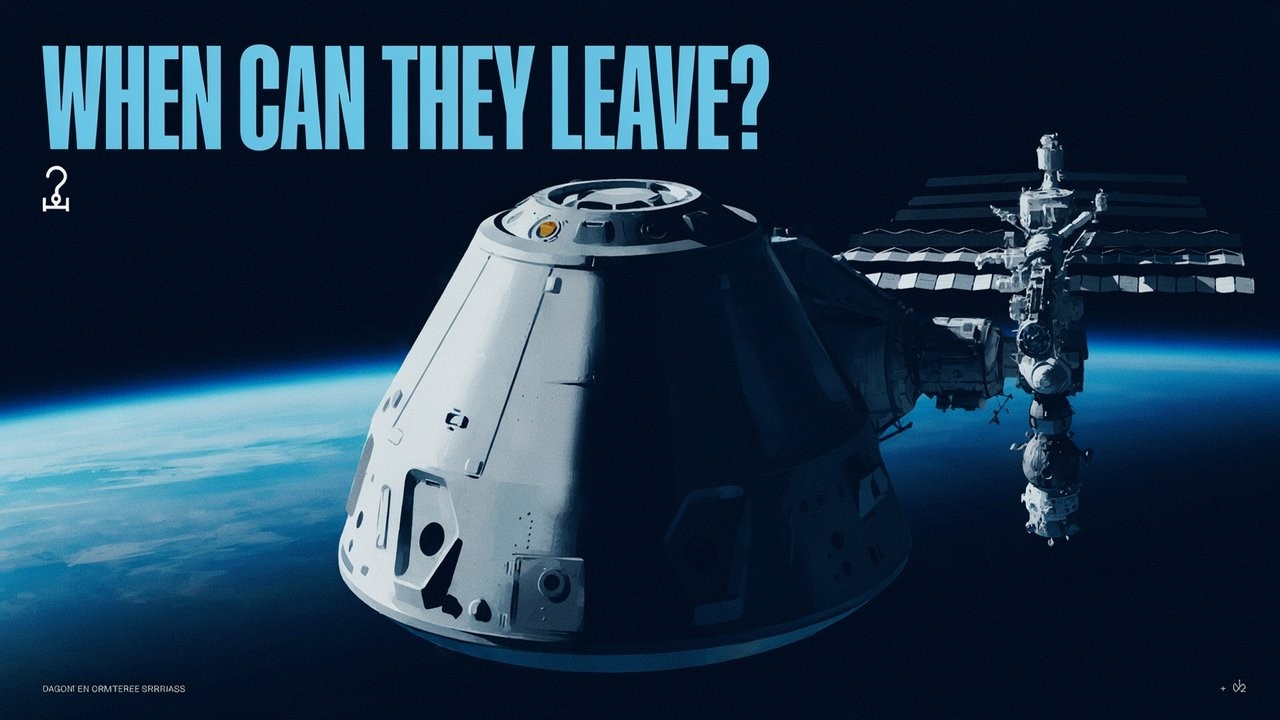
Dragon Grace’s seven-hour, 55-minute flight puts the next science crew aboard the station. Crew-12’s earliest reported departure remains October 5, weather permitting.
Transcript · LOADING
Continuing storyDay 3
2 reports28 outlets69 sources7 videos
Full story

The International Space Station’s working life depends on a succession of crews keeping its laboratory running. NASA’s Crew-13 is now the replacement team aboard: four astronauts have arrived for a long-duration science mission, even as the agency plans the station’s retirement at the end of 2030. Their arrival begins a change of shift, with the outgoing Crew-12 astronauts still awaiting their journey home. 18 1 2
Dragon Grace docked at the Harmony module’s forward port at 7:05 p.m. Eastern Daylight Time on October 1, 2026. It had launched at 11:10 a.m. EDT that morning, making the flight seven hours and 55 minutes. NASA subsequently confirmed that all four crew members entered the station and joined Expedition 75. The rendezvous that launch-day accounts described as an expectation is now a completed arrival. 7 8 18
Key facts
The flight met NASA’s under-eight-hour transit forecast, although docking occurred five minutes after the expected 7 p.m. clock time. Those two comparisons measure different things. The capsule arrived slightly later than the predicted appointment while still completing the journey in less than eight hours. 2 7 8
C-SPAN’s NPR account had described a trip of about eight hours; the Associated Press’s launch coverage carried NASA’s more specific under-eight-hour expectation. Both fit the outcome. NASA’s description of favorable orbital conditions allowing a trip close to the fastest possible supports calling this a rapid transit—not declaring an independently verified all-time speed record. 1 2 7
Four people, two returning vehicles
NASA astronaut Jessica Watkins commands Crew-13, with fellow NASA astronaut Luke Delaney serving as pilot. Canadian Space Agency astronaut Joshua Kutryk and Roscosmos cosmonaut Sergey Teteryatnikov are mission specialists. These are the full identities behind the first names Jessica, Luke, Josh and Sergey heard in launch reporting. 6 2
Watkins was selected as a NASA astronaut in 2017, and this is her second flight to the space station. The available biography information does not establish whether Delaney, Kutryk or Teteryatnikov have flown in space before. Their commander, pilot and mission-specialist designations describe flight roles, not individual assignments to particular experiments or repairs. 6
The spacecraft also has a flight history. Grace is the name of this individual Dragon capsule, and NASA’s prelaunch hatch-closure announcement identified the mission as its second flight to the International Space Station. That reuse is separate from the recovery of the rocket booster that carried it toward orbit. 22
The SpaceX Falcon 9 lifted off from Space Launch Complex 40 at Cape Canaveral Space Force Station in Florida. ABC News’s launch commentary described its nine first-stage Merlin engines producing a combined maximum thrust of 1.7 million pounds. After second-stage engine cutoff, the crew reached its expected orbit and Dragon separated from the second stage. 8 3
ABC also reported the first stage’s completed touchdown at Landing Zone 40 at Cape Canaveral. The shared number can obscure an important distinction: the launch complex was the departure point; the landing zone was the returning booster’s destination. Booster recovery, orbital insertion and docking were separate accomplishments. The NASA announcements available here confirm the launch and arrival but do not independently confirm that landing. 3 5 7
During the journey, mission control reported that the astronauts were safely in orbit and had removed their launch suits. That was reassuring information about their condition in transit, not confirmation that they had reached the station. NASA’s later docking and entry announcements establish those outcomes, although exact hatch-opening and station-entry times remain unavailable. 2 7 18
Earlier assignment announcements on April 23 and May 1 had placed launch no earlier than mid-September. October 1 became the later specific launch date, and the rocket flew that day. An earliest planning window is not a deadline; the sequence does not establish a broken promise to launch in September. 16 21 8
The laboratory work starts here
Crew-13 was expected to live and work aboard the station for up to six months. That is a planned stay, not a fixed return appointment: no exact duration in days or Crew-13 return date is established. NASA describes the mission as a long-duration science expedition. 1 16
The research agenda includes crew health, reliable food production in space and technologies for deep-space exploration. The ISS National Lab also identifies biomanufacturing among the research the astronauts will support. These are substantive areas of investigation, but they remain prospective work rather than completed experiments or demonstrated benefits. 14 17
Specific experiment names, protocols, equipment and person-by-person scientific assignments have not been established. Nor have particular inspections, servicing jobs, repairs or equipment replacements. The arrival puts people in place to do the work; it does not tell us that any particular scientific result has already been achieved. 14 17 6
The station’s eventual retirement gives that work a finite horizon. At a September 30 news conference, NASA official Lori Glaze said decommissioning and removal from orbit were planned for the end of 2030, according to C-SPAN. That remains an agency plan, not a completed shutdown or a precisely scheduled December 31 operation. It also does not make Crew-13’s intended stay a guaranteed timetable. 1
Arrival settled, departure still conditional
The immediate consequence is the crew rotation. NASA said Crew-13 would help prepare Crew-12’s return as the outgoing team wraps up a seven-month mission. A short handover is planned, but detailed individual responsibilities have not been established. 2 19
SpacePolicyOnline reports that Crew-12 could depart as soon as October 5, weather permitting, after that handover. This is a conditional departure possibility from secondary reporting—not a NASA-confirmed undocking appointment, an Earth-return date or a splashdown time. The full return timetable remains unconfirmed. 19
That is where the operational story now stands: the replacement crew has reached its workplace, but the outgoing crew has not yet completed its trip home. The next milestone is not another launch. It is a cleared departure and a return under suitable weather conditions.
Sources
C-SPAN — Washington Today, October 1, 2026. 1
Associated Press — SpaceX launches 4 astronauts to the International Space Station. 2
ABC News — NASA’s SpaceX Crew-13 mission launches. 3
NASA — NASA’s SpaceX Crew-13 mission page. 4
NASA — NASA’s SpaceX Crew-13 Reaches Orbit, News Conference at 1:10 p.m. EDT. 5
NASA — Meet the Crew of NASA’s SpaceX Crew-13. 6
NASA — Dragon Docks Bringing SpaceX Crew-13 to Station. 7
NASA — NASA’s SpaceX Crew-13 Launches. 8
UPI — NASA’s Crew-13 docks with ISS after record-fast flight. 9
NASA — NASA’s SpaceX Crew-13 Mission blog. 10
Reuters — SpaceX launches 13th long-duration astronaut crew to International Space Station. 11
Wikipedia — SpaceX Crew-13. 12
Spaceflight Now — Fresh crew takes off for six-month stay aboard space station. 13
NASA — Crew-13 Research Advances Health, Food, and Deep-Space Science. 14
NASA — Live Streaming Coverage of NASA’s SpaceX Crew-13 Mission Begins. 15
NASA — NASA Shares SpaceX Crew-13 Assignments for Space Station Mission, news release. 16
ISS National Lab — Astronauts Launching on NASA’s SpaceX Crew-13 Will … 17
NASA — Crew-13 Members Enter Station, Join Expedition 75. 18
SpacePolicyOnline — Crew-13 Arrives at ISS as Crew-12 Prepares to Depart. 19
SpaceX — Crew-13 Mission. 20
NASA — NASA Shares SpaceX Crew-13 Assignments for Space Station Mission, May 1 announcement. 21
NASA — Hatch Closed on Crew-13 SpaceX Dragon Spacecraft. 22
Space.com — SpaceX Crew-13 NASA launch live updates. 23
NASA — SpaceX Crew-13 Approaching Station Aboard Dragon. 24
Space.com — SpaceX Crew-13 astronauts dock at ISS less than 8 hours after launch in fastest American flight ever. 25
As aired 10 lines
- Dragon Grace carried four astronauts to the space station in under eight hours.
- The replacement crew is now aboard, preparing for a long-duration science mission and helping the outgoing astronauts finish a seven-month stay. What does their arrival settle, and what still stands between Crew-12 and its journey home?
- Dragon Grace docked at the International Space Station’s Harmony module forward port at 7:05 p.m. Eastern Daylight Time on October 1, 2026. Liftoff was at 11:10 that morning, making the journey seven hours and 55 minutes. All four crew members subsequently entered the station and joined Expedition 75. Docking and entry are completed milestones, not expectations. The exact times of hatch opening and station entry remain unavailable. An earlier in-flight update that the astronauts were safely in orbit and had removed their launch suits described their condition during the journey—not their arrival.
- Jessica Watkins commands the four-person crew. Luke Delaney is the pilot; both are NASA astronauts. Canadian Space Agency astronaut Joshua Kutryk and Roscosmos cosmonaut Sergey Teteryatnikov are mission specialists. Those are the full identities behind the first names Jessica, Luke, Josh and Sergey used during launch coverage. Watkins was selected as a NASA astronaut in 2017, and this is her second flight to the station. The other three astronauts’ prior-flight histories are not established, so they cannot be described as first-time space fliers. Their flight roles also do not establish which experiments or maintenance jobs each will perform.
- Nine Merlin engines powered Falcon 9’s first stage with a combined maximum thrust of 1.7 million pounds—not that amount from each engine. The rocket launched from Space Launch Complex 40 at Cape Canaveral Space Force Station in Florida. After the second-stage engine shut down, the crew reached its expected orbit and Dragon separated from that stage. The first stage completed a landing at Landing Zone 40 at Cape Canaveral. Despite the shared number, the launch complex and landing zone are different sites. Booster recovery, the astronauts’ orbital insertion and their later docking are three distinct milestones. Grace is this individual Dragon spacecraft’s name, and this was its second flight to the station.
- October 1 became the specific launch date after earlier planning placed the mission no earlier than mid-September. Assignment announcements on April 23 and May 1 used that earlier window. “No earlier than” sets an earliest possibility, not a deadline; the October launch does not establish that a promised September deadline was missed.
- The flight met the under-eight-hour transit forecast, even though docking happened five minutes after the expected clock time. The estimates of about eight hours and under eight hours fit the completed journey; they are not conflicting accounts of the arrival. The orbital conditions allowed a trip close to the fastest possible for this launch. That establishes a rapid transit, not an independently verified all-time speed record.
- Crew-13’s planned stay is up to six months, but there is no fixed return date or exact mission length in days. The work ahead includes investigations concerning crew health, reliable food production in space, technologies for deep-space exploration and biomanufacturing. These are prospective research areas, not completed experiments or demonstrated benefits. Specific experiment names, protocols, equipment and individual scientific assignments have not been established. Nor have particular inspections, repairs, servicing or equipment replacements. The station provides a working orbital laboratory; getting the crew there does not prove that any particular research result has already been achieved.
- The station itself is planned for decommissioning and removal from orbit at the end of 2030. That remains an agency plan, not a completed shutdown or deorbit, and it does not establish a precise December 31 operation. The longer-term plan also does not turn Crew-13’s intended six-month stay into a guaranteed schedule.
- Crew-12 could depart as soon as October 5, weather permitting, after a short handover. Crew-13 will help prepare that return as the outgoing crew wraps up its seven-month mission, but individual handover responsibilities have not been established. October 5 is a conditional departure possibility—not a confirmed undocking appointment, landing date or splashdown time. Arrival and station entry are settled; the full return timetable is not. Crew-13’s arrival puts the replacement team aboard, while Crew-12’s journey home still depends on the handover, departure clearance and suitable weather.
Sources
25 sources12 outlets3 videos
nasa.gov13
- NASA's SpaceX Crew-13
- NASA’s SpaceX Crew-13 Reaches Orbit, News Conference at 1:10 p.m. EDT - NASA
- Meet the Crew of NASA’s SpaceX Crew-13 - NASA
- Dragon Docks Bringing SpaceX Crew-13 to Station - NASA
- NASA’s SpaceX Crew-13 Launches - NASA
- NASA's SpaceX Crew-13 Mission
- Crew-13 Research Advances Health, Food, and Deep‑Space Science - NASA
- Live Streaming Coverage of NASA’s SpaceX Crew-13 Mission Begins - NASA
- NASA Shares SpaceX Crew-13 Assignments for Space Station Mission - NASA
- Crew-13 Members Enter Station, Join Expedition 75 - NASA
- NASA Shares SpaceX Crew-13 Assignments for Space Station Mission - NASA
- Hatch Closed on Crew-13 SpaceX Dragon Spacecraft - NASA
- SpaceX Crew-13 Approaching Station Aboard Dragon - NASA
ABC News11 video
- First reported
- NASA’s SpaceX Crew-13 mission launches · video
Associated Press11 video
- First reported
- SpaceX launches 4 astronauts to the International Space Station · video
C-SPAN11 video
ISS National Labissnationallab.org1
- First reported
- Astronauts Launching on NASA's SpaceX Crew-13 Will ...
spacepolicyonline.com1
SpaceXspacex.com1
UPIupi.com1
wikipedia.org1First
- First reported
- SpaceX Crew-13
Source map
Follow the evidence behind this report. The map shows its connections; the links below open the sources cited in this article.
Source map loads as you read.
Revision log
- r1First published.