Business · Containership fire
Salvors hired for Espirito Santo Express, but fire control remains unconfirmed
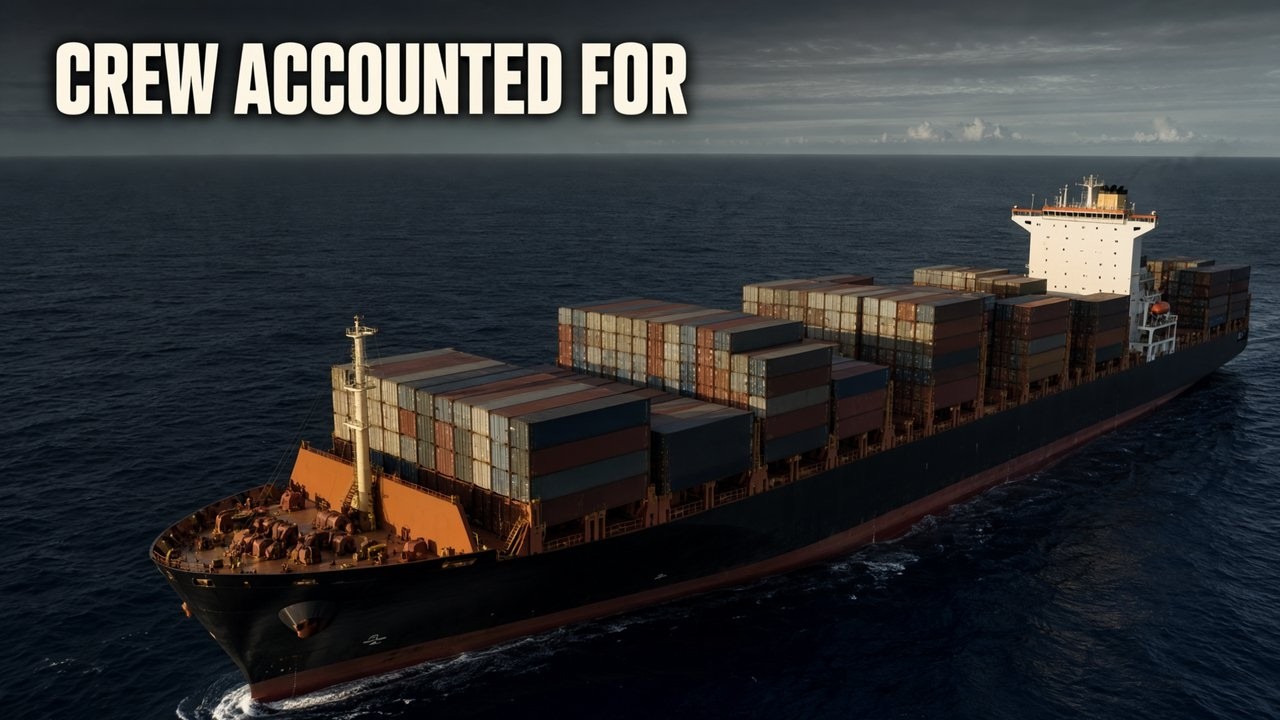
SMIT has been engaged after fire interrupted the Singapore–Santos voyage. The crew were reported safe, but fire control, the ship’s position and cargo damage remain unconfirmed.
Transcript · LOADING
Story trackerDay 5
1 report17 outlets21 sources

Salvors have been hired for the burning containership Espirito Santo Express. That is not the same as saying the ship has been secured. An October 19, 2026 casualty update records the appointment of SMIT, but the available information as of October 21 does not establish that a salvage team has reached the vessel, that towing has begun or that the fire is out. 5
The strongest reassurance concerns the people aboard: Seaspan, the ship’s owner, told charterer Hapag-Lloyd that every crew member was safe and accounted for. The ship and its cargo have a much less settled outlook. A fire interrupted their voyage from Singapore to Santos, Brazil, and neither the extent of the damage nor a recovery timetable has been established. 12
This is a casualty reported several days before October 21, not a verified new explosion that day. Hapag-Lloyd acknowledged the fire on October 16. The later salvage appointment is a concrete development in the response—not evidence that the emergency has ended. 12 5
Safe does not mean still aboard
Seaspan has confirmed that all crew members are safe and accounted for.
That sentence, in Hapag-Lloyd’s October 16 notice, is the clearest statement about the crew. It supplies no headcount, does not explicitly establish that nobody was injured and does not say the seafarers remained aboard. Those limits matter because a separate casualty account describes an evacuation. 12
Claims specialist WK Webster said it had received reports of an explosion followed by fire. In an account quoted by Shipping Telegraph, it said nearby vessels had been asked to assist and that it understood all crew members had safely abandoned the ship. The report does not establish the evacuation sequence, which vessel received the crew or whether anyone subsequently returned aboard. 1
There is no necessary contradiction between those accounts. A crew can evacuate a burning vessel and still be safe and fully accounted for. Treating the owner’s assurance as proof that everyone stayed aboard would put words into a statement that makes no such claim. Equally, the reported evacuation should not be promoted into a fully verified rescue narrative.
The same distinction applies to the explosion. Hapag-Lloyd confirmed a reported fire; WK Webster’s separate account describes an explosion preceding it. No verified explanation establishes what ignited, what may have exploded or where aboard the ship the fire began. An explosion report is not, by itself, an explanation of the cause. 12 1
A remote position, not a live location
WK Webster’s casualty listing places the incident approximately 975 nautical miles northwest of Tristan da Cunha in the South Atlantic. Its early account also described the vessel as adrift. That is a reported historical position and condition—not a verified location or drift status for October 21. The distance is an approximate estimate in the casualty notice, not an independently validated measurement. 2 1
The exact outbreak date remains less certain than some summaries suggest. WK Webster’s original notice displays October 15 as its publication date, which alone does not establish when the fire began. Shipping Telegraph’s October 20 article places the reported explosion on October 15; Dolphin Maritime gives an incident window of October 15–16; Shipwreck Log’s October 17 report identifies October 16. The defensible window is therefore October 15–16, 2026, rather than a precisely verified outbreak day or time. 2 1 4 6
Hapag-Lloyd’s initial wording was that “Necessary measures are being taken to bring the situation under control.” It did not announce that control had already been achieved. W.E. Cox’s October 19 update subsequently reported that professional salvors at SMIT had been engaged on LOF terms, a form of salvage contract. The appointment establishes an organised response, but not its arrival at the scene or its outcome. 12 5
Capacity is not the cargo loss
Espirito Santo Express, identified by IMO number 9793923, was built in 2020 by Yangzijiang Shipbuilding Group. W.E. Cox lists its capacity at 11,800 TEU—twenty-foot equivalent units, the standard measure of container space—and its gross tonnage at 113,828. Gross tonnage measures vessel size, not the weight of cargo carried. 1 13
A separate WK Webster casualty listing describes up to 11,923 TEU of containerised and temperature-sensitive cargo. That differs from the 11,800-TEU vessel-capacity figure, and the available accounts do not reconcile the two. Neither number establishes how much cargo was actually loaded or how much was exposed to fire. Presenting either as a cargo-loss total would turn an unresolved listing into a fact it cannot support. 15 13
Hapag-Lloyd said the extent of the incident and potential effects on cargo and vessel operations were still being assessed. The available evidence has not replaced that initial assessment with a verified damage inventory, completed tow, resumed voyage or delivery timetable. Nor does it establish a quantified pollution release or environmental loss; that absence is not proof that there was no impact. 12
As aired 16 lines
- Fire interrupted the Espirito Santo Express’s voyage to Brazil.
- Seaspan says every crew member is safe and accounted for. Professional salvors have been engaged, while the extent of damage to the ship and its cargo remains unclear.
- Whether those salvors have secured the vessel and brought the fire under control still isn't clear.
- The containership was sailing from Singapore to Santos. Built in 2020 by Yangzijiang Shipbuilding Group, it has a reported gross tonnage of 113,828. That's a measure of the vessel's size, rather than the weight of cargo it was carrying.
- Seaspan owns the ship, and Hapag-Lloyd charters it. Seaspan notified the charterer about the fire. The clearest later development is the appointment of SMIT, a professional salvage firm, to respond to the casualty.
- The reported incident window is October 15 to 16, 2026. Hapag-Lloyd acknowledged the fire on October 16. By October 19, SMIT had been engaged under a salvage contract known as LOF.
- The precise outbreak time is still unclear. The fire was already public several days before October 21. The salvage appointment adds a concrete response, but an appointment alone doesn't tell us whether a salvage team has reached the vessel.
- At the time of the casualty, the ship was reportedly adrift about 975 nautical miles northwest of Tristan da Cunha. That puts the incident in the remote South Atlantic, well away from its intended destination at Santos.
- That distance is an approximate historical position. It shouldn't be read as a live location for the ship. The voyage began in Singapore, but the fire interrupted the journey before the vessel reached Brazil.
- An explosion reportedly preceded the fire. Nearby vessels were asked to help, and all crew were understood to have abandoned ship safely. What ignited, and where aboard the ship the fire began, haven't been explained.
- The evacuation account can coexist with Seaspan's assurance that everyone was safe. A crew can leave a burning vessel and still be fully accounted for. Hapag-Lloyd's statement never said the crew stayed aboard.
- Hapag-Lloyd passed on Seaspan's assurance on October 16. It remains the clearest statement about the people aboard. Nobody has provided an injury assessment, and the sequence of any evacuation hasn't been clarified.
- The ship's carrying capacity also needs care. Shipping companies measure container space in TEU, short for twenty-foot equivalent units. One unit represents a standard twenty-foot container. The published vessel capacity and a separate cargo listing give different figures.
- One vessel listing gives capacity as 11,800 TEU. A separate cargo listing says up to 11,923 TEU. Those figures haven't been reconciled. The amount actually loaded aboard the ship hasn't been confirmed.
- The cargo listing includes temperature-sensitive goods. Hapag-Lloyd said it was assessing the incident's extent and possible effects on cargo and vessel operations. Cargo owners still don't have a confirmed damage total or a timetable for delivery.
- Hapag-Lloyd said measures were being taken to bring the situation under control. SMIT has since been engaged. As of October 21, nobody has confirmed that the fire is out or towing has started. The ship's current position remains unclear.
Sources
21 sources17 outlets2 wire copies
W.E. Cox Claims Group Limitedwecoxclaimsgroup.com3
apllogistics.com1
dolphin-maritime.com1
hapag-lloyd.com1
hellenicshippingnews.com1
kuehne-nagel.com1
- First reported
- Fire breaks out aboard Espirito Santo Express en r...
SAFETY4SEAsafety4sea.com1
- First reported
- Fire erupts aboard containership off the coast of Brazil
seatrade-maritime.com1
Ship & Bunkershipandbunker.com1
Shipping Telegraphshippingtelegraph.com1
- First reported
- Fire breaks out aboard containership en route to Santos
shipwrecklog.com1First
- First reported
- Espirito Santo Express - Shipwreck Log
Splash247splash247.com1
WKW Websteritaluk.com1
WKW Websterisa-surveys.com1
Source map
Follow the evidence behind this report. The map shows its connections; the links below open the sources cited in this article.
Source map loads as you read.
Revision log
- r1First published.