
Report
Facebook's Own Payouts Are Fueling AI Fakes of Australia's Leaders
Reset.Tech traced 200+ Australia-focused pages making fake Reels of Albanese, Taylor, Hanson and others — part of an 1,864-page network reaching 5.9 million users — and says Facebook creator payouts, not ideology, kept it running.
Transcript · LOADING
Story trackerDay 1
1 report26 outlets34 sources1 video
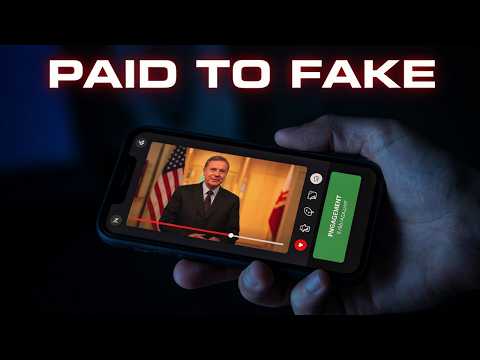
For years the fear about AI in elections was a foreign spy service with a cause. What arrived in Australia instead was cruder and, in its way, more corrosive: a foreign business with a payout form. New research published on September 9, 2026 finds a Sri Lanka-linked operation built more than 200 Facebook pages impersonating Australian politicians with AI deepfakes, not to elect anyone but to get paid 2.
The account comes from ABC News (Australia) national technology reporter Ange Lavoipierre, drawing on eight months of tracking by Reset.Tech, an independent digital-harms nonprofit, led by chief research officer Dr Rys Farthing 2. After mapping the pages, Farthing rejected the state-interference frame outright, calling the operation foreign influence for commercial motivations and a foreign distortion of Australian political discourse 2. The operators, the researchers concluded, iterate on whatever generates clicks and revenue, regardless of whom it damages 2.
Key facts
The pages were built to look like Australia itself. They ran under mass-appeal names such as I Love Australia, Life in Australia and Beautiful Australia, gathering followers with easy patriotism before turning political 2. Targets included Prime Minister Anthony Albanese, Opposition Leader Angus Taylor, One Nation leader Pauline Hanson, Senator David Pocock, Senator Fatima Payman, Allegra Spender and Home Affairs Minister Tony Burke, with some summaries of the research also naming former prime minister John Howard 2.
The funnel was familiar to anyone who has watched junk Facebook grow. Some pages opened with bait — AI animals, attractive women, or generic praise of Australia — then pivoted to short Facebook Reels in which politicians appeared to make inflammatory statements they never made 2. Recurring themes were nationalistic, anti-migrant and anti-Muslim messaging, plus bogus polls designed to drive engagement and sexualized AI images and videos of female politicians 2. Two examples show how personal it got: a fake clip of Payman asking not to be deported to Afghanistan, and a fake clip of Pocock claiming he had joined forces with One Nation 2.
One in ten pages was getting paid
Roughly one in 10 of the network's pages had been monetized through Facebook's in-house scheme that pays content creators for engagement 2. That is the engine the headline points to: the same incentive that rewards a cooking video rewards a fake prime minister, as long as people watch and react 2. Australia was only one outlet. The same coordinated network of 1,864 pages, reaching an estimated 5.9 million users, was also running in France, Italy, the United Kingdom, the United States, Canada and Mexico 2.
What the platform did not do is the most damaging part of the report. Across the targeted Australian posts Reset.Tech observed, only one in three carried an AI label, and only one in 33 was deleted 2. That was despite content that violated Facebook's own policies on inauthentic behavior networks, hate speech and AI deepfakes 2. The researchers noted that a small team could map the network with relative ease, and asked why a platform with far greater resources could not 2.
As humans, when we see someone say something, we generally believe that it's them saying it.
Pocock, an independent senator targeted by the network, said his team had been sent a bunch of deepfakes of him over the last few months and that he is concerned deepfakes really undermine the democratic system 2. He pointed directly at the business model: based on outrage, on eyeballs on screens for as long as possible, and on clicks 2. Burke, himself targeted, said that at the last election he saw for the first time photos of himself online with people he had never met, and that more recently he had seen videos and interviews of colleagues saying things they have never said 2. He urged Australians to check their sources 2.
Known
Unknown
- No public confirmation of Meta removals, and no announced inquiry by eSafety, the Australian Electoral Commission or Home Affairs.
- The name of the Sri Lankan company behind the accounts and what it earned from the scheme.
Next
- Whether Meta removes the flagged pages or keeps paying them.
- Whether Australia or the six other targeted democracies treat commercial slopaganda as a security and electoral-integrity threat.
Who’s who
- Rys FarthingChief research officer, Reset.Tech
- David PocockIndependent senator targeted by deepfakes
- Tony BurkeHome Affairs minister targeted by network
- Ange LavoipierreNational technology reporter, ABC News
As aired 10 lines
- Facebook's own payouts fueled a network faking Australia's political leaders. More than 200 pages impersonated the prime minister and opposition figures — part of an operation reaching nearly six million people across seven countries. The operators were not activists. They were being paid. The question now is whether anyone stops them.
- The research is from Reset.Tech, an independent nonprofit that maps digital harms, led by its chief research officer, Dr Rys Farthing. After eight months of tracking, the conclusion is blunt: this is commercial, not political — foreign influence for commercial motivations, and a foreign distortion of Australian political discourse. The team explicitly rejects the assumption that such networks are state-sponsored interference. The operators, they found, iterate on whatever generates clicks and revenue, regardless of whom it damages.
- One in ten of the network's pages had been monetized through Facebook's scheme that pays content creators — the same incentive that pays any page owner for engagement, whatever the content.
- The Australia-focused pages are one slice of a coordinated network — 1,864 pages in total, reaching an estimated 5.9 million users. The same Sri Lanka-linked operation ran in France, Italy, the United Kingdom, the United States, Canada and Mexico. Because the same monetization engine was firing at six other democracies at once, the enforcement gap is not an Australian problem alone.
- The pages impersonated Prime Minister Anthony Albanese, Opposition Leader Angus Taylor, One Nation leader Pauline Hanson, Senator David Pocock, Senator Fatima Payman, Allegra Spender, and Home Affairs Minister Tony Burke. Some summaries also name former prime minister John Howard. They ran under mass-appeal names like "I Love Australia" and "Beautiful Australia" — built to look like Australia itself before turning political.
- Some pages began as bait, then shifted to politics. The content came mostly as short Reels — nationalistic, anti-migrant and anti-Muslim messaging, bogus polls to drive engagement, and sexualized AI images and videos of female politicians. One fake clip showed Senator Fatima Payman asking not to be deported to Afghanistan. Another showed Senator David Pocock claiming he had joined forces with One Nation.
- Across the targeted Australian posts researchers observed, only one in three carried an AI label, and just one in thirty-three was deleted — even though the content broke Facebook's own rules on inauthentic behavior, hate speech, and AI deepfakes. A small research team mapped the network with relative ease. The researchers question why a platform with far greater resources could not.
- No removals had been confirmed when the report was published.
- Pocock said his team has been sent a bunch of deepfakes of him over the last few months, and that he is concerned they genuinely undermine the democratic system. Their business model, he said, is based on outrage, on eyeballs on the screens for as long as possible, and on clicks.
- Home Affairs Minister Tony Burke — himself targeted by the same network — said he has seen videos and interviews of colleagues saying things they never said, and urged Australians to check their sources. So far, no Australian authority, whether the eSafety commissioner, the electoral commission, or the Home Affairs department, has announced an investigation or referral. Whether this network is treated by Meta as a policy violation, or by governments as a security threat, remains the open question.
Sources
34 sources26 outlets1 video1 wire copy
ABC listenabc.net.au4
Fact Crescendo Afghanistan Englishfactcrescendo.com3
- viral hoax Archives - Fact Crescendo Sri Lanka English | The leading fact-checking website
- AI Archives - Fact Crescendo Sri Lanka English | The leading fact-checking website
- How Cyber Fraud Networks Pushed Out of Southeast Asia Have Set Up Shop in Sri Lanka - Fact Crescendo Sri Lanka English | The leading fact-checking website
X (formerly Twitter)x.com2
ABC News (Australia)1First1 video
- First reported
- Money driving 'slopaganda' network impersonating Australian politicians | ABC NEWS · video
Australiaeuropesays.com1
democracyreporting.s3.eu-central-1.amazonaws.com1Unverified host
Digital Childdigitalchild.org.au1
elevenMelevenm.com.au1
independentaustralia.net1
Lanka Newspaperslankanewspapers.com1
LinkedInlinkedin.com1
philarchive.org1
Reset Tech Australiareset.tech1
Sri Lanka News | Ada Derana | Truth Firstadaderana.lk1
Tech Policy Presstechpolicy.press1
The Australian Newstheaustraliannews.com.au1
The Saturday Paperthesaturdaypaper.com.au1
The Sydney Morning Heraldsmh.com.au1
tilburguniversity.edu1
Source map
Follow the evidence behind this report. The map shows its connections; the links below open the sources cited in this article.
Source map loads as you read.
Revision log
- r1First published.