
Energy · Hormuz blockadeContinuing story · report 1 of 4
Hormuz Grinds Toward Standstill as Tanker Strikes and Blockade Threat Collide
Attacks, a blockade threat and competing claims choked Hormuz to near standstill in mid-August, with Red Sea alternatives also under fire.
Transcript · LOADING
Continuing storyDay 1
4 reports22 outlets36 sources4 videos
Full story- No dated events yet
 Update 1Hormuz Grinds Toward Standstill as Tanker Strikes and Blockade Threat CollideYou are here
 Update 2Two UAE Tankers Hit as Hormuz Traffic Falls to Fraction of NormalNewer
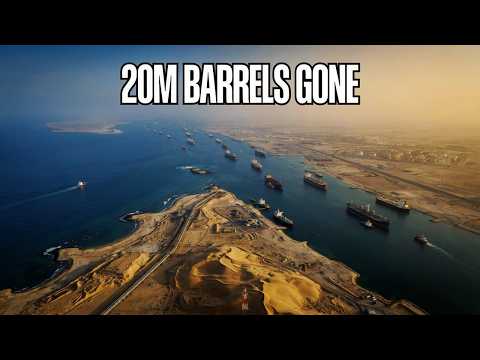 Update 3Hormuz Goes Quiet: 10 Crossings a Day as U.S.-Iran Truce ExpiresNewer
 Update 4180 Days: World's Oil Chokepoint Still ShutNewer
Traffic through the Strait of Hormuz sank to near a three-month low in mid-August 2026, then appeared to grind toward a near standstill after two more ships were attacked and Washington said it could keep a naval blockade of Iran going indefinitely. 4 10 11 5 6 That is the number that matters, because Hormuz is the narrow exit for Gulf oil and gas to world markets, and when movement there slows that sharply there is no spare pipe or canal large enough to take its place for long.
In the most acute phase, on Aug. 13-14, two more UAE tankers were attacked by drones while transiting the strait. 3 6 10 Reuters reporting carried by several outlets described transit as having appeared to grind to a near standstill on Friday after those attacks and after the United States said it could maintain a naval blockade of Iran indefinitely. 10 11 6 5 A senior Iranian source said there had been no progress in talks to build on a June agreement, and the United States warned Iran it would step up economic pressure. 10 11 6 The names of the attacked tankers, damage details and any casualties were not given in the sources provided.
The collapse did not arrive in one day. Traffic fell to its lowest in roughly a week to three months over Aug. 10-12 as ships were attacked and U.S.-Iran talks stagnated. 9 4 The United States and Yemen's Houthi rebels carried out separate attacks on commercial ships in the Gulf of Oman and the Red Sea on Tuesday, Aug. 11. 9 Houthi activity also struck around Mokha, Yemen, around Aug. 10. 9 3 By Aug. 16, Reuters reported that shipping via Hormuz was still slowing after the tanker attacks, citing data. 7
Blocked or under control
What flow remained became a political fact in itself. CNBC reported that the Persian Gulf Strait Authority said the strait remains blocked and would not reopen until Iran's conditions were accepted, after U.S. President Donald Trump said the U.S. had total control over the strait. 4 Fortune framed the same dispute as Iran saying the strait is shut down while Trump claimed 9 million barrels a day were still getting out. 8 The sources provided do not resolve that gap, and the honest reading is that they disagree on how much oil is still escaping.
the Strait of Hormuz remains blocked and will not be reopened until Iran's conditions are accepted
That disagreement is central because the video account that prompted this article put a sharper number on the fall: throughput down to roughly a quarter to a third of normal, on a waterway said to normally carry about 20% of the world's energy. 4 5 10 The direction is consistent with the reporting file — near three-month lows, a one-week low, and a near standstill are all documented. 4 9 5 10 11 But no source in this set explicitly quantifies a quarter to a third, none repeats the 20% baseline, and Iran's stated conditions for reopening are not detailed in the provided text.
The water itself is being rearranged. An Aug. 14 gCaptain analysis, based on more than 100,000 AIS position reports from March 1 to July 31, 2026, laid out in 1 km grid cells, found Iranian attacks were pushing vessels away from the U.S.-coordinated route through Omani waters toward a northern, Tehran-controlled route. 2 The analysis noted that EMCON-silent transits are not captured, meaning ships running without electronic broadcast would not appear in that picture. 2 The finding supports two planks of the broadcast account: that there is a U.S.-coordinated route through Omani waters, and that Iranian actions are deterring vessels from using it. 2 4 5
Washington's leverage in that contest is not only naval. The United States warned Iran it would step up economic pressure as traffic slowed further, linking the maritime squeeze to a wider coercive campaign. 6 5 10 Tehran's leverage is the physical threat and the legal-political claim that the strait will stay closed until its conditions are met, conditions that are not spelled out in the sources here. 4 Shippers caught between those poles face a choice between a protected corridor that is still being shot at and a northern route closer to Iranian control. 2
No relief valve in Red Sea
The usual relief valve was also under fire. Houthi attacks on commercial ships in the Red Sea and on Mokha are documented in the same window, which supports the broadcast's point that alternative routes that would normally absorb diverted traffic were being degraded at the same time. 9 3 The simultaneity matters: separate attacks in the Gulf of Oman and the Red Sea on Aug. 11 point to multi-corridor disruption rather than a single-point accident or weather delay. 9 That is a thinner version of the regionalization warning in the video, but it is the version the sourced reporting can carry without stretching.
Read carefully, the evidence allows a firm but limited verdict. Transit fell hard and fast in the second week of August, drone strikes on tankers continued into Aug. 13-14, diplomacy stalled, and both a blockade threat and competing routing claims kept owners and masters from sending ships normally. 3 6 10 11 5 2 What the evidence does not allow is precision about the exact fraction of normal flow remaining, the baseline share of world energy involved, the identities and fates of the struck crews and hulls, Iran's conditions, or any market or price effect. 4 7 None of those details appear in the provided source text, and they should not be filled in by assumption.
Known
- Transit ground toward near standstill after two more ships were attacked and the U.S. said it could hold a blockade indefinitely. 101165
- Separate U.S. and Houthi attacks hit commercial ships in the Gulf of Oman and Red Sea on Aug. 11. 9
- Iranian attacks pushed vessels from U.S.-coordinated Omani-waters route toward northern Tehran-controlled route, per 100,000+ AIS reports. 2
Unknown
- No verified throughput fraction, world-energy share, tanker names, casualty or damage outcomes, or Iran's reopening conditions.
- No market or price outcome stated in the provided sources.
Next
- Whether traffic stabilizes, falls further, or splits durably between Omani-waters and northern routes.
- Whether talks move beyond the reported no-progress position or economic and naval pressure tightens first.
Sources
11 sources9 outlets1 video
al-monitor.com2
Arizona Daily Startucson.com1
HeyDay News11 video
MarketScreenermarketscreener.com1
Source map
Follow the evidence behind this report. The map shows its connections; the links below open the sources cited in this article.
Source map loads as you read.
Revision log
- r1First published.