Conflict · Kyauktaw market strike
Kyauktaw families bury airstrike victims as reported death toll reaches 50
Families have begun burying victims of the Kyauktaw market strike. The reported toll has reached 50, but the casualty register—and the allegation of deliberate civilian targeting—remain unsettled.
Transcript · LOADING
Story trackerDay 3
1 report19 outlets32 sources
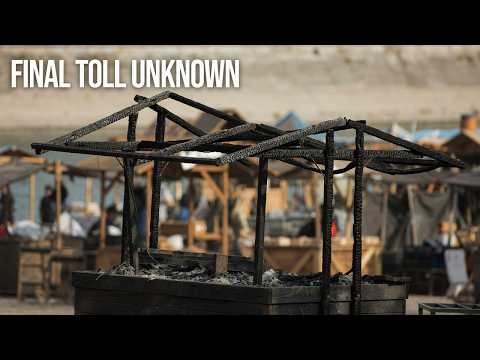
Families are burying victims of the Kyauktaw market airstrike before the full human toll is known. Fifty people are now reported dead after the September 28, 2026 attack in Myanmar’s Rakhine State, and at least 58 were reported wounded. But those figures are not a final casualty register: another victim’s death during treatment has already raised the count, and the UN human rights office warns it could rise again. 1 24
The death and injury figures were attributed by Reuters to the Arakan Army and local aid worker Wai Hun Aung. Women and children were among those reported killed. Additional aid-worker and local reporting supports the reported death toll of 50; the available accounts through September 30 do not establish a specific higher total. 1 6 2
Key facts
The strike hit the Indian Market and adjoining Kissapanadi Bridge in Kyauktaw, an area controlled by the Arakan Army. Other accounts render the names as India Market and Kacchapanadi Bridge. These are different spellings of the same locations, not evidence of additional attack sites. Witnesses placed the bombing around midday on September 28, approximately 05:30 GMT; that remains an estimated time. 7 17 23
This was a riverside commercial hub, not simply a point on a military map. Reuters described a market with more than 200 shops serving multiple communities. That scale has not been independently corroborated by the additional reporting available, and it is not a count of shops destroyed. The reported dead included vendors, customers, transport workers and other civilians—people whose work and daily errands brought them into the same crowded place. 1 16 18
Local coverage describes two airstrikes, burning structures and a charred marketplace. It does not establish how many aircraft were involved, their types, the number or weights of bombs, or how many businesses survived. Nor is there a verified assessment of the bridge’s condition: its inclusion among the attack sites does not establish that a span failed or that the crossing became impassable. The damage to a shared trading hub is evident; its longer-term effect on access and commerce has not been measured. 7 3 17
A death toll still being counted
The changing numbers describe successive accounts of one attack’s aftermath. Aid-worker coverage put the initial death estimate at around 30. An early DVB report, citing Arakan Army statements, gave at least 33 dead and 36 injured. By September 29, DVB and UCA News were reporting at least 49 dead and 58 injured, including 22 initially listed as critically injured in DVB’s account. 6 20 7 17
Development Media Group subsequently reported that another critically injured victim died while receiving treatment, taking the death toll to 50. New Day Myanmar described him as an injured man who died in hospital. The Japan Times separately attributed a count of 50 dead and 58 injured to two local aid workers, while The Irrawaddy cited the Arakan Army for 50 dead and nearly 60 injured. 24 29 6 3
Some coverage had not incorporated that increase: The Star’s September 30 report still used 49 deaths, while DVB’s September 30 follow-up used 50. These are differing snapshots, not proof of incompatible final registers. The reported treatment death explains the increase, without establishing when every outlet updated its account. 21 2 24
The injury figures require the same care. The 22 initially critical cases were included within the reported 58 injured, not an additional group to add to it. One subsequently died, but no reconciled register shows how that death affected the wounded count. Automatically subtracting one—or calculating a definitive combined casualty total—would impose precision the reporting does not provide. 22 24
Separately, members of the United League of Arakan buried the remains of 22 victims on September 29, according to DVB’s follow-up report and photo caption. The location was withheld, identified only as somewhere in Arakan Army-controlled territory. Those burials are part of the death toll, not deaths to add to it. The available accounts do not establish whether the victim who died during treatment was among those buried. 2 24
Condemnation does not settle the targeting
UN Secretary-General António Guterres condemned the reported strike, with spokesperson Stéphane Dujarric conveying his position at the September 29 briefing. Anadolu’s account says Guterres “strongly condemns” ongoing attacks against civilians. UN human rights chief Volker Türk also deplored the airstrikes and warned that the toll could rise. These are established public responses, not independent authentication of a final casualty count. 1 25 26
the military airstrikes that reportedly killed at least 50 people at a market in Myanmar are deplorable.
That wording is Laurence’s, preserved in the UN’s September 29 Geneva record—not a direct quotation spoken by Türk. The OHCHR statement described the attack as one of the deadliest in Rakhine since the February 2021 coup, but supplied no numerical comparison establishing a precise historical ranking. 14 16
The attack is reported as a Myanmar military airstrike. The Arakan Army’s further allegation—that civilians were deliberately targeted—concerns intent and remains unproven in the available evidence. A crowded civilian location, civilian deaths and visible destruction establish the gravity of what happened. They do not, by themselves, reconstruct the targeting decision or what those ordering the strike knew. 1
Reuters reported that the junta did not comment. No subsequent acknowledgment, denial, explanation or claimed military target is established in the available accounts through September 30. Nor is there an independently established reconstruction identifying the weapons, orders or decision-making chain, or an announced investigation timetable. Those gaps must remain visible without obscuring the immediate consequence: dozens of reported deaths, many wounded people, and families already burying victims of an attack on a place that sustained surrounding communities. 1 2
Sources for this report
Reuters: the reported strike, casualties and UN response. 1 DVB: September 30 condemnation and burial follow-up. 2 The Irrawaddy: death toll rises to 50. 3 Anadolu: UN rights chief deplores the strikes. 4
Euronews: the 49-death casualty account. 5 The Japan Times: aid workers report 50 deaths. 6 DVB: the September 29 market-and-bridge casualty update. 7 The Japan Times: UN alarm over the reported strike. 8
The Straits Times: UN alarm over 50 reported deaths. 9 DVB: UN alarm over the reported airstrikes. 10 United Nations: September 29 daily press briefing. 11 UN News: world news briefing on Myanmar and other developments. 12
UN Web TV: September 29 daily press briefing. 13 UNifeed: OHCHR’s Rakhine market strikes record. 14 United Nations: Statements and Messages collection. 15 The National Tribune: republication of Türk’s statement. 16
UCA News: at least 49 reported killed at the market. 17 Progressive Voice: republication of Türk’s statement. 18 CRPH Support Group: UN and UK condemnation coverage. 19 DVB: the early Arakan Army casualty account. 20
The Star: September 30 account carrying 49 deaths. 21 CRPH Support Group: republication of the treatment-death update. 22 NAMPA/AFP: families gather bodies as the toll reaches 50. 23 Development Media Group: death toll rises to 50 after a treatment death. 24
As aired 13 lines
- Families are burying victims of the airstrike that struck a crowded market.
- The reported death toll has reached fifty, with at least fifty-eight people wounded and women and children among the dead. The market served surrounding communities, bringing vendors, customers and transport workers into the same crowded space. What remains unresolved about the final human toll and whether civilians were deliberately targeted?
- The strike hit the Indian Market and adjoining Kissapanadi Bridge in Kyauktaw, in Myanmar's Rakhine State, on September twenty-eighth, twenty twenty-six. The area was under Arakan Army control. The market's name also appears as India Market, and the bridge as Kacchapanadi. These are different renderings of the same attack locations, not additional sites.
- The market reportedly contained more than two hundred shops and served multiple communities. That figure describes its scale before the attack, not the number of shops destroyed, and it lacks independent corroboration. People came here to earn a living, buy goods and move through town. The reported victims included vendors, customers, transport workers and other civilians.
- The attack's estimated timing is around midday, approximately five-thirty GMT. That is a witness estimate, not an independently verified exact time. Two airstrikes are described, but that does not establish how many aircraft flew, their types, how many bombs were dropped or what those bombs weighed.
- Another critically injured victim died during treatment, taking the reported death toll from forty-nine to fifty. The earlier estimates had put deaths at around thirty, then at least thirty-three, with thirty-six injured. September twenty-ninth accounts subsequently reached at least forty-nine dead and fifty-eight injured. Some September thirtieth coverage still carried forty-nine, while other follow-up accounts used fifty. These are successive snapshots of the same aftermath, not several separate attacks. The additional treatment death explains the increase without establishing that every count was updated at the same time.
- Twenty-two victims were buried on September twenty-ninth by members of the United League of Arakan. The burial took place at an undisclosed location in Arakan Army-controlled territory; no named cemetery, village or exact burial time is established. Those twenty-two are part of the reported deaths, not people to add to the toll. Separately, twenty-two of the fifty-eight injured were initially listed in critical condition. One subsequently died, but it is unknown whether that person was among those buried. The two figures describe different categories; they do not establish which individuals overlap.
- The wounded count also remains unreconciled. Accounts used fifty-eight, at least fifty-eight, or nearly sixty, without establishing a definitive register after the treatment death. Automatically subtracting one from the wounded, or calculating a final combined casualty total, would give the figures a precision they do not have. The casualty account is not an independently verified final register.
- Fire damaged the marketplace, leaving charred structures and extensive destruction. But the number of shops damaged or destroyed has not been established. Neither has the number of businesses still operating. The commercial loss reaches a hub used by several communities, but its longer-term effect on trade and access remains unquantified.
- The bridge's condition is another unanswered question. Its location beside the market does not establish structural failure. There is no verified assessment of whether a span failed or whether the crossing remained passable.
- UN Secretary-General António Guterres condemned the reported strike. UN human rights chief Volker Türk also deplored the military airstrikes and warned that the toll could rise. The attack was characterized as one of the deadliest in Rakhine since the February twenty twenty-one coup, but no numerical historical comparison establishes a precise ranking. The condemnation is an established public response; it does not independently authenticate every casualty figure or settle the targeting decision.
- Whether civilians were deliberately targeted is not yet confirmed. A crowded civilian location, civilian deaths and visible destruction do not by themselves establish the complete targeting decision or what information those ordering the strike possessed. No independent reconstruction identifies the aircraft, weapons, orders, asserted military objective or decision-making chain. The junta did not comment in the initial account, and no subsequent acknowledgment, denial, explanation or claimed target is established through September thirtieth.
- The known human toll is therefore fifty reported deaths, with no specific higher figure established through September thirtieth. The final death and injury counts, and the allegation of deliberate civilian targeting, remain unresolved. No announced investigation timetable is established. The human rights office's warning remains consequential: the death toll could still rise as injured victims receive treatment.
Sources
32 sources19 outlets1 wire copy
UN Newsun.org5
- First reported
- Daily Press Briefing by the Office of the Spokesperson for the ...
- World News in Brief: Deadly Myanmar strikes as Malaysia begins deportations, new emergency funding released, Gaza and West Bank update
- UNGA update, Nuclear Weapons, Ukraine/Russia & other topics - Daily Press Briefing | UN Web TV
- OHCHR / MYANMAR RAKHINE MARKET STRIKES | UNifeed
- Statements and Messages
DVBdvb.no4First
- First reported
- International condemnation mounts as death toll in Rakhine State reaches 50
- Death toll rises to 49 in Myanmar airstrikes on Rakhine State market and bridge
- UN alarmed by reports that Myanmar airstrikes killed 50
- At least 33 killed in Myanmar military airstrike on crowded market in Rakhine State
Supportgroup Norwaycrphsupportgroup.no3
France 24france24.com2
Development Media Groupdmediag.com1
Khaosod Englishkhaosodenglish.com1
- First reported
- Myanmar airstrike kills 50 at market in Rakhine
progressivevoicemyanmar.org1
Reutersreuters.com1
The Irrawaddyirrawaddy.com1
The Japan Timesjapantimes.co.jp1
- First reported
- U.N. alarmed by reports that Myanmar air strike killed 50
The National Tribunenationaltribune.com.au1
- First reported
- Türk deplores deadly strikes at busy Rakhine market: Myanmar
The Starthestar.com.my1
- First reported
- Market airstrike kills 49
The Straits Timesstraitstimes.com1
- First reported
- UN alarmed by reports that Myanmar air strike killed 50
ucanews.com1
Source map
Follow the evidence behind this report. The map shows its connections; the links below open the sources cited in this article.
Source map loads as you read.
Revision log
- r1First published.