Conflict · Kyiv daytime strikes
Two killed at Kyiv science academy; nearby clinic survives with its doors closed
Nataliia Bukalo was among two people killed at Ukraine’s science academy. A separate strike left Dobrobut staff and visitors alive—but injured people and a closed clinic behind.
Transcript · LOADING
Story trackerDay 5
1 report82 outlets144 sources
Nataliia Bukalo had worked at the headquarters of Ukraine’s National Academy of Sciences since 2016. On September 28, a Russian drone strike killed the 44-year-old assistant to the academy’s first vice-president, Volodymyr Horbulin. She left a husband and daughter; her husband, Vyacheslav, was also reported seriously injured in the attack. 102 108
Fire cut off staff inside the academy’s central Kyiv headquarters, forcing people to escape through windows. Two people were killed and six injured. Roughly an hour later, a second Russian jet-powered drone struck a nearby Dobrobut medical centre, burning clinical and teaching spaces. Everyone among its staff and visitors survived, according to the operator, but one woman remained in intensive care in the following day’s update. 53 4 3 49 144
The latest established account changes the early picture in two important ways: the academy’s death toll rose from one to two, while the reported death at the medical centre is not supported. The Guardian’s September 28 account had reported at least one person killed at each site; Dobrobut’s own statement that day said all employees and visitors were alive. The two confirmed deaths occurred at the academy. 1 49 11
Key facts
The first drone hit the academy’s Presidium building at 54 Volodymyrska Street, in the Shevchenkivskyi district, just before or around 13:30 Kyiv time on Monday, September 28, 2026. The second struck Dobrobut at 40 Antonovycha Street, near Olimpiiska metro, several blocks away. These were separate impacts at separate addresses—not two descriptions of the same burning building. 21 3 47
At the academy, the second and third floors were partly destroyed and fire engulfed the upper levels of the three-storey headquarters. Two people were brought down by ladder. The walls remained standing, but the damage was significant. This was the institution’s working-day headquarters; its destruction does not mean every academy institute or laboratory was destroyed. 28 53 29
Academy president Anatoliy Zagorodny initially feared colleagues were still trapped. That was an urgent uncertainty during the fire, not the latest rescue status. Firefighters extinguished the blaze that evening, rescuers recovered a second body from the rubble, and emergency rescue work was reported completed on September 28. Ending the emergency operation did not restore the headquarters to use. 1 28 129
The casualty reports changed as the response unfolded. The initial academy count was one woman killed and three people injured. Intermediate injury counts reached four and five before the emergency-service tally reached six. Interfax’s 20:21 report still carried one death alongside six academy injuries; RBC-Ukraine’s 23:21 update confirmed two deaths. Those are publication times, not established times of death or recovery. Six injured replaces three—it is not six additional casualties. 40 57 42 4 11
The academy’s September 29 statement settled the known death count in plain terms: “The Russian strike claimed the lives of two people.” It did not describe both victims as titled academicians. State Language Protection Commissioner Taras Kremin had used that description earlier, but the academy’s press service did not confirm it. Two deaths are established; two deceased academicians are not. 51 12 17
Bukalo was born in Buzaky, Volyn, on October 19, 1981. Her farewell was announced for September 30 at 10:00 Kyiv time at 9 Oranzhereina Street, with burial to follow in Volyn. By this report’s September 30, 08:15 UTC information cutoff, the scheduled start had passed, but completion of the ceremony had not been verified. The second person killed had not been publicly identified in the available updates. 102 107 109
Horbulin, the academy’s first vice-president and a former secretary of Ukraine’s National Security and Defense Council, survived with minor injuries from shattered glass. The drone struck a room one floor above his office; he was reported already at home on September 28. His survival and his assistant’s death are documented consequences, not evidence that he was the intended target. 13 94
Survival did not keep care available
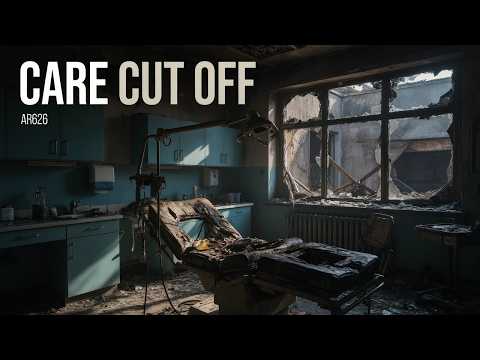
At Dobrobut, the upper floors housed its Academy and the lower floors outpatient clinical services. Both teaching and clinical areas burned. Courtyard-facing windows on the first through third floors were blown out, equipment was damaged, and the roof of a nearby four-storey residential building also caught fire. The network described this as the second attack on its Antonovycha site. 44 4 49
The medical-centre figures describe related but differently scoped groups. Dobrobut initially reported seven injured, including six employees. The State Emergency Service subsequently counted eight injured at and near the address, covering the medical centre and neighbouring residential building, including a rescued resident. On September 29, Dobrobut said ten people had received care following the strike. These figures must not be added together or treated as interchangeable final injury totals. 49 4 144
Nine of those ten people were already at home. One woman remained in intensive care in serious but stable condition. Being home does not mean the other nine were uninjured or needed no further treatment. No later public condition update for the woman was established before the September 30 cutoff. 144
The Antonovycha clinic remained closed in its September 29 update while damage was assessed and a recovery plan prepared. Dobrobut Academy activities continued online or at other locations, but no restored on-site patient services were established. An apparently reassuring reopening notice concerned August 29, 2025, after an earlier attack—not recovery from this September’s strike. 144 68
The distinction matters beyond correcting a date. Survival at a medical facility is not the same as preserving access to care. The fire ended; the interruption to services had not, in the latest dated operating update.
Kyiv’s wider casualty count also needs a boundary. The citywide injury figure progressed from 14 to 19 and then 24 during September 28. The later count included three children, with six people hospitalized, two of them children. These totals cover attacks across Kyiv, not just the academy and Dobrobut. They cannot be added to the site-specific counts or used to place all three injured children inside either institution. 57 20 22
Science, war and the targeting question
The academy headquarters was also a historic building: architect Oleksandr Beretti built it in 1851–52 as Countess Levashova’s boarding school for girls, and a third floor was added in 1891–92. Ukraine’s academy was founded in 1918; the building was transferred to it in February 1919 and became its Presidium seat that year. The attack damaged more than a set of offices, though the full repair requirements remain unknown. 120 121 124
We are not connected with the military. This is an attack on science. It is terrorism.
Zagorodny’s characterization is separate from proof of either weapon’s programmed aim. Some academy-affiliated institutes have supported wartime technologies, including drones and vehicle armour, as The New York Times reported on September 29. That does not establish a military operation inside the Presidium building, or make the clinic a demonstrated military objective. Russia’s Defence Ministry described strikes on fuel and telecommunications infrastructure and several data centres in Kyiv that day, but did not publicly name the Presidium, Dobrobut or Horbulin as intended targets. 41 112
What is established is the direct impact on scientific and medical premises during the day. The academy’s response was to demand consequences within the scientific world. Its September 29 appeal asked academies, universities, research centres, foundations, international scientific organisations and publishers “not to resume or legitimize institutional cooperation with Russian state scientific and educational institutions as long as Russia is waging an aggressive war against Ukraine.” That concerns institutional ties with Russian state bodies for the duration of the war, not every individual scientific contact. 53 51
Known
Unknown
- The second academy victim’s identity, subsequent conditions of Vyacheslav Bukalo and the woman in intensive care, and the timetable for repairs remain unestablished.
Next
- Watch for dated clinical updates, identification of the second victim, and a verified announcement restoring on-site patient services at Antonovycha.
As aired 17 lines
- Flames cut off staff inside Ukraine’s science academy, forcing them to escape through windows. Two people died and six were injured. A separate drone struck a nearby medical centre, interrupting patient care and leaving one woman in intensive care. With the academy rescue operation complete, what remains unresolved for the victims, and when can medical services return?
- Two Russian jet-powered drones struck different buildings several blocks apart on September twenty-eighth, twenty twenty-six. The first hit the National Academy of Sciences’ Presidium headquarters at fifty-four Volodymyrska Street, in Kyiv’s Shevchenkivskyi district, just before or around one-thirty in the afternoon. Roughly an hour later, another hit Dobrobut at forty Antonovycha Street, near Olimpiiska metro, in Holosiivskyi district. These were separate impacts, not two names for the same attack. The two deaths occurred at the academy. The initial claim that someone also died at the medical centre is not supported; all Dobrobut employees and visitors survived.
- The academy’s second and third floors were partly destroyed. Fire engulfed the upper levels of the three-storey headquarters, burning extensively above the first floor. Staff escaped through windows, and two people were brought down by ladder. The walls remained standing, but the damage was significant. This was an attack on the institution’s working-day headquarters, not evidence that every academy institute or laboratory had been destroyed.
- The academy death toll rose from one to two after rescuers recovered a second body from the rubble that evening. Injury counts moved from three through four and five to six. Six replaces the initial three; it does not mean six additional injuries. At twenty twenty-one, the public count still listed one death alongside six injuries. At twenty-three twenty-one, the death count had risen to two. Those are update times, not established times of death or body recovery. Firefighters extinguished the fire, and emergency rescue work was completed that evening. Initial fears that colleagues remained trapped were overtaken by that completed operation. Descriptions of recovery continuing on September twenty-ninth did not reflect the later official rescue status. Completion of rescue work does not mean the headquarters was repaired or normal operations resumed.
- Nataliia Mykolaivna Bukalo was one of the two people killed. She was forty-four, an assistant to academy first vice-president Volodymyr Horbulin, and had worked at the Presidium since twenty sixteen. Born on October nineteenth, nineteen eighty-one, in Buzaky in Volyn, she left a husband and daughter. Her husband, Vyacheslav Bukalo, was also seriously injured. The second person killed had not been publicly identified by September thirtieth.
- Horbulin survived with minor injuries from shattered glass. The drone struck a room one floor above his office, and he was already at home on September twenty-eighth. He is a former secretary of Ukraine’s National Security and Defense Council. His injuries and his assistant’s death do not establish that he was the intended target. Nor does confirmation of two deaths validate the early description of two deceased academicians. The academy did not confirm that both victims held that title; its subsequent statement described two people killed.
- Bukalo’s farewell was announced for September thirtieth at ten in the morning, Kyiv time, at nine Oranzhereina Street, with burial to follow in Volyn. By the information cutoff, September thirtieth at eight-fifteen UTC, the scheduled start had passed. Completion of the ceremony had not been verified.
- The damaged headquarters had served the academy since nineteen nineteen. Architect Oleksandr Beretti built it in eighteen fifty-one and fifty-two as Countess Levashova’s boarding school for girls. A third floor was added in eighteen ninety-one and ninety-two. The academy itself was founded in nineteen eighteen; the building was transferred to it in February nineteen nineteen and became its Presidium seat that year. The distinction matters: the institution’s founding and its occupation of this headquarters were separate events.
- Fire damaged both medical care and teaching space at Dobrobut. Its Academy occupied the upper floors, with outpatient clinical services below. Courtyard-facing windows on the first through third floors were blown out, and medical equipment was damaged. The roof of a nearby four-storey residential building also caught fire. The medical network described this as the second attack on its Antonovycha site. The consequences extended beyond putting out the flames: patients lost on-site access to a damaged clinic.
- Ten people had received care after the Dobrobut strike by September twenty-ninth, but that is not an interchangeable final injury count. The initial clinic tally was seven injured, including six employees. The emergency-service tally was eight injured at and near the address, covering the medical centre and neighbouring residential building, including a rescued resident. The later ten-person figure counts people receiving care. These groups must not be added together. Calling all ten injured, without preserving the care wording, would erase an important difference in scope.
- One woman remained in intensive care in serious but stable condition in the September twenty-ninth update. Nine of the ten people who received care were already at home. Being home does not establish that they were uninjured or needed no further treatment. No later public condition update for the woman was established before the September thirtieth cutoff.
- The Antonovycha clinic remained closed in its September twenty-ninth operating update. Damage assessment and recovery planning were underway, with no restored on-site services established. Dobrobut Academy activities continued online or at other locations. A reopening notice dated August twenty-ninth, twenty twenty-five, concerned recovery after an earlier attack. It cannot establish reopening after this September’s strike. No September twenty twenty-six reopening was verified.
- Kyiv’s citywide injury count rose from fourteen to nineteen and then twenty-four during September twenty-eighth. Nineteen injured, with six receiving hospital treatment, was an intermediate snapshot. The later count included three injured children, with six people hospitalized, two of them children. These figures cover attacks across Kyiv, not just the academy and Dobrobut. They cannot be added to the site-specific counts or used to place all three injured children inside either institution. Earlier nationwide totals of at least seven dead and more than fifty wounded also covered a much wider area; they were not Kyiv-only figures.
- Some academy-affiliated institutes have supported wartime technologies, including drones and vehicle armour. That broader research activity does not establish that a military operation was taking place in the Presidium building, that Horbulin was selected as a target, or that the clinic was a military objective. Calling the strike terrorism is a characterization separate from proof of either weapon’s programmed aim. The stated Russian targets that day were fuel and telecommunications infrastructure and several data centres in Kyiv. Neither the academy Presidium, Dobrobut nor Horbulin was publicly named as an intended target.
- The headquarters stands near the National Opera, St Volodymyr’s Cathedral, the German embassy and Ukrtelecom offices. Their proximity locates the impact in Kyiv’s central institutional district; it does not establish which building either drone was programmed to hit. Direct impacts on scientific and medical premises during the day are established. The precise intended aim of either weapon remains unknown.
- The academy is asking the international scientific community to withhold renewed or legitimized institutional cooperation with Russian state science and education while the war continues. Its September twenty-ninth appeal addresses academies, universities, research centres, scientific foundations, international scientific organisations and publishers. That is a demand concerning institutional ties with Russian state bodies, not a demand to sever every individual scientific contact. The academy had already cut cooperation with Russian scientific organisations and scientists in twenty twenty-two. The Russian academy’s membership in ALLEA, the European federation of academies, remained suspended.
- The immediate rescue uncertainty at the academy is resolved: a second victim was recovered and the emergency operation ended on September twenty-eighth. The remaining unknowns are the second victim’s identity, subsequent medical updates for Vyacheslav Bukalo and the woman in intensive care, and the scale and timetable of repairs. There is no verified date for patients to return to the Antonovycha clinic. Its staff and visitors survived, but its doors remained closed in the September twenty-ninth operating update.
Sources
144 sources82 outlets6 wire copies
dobrobut.com10
- Оновлення щодо наслідків російської атаки ❤️ Новини ММ «Добробут»
- Dobrobut on Antonovycha Temporarily Closed Due to the Aftermath of the Attack ❤️ News of the MN "Dobrobut"
- Dobrobut on Antonovycha Street Has Reopened ❤️ News of the MN "Dobrobut"
- Контакти — клініка «Добробут»
- Dobrobut Opens a New Large Family Clinic in the Heart of Kyiv ❤️ News of the MN "Dobrobut"
- Clinics of Dobrobut medical network :: MN «Dobrobut»
- ❤️ News of the MN "Dobrobut"
- "Добробут" на Антоновича тимчасово припинив роботу через наслідки обстрілу ❤️ Новини ММ «Добробут»
- Обновление о последствиях российской атаки ❤️ Новости МС «Добробут»
- Update on the Aftermath of the Russian Attack ❤️ News of the MN "Dobrobut"
Interfax-Ukraineinterfax.com.ua9
- First reported
- Eight injured near Dobrobut building in Kyiv, six at National Academy of Sciences; one killed – service
- Two academicians killed in strike on National Academy of Sciences – State Language Protection Commissioner
- Assistant to former NSDC chief Horbulin killed in strike on National Academy of Sciences; Horbulin himself injured – media
- Zaluzhny reports several killed in Russian strike on National Academy of Sciences building
- One woman killed, 3 injured in strike on NAS building – Klitschko
- National Academy of Sciences calls on global scientific community not to resume cooperation with Russian state scientific institutions
- Klitschko: Number of victims in Kyiv downtown grows to four, to 14 throughout the city
- Ukraine's National Commission for UNESCO condemns damage to National Academy of Sciences building caused by Russian attack
- Casualties, fatalities reported at UAV strike site in Kyiv's Shevchenkivskyi district – district administration
RBC-Ukrainerbc.ua5
- First reported
- Death toll rises after Russian strike on National Academy of Sciences building in Kyiv
- Russian drone strikes National Academy of Sciences building in central Kyiv
- Russian forces strike Dobrobut clinic in Kyiv
- Добробут у Києві атакувала Росія - заява Зеленського | РБК-Україна
- НАН України атакувала РФ 28 вересня - кількість загиблих зросла | РБК-Україна
ukrinform.net5
- First reported
- Russian strike on National Academy of Sciences building in central Kyiv kills one, injures three
- Russian strike on National Academy of Sciences building in central Kyiv kills one, injures five
- Ukrinform - Ukrainian National News Agency
- Strike on science academy in Kyiv: Ex-NSDC Secretary Horbulin injured, his aide killed
- Russian strike on Dobrobut medical center in Kyiv injures seven people
X (formerly Twitter)x.com5
- First reported
- A Russian strike against the building of the National Academy of Sciences of Ukraine. A rescue operation is underway: crews are putting out the fire and searching for people who may have been trapped inside. All services are deployed. Today in Kyiv, a pharmaceutical company and gas stations were also attacked; in Dnipro, a business center; and in other cities and regions, civilian facilities, businesses, and communications infrastructure were targeted as well. Sadly, people have been killed… My condolences to their families and loved ones. Russia will definitely face a response to this. And every one of Ukraine’s partners must see from this terror, from these strikes, that supporting Ukraine means truly supporting people’s lives – supporting the principle that terror must never be normalized, anywhere. Russia must be held accountable for all of this and face real consequences. I thank everyone who helps Ukraine!
- 🇷🇺🇺🇦 Russian drones struck Kyiv’s National Academy of Sciences Monday, killing at least two people, with recovery efforts at the site ongoing on Tuesday, according to Reuters. President Volodymyr Zelenskyy said Russian strikes killed at least nine people nationwide on Monday and wounded more than 80, including at a Kyiv medical facility, with separate strikes killing three people in Dnipro, killing another in Synelnykove, and wounding 32 in Zaporizhzhia. Russia’s Defence Ministry separately said it struck cargo vessels bound for Odesa and Chornomorsk along with telecom and data infrastructure in Kyiv, while Ukraine reported hitting Russian oil facilities in Krasnodar and two defense plants. Ukrainian President Volodymyr Zelenskiy claimed on Monday that more than 8,000 North Korean troops are currently on Russian territory and another 10,000 are being “selected for training and subsequent deployment to Russia,” citing “new data” on the buildup. Zelenskyy had s...
- Кілька днів тому Наталя Букало дзвонила та вітала мене з днем народження. І я досі не можу повірити, що вона загинула… Той клятий дрон серед білого дня влучив у будівлю Національної академії наук і забрав її життя. Хто хоч раз телефонував Володимиру Горбуліну, знав її голос. А всіх, хто приходив на зустріч, завжди зустрічали із посмішкою. Світла, сильна та щира, такою я памʼятаю Наталю. Мої співчуття родині, колегам та друзям… Світла пам'ять, Наталю. Говорив і з Володимиром Павловичем, для якого Наталя була рідною людиною. Побажав йому сил і як...
- I remember Natalia well. And I know how proud she was to work for Volodymyr Horbulin. My heart goes out to her family — and young daughter in particular. Just tragic.
- 😢🇺🇦❤️🇨🇦
UA.NEWSua.news4
- First reported
- Zelenskyy announced the number of casualties strike on Presidium of Academy of Sciences
- Kherson Bids Farewell to Fallen Police Officer Anatoliy Zagrodsky
- Medical provided an update on condition of those injured during attack on Dobrobut Clinic
- The Academy of Sciences reported on those killed and missing at the site strike
LIGA.netliga.net3
- First reported
- Russian attack on Kyiv on September 28: two academicians of the National Academy of Sciences of Ukraine killed | Ukrainian News
- Лікарня "Добробут" у Києві частково зруйнована через атаку РФ – семеро поранених | Новини України
- Атака РФ на Київ 28 вересня – загинули двоє науковців НАН України | Новини України
Ukrainian National News (UNN)unn.ua3
- First reported
- "Dobrobut" suspends operations after a Russian attack | УНН
- As a result of the strike on the National Academy of Sciences of Ukraine, former NSDC Secretary Horbulin was injured, and his assistant was killed | УНН
- The number of victims as a result of Russia’s attack on the National Academy of Sciences of Ukraine has risen — the body of a deceased person was found under the rubble | УНН
Censor.NETcensor.net2
wikipedia.org2First
Київ від минулого до майбутньогоkyivpastfuture.com.ua2
ABC listenabc.net.au1
Brit Briefbritbrief.co.uk1
CBS Newscbsnews.com1
- First reported
- Russian drones strike Kyiv science academy and hospital
Devdiscoursedevdiscourse.com1
dpa-international.com1
EUobservereuobserver.com1
Fine Day Radio 102.3 WNJDfinedayradio.com1
Forbes.uaforbes.ua1
hromadskehromadske.ua1
IMIimi.org.ua1
- First reported
- RFE/RL correspondent witnesses drone strike in Kyiv
International Science Councilcouncil.science1
LB.ualb.ua1
Naturenature.com1
news.cn1
NVnv.ua1
opendatabot.ua1
TASStass.com1
The Art Newspaper - International art news and eventstheartnewspaper.com1
The Guardiantheguardian.com1
The Irish Timesirishtimes.com1
The Japan Timesjapantimes.co.jp1
The Kyiv Independentkyivindependent.com1
The Starthestar.com.my1
The Straits Timesstraitstimes.com1
thetimesunion.com1
UAZMIuazmi.com1
Ukraine Top News | Ukraine news todayin.ua1
ukrinform.de1
UkrMedia Newsukrmedia.news1
UNITED24 Mediaunited24media.com1
Visnik Nacional noi academii nauk Ukrai ninasu-periodicals.org.ua1
ВУЕvue.gov.ua1
- First reported
- Президії Національної академії наук України будинок у Києві
Історична правдаistpravda.com.ua1
Межаmezha.net1
Новости Николаева cегодняkorabelov.info1
Прямий Онлайнprm.ua1
- First reported
- Russia strikes NAS in Kyiv: there are dead and injured

Source map
Follow the evidence behind this report. The map shows its connections; the links below open the sources cited in this article.
Source map loads as you read.
Revision log
- r1First published.