Report
P.E.I.’s fuel-tax break is real. The pump-price saving is still unclear.
P.E.I. has suspended its gasoline and diesel taxes through January. The levies are clear; the size of any resulting drop at Island pumps is not.
Transcript · LOADING
Story trackerDay 1
1 report25 outlets51 sources2 videos
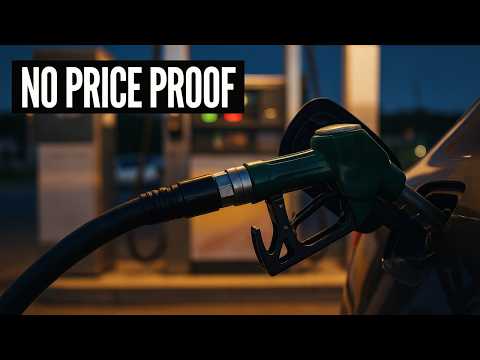
For an Islander filling a car, or a truck operator buying a tank of diesel, Prince Edward Island’s new fuel-tax break removes a charge on every litre. It does not, by itself, tell either customer how much less they will pay at the pump. Premier Rob Lantz announced the suspension on September 25, 2026. It began the next day and is set to run through January 31, 2027. The province has stopped collecting 8.47 cents a litre on gasoline and 14.15 cents on diesel during that period. 3
Key facts
The provincial break overlaps with a federal fuel-excise-tax holiday already in operation. Ottawa’s 10-cent-per-litre gasoline levy is also being kept off through January. Add that to P.E.I.’s 8.47 cents and the two suspended gasoline levies total 18.47 cents a litre. CTV News reports a four-cent federal diesel levy is suspended as well; adding that reported amount to P.E.I.’s diesel cut gives 18.15 cents a litre. The federal-government excerpts checked for this story did not independently confirm the four-cent diesel figure, so the diesel total rests in part on CTV’s reporting. 113
Those totals are arithmetic, not a receipt. A tax removed from a litre of fuel is not an independently measured fall of the same size in the retail price. Other parts of that price can change, and the evidence here does not establish a comparable set of regulated Island prices immediately before and after September 26. Calling 18.47 cents a guaranteed saving on every litre of gasoline would turn a known tax calculation into an unverified claim about what happened at the pump.
What the pump prices show
Prince Edward Island’s Island Regulatory and Appeals Commission regulates petroleum prices. Its available September 19 self-serve ranges were 214.9 to 216.1 cents a litre for regular gasoline and 283.4 to 284.5 cents for diesel. But September 19 was a week before the provincial suspension began, not the eve of the cut. Without comparable regulated prices for September 25 and 26, those ranges cannot show how much of the tax change reached customers. They establish how expensive fuel had been, not the size of the subsequent price change. 428
The diesel suspension has a clear value as a tax break for an operator buying large volumes of fuel, even while high diesel costs continue to affect trucking. Passing a saving along the freight chain is a different question. Business professor Ian Lee told CTV News he expected the effect of the tax reductions on consumers’ cost of goods to be trivial. That is his assessment, not a measurement of prices in a grocery store or proof that no business will benefit. 12
The public cost is less firmly pinned down than the per-litre rates. Secondary coverage has put forgone P.E.I. revenue at up to $12 million, but the material checked does not establish a provincial-government calculation, the period covered by that estimate or whether it accounts for the later reduced-rate phase. It is a reported estimate, not a confirmed final bill. The distinction matters: the measure eases a tax on fuel purchases while also giving up revenue that would otherwise go to the province. 2643
The break has an end date
Both full suspensions are set to end after January 31. Under the announced federal plan, the excise taxes return at half their regular rates from February 1 through March 31, 2027. That would put five cents a litre back on gasoline; using CTV’s reported regular diesel rate, it would put two cents back on diesel. The regular federal rates are scheduled to resume April 1 if the plan proceeds unchanged. This is a staged return, not a promise that fuel prices will rise by precisely those amounts on those dates. 13139
P.E.I. says its own tax will return at 50% of its previous rate in February. CTV News reports that the provincial phase-in begins February 1, but the checked excerpt of the province’s announcement does not independently establish that exact day. Nor does the available material verify when the province will restore its full gasoline and diesel tax rates. Islanders can see when the complete suspension is scheduled to end; they cannot yet see a verified full provincial restoration timetable. 31
There is a legislative qualification on the federal extension, too. Bill C-38, the Canadian Fuel Affordability Act, was introduced on September 21 and had passed second reading in the House of Commons on September 22. As of September 27 it was in committee, not enacted. That should not be confused with the federal tax holiday already operating: the legal instrument authorizing the existing holiday was not established in this check. The immediate Island tax cut is real; the precise pump-price benefit and the complete route back to regular provincial rates remain open questions. 4513
Known
Unknown
- The comparable September 25–26 pump-price change and the date P.E.I.’s full tax rates return are not established.
Next
- Watch for regulated price records and a complete provincial phase-in schedule.
As aired 10 lines
- Prince Edward Island has stopped collecting 8.47 cents a litre in gasoline tax. Its diesel tax is also suspended, and a federal fuel-tax holiday overlaps with both breaks. That matters to drivers filling cars and businesses buying diesel in large quantities. But how much of the removed tax has actually reached prices at Island pumps?
- The two suspended gasoline levies total 18.47 cents a litre: 8.47 cents provincial and 10 cents federal. For diesel, P.E.I. has removed 14.15 cents a litre. Adding the reported four-cent federal diesel levy gives 18.15 cents. That federal diesel amount was reported in coverage but was not independently confirmed in the federal-government material checked. These totals describe taxes kept off a litre of fuel—not a measured or guaranteed decline in the price a customer pays.
- Premier Rob Lantz announced the provincial suspension on September 25. It began September 26, 2026, and runs through January 31, 2027. The federal holiday was already operating when P.E.I. added its own break. For a driver, the distinction between a tax rate and a pump price matters: the two can change together, but one does not prove the size of the other.
- The Island Regulatory and Appeals Commission regulates petroleum prices. Its available September 19 self-serve ranges were 214.9 to 216.1 cents a litre for regular gasoline, and 283.4 to 284.5 cents for diesel. But September 19 is not the price immediately before the tax change. Without comparable regulated prices for September 25 and 26, there is no established before-and-after measure of how much relief appeared at pumps.
- The diesel break is particularly relevant to truck operators, whose fuel purchases can be large. Yet high diesel costs still affect trucking operations, and paying less tax on fuel does not automatically make groceries or other goods visibly cheaper. The assessed effect on consumers’ cost of goods is trivial; that is a business professor’s assessment, not an observed change in any store’s prices.
- There is a cost on the other side of the ledger. A reported estimate puts forgone provincial revenue at up to 12 million dollars. No verified provincial calculation establishes the estimate’s time period, how it was worked out, or whether it includes the later reduced-rate phase. The figure is therefore a possible revenue cost, not a confirmed final bill.
- The full suspensions are set to end after January 31. Under the federal plan, half the regular excise tax returns February 1 and remains through March 31. On the stated gasoline rate, that would put five cents a litre back on gasoline. On the reported diesel rate, it would be two cents a litre on diesel. The regular federal rates are scheduled to resume April 1 if the plan proceeds unchanged.
- P.E.I. also says its tax will return at 50 percent of its previous rate in February. February 1 has been reported as the start of that provincial phase-in, but the checked provincial announcement does not establish that exact day. Neither the duration of P.E.I.’s half-rate nor the date its full provincial rates return has been verified.
- The proposed federal extension is in Bill C-38, the Canadian Fuel Affordability Act. Introduced September 21, it passed second reading in the House of Commons on September 22 and was in committee as of September 27. It had not been enacted. That pending bill should not be mistaken for the federal holiday already operating; the legal instrument authorizing that existing holiday was not established in this check.
- So the answer to the pump-price question remains open. The provincial tax amounts are known, and the overlapping gasoline levies total 18.47 cents a litre. But without comparable regulated prices immediately before and after September 26, the amount of that relief that reached Island drivers at the pump has not been demonstrated.
Sources
51 sources25 outlets2 videos2 wire copies
princeedwardisland.ca6
- Province suspends provincial fuel tax to ease cost of living | Government of Prince Edward Island
- Gasoline Tax Rates | Government of Prince Edward Island
- Year Date Gasoline Diesel 2026 01-Jan-20 8.47 14.15 2025 01-Jan-20 8.47 14.15 2024 01-Jan-20 8.47 14.15 2023 01-Jan-20 8.47 14.15 2022 01-Jan-20 8.47 14.15 2021 01-Jan-20 8.47 14.15 2020 01-Jan-20 8.47 14.15 2019 01-Jan-19 9.68 15.83 2018 01-Jan-18 13.1 20.2 2017 01-Jan-17 13.1 20.2 2016 01-Jan-16 13.1 20.2 2015 01-Jan-15 13.1 20.2 2014 01-Jan-14 13.1 20.2 2013 01-Apr-13 13.1 20.2 2013 01-Mar-13 15.8 20.2 2013 01-Feb-13 15.8 20.2 2013 01-Jan-13 15.8 20.2 2012 01-Dec-12 15.8 20.2 2012 01-Nov-12 15.8 20.2 2012 01-Oct-12 15.8 20.2 2012 01-Sep-12 15.8 20.2 2012 01-Aug-12 15.8 20.2 2012 01-Jul-12 15.8 20.2 2012 01-Jun-12 15.8 20.2 2012 01-May-12 15.8 20.2 2012 01-Apr-12 15.8 20.2 2012 01-Mar-12 15.8 20.2 2012 01-Feb-12 15.8 20.2 2012 01-Jan-12 15.8 20.2 2011 01-Dec-11 15.8 20.2 2011 01-Nov-11 15.8 20.2 2011 01-Oct-11 15.8 20.2 2011 01-Sep-11 15.8 20.2 2011 01-Aug-11 15.8 20.2 2011 01-Jul-11 15.8 20.2 2011 01-Jun-11 15.8 20.2 2011 01-May-11 15.8 20.2 2011 01-Apr-11 15.8 20.2 2011 01-Mar-11 15.8 20.2 2011 01-Feb-11 15.8 20.2 2011 01-Jan-11 15.8 20.2 2010 01-Dec-10 15.8 20.2 2010 01-Nov-10 15.8 20.2 2010 01-Oct-10 15.8 20.2 2010 01-Sep-10 15.8 20.2 2010 01-Aug-10 15.8 20.1
- Gasoline Tax Regulations
- Gasoline Tax Act
- News | Government of Prince Edward Island
cbc.ca5
- Islanders will pay less at the pump starting Saturday as ...
- Federal government will extend gas tax holiday into 2027
- P.E.I. is pausing its fuel tax. Here's what that means for Islanders and the province
- Islanders will pay less at the pump starting Saturday as P.E.I. suspends provincial fuel tax | CBC News
- P.E.I. government projects $410M deficit, warns of tough choices ahead
parl.ca4
- Government Bill (House of Commons) C-38 (45-1) - First Reading - Canadian Fuel Affordability Act - Parliament of Canada
- C-38 (45-1) - LEGISinfo - Parliament of Canada
- Government Bill (House of Commons) C-38 (45-1) - First Reading - Canadian Fuel Affordability Act - Parliament of Canada
- C-38 (45-1) - LEGISinfo - Parliament of Canada
CTV News2First2 videos
CityNews Torontocitynews.ca1
CKPG Todayckpgtoday.ca1
ey.com1
National Newswatchnationalnewswatch.com1
nationalpostnationalpost.com1
Prime Minister of Canadagc.ca1
rcncanada.blogspot.com1Unverified host
Regfollowerregfollower.com1
WTN Globalworld-today-news.com1
Source map
Follow the evidence behind this report. The map shows its connections; the links below open the sources cited in this article.
Source map loads as you read.
Revision log
- r1First published.