Conflict · RAF FairfordContinuing story · report 2 of 2
Fairford’s bombers are home. All seven suspects are bailed. The alleged plot remains unproved.
Seven men are on police bail without reported charges. Twelve B-1B bombers have returned to America. The evidence connecting the two—and establishing an Iranian drone plot—remains undisclosed.
Transcript · LOADING
Continuing storyDay 11
2 reports119 outlets342 sources107 videos
Full story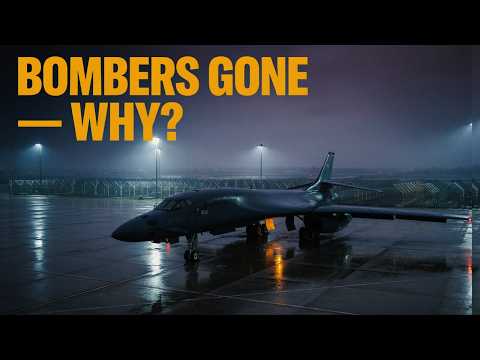

What changed since our last report
4 days later
Then
Rotation or threat? Trump's words break the Fairford story openWhat we said was still open
What the men were doing near the base, and what the petrol was for.
Still openThe men’s respective roles and the petrol’s purpose remain unexplained.
Any police update or charging decision, and Burnham's promised further statement.
Still openWhether the bombers return, and what a US carrier deployment does to the picture.
Still openNo verified bomber return is documented through October 9. The previously discussed carrier deployment remains unconfirmed and cannot resolve the Fairford threat assessment.
Now
Seven men are on police bail without reported charges. Twelve B-1B bombers have returned to America. The evidence connecting the two—and establishing an Iranian drone plot—remains undisclosed.
Twelve American bombers have gone home. Seven men arrested in the investigation around RAF Fairford are all on police bail, with no charges filed in NPR’s October 9 account. The military consequence is concrete; the alleged Iranian operation behind it remains unproved publicly. 280 2
In our October 6 broadcast, we reported six arrests, the bomber withdrawal and conflicting official explanations. Since then, police have arrested a seventh man and announced his release. Reporting has also supplied more elaborate descriptions of a possible drone threat—but not the public evidence needed to connect that scenario to the suspects.
Key facts
The latest suspect, a 22-year-old British national, was arrested in Westminster, central London, on October 6 on suspicion of preparing terrorist acts under Section 5 of the Terrorism Act 2006. Officers searched premises nearby. Counter Terrorism Policing’s update headed October 8 at 11:30 a.m. announced his release on police bail; that timestamp does not establish precisely when bail was granted. 18 19 307
The six previous suspects had already been bailed. NPR’s October 9 report retains the all-seven bail status and says no charges had been filed, superseding the six-arrest account NBC carried early on October 6. Arrest is not a charge; bail establishes neither guilt nor exoneration. Police say the investigation remains live, with multiple lines of inquiry, and are still determining motive. 1 2 18 15
What the vans actually establish
The investigation began on September 27 after suspicious vans were reported near Fairford in Whelford, Gloucestershire. Residents were evacuated during a major incident response. Five British men from London, aged 23–25, were arrested on suspicion of explosives offences and preparing a terrorist act, then bailed on September 28. These are the original events, not a newly discovered attack. 217 243
As we reported on September 30, examinations found petrol but no improvised explosive devices. Earlier police findings also said London searches produced no evidence of a viable device. The fuller reporting included a suspect’s call to police before a farmer’s later call: describing the farmer as raising the alarm does not establish that hers was the first notification. 243 244 86
The petrol’s purpose remains unexplained. It could serve as an accelerant, but its presence does not prove an intended fire, a target or a bomb. Equally, a negative explosives search does not establish that no offence occurred—or settle whether drones were involved.
A sixth man, described as a UK-Iranian dual national, was arrested in Westminster on October 1 and reported bailed by October 3. BBC’s October 1 account gave his age as 27; The Telegraph’s same-day account gave 25, as did both outlets’ October 3 coverage. A retrieved October 1 police excerpt also clearly says 25, although the identifying sentence is incomplete. No correction history explains the discrepancy. 62 333 332 310 331
NPR’s October 9 discussion described five British nationals and two British-Iranian nationals. The other available descriptions specifically identify only the sixth suspect as UK-Iranian and the seventh as British. British nationality does not exclude another nationality, but a second dual national has not been identified here. Seven arrests are established; that exact nationality breakdown is not. Nationality itself is no evidence of Iranian direction. 2 310 18
The aircraft moved; explanations did not
All 12 B-1B Lancers departed over the course of October 4. Fairford had served as a forward operating base for aircraft used in the conflict with Iran. The Pentagon confirmed their return to U.S. home stations. The Guardian’s October 5 count of at least 10 departures was an earlier account of the same withdrawal, not another group to add to the twelve. 280 314 22
Speaking outside the White House on October 5, Donald Trump said the aircraft “didn’t fly out by accident,” citing “some threats.” He also said: “So we moved them around a little bit. Not very far”. That description sits awkwardly beside the confirmed transatlantic return, rather than a short move to another British airfield. 336 28 340 314
Vice President JD Vance called the move “out of an abundance of caution.” Secretary of State Marco Rubio instead emphasized regular rotations and resource reallocation, declining to tie the redeployment directly to the Fairford incident. That qualification is narrower than proving there was no connection. Threat-driven precaution and routine rotation remain unreconciled explanations. 317 339 20
The intelligence accounts vary too. NPR reported on October 7 that an unnamed U.S. official described a credible Iranian threat potentially involving drones. NBC’s October 6 coverage cited two officials saying a possible Iranian drone attack partly informed the withdrawal, while a third said imminence was unclear. PBS’s October 6 account cited an official describing a possible imminent attack before the earlier arrests. Their timing and urgency have not been reconciled. 6 15 9
The more detailed scenarios describe bombers and American personnel as potential targets, with multiple drones or a swarm attack among the concerns. Comparisons with Ukraine’s June 2025 drone attack against Russian bomber bases explain the vulnerability officials feared; they do not demonstrate that an equivalent operation was assembled in England. 13 41 5
Channel 4’s October 6 intelligence account described the arrested men as unwitting accomplices directed by an alleged agent linked to Iran’s Islamic Revolutionary Guard Corps. It reported an uncaught agent, a continuing manhunt and possible attacks from several directions. Those are unconfirmed descriptions, not police findings about the men’s knowledge, roles or culpability. 14
On October 8, Channel 4’s Mark Urban said no drone evidence had been found at Fairford and that the intelligence’s credibility and reliability were not known precisely. Former national security adviser Mark Lyall Grant tentatively assessed Iranian involvement as potentially traceable. Neither assessment supplies a publicly demonstrated operational plan or a physical link to the vans. 3
Prime Minister Andy Burnham’s September 30 allegation of “strong indications” that Iran played a part remains unsupported by publicly supplied evidence here. Trump’s later assertion that Washington knew who made the threat does not independently substantiate it. Iran denies involvement. 70 28 2
A precaution with operational consequences
The British government said Fairford was safe. WRAL’s October 6 account said American personnel remained after the bombers left; no later staffing inventory is established. U.S. European Command declined to discuss intelligence and said it would continue assessing threats. Removing aircraft did not establish that the base was abandoned or a threat had ended. 272 17 18
Retired General Charles Wald considered withdrawal sensible and said the bombers could operate from America. Hudson Institute analyst Timothy Walton assessed that it allowed more significant maintenance but reduced potential sustained strike capacity against Iran. These are operational assessments, not measured losses: no actual sortie reduction, additional cost or delay has been quantified. 10 315
A commander can reasonably take precautions before intelligence becomes courtroom evidence. But that does not turn the precaution into proof of the alleged plot. Fairford’s unresolved story is the gap between a consequential military decision and the public account of what justified it.
As aired 31 lines
- On October 6 we reported vans containing petrol. Now seven men are on bail.
- The United States has sent home all twelve bombers from the same base, while the police investigation continues without announced charges. What threat drove that military decision, and how does it connect to the men arrested near RAF Fairford?
- Police arrested the seventh suspect in Westminster, central London. He's a twenty-two-year-old British national, detained on October 6 on suspicion of preparing terrorist acts. Officers also searched premises in the area.
- The arrest count rose from six to seven. Police announced the latest man's release on October 8, and all seven are now on bail. No charges have been announced through October 9.
- Police arrested the latest man under the Terrorism Act's provision covering preparation of terrorist acts. Bail leaves the men under investigation. It doesn't settle guilt or clear them. Police are still pursuing multiple lines of inquiry and determining motive.
- Three suspicious vans brought a major incident response to Whelford on September 27. Police evacuated residents near the base. Five British men from London, aged twenty-three to twenty-five, were arrested at the scene.
- Officers suspected explosives offences and preparation of a terrorist act. The five men were bailed on September 28. One suspect had called police before a farmer's later call about the vans. Nobody has explained what prompted the suspect's call.
- Police recovered petrol from the three vans, but found no improvised explosive devices. Earlier London searches also found no evidence of a viable device. Police haven't explained what the petrol was intended for.
- Petrol can fuel a fire, but the men’s purpose remains unknown. The explosives searches also leave the separate drone question open. Police included possible foreign-state involvement among the lines of inquiry.
- The sixth suspect, described as a UK-Iranian dual national, was arrested in Westminster on October 1 and bailed by October 3. The seventh arrest followed on October 6. October 8 marks the announcement of his release.
- Police's October 1 identification gives the sixth man's age as twenty-five. An earlier description gave twenty-seven. Nobody has explained that discrepancy, which concerns the same suspect.
- The exact nationality breakdown is also unsettled. A later description counted two British-Iranian dual nationals, but only the sixth suspect has been specifically identified that way. Describing the others as British doesn't settle whether they hold another nationality. Nationality alone tells us nothing about who directed them.
- All twelve American B-1B Lancer bombers left RAF Fairford over the course of October 4. They'd used the base for operations in the conflict with Iran. The Pentagon confirmed their return to home stations in the United States.
- Earlier accounts counted at least ten departures. The fuller count is twelve aircraft in that same withdrawal. The return to America had already happened by October 6.
- Donald Trump said, “So we moved them around a little bit. Not very far”. The Pentagon confirmed a transatlantic return to American home stations. All twelve B-1B bombers left the British base.
- Trump said the bombers “didn’t fly out by accident” and cited “some threats”. Speaking outside the White House on October 5, he said Washington knew who made the threat. He linked it to Iran without identifying the people responsible.
- JD Vance called the withdrawal “out of an abundance of caution” to protect American personnel. Marco Rubio emphasized regular rotations and resource movements. He declined to tie the redeployment directly to the earlier Fairford incident.
- Vance also invoked a claim that Iran had engaged in terrorism for forty-nine years as his argument for precaution. Rubio's refusal to make a direct link leaves room for a connection. The officials haven't reconciled their explanations.
- Prime Minister Andy Burnham had said on September 30 there were “strong indications” Iran played a part. He didn't publicly supply the supporting evidence. Iran denied involvement. Trump's later allegation also came without disclosed evidence establishing responsibility.
- A U.S. official described a credible Iranian threat potentially involving drones. Two other American officials said a possible drone attack partly informed the withdrawal. The more detailed scenario involved multiple drones targeting bombers and potentially American personnel.
- The urgency differs across those descriptions. One account described a possible imminent attack before the earlier arrests. Another official said imminence was unclear, and described a precaution because the bombers could operate elsewhere. The underlying intelligence hasn't been made public.
- The multiple-drone scenario drew comparisons with Ukraine's June 2025 attack on Russian bomber bases. That comparison explains the vulnerability officials feared. No physical drone evidence has been publicly shown connecting such an operation to the three Whelford vans.
- A more elaborate intelligence account described the arrested men as unwitting accomplices directed by an alleged agent linked to Iran's Revolutionary Guard. It said that agent hadn't been caught and a manhunt was continuing. Police haven't confirmed that account.
- That scenario envisaged drone attacks from multiple directions, possibly followed by further plots. The alleged agent's identity and relationship to the seven men remain unknown. Describing the men as unwitting leaves their actual knowledge and intentions unresolved.
- Former national security adviser Mark Lyall Grant tentatively assessed that Iranian involvement appeared potentially traceable. By October 8, the newer assessment still described uncertainty over the intelligence's reliability. No public evidence has proved Iranian direction or an operational drone plan.
- The bombers' destination is clear. The connection between their withdrawal, the vans and any Iranian-directed activity remains unresolved. Police have added an arrest and released the seventh man, without publicly explaining the motive or each suspect's role.
- The British government said Fairford was safe. American personnel remained at the base in the October 6 account, after the bombers left. U.S. European Command said it would keep assessing threats and take appropriate measures to protect personnel and bases.
- The command declined to discuss intelligence and said American forces remained at their highest state of readiness. Police haven't announced a next court date or bail-return date. No bomber return to Fairford has been confirmed through the October 9 cutoff.
- Retired General Charles Wald considered withdrawal a sensible precaution and said the bombers could fly from America when needed. RUSI analyst Christoph Bergs assessed that redeployment reduced the ability to increase combat flights against Iran quickly.
- The Pentagon has said B-1, B-2 and B-52 crews can conduct global precision strikes from the continental United States. Wald's suggestion that the suspicious activity might have been a dry run was his speculation about the men's intent.
- Hudson Institute analyst Timothy Walton assessed that withdrawal allowed more significant maintenance, but reduced potential sustained strike capacity against Iran. Those are operational assessments. Nobody has quantified an actual loss of flights, an extra cost or a delay.
Sources
342 sources119 outlets107 videos8 wire copies
BBC Newsbbc.com2717 videos
- First reported
- Dual UK–Iranian national arrested in expanding RAF Fairford terror investigation
- UK believes Iran involved in RAF Fairford incident, Burnham says
- Police declare major incident at UK's Fairford air base, used by US air forces
- Men held in major incident near RAF Fairford as homes evacuated
- One of the five men arrested near RAF Fairford called 999 himself
- RAF Fairford: Timeline of the incident and investigation
- Burnham: 'Strong indications' Iran involved in RAF Fairford incident
- Donald Trump says a 'threat' led US to move bombers from RAF Fairford
- US removes all bombers from RAF Fairford base - BBC
- Seventh man bailed in connection with RAF Fairford incident
- Fighting intensifies between Iran-backed Houthis and Saudi-led government forces in Yemen · video
- RAF Fairford update as British national arrested in connection with incident · video
- Trump says “threats" to US bombers led to withdrawal from UK airbase · video
- Alleged Flydubai hijacker was a ‘lone wolf’ say reports and other stories | Global News Podcast · video
- Why has the US removed all of its bombers from RAF Fairford? · video
- US bombers withdraw from Fairford airbase · video
- US pulls bombers from UK air base after suspected terror plot · video
- Was our rural village at the centre of a terror plot? · video
- Donald Trump threatens to "annihilate" Iran again. But when? · video
- Andy Burnham says RAF Fairford airbase incident was linked to Iran · video
- Could the UK really rejoin the EU? | BBC Newscast · video
- What was the suspected plot to attack RAF Fairford? | The Global Story · video
- Iran's Revolutionary Guards encourage Americans to reject Donald Trump's policies · video
- 5 terror arrests at airbase used by US bombers - possible Iran link investigated · video
- RAF Fairford incident: US military 'working closely' with UK · video
- Counter-terror police lead investigation into major incident near RAF base, officials say · video
- Five men arrested as counter-terror police investigate major incident near RAF Fairford · video
The Independentindependent.co.uk264 videos
- First reported
- Sixth man arrested in connection with suspected RAF Fairford terror plot
- ‘Strong indications’ Iran played role in suspected Fairford terror plot, PM says
- Five men arrested over RAF Fairford ‘bomb plot’ are British nationals, police say
- Police investigate whether Iran linked to suspected RAF base terror plot
- Counter-terrorism police leading inquiry after explosive arrests near RAF base
- Men arrested under Explosives Act as villagers evacuated near RAF Fairford
- Major incident declared near RAF Fairford as bomb squad called out and multiple men arrested
- Men arrested under Explosives Act as villagers evacuated near RAF Fairford
- Residents evacuated from Gloucestershire village as major incident declared near RAF base
- Men arrested under Explosives Act as villagers evacuated near RAF Fairford
- RAF Fairford: What happened and who is behind the alleged terror plot?
- Counter-terrorism police leading inquiry after explosive arrests near RAF base
- Men arrested over RAF Fairford ‘bomb plot’ released on bail
- Questions surround counterterror probe into US air base after suspects were freed on bail
- RAF Fairford suspected terror plot involved ‘a foreign actor’, says Marco Rubio
- Marco Rubio claims suspected terror plot at UK-US airbase ‘clearly involved a foreign actor’
- RAF Fairford suspect called police an hour before farmer raised alarm
- Burnham says ‘strong indications’ Iran played part in suspected RAF Fairford bomb plot
- US bombers pulled from RAF Fairford in face of ‘some threats’, says Trump
- Sixth man arrested over suspected RAF Fairford terror plot bailed
- Seventh suspect bailed in connection with RAF Fairford incident
- US bombers pulled from RAF Fairford in face of ‘some threats’, says Trump
- Trump says ‘threats’ led to US decision to remove bombers from RAF Fairford · video
- No homemade bombs found in RAF Fairford investigation say police · video
- RAF Fairford: What happened and who is behind the alleged terror plot? · video
- Trump says terror plot suspects ‘looking to do big damage’ after arrests near RAF base used by US · video
BBC Newsbbc.co.uk19
- First reported
- British national arrested in connection with RAF Fairford incident
- What prompted the US bombers to leave RAF Fairford?
- Trump says 'threat' led US to pull bombers from RAF Fairford
- US removes all bombers from RAF Fairford base
- UK-Iranian dual national arrested over RAF Fairford incident, police say
- UK believes Iran involved in RAF Fairford incident, Burnham says
- Watch: Were the RAF Fairford arrests 'pure luck'?
- What we know about RAF Fairford counter-terror probe
- Men arrested and houses evacuated in major incident near RAF Fairford
- Fosse Cross Recycling Centre reopens after controlled explosion
- My 999 call foiled RAF Fairford plot, farmer tells BBC
- RAF Fairford: 'Quantity of petrol' but no explosives found in three vehicles
- How did the RAF Fairford incident go from 'suspected bomb plot' to police bail?
- RAF Fairford: A timeline of the incident and investigation
- Residents left 'like sitting ducks' amid RAF Fairford incident
- RAF Fairford incident involves 'foreign actor', says Rubio
- No 10 says RAF Fairford is 'safe' after US withdraws bombers
- Seventh man bailed in connection with RAF Fairford incident
- UK-Iranian dual national arrested over RAF Fairford investigation bailed
Fox Newsfoxnews.com129 videos
- First reported
- 5 RAF Fairford terror plot suspects released on bail in Britain
- U.K. arrests five men near RAF Fairford in suspected terror plot with possible Iran link
- UK police arrest 'explosive' suspects near US airbase, key to Iran war
- JUST IN: Officials feared Iranian DRONE ATTACK before bombers pulled from UK base · video
- 7th suspect ARRESTED in alleged UK base terror plot · video
- FlyDubai attack: Prosecutors eyeing DEATH penalty for suspect · video
- Jack Keane: This is TROUBLING · video
- Trump announces the withdrawal of American troops from Iraq is completed · video
- UK PM says there are 'strong indications' Iran was involved in suspected airbase terror plot · video
- BREAKING: Suspected plane attacker in custody · video
- NEW DETAILS: Farmer alerted police to masked men in alleged terror plot · video
- Alleged terror plot FOILED near military base in UK hosting US assets · video
The Guardiantheguardian.com12
- First reported
- Why did the US rush to withdraw bombers from RAF Fairford? - The Latest
- Not since 9/11 has the UK faced such a security crisis – and threat to our liberal principles | Gaby Hinsliff
- US bombers pulled from RAF Fairford base after suspected terror plot
- Suspect in RAF Fairford case called police to report incident
- Counter-terror police investigate Iran link over suspected bomb plot at RAF base used by US
- RAF Fairford live updates: Five men arrested over suspected bomb plot are UK nationals from London, say counter terror police
- Five men arrested at RAF Fairford are all UK nationals from London, say police | UK news
- Counter-terrorism police investigate ‘major incident’ near RAF Fairford
- UK security forces were aware of RAF Fairford suspected bomb plot, hints defence secretary | UK news
- Rubio says foreign actor was ‘clearly’ behind suspected RAF Fairford bomb plot | UK news
- ‘Strong indications’ that Iran played role in RAF Fairford incident, says Burnham | UK news
- No 10 insists RAF Fairford is safe after US withdraws its bombers from base | US military
Sky News1111 videos
- First reported
- US bombers left UK over 'specific threat', says Donald Trump · video
- What is Operation Spiderweb and could it happen in the UK? · video
- What open-source intelligence tells us about the US bomber withdrawal from RAF Fairford · video
- Security expert analyses pressure on security services following RAF Fairford incident · video
- Pentagon's 'hasty' decision to pull US bombers out of RAF Fairford: What we know · video
- BREAKING: US takes all bombers out of RAF Fairford · video
- PM calls COBRA meeting over 'terror plot', as police announce suspects will be released on bail · video
- Men held over suspected RAF Fairford terror plot are UK nationals from London · video
- Trump says more information on Fairford terror suspects coming 'very soon' · video
- Terror probe latest updates as suspects are pictured and robot fires at van · video
- Five men held on suspicion of preparing act of terror near RAF base · video
ABC Newsabcnews.com106 videos
- First reported
- UK releases five terror suspects on bail near RAF Fairford
- UK police evacuate homes near air base used by US and detain men on suspected explosives offensives
- UK police arrest several under explosives act in 'major incident' near US air base
- US removes bombers from UK base after suspected plot
- Isaias Strengthens Into First Hurricane of the Atlantic Season. What You Need to Know - October 8 · video
- US Monitors Suspected Plague Case After Russian Worker Dies. What You Need to Know - October 5 · video
- Good Morning America Full Broadcast — Monday, October 5, 2026 · video
- Start Here Sept. 28 | The Alleged Terror Plot Near a UK Air Base · video
- ABC World News Tonight with David Muir Full Broadcast - Sept. 27, 2026 · video
- Several people arrested in 'major incident' near US air base, British police say · video
Bloomberg Television1010 videos
- First reported
- Trump on Suspected Russia Plague: In Very Deep Discussions · video
- Wald Says RAF Fairford B-1 Move Is Depicted Out of Context · video
- Sen. Warner Says Senate Not Briefed On B-1 Bomber Move · video
- US Moves Bombers From UK Airbase as Threats Linger · video
- Oil Rise Piles More Pressure On Bonds · video
- UK Police Investigate Potential Terror Incident · video
- Iran Holds Firm on Hormuz, US-China Tariff Cuts Take Shape · video
- Stocks Fall, Oil Rises as Iran Refuses to Soften Demands; US, China to Cut Tariffs · video
- Trump Rejects Iran's Hormuz Offer as US Borrowing Costs, Oil Rise · video
- Burnham Faces First Labour Conference as PM · video
Gloucestershire Livegloucestershirelive.co.uk10
- First reported
- 'Risk of death' from illegally stored fireworks as Cheltenham firm hit with £25k fine
- RAF Fairford arrests update as counter-terror probe disruption continues
- RAF Fairford evacuations update as nearly 30 stay in hotel
- RAF Fairford latest as five in custody over terror probe
- 8 key facts we learned from RAF Fairford evening press conference
- RAF Fairford 'terror plot': Everything we know and how events unfolded
- RAF Fairford terror plot ‘looking to do big damage’, Donald Trump says
- 999 caller has only ‘partial picture’ of RAF Fairford incident, says Streeting
- Police investigating whether Iran linked to RAF Fairford terror probe
- RAF Fairford: Counter-terror police reveal what was found in vans
Counter Terrorism Policingpolice.uk8
- First reported
- How to report possible terrorist activity | Gloucestershire Constabulary
- Tell us about possible terrorist activity | Gloucestershire Constabulary
- Update on RAF Fairford investigation
- Counter Terrorism Policing leading investigation following Whelford arrests | Gloucestershire Constabulary
- Update on RAF Fairford investigation - 16:00 28 September 2026
- Thank You to local community following arrests in Whelford | Gloucestershire Constabulary
- Man bailed in RAF Fairford investigation
- Update on RAF Fairford investigation – 17:30 01 October 2026
NBC Newsnbcnews.com86 videos
- First reported
- Britain believes Iran was involved in incident near air base used by U.S., Prime Minister Andy Burnham says
- Men arrested on suspicion of explosives offences near U.S. air base in Britain as vehicles searched
- Trump says U.S. bombers pulled from British base due to threats · video
- Current with Christine Romans – Oct. 6 | NBC News NOW · video
- Current with Christine Romans – Oct. 5 | NBC News NOW · video
- U.S. is 'studying' role Iran may have played in air base incident in U.K., Trump says · video
- NBC Nightly News Full Episode - Sep. 27 · video
- Suspected terror attack thwarted near U.S. air base in U.K. · video
The Telegraphtelegraph.co.uk73 videos
- First reported
- Vance: US pulled bombers from RAF Fairford over Iran threat
- Sixth man bailed over suspected RAF Fairford terror plot
- RAF terror plot suspect ‘phoned the police himself’
- www.telegraph.co.uk
- Saudi deploys 100 fighter jets in Yemen blitz after Iran’s Houthis attack oil | war latest news · video
- Trump digs in on Iran blockade & how the Houthis outmanoeuvred Saudi Arabia in Yemen · video
- Trump says ‘bomb plot’ suspects planned ‘big damage’ to UK base for Iran bombers | war latest news · video
CBS Newscbsnews.com62 videos
- First reported
- 5 British men arrested near U.K. air base used by U.S. forces released on bail, police say
- U.K. believes Iran "played a part" in incident near RAF Fairford base used by U.S. forces, prime minister says
- U.K. police release 7th man arrested over RAF Fairford incident on bail
- Dual U.K.-Iranian national released on bail after arrest over ...
- Farmer apparently warned about suspects in U.K. air base terror plot being linked to Iran · video
- Trump reacts after apparent terror plot near U.K. air base used by U.S. forces · video
CNNcnn.com63 videos
- First reported
- UK PM cites strong indications Iran involved in RAF Fairford security incident
- US removes all Air Force bombers from UK base following new threat | CNN Politics
- Rubio says ‘foreign actor’ involved in alleged terror plot targeting British base used by US
- US pulls all bombers from UK base after new threat · video
- US base incident, oil flows through Hormuz & more | Experts on Iran · video
- 5 arrested in possible terror plot near British base used by US bombers · video
NPRnpr.org51 video
- First reported
- U.S. moves long-range bombers from U.K. And, Israel allegedly warned before Oct. 7
- Trump weakens fuel efficiency standards. And, Cornell fraternity rape case reopened
- Morning news brief
- Multiple arrests on suspicion of explosives offenses near U.K. base used by U.S. forces
- German spymaster / U.K. drone fears / Musk on Pentagon project? · video
The Irish Timesirishtimes.com5
- First reported
- Five men arrested at UK airbase are all UK nationals from London, say police
- Counter-terrorism police arrest several men near UK airbase used in US strikes
- Suspect in RAF base terror investigation called police to report incident
- Behind the mystery that first set off fears of Iranian threats at a UK military base
- Iranian drone threat prompted withdrawal of US aircraft from British airbase
UK Defence Journalukdefencejournal.org.uk5
ABC listenabc.net.au4
- First reported
- 'Strong indications' Iran involved RAF Fairford incident, UK prime minister says - ABC News
- Men accused of planning terrorist attack near RAF base used to strike Iran - ABC News
- Major incident declared at Fairford air base used by US Air Force - ABC News
- UK police say no explosives found after five arrested over suspected air base plot - ABC News
Al Jazeeraaljazeera.com4
- First reported
- UK police evacuate homes near RAF Fairford airbase used by US
- ‘Terror’ incident near RAF base used for Iran war: What we know | Military News
- US withdraws B-1 bomber aircraft from UK's Fairford base amid ...
- Bail for RAF base suspects suggests no evidence of ‘terror’, say analysts | US-Israel war on Iran News
FRANCE 24 English44 videos
- First reported
- Five suspects arrested in explosives case near UK airbase were British nationals • FRANCE 24 · video
- UK: Police arrest 5 on suspicion of preparing a terrorist act • FRANCE 24 English · video
- Major incident at UK airbase used by US • FRANCE 24 English · video
- UK: Several arrested as bomb disposal team examines vehicles • FRANCE 24 English · video
The Athleticnytimes.com4
- How RAF Fairford in a Quiet Corner of England Became a U.S.-Iran Flashpoint - The New York Times
- Possible Terrorist Plot at RAF Fairford Air Base in U.K.: What We Know - The New York Times
- Rubio Says Incident at UK Air Base RAF Fairford ‘Clearly Involved’ a Foreign Actor - The New York Times
- No Bombs Found in U.K. Case, but Officials Say Threat to Bases Is Real - The New York Times
The Hillthehill.com43 videos
- First reported
- UK airbase plot expands fears of Iran’s military capabilities
- US pulls bombers from UK airbase over potential Iranian drone threat · video
- US pulls bombers from UK airbase over potential Iranian drone threat · video
- What to know about evacuation of US B-1 bombers from RAF Fairford · video
C-SPAN33 videos
Channel 4 News33 videos
Daily Mirrormirror.co.uk3
- First reported
- RAF Fairford live: Major incident declared as several men arrested and homes evacuated - The Mirror
- RAF Fairford 'terror plot' suspects released on bail as cops give 'foreign state' update - The Mirror
- RAF Fairford police have 'a lot of secret intelligence' after suspected terror plot - The Mirror
DW News33 videos
GB Newsgbnews.com3
ABC News (Australia)22 videos
Associated Press22 videos
aviationweek.com2
CBC News22 videos
CNAchannelnewsasia.com2
euronewseuronews.com21 video
Gloucester News Centregloucesternewscentre.co.uk2
Joe.co.ukjoe.co.uk2
Manchester Evening Newsmanchestereveningnews.co.uk2
PBS NewsHour22 videos
- First reported
- PBS News Hour full episode, Oct. 6, 2026 · video
- PBS News Hour full episode, Oct. 5, 2026 · video
Reuters22 videos
Scripps News22 videos
The Straits Timesstraitstimes.com2
aawsat.com1
- First reported
- Security Increased at US Fairford Air Base in England
ADS Advanceadsadvance.co.uk1
- First reported
- US "rushes" B-1 bombers home from RAF Fairford
AFP.comafp.com1
- First reported
- US withdraws all bomber aircraft from UK airbase
Air & Space Forces Magazineairandspaceforces.com1
- First reported
- All US B-1 Bombers Leave RAF Fairford in Hasty Departure
Birmingham Livebirminghammail.co.uk1
- First reported
- Whelford 'major incident' declared live as homes evacuated
BostonGlobe.combostonglobe.com1
Breaking Defensebreakingdefense.com1
breakingthenews.net1
Cedar Newscedarnews.net1
cotswold.gov.uk1
counterterrorbusiness.com1
CP24cp24.com1
- First reported
- U.S. bombers moved from U.K. base after ‘threats’: Trump
CTV News11 video
Daily Maildailymail.com1
Devdiscoursedevdiscourse.com1
Express.co.ukexpress.co.uk1
Geopolitikigeopolitiki.com1
Global Banking & Finance Reviewglobalbankingandfinance.com1
gloucestershire.gov.uk1
gloucestershirepolicearchives.org.uk1
Guardian News11 video
- First reported
- Five arrested in UK on terrorism charges near RAF base used by US military, police say · video
gulfnews.com1
https://www.wlfi.comwlfi.com1
HuffPosthuffpost.com1
India Todayindiatoday.in1
International Business Times UKibtimes.co.uk1
Iran International | Iran Internationaliranintl.com1
ITV News11 video
- First reported
- Watch as US bombers leave RAF Fairford - despite No 10 insisting it's safe · video
La Voce di New Yorklavocedinewyork.com1
LBClbc.co.uk1
Los Angeles Timeslatimes.com1
MEAWW Newsmeaww.com1
morningchronicle.co.uk1
MS NOW11 video
- First reported
- 'Absolutely jaw-dropping': U.S. Ambassador says Trump offered to sell arms to China · video
News Channel 3-12keyt.com1
Newswavnewswav.com1
- First reported
- Men arrested over RAF Fairford ‘bomb plot’ released on bail
Newsweeknewsweek.com1
Red Hot Singaporeredhot.sg1
RNZrnz.co.nz1
SBS News11 video
South China Morning Postscmp.com1
- First reported
- Trump says US moved bombers from UK airbase after threats
STV Newsstv.tv1
Swindon 24 | Swindon Newsswindon24.co.uk1
The Globe and Mailtheglobeandmail.com1
The Jerusalem Post | JPost.comjpost.com1
The Jewish Chroniclethejc.com1
The Republic Gazetterepublicangazette.com1
The Times of Indiaindiatimes.com1
thegistnotes.com1
ThePrinttheprint.in1
TIMEtime.com1
Türkiye Todayturkiyetoday.com1
uknip.co.uk1
UPIupi.com1
WBAL News Radiowbal.com1
Western Telegraphwesterntelegraph.co.uk1
wikipedia.org1First
- First reported
- Gloucestershire Constabulary
Wiltshire 999swiltshire999s.co.uk1
WRAL11 video
- First reported
- Threats prompt U.S to pull back bombers · video
WSLSwsls.com1
Source map
Follow the evidence behind this report. The map shows its connections; the links below open the sources cited in this article.
Source map loads as you read.
Revision log
- r1First published.