Conflict · Nuclear cooperation
British escorts join French nuclear rehearsal—not a shared nuclear force
RAF Typhoons escorted French Rafales rehearsing a nuclear strike over the Mediterranean. No nuclear weapons were involved, and closer coordination does not mean a shared nuclear force.
Transcript · LOADING
Story trackerDay 2
1 report26 outlets27 sources
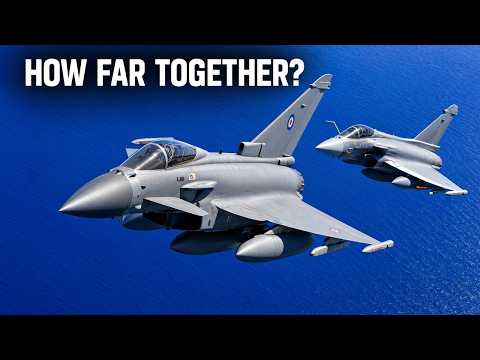
British fighter jets escorted French aircraft rehearsing a nuclear strike over the Mediterranean Sea. No nuclear weapons were involved, the two countries’ defence ministries said. The RAF’s job was to accompany the French strike aircraft—not to deliver a nuclear weapon. 1 13
The exercise, named Rummy, brought Royal Air Force Typhoons into a French nuclear air exercise for the first time. French Rafales reportedly departed a base in northeastern France before carrying out the simulated strike, with the British fighters providing escort. That division of labour is the substance of the announcement: British support became part of a rehearsal for a sensitive French mission. 2 4 1
It is a meaningful operational step, but not the creation of a joint nuclear force. The two air forces practised working together while performing different tasks. Nothing established about the exercise gives the Typhoons a nuclear-delivery role or demonstrates a change in their nuclear capability.
For the first time, RAF Typhoon fighters have taken part in a French nuclear air exercise, flying alongside French Rafale.
That official wording matters more than the broader shorthand of a “first joint nuclear exercise.” It identifies a particular first: RAF Typhoon participation in this category of French training. It does not mean France and Britain had never exercised together, or that their air forces had previously operated in isolation. 2
France already regularly rehearses nuclear raids in exercises called Poker. The available account does not establish what British roles, if any, existed in earlier iterations. Poker therefore supplies context for France’s training programme, not proof of a broader historical claim about when all Franco-British nuclear cooperation began. 11
The flight and the announcement
The British government published its Rummy announcement on October 23, 2026. The flight was reported as taking place on October 20, three days earlier. Those are different milestones: one is the reported operational date, the other a directly established official publication date. 2 3
There is still a limited uncertainty about the exercise’s duration. The Straits Times, reporting on October 23, places Rummy on October 20; EconoTimes describes an October 20–21 exercise period. A flight on one day could fall within a longer exercise, but that explanation has not been established. The complete window remains unverified, and the reported flight date has not been independently checked against a full original mission record. 3 6
The public operational picture is similarly spare. The Mediterranean was the operating area for the simulated strike, not a disclosed target or a precise flight route. No verified total of participating aircraft, full formation composition, flight distance or more specific operating area has been established. 1 4
Saint-Dizier air base appears in a photograph caption showing an RAF Typhoon and a French Rafale B. That identifies the photograph’s stated location; it does not, by itself, confirm where the operational mission began. Nor is a photograph of one aircraft of each type a count of the force deployed. The supported departure description remains a base in northeastern France. 15 1
The ministries described the exercise as intended to improve coordination and said it followed security procedures. The procedures themselves were not detailed in the established account. Their explicit assurance that no nuclear weapons were involved also does not settle whether aircraft carried conventional weapons, inert training stores or other equipment. “No nuclear weapons” is a clear and important statement, not a complete inventory. 1 13
Closer operations, still independent deterrents
The political groundwork came more than a year before the flight. The July 2025 Northwood Declaration provided a framework for closer nuclear-defence cooperation, alongside the wider modernisation of bilateral defence ties under Lancaster House 2.0. The British version of that wider declaration was published on July 10, 2025, and the French presidential version on July 14. 26 25 27
The French declaration labels this area “Coopération de nos dissuasions nucléaires indépendantes”—cooperation between independent nuclear deterrents. That is the boundary within which Rummy should be understood. Closer coordination does not establish a merged arsenal or shared launch authority. The available text does not identify the particular provision authorising this exercise, so it cannot support a more detailed account of its legal or decision-making arrangements. 27
British Defence Secretary Wes Streeting called Rummy a “landmark step in UK-France defence co-operation,” according to Labour Home’s October 23 report. The official British announcement names Streeting; French coverage also identifies Defence Minister Catherine Vautrin in connection with the exercise. The political ambition is clear, but the demonstrated change remains the training participation itself—not a proven increase in nuclear capability. 21 2 22
The rehearsal took place against continuing tensions between NATO powers and Russia. That setting gives the cooperation strategic weight, but it does not turn the simulated mission into evidence of an impending attack. No actual target has been established in the public account. 1
Known
Unknown
- The complete exercise duration, aircraft totals and detailed mission arrangements remain unestablished.
Next
- A fuller operational account could resolve those gaps. No dated next iteration has been established.
Rummy’s significance lies between two misleading extremes. It was not a nuclear attack, but neither was it merely an announcement of goodwill: British escorts actually joined a French nuclear-mission rehearsal. The two countries have moved closer in how their aircraft train for that mission, without establishing that their independent deterrents have become one.
As aired 13 lines
- British fighters escorted French jets rehearsing a nuclear strike over the Mediterranean.
- The exercise involved zero nuclear weapons, both defence ministries say. But it brings British escorts into a French nuclear air exercise for the first time. What changes operationally, and how far does that cooperation go?
- France and Britain called the exercise Rummy. French Rafales departed a base in northeastern France before the rehearsal over the Mediterranean. The sea was the operating area for the simulated mission.
- The aircraft had different jobs. The French crews rehearsed the strike mission, while the Royal Air Force supplied fighter escorts. That puts the British contribution in the supporting part of the operation.
- The Rafales performed the simulated strike. The Typhoons escorted them, helping the two air forces practise working together during the mission. The ministries described the exercise as intended to improve coordination and said it followed security procedures.
- The British aircraft's assignment was escort duty. Their participation adds British support to a French nuclear-mission rehearsal. It doesn't give the Typhoons a nuclear-delivery role.
- The Royal Air Force's Typhoons had never before participated in a French nuclear air exercise. That's the specific first the British government announced. France and Britain already had a defence relationship, and France regularly rehearses nuclear raids in exercises called Poker.
- The public announcement followed the reported flight by three days. The distinction between those dates helps explain why the exercise appears under more than one date.
- The flight reportedly took place on October twentieth, twenty twenty-six. Another account gives October twentieth through twenty-first for the exercise. The full exercise window isn't clear. The British government published its announcement on October twenty-third.
- The political groundwork came more than a year earlier. France and Britain set out closer nuclear-defence cooperation in the Northwood Declaration in July twenty twenty-five, alongside their wider Lancaster House defence agreement.
- British Defence Secretary Wes Streeting called Rummy a “landmark step in UK-France defence co-operation.” The announcement also involved French Defence Minister Catherine Vautrin. Their governments are bringing the two air forces closer together in a sensitive mission area.
- The rehearsal comes amid continuing tensions between NATO powers and Russia. Its demonstrated change is closer coordination between French strike aircraft and British escorts. The countries' political framework keeps their nuclear deterrents independent.
- The July declaration describes cooperation between independent nuclear deterrents. Britain and France are practising how their aircraft can work together while maintaining that independence. Rummy brought British escorts into the French rehearsal, with the French Rafales carrying out the simulated strike.
Sources
27 sources26 outlets1 wire copy
20 Minutes20minutes.fr1
aawsat.com1
AeroTimeaerotime.aero1
ajbell.co.uk1
Daily Maildailymail.com1
defencenews.sk1
Defense Newsdefensenews.com1
EconoTimeseconotimes.com1
Forces Newsforcesnews.com1
franceinfofranceinfo.fr1
GlobalMilitary.netglobalmilitary.net1
hnonline.sk1
Ici Beyrouthicibeyrouth.com1
iiss.org1
KioskNewskiosknews.app1
l'Opinionlopinion.fr1
The Aviationisttheaviationist.com1
The Straits Timesstraitstimes.com1
- First reported
- France, Britain stage first joint nuclear air strike
The Telegraphtelegraph.co.uk1
The Times of Israeltimesofisrael.com1
TimesLIVEtimeslive.co.za1
Zone Militaireopex360.com1
Source map
Follow the evidence behind this report. The map shows its connections; the links below open the sources cited in this article.
Source map loads as you read.
Revision log
- r1First published.