Justice · Castro warrant
Florida has a warrant for Raúl Castro. Can it bring him to court?
Florida's new conspiracy warrant adds a state case over the deaths of four men in 1996. Bringing the former Cuban leader before a judge remains the unresolved test.
Transcript · LOADING
Story trackerDay 2
1 report26 outlets38 sources
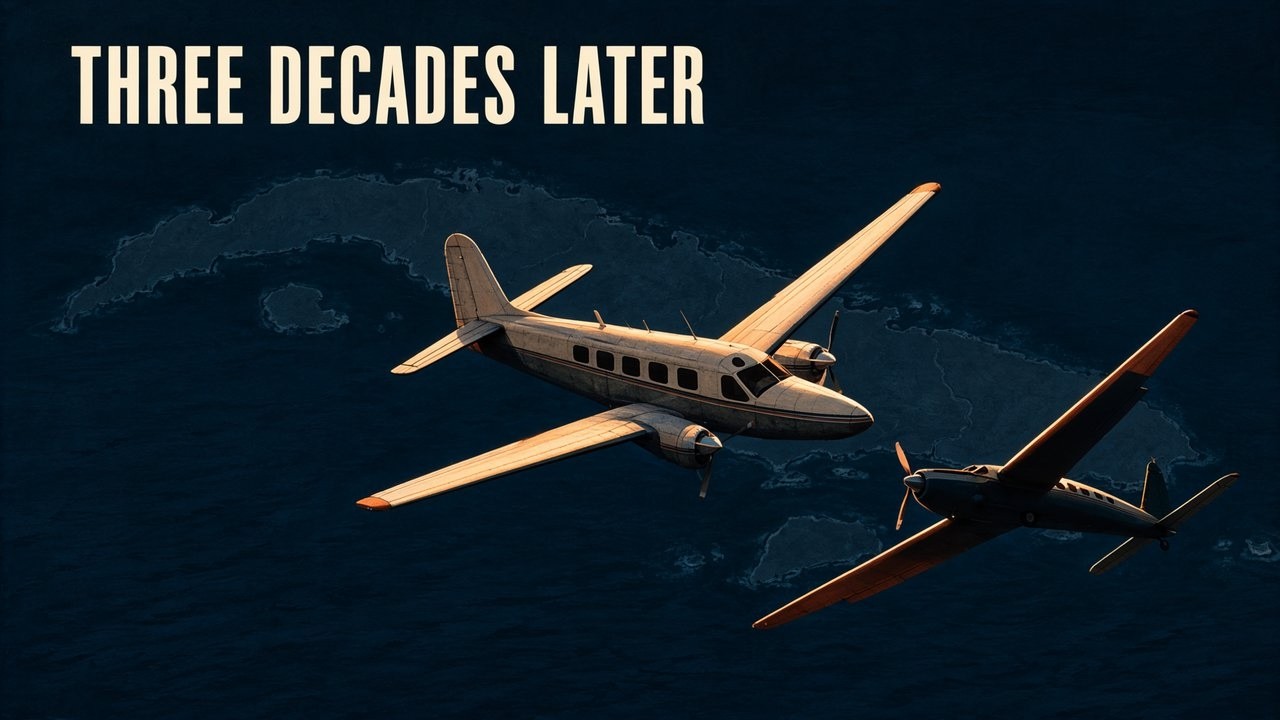
Can Florida turn a warrant for Raúl Castro into an appearance before a judge? That is the question raised by the state's newly announced prosecution over the 1996 Brothers to the Rescue shootdown. Thirty years after Cuban military aircraft destroyed two unarmed civilian planes, killing four men, Florida has added its own demand for accountability to an existing federal case. What authorities have not announced is an arrest—or an arrangement that would deliver Castro to a courtroom. 4 14
Attorney General James Uthmeier announced the state warrant on October 19, 2026, at Florida International University in Miami. The Office of Statewide Prosecution and the Florida Department of Law Enforcement obtained it. The reported charge against the 95-year-old former Cuban leader is conspiracy to commit first-degree murder. This is a separate state action, not a new name for the federal prosecution made public in May. 2 4 7
The distinction matters in both directions. Florida has taken a legal step beyond another public denunciation of Castro. But a warrant authorizing authorities to seek his arrest is not proof that they can reach him, secure his surrender or establish his guilt.
Four deaths behind the warrant
The attack occurred on February 24, 1996. Cuban military aircraft shot down two unarmed civilian light planes associated with Brothers to the Rescue. Congressional findings described the aircraft as defenseless and posing no threat to Cuba's government, military or people. Those findings establish the official historical characterization of the attack; they do not, by themselves, establish Castro's personal criminal responsibility. 21 22 24
Carlos Costa, Pablo Morales, Mario de la Peña and Armando Alejandre Jr. were killed. CBS Miami reports that three were U.S. citizens and one was a legal resident, without assigning those categories individually. Their deaths underlie both the state and federal proceedings. 2 21
For the officials welcoming the warrant, the announcement answered a demand that has outlasted three decades. Miami-Dade County Commissioner Natalie Milian Orbis said in a statement reproduced by CBS Miami: “The families of these four men have waited three decades for this day.” She added: “Miami has never forgotten them, Florida has not forgotten them, and Raúl Castro should never forget that we are coming.” 2
That language expresses the persistence of the demand for justice. Whether the warrant can produce a trial is a different question, dependent on evidence, custody and the actions of governments—not simply the strength of the announcement.
The Florida link prosecutors must prove
The state's theory connects alleged preparations in Florida to the killings off Cuba. Castro is accused of agreeing to the killing of the people aboard the aircraft. According to CBS Miami's account of court documents, Cuban spies transmitted flight information and monitored the naval station in Key West. The reported affidavit presents those activities as a basis for believing a conspiracy took place within Florida. 2
That alleged agreement is central to the charge. The state is not merely pointing to where the victims lived or where their deaths were mourned; it is alleging that part of the conspiracy operated in Florida. Prosecutors would still have to prove the agreement and Castro's participation. The announcement does not settle either issue.
Uthmeier stated the prosecution's accusation in categorical terms:
Raúl Castro ordered the murder of four Floridians in cold blood, and Florida will never stop pursuing accountability for that communist conspiracy.
He also accused the Castro regime's spies of operating in Florida communities, feeding intelligence to Havana and helping put civilian pilots “in the crosshairs of Cuban MiGs.” These are allegations by the attorney general, not findings reached after a trial. 2
NBC6 identifies Chief Judge Ariana Fajardo Orshan of Florida's Eleventh Judicial Circuit as the judge who signed the warrant. The signed warrant, supporting affidavit and complete state docket were not available for independent inspection. The exact signature date, state case number, statutory provisions and count total therefore remain unverified. October 19 is the authenticated public announcement date, not an independently verified date of issuance. 4 6
The available reporting supports the specific charge description of conspiracy to commit first-degree murder. Broader shorthand describing Castro as accused of murder should not be read as confirmation of an additional, separate substantive murder count. The underlying charging document is needed to establish the warrant's full scope. 2 7
Two cases, one enforcement problem
The federal proceeding predates this state announcement. On May 20, 2026, the Justice Department announced the unsealing of a superseding indictment charging Raúl Modesto Castro Ruz and five co-defendants in connection with the same shootdown. That prosecution is in the U.S. District Court for the Southern District of Florida. 14 15
The available federal court-document excerpt bears an April 23 filing stamp and an April 29 docket-entry date. Those dates describe filing and entry; May 20 describes the public unsealing. None dates the Florida state warrant. Although the federal case number begins with 03, the record establishes a 2026 superseding indictment charging Castro—not that he personally faced that indictment in 2003. 14 15
Adding a state proceeding creates another route for seeking accountability. It does not solve the immediate problem of obtaining the defendant. No inspected record establishes that Castro has been arrested, booked or detained, and no formal extradition request or scheduled extradition proceeding has been announced.
Uthmeier has pointed to travel as a possible opening. CiberCuba reports that he warned Castro could face arrest and extradition if he visited a country with extradition agreements, including for medical treatment. Extradition is the process of asking another country to surrender someone for prosecution. His warning was conditional: Castro would have to travel, authorities would have to reach him, and another government would have to act. It was not an announcement that a foreign government had agreed to surrender him. 31
There is no verified hearing, arraignment or trial date to put on the calendar. The next meaningful developments would be the release of the complete signed state records and an actual enforcement step. For now, Florida has added a legal demand to a long campaign for justice. Whether that demand can become a courtroom test remains unresolved.
As aired 15 lines
- Cuban military aircraft shot down two unarmed civilian planes, killing four men.
- Thirty years later, Florida is pursuing former Cuban leader Raúl Castro over those deaths. The ninety-five-year-old already faces a federal prosecution. The new state warrant gives Florida another route to seek accountability. Can authorities turn that warrant into a court appearance?
- Attorney General James Uthmeier announced the warrant at Florida International University in Miami on October nineteenth, 2026. The Office of Statewide Prosecution and the Florida Department of Law Enforcement obtained it. Chief Judge Ariana Fajardo Orshan, of Florida's Eleventh Judicial Circuit, signed the warrant.
- The state accuses Castro of conspiracy to commit first-degree murder. Prosecutors allege he agreed to the killing of the people aboard the aircraft. Officials haven't announced that he's been arrested. His guilt would have to be decided in court.
- Uthmeier went further in his public statement, accusing Castro of ordering the killings. He also accused Cuban spies of helping the military target civilian pilots. Those accusations describe the prosecution's case against Castro, and they still have to be proved.
- Uthmeier said, “Raúl Castro ordered the murder of four Floridians in cold blood, and Florida will never stop pursuing accountability for that communist conspiracy.” He said spies fed intelligence to Havana and helped put civilian pilots in the crosshairs of Cuban MiGs.
- Prosecutors allege Cuban spies transmitted flight information and monitored the naval station in Key West. They say those activities give Florida a basis to prosecute a conspiracy within the state, even though Cuban military aircraft attacked the planes off Cuba.
- The state is therefore seeking to connect preparations in Florida to the deaths aboard the aircraft. Prosecutors would have to prove Castro participated in the alleged agreement. The warrant allows authorities to seek his arrest while that accusation awaits a courtroom test.
- The attack happened on February twenty-fourth, 1996. Cuban military aircraft destroyed two unarmed civilian light planes associated with Brothers to the Rescue. Congressional findings described the planes as defenseless and posing no threat to Cuba's government, military or people.
- Carlos Costa, Pablo Morales, Mario de la Peña and Armando Alejandre Junior died. Three were U.S. citizens and one was a legal resident. Their deaths underlie both prosecutions, and the demand for accountability has continued across three decades.
- Miami-Dade Commissioner Natalie Milian Orbis applauded the warrant. She said, “The families of these four men have waited three decades for this day.” She also said, “Miami has never forgotten them, Florida has not forgotten them, and Raúl Castro should never forget that we are coming.”
- Federal prosecutors had already charged Castro and five co-defendants over the same shootdown. The defendants named in that case include Lorenzo Alberto Perez Perez and Emilio Jose Palacio Blanco. That prosecution is in the U.S. District Court for the Southern District of Florida.
- The federal indictment was filed April twenty-third and entered on the docket April twenty-ninth. It was publicly unsealed May twentieth. Florida announced its warrant October nineteenth. That October date marks the public announcement of the state action.
- Uthmeier warned that Castro could face arrest and extradition if he traveled to a country with extradition agreements, including for medical treatment. Extradition is the process of asking another country to surrender someone for prosecution. His warning depended on Castro traveling and another government acting.
- Florida has added a state demand to bring Castro before a judge. Executing it would require authorities to reach him and secure his surrender. No formal extradition request or scheduled extradition proceeding has been announced.
Sources
38 sources26 outlets
CBS Miamicbsnews.com3
Office of the Clerk, U.S. House of Representativeshouse.gov2
United States Department of Justicejustice.gov2
clintonlibrary.gov1
Florida Moving Chroniclefloridamovingchronicle.com1
Fox Newsfoxnews.com1
hermanos.org1
jurist.org1
- First reported
- US unseals indictment charging Raúl Castro in 1996 ...
legal-tools.org1
NST Onlinenst.com.my1
oas.org1
Survive Falloutsurvivefallout.com1
UPIupi.com1First
- First reported
- U.S. sees Castro hand in shootdown - UPI Archives
wikipedia.org1
- First reported
- 1996 shootdown of Brothers to the Rescue aircraft
WKMGclickorlando.com1
WPBFwpbf.com1
- First reported
- Florida AG announces arrest warrant for Raul Castro in Miami
WPECcbs12.com1
Source map
Follow the evidence behind this report. The map shows its connections; the links below open the sources cited in this article.
Source map loads as you read.
Revision log
- r1First published.