
World · Ceuta border crisisContinuing story · report 8 of 8
Sanchez Admits 10-Hour Border Opening Amid 72,000 Ceuta Crossings
Sanchez conceded a 10-hour opening but denied orchestration, trading blame for returns as deaths hit 141 and protests spread.
Transcript · LOADING
Continuing storyDay 37
8 reports58 outlets102 sources8 videos
Full story Update 140,000 to 60,000 in a Day: Ceuta Surge Overwhelms Spain's Enclave
 Update 2Italy Suspends Schengen With Spain After Ceuta Deaths
 Update 367 Dead, 60,000 Crossed — But Ceuta Emptied. Now Spain Builds a Wall.
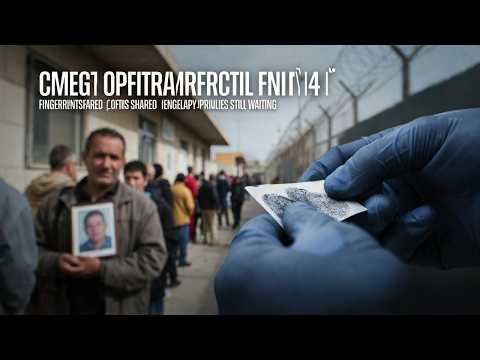 Update 472,000 Entered Ceuta in Two Days. At Least 80 Never Came Home.
 Update 5After 80,000 Crossings, Ceuta Fills Its Square and Demands Madrid and Brussels Act
 Update 6Ceuta's July 30 Surge Overwhelmed the Enclave, but the Toll and Total Remain Disputed
 Update 7Ceuta's Nights Outdoors Turned Into Almost Daily Assaults
 Update 8Sanchez Admits 10-Hour Border Opening Amid 72,000 Ceuta CrossingsYou are here
What changed since our last report
18 days later
Then
Ceuta's Nights Outdoors Turned Into Almost Daily AssaultsStill open then
- No public Interior Ministry position appears in the provided sources, and the sources do not detail suspect identities, charges, or convictions.
- The sources do not reconcile the 15 and 23 counts or show how many people remained sleeping outside after Aug. 20.
We said we'd watch for
- Whether shelter becomes gender-separated, supervised for minors, and matched to medical and investigative support.
- Whether the detained cases advance and whether daily assault reports fall as sleeping outside ends.
Now
Sanchez conceded a 10-hour opening but denied orchestration, trading blame for returns as deaths hit 141 and protests spread.
What moved
- Crowds overwhelm Loma del Colmenar reception centre.
- Nationwide protests; Ceuta holiday becomes crisis backdrop.
- Sanchez addresses Congress, admits window, denies orchestration.
Spain's prime minister walked into parliament to admit what his own police had already put in writing, and then to deny what that admission seemed to imply. Moroccan gendarmes, Pedro Sanchez conceded, let people pass into Ceuta for about ten hours in late July. 13 Yet there is, he insisted, no solid proof that Rabat planned the rush. 16 It is absurd, he told the Congress of Deputies, to think that the government knew and did nothing. 14 That sentence is the whole crisis in miniature: a ten-hour opening acknowledged, an orchestration denied, and a neighbor who must be both witness and partner.
Key facts
By Sanchez's own figure, 72,000 people entered the enclave by the end of July. 14 No one, he said, foresaw an influx on that scale. 14 The number dwarfs anything Spain has confronted at this fence. The 2021 rush, when thousands swam around breakwaters, walked at low tide or paddled in inflatable boats toward El Tarajal beach, is remembered as about 8,000 entering, though some later accounts put it near 10,000 and the sources still disagree. 6 9 10 This year is roughly nine times that size, compressed in the official account into a single permissive window rather than the two days of crossings seen in May 2021. 6
The restraint is not confusion. It is policy. By declining to accuse Morocco, Sanchez secured the return of roughly 90 percent of the Moroccans who crossed, preserving cooperation with the same government whose border guards he says stood aside. 1 IE University professor Alana Morseri gave the strategy its bluntest name. Blame a window of permissiveness, not the host, because Rabat controls the returns and Madrid needs them.
Pragmatic international relations.
The human cost now shadows that calculation. The death toll from the crossings has risen to 141, a figure raised as Sanchez faced a fierce parliamentary grilling over the deadly crossing and Morocco's alleged role. 17 Ceuta's president, Juan Jesus Vivas, who earlier described 100 deaths as an irreparable tragedy, told the European Parliament of his profound sorrow. 26 What remains in the city is itself disputed. Some reports put those still there near 5,000, including about 1,200 unaccompanied minors, while separate authorities cite more than 10,000 still stranded in early September. 26 27 Vivas had earlier estimated 3,000 to 5,000 remained on 6 August, with more than 1,000 unaccompanied minors among them. 26 27 On 1 September a large group crowded outside the Loma del Colmenar reception centre waiting for admission. 22
Protests, warnings and a denial
The streets answered before parliament did. Tens of thousands protested across Spain over the handling of the influx, with large crowds in Madrid and at least 20,000 in Ceuta alone, and opposition parties are calling for resignation. 28 23 Hundreds of rallies were planned nationwide in solidarity with Ceuta, while Ceuta residents appealed for calm on 2 September. 25 That date matters locally: the enclave's 2 September annual holiday, ordinarily ignored by mainland Spain, became this year the backdrop to the country's worst border crisis in living memory. 28
The opposition's charge goes beyond a slow response. Lawmakers allege Spanish police and intelligence warned the government two days before a movement of roughly 80,000 people arriving by truck, and that Moroccan police were directly involved. Sanchez rejects the claim, defends that there were no extraordinary warnings that would have allowed anticipating the magnitude of the crisis, and has committed to investigate and to publish all reports, insisting there is nothing to hide. 12 20 He also dismisses the separate police claim that Morocco instigated the crisis, while refusing to blame Rabat but reaffirming Madrid's sovereignty over its North African cities. 13 A Spanish police report described Moroccan officers showing total permissiveness and directing migrants toward the water during the late-July rush. 13
From 2021 precedent to 2026 rupture
- May 17-18, 20216
About 8,000 enter Ceuta by sea; some accounts later say 10,000.
- Late July 202613
About 72,000 cross during roughly 10-hour permissive window.
- Sep 1, 202622
Crowds overwhelm Loma del Colmenar reception centre.
- Sep 2, 202622
Nationwide protests; Ceuta holiday becomes crisis backdrop.
- Sep 3, 202612
Sanchez addresses Congress, admits window, denies orchestration.
Europe is now part of the standoff. The EU is withholding assistance pending answers, with the European Commission and Spanish MEP Antonio Lopez involved. 1 The parallel to 2021 is direct and uncomfortable. Then, after the hospital treatment in Spain of a Western Sahara independence leader helped spark the stand-off, Morocco resumed control only after public and private calls from the EU and foreign ministries across Europe, while Spain deployed troops to El Tarajal beach to patrol the border and vowed to restore order. 5 11 Hundreds of minors remained in limbo after the border was re-controlled. 2 The precedent shows pressure can work. It also shows how quickly migration control becomes diplomacy for the disputed enclaves.
Symbolism has returned with it. Sanchez proposed that King Felipe VI visit Ceuta and Melilla, a reaffirmation of Spanish sovereignty over cities whose status Morocco disputes. 1 At home the government says right-wing parties are exploiting the crisis, while opposition parties accuse Sanchez of abandoning the residents of Ceuta. 25 He has been criticised for blaming trafficking gangs and social media for the crisis. 14 On disinformation, the account notes Russia and Israel amplified, but did not initiate, viral posts about the crossings, a theory linked to a Supreme Court misinformation case involving trafficking networks but so far unproven. 1
Known
Unknown
- No verified evidence on whether Morocco ordered the crossings.
- Accurate number still in Ceuta and share who are minors.
Next
- Whether inquiry evidence or EU conditions collapse the balancing act.
- Whether promised reports are published in full.
With a 2027 election horizon and right-wing attacks intensifying, the political cost is already being paid. 1 The open question is not whether the gate stood open. Sanchez says it did. It is whether the inquiry will show someone opened it on purpose, and whether a prime minister who traded accusation for returns can survive the answer.
As aired 15 lines
- Moroccan guards let 72,000 people cross in ten hours.
- Spain's prime minister admits it, but says Morocco did not order it. 141 have died. The question: will evidence show Rabat deliberately opened the gate?
- Seventy-two thousand people entered Ceuta by the end of July — a number the prime minister himself gave to parliament. That is an order of magnitude beyond anything Spain has faced at this border.
- Sánchez stood before the Congress of Deputies and acknowledged what his own police had reported: as tens of thousands pushed into the enclave late last month, Moroccan gendarmes let them pass for about ten hours. He called it absurd to think the government knew and did nothing, and told lawmakers there is no solid proof Rabat planned the rush.
- By declining to accuse Morocco, Sánchez secured the return of roughly 90 percent of the Moroccans who crossed — preserving cooperation with the same government whose guards he says stood aside.
- The restraint is deliberate. Blame a window of permissiveness, not the host, because Rabat controls the returns and Madrid needs them. But the political price is mounting alongside the dead. The death toll has risen to 141 — a figure the prime minister cited in the same session. Ceuta's president, who earlier called 100 deaths an irreparable tragedy, told the European Parliament of his profound sorrow. Tens of thousands protested across Spain, with at least 20,000 in Ceuta alone, and opposition parties are calling for resignation. The Loma del Colmenar reception centre was overwhelmed on 1 September by crowds seeking admission, and the enclave's 2 September holiday — ordinarily ignored by mainland Spain — became the backdrop to the country's worst border crisis in living memory. How many remain is disputed: some reports put it near 5,000, including about 1,200 unaccompanied minors, while separate authorities cite more than 10,000 still stranded in early September.
- The protests spread from Ceuta to Madrid and beyond.
- The accusation goes further. Opposition lawmakers allege Spanish police and intelligence warned the government two days before a movement of roughly 80,000 people arriving by truck, and that Moroccan police were directly involved. Sánchez rejects that claim, has committed to investigate and to publish all reports, insisting there is nothing to hide.
- The 2021 precedent ended with EU pressure and Spanish troops. The 2026 crisis is still unfolding.
- The crisis is testing Europe too. The EU is withholding assistance pending answers, with the European Commission and Spanish MEP Antonio López involved. The parallel to 2021 is direct: then, an influx triggered by the hospital treatment of a Western Sahara leader brought about 8,000 to 10,000 people across in two days — a total authorities still disagree on — before Morocco re-tightened control after public and private pressure from Europe, and Spain sent troops to patrol the beaches. This surge is roughly nine times that scale.
- The 2026 surge is roughly nine times the scale of 2021.
- On disinformation, Russia and Israel amplified, but did not initiate, viral posts about the crossings — a theory linked to a Supreme Court misinformation case involving trafficking networks, but so far unproven. Sánchez also proposed that King Felipe VI visit the disputed enclaves of Ceuta and Melilla — a symbolic reaffirmation of Spanish sovereignty as the government accuses the right of exploiting the crisis.
- The confirmed numbers sit beside a pile of disputed claims — and the single biggest question is still open.
- Five players, one balancing act — and it's already cracking.
- So the answer to whether Morocco deliberately opened the gate is not yet known. The prime minister has promised to publish all reports. Whether the EU turns its withheld assistance into conditions — and whether the inquiry produces evidence of orchestration — will determine whether this balancing act can hold. With a 2027 election horizon and right-wing attacks intensifying, the political cost is already being paid.
Sources
29 sources25 outlets1 video
Al Jazeeraaljazeera.com1
bostonherald.com1
El Constitucionalelconstitucional.es1
FRANCE 24 English1First1 video
- First reported
- 'Pragmatic international relations: Sánchez seeks to avoid 'further conflict with Rabat' · video
Free Malaysia Today | FMTfreemalaysiatoday.com1
India Todayindiatoday.in1
infomigrants.net1
Oxford Law Blogsox.ac.uk1
POLITICOpolitico.eu1
the Guardiantheguardian.com1
The Independentindependent.co.uk1
The Irish Newsirishnews.com1
The Irish Timesirishtimes.com1
The Local Spainthelocal.es1
The Straits Timesstraitstimes.com1
Source map
Follow the evidence behind this report. The map shows its connections; the links below open the sources cited in this article.
Source map loads as you read.
Revision log
- r1First published.