Science · Island biosecurity
Second stoat caught on Rousay ends hope of a lone intruder
Trappers and volunteers have removed two predators from the Orkney island. The second capture ends hopes of a lone intruder, but leaves its arrival route—and any remaining animals—unresolved.
Transcript · LOADING
Story trackerDay 3
1 report7 outlets21 sources
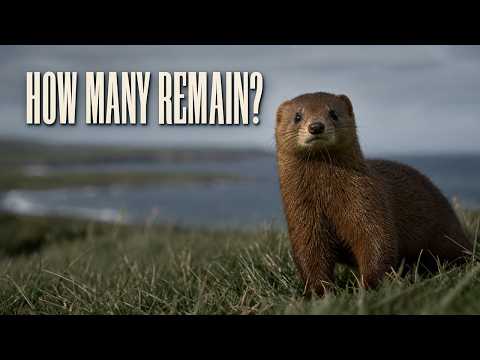
For the trappers and volunteers who spent months searching Rousay, catching the island's first stoat was a success—but not the end of the job. A second animal has now been trapped and killed, overturning hopes that removing one predator had resolved the threat to the Orkney island's native wildlife. 12 13 1
A trail camera detected the second stoat near Loch of Loomachun on 21 October 2026. It was caught nearby two days later, according to The Orcadian. BBC Scotland's report on 23 October confirmed that it had been trapped and killed. Two animals have been removed; whether more remain is unknown. 7 1
Before the second detection, the Orkney Native Wildlife Project had said it was “increasingly confident” that the animal caught on 9 October was Rousay's only stoat. That was a qualified assessment, not a declaration that the island was clear. Even so, the second capture decisively ends the single-animal explanation for this incursion. 1
From first reports to a second capture
- 7 May 202612
The project confirms a stoat's presence on Rousay, following potential sightings in April.
- 9 October 2026121
The first stoat is caught near Loch of Loomachun.
- 21 October 202671
A trail camera detects a second animal near the same loch.
- 23 October 202671
The second stoat is caught in a nearby trap; its killing is confirmed in that day's reporting.
The distinction between a sighting and a capture matters here. The second animal was detected on 21 October, not established to have been caught that day. Likewise, the first capture in October was not the first evidence of a stoat on Rousay: the response had begun with potential sightings in April and confirmation in May. Trappers, local volunteers and the island community all contributed to that search. 7 12 13
Project manager Sarah Sankey described the second sighting as “a deeply concerning development”, adding that it was especially unfortunate so soon after the first removal. The Orcadian reported that eradication efforts were stepped up after the detection. The available accounts do not specify how many extra traps or cameras were deployed, or set out a post-capture surveillance timetable. 1 17
A predator in the wrong place
The purpose of the search is to protect wildlife that cannot simply be replaced elsewhere. Stoats prey on ground-nesting birds and the Orkney vole, a subspecies found nowhere else in the world. The vole is larger and heavier than the common vole; its entire natural home is this archipelago. 1
Orkney is also an important breeding area for curlews, red-throated divers, hen harriers and short-eared owls. Those birds illustrate the wider conservation stakes, not a measured toll from these two animals on Rousay. No island-specific predation count or population decline attributable to the pair has been established in the available evidence. 1
Stoats are native to mainland Scotland and other parts of the United Kingdom. Related to weasels and otters, they usually hunt rabbits and small rodents such as mice. The problem is not that the species is inherently harmful everywhere: it is that an effective predator has entered an island ecosystem where it is not native. Females can produce litters of six to 12 kits a year, making delay a risk—but there is no established evidence here that stoats have bred on Rousay. 1
The wider task began long before this island's search. Stoats were first recorded in Orkney in 2010 and became established on Mainland Orkney, Burray and South Ronaldsay. NatureScot identifies those established populations as the background to the archipelago's removal effort. 10
The project says more than 9,100 stoats have been removed across Orkney since 2019, a cumulative figure reported by the BBC on 23 October. It is neither a Rousay count nor an estimate of how many animals remain. The operation uses trail cameras, traps and dogs trained to detect stoat droppings. Its stated aim is to remove every last stoat, with a programme target of a stoat-free Orkney by 2030—not a promised clearance date for Rousay. 1 4
The BBC describes the wider programme as a £15 million project. That reported cost is not a complete audited account of expenditure. Separately, an RSPB announcement on 14 August 2024 set out a further £2.5 million commitment from the National Lottery Heritage Fund and more than £1.5 million from the Scottish Government's Nature Restoration Fund, managed by NatureScot. Those were funding commitments, not a fresh October 2026 award or a running total of money spent. 1 5
The route remains an open question
Finding both animals near the same loch does not explain how they arrived. Conservationists say stoats are strong swimmers and could have crossed Eynhallow Sound from Mainland Orkney. But that remains a possible route, not an observed crossing or an established explanation for either animal. The captures do not show whether the stoats arrived together, crossed separately or reached Rousay by some other means. 1
That uncertainty makes biosecurity inseparable from removal. The project's work aims both to stop stoats spreading to additional islands and to prevent their return after eradication. Finding animals already present and detecting fresh arrivals are connected tasks; success at the first does not remove the need for the second. 14
Public sightings help direct the response alongside monitoring tools, dog searches and information from the trap network. The project accepts reports by phone, through its website and through the “Stoats in Orkney” Facebook group. It says some detailed morning reports have led to traps being installed by lunchtime and an animal caught overnight—an example of what useful information can achieve, not a guaranteed response time. 11
There is no announced date for declaring Rousay clear, nor an established clearance threshold in the information available. The second capture has answered one question: the first animal was not alone during this incursion. The questions that determine what happens next—whether others remain and how new arrivals can be prevented—are still open.
As aired 18 lines
- Trappers have caught and killed a second stoat on Rousay. Two predators have now been removed from an island where conservationists had hoped there was only one. They're protecting ground-nesting birds and a vole found nowhere else in the world. They still have to work out whether more stoats remain and how the animals reached the island.
- A trail camera picked up the second animal near Loch of Loomachun on October twenty-first. Trappers caught it nearby two days later, on October twenty-third. The first animal had been caught near the same loch on October ninth.
- The Orkney Native Wildlife Project had said it was increasingly confident that the first animal was the only stoat on Rousay. The second capture overturned that hope. Removing the first animal had ended a months-long search, but another predator was still there.
- The project confirmed a stoat's presence on May seventh, after potential sightings in April. October ninth brought the first capture. October twenty-first brought the second detection, followed by capture on October twenty-third. Trappers, local volunteers and the island community have all helped the response.
- Project manager Sarah Sankey called the second sighting deeply concerning, especially so soon after the first removal. The project stepped up eradication efforts after the detection. Two animals have been caught, but nobody has announced that Rousay is clear.
- Stoats prey on ground-nesting birds and the Orkney vole. On these islands, that puts an introduced predator alongside wildlife with particular conservation value. The vole is a subspecies found only in Orkney, and it's larger and heavier than the common vole.
- Orkney is an important breeding area for curlews, red-throated divers, hen harriers and short-eared owls. Across the archipelago, protecting those birds and the vole is a central reason for removing stoats before they spread further.
- Stoats are native to mainland Scotland and other parts of the United Kingdom. They're related to weasels and otters, and usually hunt rabbits and small rodents such as mice. Their arrival puts that hunting ability into an island ecosystem where they aren't native.
- Female stoats can produce litters of six to twelve kits a year. That capacity to multiply explains the urgency of finding every animal. Whether any have bred on Rousay is unknown.
- Stoats were first recorded in Orkney in twenty-ten. They became established on Mainland Orkney, Burray and South Ronaldsay. The wider removal operation now stretches far beyond the two animals found on Rousay.
- The project says it has removed more than nine thousand one hundred stoats across Orkney since twenty-nineteen. Each removal takes out a predator, but even that cumulative total can't tell conservationists whether another animal is still hiding on Rousay.
- The operation uses trail cameras, traps and dogs trained to detect stoat droppings. Its aim is to remove every last stoat. The project targets a stoat-free Orkney by twenty-thirty, though Rousay has no announced clearance date.
- The National Lottery Heritage Fund committed another two point five million pounds in August twenty-twenty-four. More than one point five million pounds also came through the Scottish Government's Nature Restoration Fund, managed by NatureScot. Those were commitments to support the work.
- The wider programme reportedly costs fifteen million pounds. That figure isn't a complete audited spending total. The earlier funding awards describe money committed, so they can't be treated as a running account of what has already been spent.
- Stoats are strong swimmers. Conservationists say a crossing from Mainland Orkney through Eynhallow Sound is one possible explanation for their arrival on Rousay. But nobody knows how either animal got there. Finding both near the same loch doesn't reveal their route.
- The project's biosecurity work aims to stop stoats spreading to more islands and prevent their return after removal. That means an island's protection depends both on finding animals already there and detecting fresh arrivals.
- Public sightings help direct the search alongside cameras, dog searches and information from the trap network. People can report sightings by phone, through the project's website or through the Stoats in Orkney Facebook group.
- In some previous responses, detailed morning sightings have led to traps being installed by lunchtime and an animal caught overnight. That shows how quickly a useful sighting can lead to removal, though response times vary. Rousay's second capture proves the first animal wasn't alone. Whether more remain, and how to prevent another arrival, are still unresolved.
Sources
21 sources7 outlets
Orkney Native Wildlife Projectorkneynativewildlife.org.uk8
NatureScotnature.scot4First
- First reported
- Freedom of Information Request - Eradication of Stoats on Orkney
- Orkney Native Wildlife Project
- Operational Plan for the eradication of stoat Mustela erminea from Orkney Mainland and linked isles, Scotland
- SNH Commissioned Report 871: Stoat (Mustela erminea) on the Orkney Islands – assessing risks to native species
The Orcadian Onlineorcadian.co.uk3
BBC Newsbbc.com2
rspb.org.uk2
BBC Scotlandbbc.co.uk1
- First reported
- Orkney island's second recorded stoat trapped and killed
The Telegraphtelegraph.co.uk1
Source map
Follow the evidence behind this report. The map shows its connections; the links below open the sources cited in this article.
Source map loads as you read.
Revision log
- r1First published.