
Economy · Trump's new tariffsContinuing story · report 1 of 2
60 Countries, Two Tiers, One Friday Deadline: The New Tariff Map
Trump's permanent Section 301 duties replace expiring stopgap levies at 12:01 a.m. Friday, hitting nearly every US trading partner.
Transcript · LOADING
Continuing storyDay 1
2 reports15 outlets22 sources2 videos
Full story
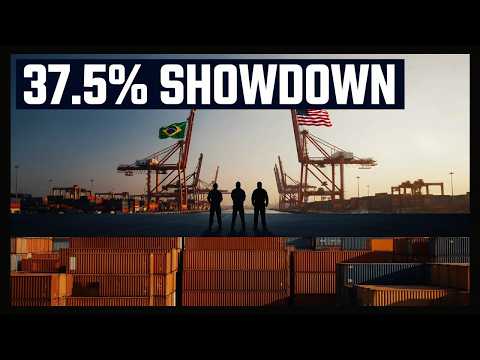
The number that matters is sixty. Sixty economies — including China, the United Kingdom, the European Union, India, and Vietnam — will sit under permanent United States tariffs from 12:01 a.m. Friday, July 24, as the Trump administration's temporary 10% global tariffs expire on schedule 34711. Those sixty partners account for nearly all US imports, which is why a White House action that reads like a technical trade-law maneuver is, in plain language, a reset of how America taxes almost everything it buys from almost everyone 57.
The legal vehicle is Section 301 of the Trade Act of 1974, the same statute the administration has used for years against China. This time the stated justification is forced labor — specifically, the White House says, each target economy's "failure to impose and effectively enforce a prohibition on the importation of goods produced with forced labor" 2. US Trade Representative Jamieson Greer recommended the duties after a months-long investigation and public hearings; the targeted countries deny the accusations 9.
Two tiers, one legal hook
Reports describe a two-tier structure, and the sources agree on the shape if not the exact headcount. Most partners — including China and Vietnam — face a 12.5% rate. A smaller group with what the administration calls partial prohibitions on forced-labor imports faces 10%. CBS counts 17 countries at the lower rate, including the UK, Canada and Mexico 8. Other outlets describe the lower band as 10%–12.5% without naming exact numbers 57. The dispute is small, but it matters to anyone trying to model what their specific supply chain will pay next week.
The duties replace levies struck down by the Supreme Court in February, which had forced the administration back to the drawing board 23. Section 301 gives the executive branch wide latitude to act on "unfair" foreign trade practices, and the forced-labor rationale is the hook the administration chose to hang the new map on 28.
What changes Friday
For importers, the change is mechanical but consequential. The temporary 10% baseline that has applied across the board since the court ruling vanishes at the first minute of Friday. In its place sit the permanent Section 301 rates, which are higher for most partners and apply selectively to a smaller tier at the lower end 3811. Trading partners reacted sharply. Reuters reported protests from capitals whose economies now face double-digit duties for the first time 4.
For consumers, the timeline is the same one economists have been warning about since the spring: duties that took effect months ago are already showing up in shelf prices, and a fresh round layered on top is unlikely to lower them 7.
Who's who in the new trade map
Who’s who
- Jamieson GreerUS Trade Representative
- China, Vietnam, the United Kingdom, the European Union, IndiaTargeted economies include the world's largest US partners
- United Kingdom, Canada, MexicoLower-tier (10%) countries named by CBS
What's confirmed, and what isn't
The reporting is solid on the legal mechanism, the deadline, the rate structure and the forced-labor rationale. It is thinner in three specific places — and a careful reader should keep them in mind.
Known
- Permanent Section 301 tariffs of 10%–12.5% take effect 12:01 a.m. Friday, July 24, on 60 economies, replacing the expiring 10% stopgap. 23811
- The stated legal rationale is each target's failure to prohibit goods made with forced labor. 28
- USTR Jamieson Greer recommended the duties after a months-long investigation and public hearings. 9
Unknown
- Whether a separate 50% Section 338 tariff on Canada, with a 30-day negotiation window for Prime Minister Mark Carney, is in effect.
- Whether a CNN poll showing 63% opposition (up from 48% in November) reflects current public opinion.
- Which specific product categories — beyond the general forced-labor framing — are exempted from the new duties.
Next
- How trading partners respond in formal filings and at the WTO before Friday's deadline.
- Whether the lower-tier headcount settles at 14, 16, 17 or another number as more documentation is published.
- How quickly the new rates pass through to consumer prices on the next import cycle.
Counter-read: the trading partners
Sources
11 sources11 outlets1 video
BBC Newsbbc.com1
Business Insiderbusinessinsider.com1
USA TODAYusatoday.com1
Source map
Follow the evidence behind this report. The map shows its connections; the links below open the sources cited in this article.
Source map loads as you read.
Revision log
- r1First published.