Énergie · Alaska LNG
L’annonce de Trump sur les 54 milliards de dollars pour Alaska LNG ne constitue pas encore un financement vérifié
Washington présente comme conclu un investissement de 54 milliards de dollars dans Alaska LNG. Séoul continue de parler d’une participation conditionnelle — et le financement, la décision d’investissement et le début des travaux restent à vérifier.
Suivi du dossierJour 2
1 reportage28 médias42 sources3 vidéos
- Aucun événement daté pour l’instant
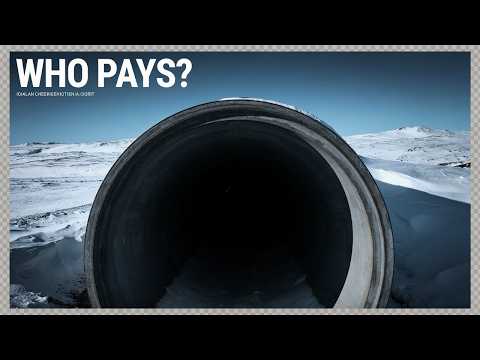
Traduit de l’original anglais.
Vidéo en langue originale
Transcription · CHARGEMENT
Alaska LNG a obtenu une autorisation fédérale conditionnelle en 2020. Six ans plus tard, le projet de longue date a fait l’objet d’une annonce d’investissement à la une, mais aucun accord de financement sud-coréen vérifié n’a été conclu. L’annonce du président Donald Trump, le 30 septembre 2026, portant sur 54 milliards de dollars selon les informations rapportées, accroît la visibilité politique du projet sans établir que les fonds nécessaires à sa construction ont été réunis. 19 39
Cette distinction est importante, car Washington et Séoul décrivent des étapes différentes de l’accord. Trump a présenté un accord sur les infrastructures énergétiques à la Maison-Blanche. Jusqu’au 1er octobre, les médias coréens continuaient de présenter la participation comme subordonnée à la viabilité commerciale, à un examen plus approfondi et à des négociations. Un investissement annoncé constitue une avancée importante ; ce n’est pas une clôture financière. 4 5 6
Faits essentiels
Trump a déclaré que le gouvernement sud-coréen investirait jusqu’à 200 milliards de dollars dans des projets énergétiques américains, notamment Alaska LNG, une centrale électrique de six gigawatts au Texas et huit centrales nucléaires de grande taille. La répartition complète et les règles applicables à ce plafond restent indisponibles. Ces autres projets sont des destinations envisagées pour les fonds du dispositif, et non la preuve que le financement de l’Alaska est bouclé. 4
PBS/AP a rapporté que la part de l’Alaska s’élevait à 54 milliards de dollars. Washington Today de C-SPAN a également relayé ce chiffre de Newsweek, qui citait des informations de la Maison-Blanche, tout en indiquant que le montant destiné à l’Alaska selon Trump dépassait 50 milliards de dollars. Ces montants sont compatibles. Le titre d’Alaska Public Media, qui évoque 50 milliards de dollars, ne suffit pas à établir une réduction ; les articles disponibles n’expliquent pas si le chiffre arrondi résulte d’un arrondi. 39 2 14
Séoul n’a pas encore tranché
La réserve la plus claire figure dans l’article du 1er octobre d’Asia Business Daily : le gouvernement coréen n’avait pas encore finalisé sa participation. The Korea Herald a évoqué l’examen par Séoul d’une éventuelle participation. Aucun des deux articles n’établit d’obligation contraignante de financer le projet. 6 12
Dans un article publié le 30 septembre, Herald Business, citant la position du ministère exposée lors d’une réunion d’information à l’Assemblée nationale le 22 septembre, a indiqué qu’un examen de faisabilité et des procédures législatives étaient nécessaires avant tout engagement. Les approbations concernées, leur calendrier et les critères financiers d’une évaluation de viabilité concluante ne sont pas établis. 8
Le 1er octobre, Seoul Economic Daily a rapporté que Séoul avait demandé un plan revu à la baisse pour respecter le plafond d’investissement. Aucun montant de réduction, périmètre révisé ni nouvelle allocation à l’Alaska n’est disponible. Le ministre de l’Industrie, Kim Jung-kwan, a déclaré que les fonds restants pourraient être affectés à des projets sur les minerais critiques — une utilisation possible, et non une répartition arrêtée. Les baisses de droits de douane et l’accès prioritaire au GNL restaient également à négocier, sans indication des taux, des volumes garantis, des conditions tarifaires ni du mécanisme d’accès. 10
Il ne s’agit pas de simples formalités. Le soutien fiscal, une décision finale d’investissement et des contrats d’achat contraignants ont été identifiés comme des questions non résolues. Elles déterminent directement si le projet peut attirer des capitaux et vendre sa production à des conditions viables. 6
Aucun accord de financement d’Alaska vérifié et dûment signé ne précise l’identité des financeurs coréens, leurs contributions individuelles ni les conditions juridiques assorties à leurs obligations. Un échéancier de décaissement signé et un document attestant de la clôture financière ne sont pas non plus vérifiés. On ignore si la participation prendrait la forme de fonds propres, de dette, de garanties, d’achats de gaz ou d’une combinaison de ces éléments. Cette lacune documentaire ne prouve pas qu’aucun document n’existe — ni que la Corée a rejeté le projet. 6 10
Deux activités, pas une seule étape importante
L’objectif intérieur d’Alaska LNG peut être éclipsé par l’annonce d’exportation. Glenfarne décrit deux phases financièrement indépendantes : d’abord, un gazoduc acheminant le gaz du North Slope aux consommateurs de l’Alaska ; ensuite, des installations de liquéfaction et d’exportation à Nikiski. La liquéfaction transforme le gaz naturel en un liquide pouvant être transporté outre-mer. 16
Le plan du promoteur, daté du 22 janvier 2026, prévoit un gazoduc principal de 739 miles et de 42 pouces de diamètre. Une éventuelle conduite latérale vers Point Thomson ajouterait 63 miles de tuyaux de 32 pouces, portant la longueur totale à 802 miles si elle était incluse. Cette conduite latérale n’était pas définitive. La capacité d’exportation prévue pour la phase deux est de 20 millions de tonnes par an — il ne s’agit ni de la production actuelle ni d’achats coréens sous contrat. 18
La justification intérieure tient à la menace d’un déficit d’approvisionnement, alors que la production de Cook Inlet diminue. Les livraisons du North Slope pourraient aider si le gazoduc est financé, achevé et exploité. Pour les ménages et les entreprises de l’Alaska, le résultat déterminant serait un approvisionnement fiable en gaz. Les documents ne quantifient ni les économies des ménages, ni les futurs prix à la consommation, ni les nouveaux emplois, ni les contributions des contribuables, ni la répartition finale des risques financiers. 16
Le projet avait un promoteur avant l’annonce de Trump. Des accords définitifs signés le 27 mars 2025 ont fait de Glenfarne le propriétaire majoritaire et le promoteur principal. Dans sa déclaration de janvier 2026, l’entreprise indique que l’entité du projet, 8 Star Alaska LLC, est détenue à 75 pour cent par Glenfarne et à 25 pour cent par l’Alaska, par l’intermédiaire de l’Alaska Gasline Development Corporation. Ces parts historiques ne prouvent pas l’existence d’une nouvelle participation coréenne. 20 18
Il y a également eu de réels progrès du côté de l’approvisionnement. Glenfarne et ConocoPhillips ont annoncé le 18 mai 2026 un accord de principe de vente de gaz d’une durée de 30 ans. Glenfarne a déclaré que les accords conclus avec ConocoPhillips, ExxonMobil, Hilcorp Alaska et Great Bear Pantheon fournissaient suffisamment de gaz engagé pour soutenir une décision finale d’investissement pour la phase un. Le mot important est soutenir : le communiqué ne confirmait pas que cette décision avait été prise, et l’approvisionnement en gaz n’équivaut pas à un financement coréen. 16
Les coûts de construction constituent un autre chiffre. Petroleum News et KTUU ont rapporté que Glenfarne avait estimé le coût total du projet entre 44,5 et 54,5 milliards de dollars, estimation présentée le 3 juin 2026. Le titre de Reporting From Alaska indiquait 54,4 milliards de dollars ; l’écart n’est pas expliqué. Les coûts distincts des phases ne sont pas vérifiés. La proximité avec les 54 milliards de dollars annoncés ne prouve pas que la Corée paierait tous les coûts ou absorberait les dépassements. 32 33 36
Une autorisation existe ; le démarrage reste à vérifier
Il serait inexact d’affirmer qu’Alaska LNG ne dispose d’aucune autorisation de construction. Le 21 mai 2020, la Federal Energy Regulatory Commission a autorisé l’implantation, la construction et l’exploitation en vertu de l’article 3 du Natural Gas Act, sous réserve de conditions, dans le dossier CP17-178-000. Une lettre du 5 février 2026 relative au plan de mise en œuvre mentionne également cette décision. 19 17
Il reste à vérifier si toutes les conditions nécessaires au démarrage effectif des travaux ont été remplies, si la construction physique a commencé et si l’annonce de septembre a donné lieu à une nouvelle autorisation. L’autorisation réglementaire, le respect de ses conditions, la décision d’investissement et la clôture financière sont des étapes distinctes. Les documents disponibles ne permettent pas non plus d’établir l’existence d’une autorisation d’exportation du Department of Energy datée, ni d’en préciser les conditions ; cette limite ne prouve pas qu’aucune autorisation de ce type n’existe.
Le calendrier reste tout aussi incertain. CBS a rapporté qu’il faudrait trois ans pour construire le gazoduc, puis encore deux ans avant les premières expéditions outre-mer, sans indiquer de date de démarrage. Compter à partir du discours de Trump ne permet pas de confirmer une année d’exportation. 3
Les plans antérieurs visaient l’achèvement mécanique du gazoduc en 2028 et les premières livraisons de gaz domestique en 2029. Des articles de février évoquaient un début des travaux prévu en avril 2026, mais les documents disponibles ne confirment pas qu’il a eu lieu. L’objectif formulé en mars 2025 de prendre une décision d’investissement cette année-là et les propos de mai 2026 selon lesquels les accords la soutenaient ne permettent pas d’établir son statut actuel. Le gaz domestique et les exportations de GNL sont des étapes différentes, et ces articles ne fournissent pas un calendrier unique et cohérent. 18 22 20 16
Ce que l’on sait
Ce que l’on ignore
- Le financement contraignant du projet par la Corée, la clôture financière, une décision finale d’investissement à jour, le démarrage effectif des travaux et la date des premières exportations restent à vérifier.
La suite
- Il faudra surveiller les engagements de financement et d’achat exécutoires propres au projet, l’issue de l’examen de Séoul, ainsi qu’une confirmation datée du promoteur concernant la décision d’investissement et le début des travaux. Aucune échéance officielle pour la prochaine décision n’est établie.
L’annonce change l’ampleur de la participation coréenne envisagée, pas l’approvisionnement énergétique immédiat de l’Alaska. La prochaine avancée déterminante du projet sera une étape commerciale ou de construction documentée — et non une nouvelle description de l’ampleur de l’annonce.
Sources de cet article
Couverture de l’annonce : Alaska’s News Source 1 ; Washington Today de C-SPAN 2 ; reportage télévisé de CBS News 3 ; enregistrement de l’annonce par C-SPAN 4 ; PBS/AP 39 ; article de CBS/AP 37.
Conditions et négociations coréennes : Korea JoongAng Daily 5 ; Asia Business Daily 6 ; Herald Business 8 ; article du 30 septembre de Seoul Economic Daily 9 et article du 1er octobre sur les négociations 10 ; The Korea Herald 12.
Autres articles sur l’annonce : Reuters 7 ; Anchorage Daily News 13 ; Alaska Public Media 14 ; troisième mise à jour de Yonhap 11, article principal 24 et deuxième mise à jour 26 ; article de Seoul Economic Daily sur l’annonce 25 ; ChosunBiz 27.
Documents du promoteur et des autorités réglementaires : communiqué sur l’approvisionnement en gaz du 18 mai 16 ; lettre relative au plan de mise en œuvre 17 ; communiqué sur le projet du 22 janvier 18 ; autorisation de la FERC 19 ; annonce des accords de développement du 27 mars 20 ; mise à jour de la commission des finances de la Chambre législative 23.
Contexte du développement : article d’Alaska Public Media sur la propriété 21 ; article d’Anchorage Daily News sur le calendrier de construction 22 ; article d’Alaska Public Media sur les coûts 15 ; présentation de la commission des finances du Sénat 28 ; couverture des coûts par KTOO 29.
Tel que diffusé 25 lignes
- Trump announced a $54 billion investment in Alaska LNG. South Korea's binding participation remains unverified, while declining gas production threatens Alaska's domestic supply. The proposed export business is years away, not an immediate addition to energy supply. What has actually been secured, and what still stands between the announcement and delivered gas?
- The broader energy package has an announced ceiling of up to two hundred billion dollars. President Donald Trump presented it at the White House on September thirtieth, twenty twenty-six, as an energy infrastructure agreement with South Korea. That moves the story beyond earlier expectations that an announcement was coming. It does not establish that financing has closed.
- The package includes a proposed six-gigawatt power-generation facility in Texas and eight new large-scale nuclear plants, alongside Alaska LNG. Its complete allocation and the operative rules governing the investment ceiling remain unavailable. Those other projects are proposed uses of the package, not proof that Alaska's funding is complete.
- Fifty-four billion dollars and more than fifty billion dollars are numerically compatible descriptions of the Alaska investment. A flat fifty-billion-dollar figure has not been definitively reconciled with them. Neither a reduction nor two separate Alaska commitments is established. The announced amount is not verified cash delivered to the developer, and it is not, by itself, a construction-cost estimate.
- Seoul's participation still hinges on commercial viability. The position remained conditional through October first: further feasibility review, legislative procedures and negotiations stood between possible participation and a finalized project obligation. That position had also been outlined through a September twenty-second National Assembly briefing. The specific legislative approvals and their timetable are not established, nor are a completed viability assessment or the financial criteria the project must satisfy.
- Seoul requested a scaled-down plan to stay within the investment cap. No requested reduction amount, revised scope or revised Alaska allocation is established. Remaining funds could potentially go toward critical-minerals projects; that possibility is not a settled allocation.
- Tariff cuts and priority access to liquefied natural gas remain negotiation issues. There are no established tariff rates, guaranteed gas volumes, pricing formula or priority-access mechanism. Tax support, a final investment decision and binding purchase contracts are also unresolved commercial issues. These are conditions that affect whether a project can proceed, not details that an announcement automatically settles.
- No verified executed Alaska financing agreement identifies the South Korean funders, their individual contributions or the legal conditions attached to their obligations. A signed disbursement schedule, financial-close record and current final investment decision are also unverified. Korean participation could involve equity, debt, guarantees, gas purchases or a combination; its structure is not established. Those evidence gaps do not prove that documents do not exist, that South Korea has rejected the project or that financing has failed.
- The planned main pipeline would carry North Slope gas seven hundred thirty-nine miles to Alaska consumers. Its diameter would be forty-two inches. A possible Point Thomson lateral would add sixty-three miles of thirty-two-inch pipe. Together they would total eight hundred two miles, but the lateral's inclusion is not final. Calling it an eight-hundred-mile pipeline should not obscure that distinction.
- Alaska LNG has two financially independent planned phases. Phase One is the domestic-supply pipeline. Phase Two would add a liquefaction terminal and related export facilities at Nikiski, with proposed capacity of twenty million tonnes a year. Liquefaction turns natural gas into liquid suitable for overseas shipment. Planned capacity is not an operating export business.
- Declining Cook Inlet production creates a domestic gas-supply risk. North Slope deliveries could help address that shortfall if the pipeline is financed, completed and operated. For households and businesses, delivery of dependable gas is the consequential milestone, not the investment announcement.
- Domestic delivery volumes, household savings, future consumer prices and reductions in energy bills are not quantified. Neither are verified new job totals, taxpayer contributions or the final division of financial risk. Those potential benefits and costs cannot be assumed.
- Glenfarne already controlled the project before the September announcement. Definitive development agreements signed March twenty-seventh, twenty twenty-five, made it majority owner and lead developer. The January twenty-second, twenty twenty-six ownership statement identifies the project entity as Eight Star Alaska LLC: seventy-five percent Glenfarne and twenty-five percent the State of Alaska through the Alaska Gasline Development Corporation. Glenfarne Alaska LNG LLC is the majority owner and developer. No new South Korean ownership percentage is established.
- Trump thanked Alaska Senator Dan Sullivan for work on the pipeline and other Alaska deals. The announcement also comes weeks before critical elections, including a competitive Alaska Senate race. Political sponsorship does not substitute for an executed financing agreement, and the proposed projects would take years to develop.
- A thirty-year gas sales precedent agreement with ConocoPhillips was announced on May eighteenth, twenty twenty-six. Other supply agreements involved ExxonMobil, Hilcorp Alaska and Great Bear Pantheon, a wholly owned Pantheon Resources subsidiary. The gas commitments were described as sufficient to support a Phase One investment decision and meet Alaska's needs. Supporting that decision is different from establishing that it happened. These supply-side agreements are not evidence of South Korean financing, and no numerical domestic-delivery volume is established.
- The full-project construction estimate is forty-four-point-five billion to fifty-four-point-five billion dollars. That historical estimate was presented to the Senate Finance Committee on June third, twenty twenty-six—not June fourth, when subsequent coverage appeared. Separate costs for the pipeline phase and export phase are not established.
- An alternative upper figure of fifty-four-point-four billion dollars remains unexplained. More importantly, the proximity between the announced fifty-four-billion-dollar investment and the construction range does not establish that South Korea would cover every cost, absorb overruns or supply all the capital needed to begin operations.
- The project already has a conditional federal authorization for siting, construction and operation. The Federal Energy Regulatory Commission issued it on May twenty-first, twenty twenty, under section three of the Natural Gas Act, following an application filed April seventeenth, twenty seventeen. It would be wrong to describe Alaska LNG as a project that has never received construction authorization.
- That authorization does not establish that every condition required for actual work has been satisfied. Physical construction remains unverified, as does any new clearance resulting from the September announcement. Regulatory approval, satisfying its conditions, a final investment decision, financial close and the start of work are separate milestones. A February fifth, twenty twenty-six implementation-plan letter also identifies the existing federal order.
- A dated Department of Energy export authorization, its authorized volumes and its conditions are not established here. That limitation is not evidence that no such authorization exists.
- The latest construction projection describes three years for the pipeline, followed by another two before overseas LNG shipments. It supplies no verified start date. Counting forward from the White House announcement therefore cannot produce a confirmed export year.
- The older developer targets were pipeline mechanical completion in twenty twenty-eight and first domestic gas in twenty twenty-nine, using four simultaneous construction sections. An expected April twenty twenty-six start was not confirmed as an actual start. And the twenty twenty-five expectation of a pipeline investment decision, followed by supply agreements described as supporting one in May twenty twenty-six, does not establish its status at every later date.
- First domestic gas and first LNG exports are different milestones. The older calendar targets and the later construction-duration estimate are not one reconciled timetable. None establishes that work began when Trump announced the investment.
- The answer to what has been secured is therefore narrower than the headline dollar figure: an investment announcement, an existing conditional regulatory authorization, a documented historical ownership structure and gas-supply agreements intended to support an investment decision. Binding South Korean project financing, financial close, a current final investment decision and physical construction remain unverified through October first, twenty twenty-six.
- Commercial review, legislative requirements and negotiations still need to produce enforceable project-specific financing and purchase obligations. No dated next decision or funding deadline is established, and no verified first-export date exists.
Sources
42 sources28 médias3 vidéos1 dépêche reprise
Alaska Public Mediaalaskapublic.org3Premier
Anchorage Daily Newsadn.com3
Seoul Economic Dailysedaily.com3
Yonhap News Agencyyna.co.kr3
- Premier signalement
- (3rd LD) Trump unveils S. Korea's investment plans for Alaska LNG project, Texas power plant, 8 nuclear reactors
- (LEAD) Trump unveils S. Korea's investment plans for Alaska LNG project, Texas power plant, 8 nuclear reactors
- (2nd LD) Trump unveils S. Korea's investment plans for Alaska LNG project, Texas power plant, 8 nuclear reactors
Alaska Storythealaskastory.com2
alaska-lng.com2
- ANCHORAGE, Alaska (May 18, 2026) – Today Glenfarne Alaska LNG LLC, a subsidiary of Glenfarne Group, and ConocoPhillips (NYSE: COP) Alaska announced the companies have signed a gas sales precedent agreement to supply natural gas produced on Alaska’s North Slope for Phase One of the Alaska LNG project. With this thirty-year agreement, Alaska LNG has now secured precedent agreements for sufficient volumes to support a Phase One final investment decision and supply enough natural gas to meet Alaska’s energy needs. Glenfarne is developing Alaska LNG in two financially independent phases to accelerate project execution. Phase One consists of the 739-mile, 42-inch pipeline to transport natural gas to Alaska consumers to strengthen long-term energy security and address looming supply shortfalls resulting from declining Cook Inlet production. Phase Two will add the LNG export facilities in Nikiski. Alaska LNG now has agreements with all three major North Slope producers: ConocoPhillips, ExxonMobil (NYSE: XOM), Hilcorp Alaska, as well as Great Bear Pantheon LLC, a wholly owned subsidiary of Pantheon Resources plc (AIM: PANR). Adam Prestidge, President of Glenfarne Alaska LNG, said, “All major North Slope producers have now committed enough natural gas to support a Phase One final investment decision. Today’s milestone agreement establishes the commercial terms for ConocoPhillips to supply gas and help Phase One of Alaska LNG provide energy security for Alaska. I appreciate Erec and his team for their continued collaboration and support as we advance this transformational energy project for Alaska.” ConocoPhillips Alaska President Erec Isaacson said, “ConocoPhillips shares Glenfarne’s commitment to developing Alaska’s resources for the long-term benefit of Alaskans. Our participation in Alaska LNG supports reliable access to responsibly produced North Slope natural gas while complementing our ongoing investment in Alaska.”
- FOR IMMEDIATE RELEASE GLENFARNE ANNOUNCES MAJOR PHASE ONE ALASKA LNG MILESTONES, WITH CONSTRUCTION, LINE PIPE SUPPLY, AND IN-STATE GAS AGREEMENTS JUNEAU, Alaska (January 22, 2026) – Glenfarne Group, LLC subsidiary Glenfarne Alaska LNG, LLC (“Glenfarne”), majority owner and developer of the Alaska LNG Project, today announced a series of major advances that move Phase One of the Alaska LNG Project from development into early execution – focused on rapidly delivering reliable, affordable natural gas to Alaskans. Glenfarne Chief Executive Officer and Founder Brendan Duval said, “This is about progressing from planning to building. By aligning construction, pipe supply, gas supply, and in-state customers, we are advancing Alaska LNG in a concrete way that is practical, financeable, and focused on delivering real benefits to Alaskans. Glenfarne and the many companies involved in today’s announcements have dedicated significant time, resources, and expertise as we simultaneously and rapidly progress so many different aspects of the project.” Alaska LNG is being developed through the entity 8 Star Alaska LLC, which is 75% owned by Glenfarne and 25% owned by the State of Alaska through the Alaska Gasline Development Corporation. Glenfarne is developing Alaska LNG in two financially independent phases to accelerate project execution. Phase One consists of a 739-mile, 42-inch pipeline constructed in four simultaneous sections, or spreads, to deliver natural gas from Alaska’s North Slope to meet Alaska’s domestic energy needs. Phase One of the pipeline may also include the 63- mile, 32-inch Point Thomson Lateral Pipeline (the “Point Thomson Lateral”). Glenfarne is targeting mechanical completion of the pipeline in 2028 and delivery of first gas in 2029. Phase Two will add the LNG liquefaction terminal and related infrastructure to export 20 million tonnes per annum (MTPA) of LNG. EPCM Agreement Glenfarne has provisionally named global energy, chemicals, and resources professio
CBS Newscbsnews.com21 vidéo
CHOSUNBIZchosun.com1
- Premier signalement
- Korea weighs Alaska LNG with US, balancing commercial sense and energy security
Fairbanks Daily News-Minernewsminer.com1
https://www.alaskasnewssource.comalaskasnewssource.com1
- Premier signalement
- Trump set to announce $54B Alaska LNG investment; South Korea to fund project
https://www.webcenterfairbanks.comwebcenterfairbanks.com1
- Premier signalement
- Alaska LNG pipeline cost unveiled after months of lawmakers asking for price tag
koreajoongangdailykoreajoongangdaily.com1
KTOOktoo.org1
PBS Newspbs.org1
Petroleum Newspetroleumnews.com1
Reporting From Alaskadermotcole.com1
- Premier signalement
- Reporting From Alaska- Just like that, Alaska LNG project soars to $54.4 billion
SBS World Newssbs.co.kr1
The Asia Business Dailyasiae.co.kr1
The Herald Businessheraldcorp.com1
The Hillthehill.com1
- Premier signalement
- South Korea to invest $200B in US energy projects
The Korea Heraldkoreaherald.com1
- Premier signalement
- Trump unveils 3 projects under Korea's $200b US investment plan
매일경제mk.co.kr1
一般財団法人 日本エネルギー経済研究所 - IEEJieej.or.jp1
Carte des sources
Consultez les éléments à l’appui de ce reportage. La carte montre leurs liens ; les liens ci-dessous ouvrent les sources citées dans cet article.
La carte des sources se charge pendant votre lecture.
Traduction mise à jour le
Historique des révisions
- r1Première publication.