
Conflitos · Hormuz tanker attacksTema em acompanhamento · reportagem 7 de 8
A tanker strike tests U.S. assurances of safe passage through Hormuz
An unnamed tanker was hit while leaving Hormuz on the U.S.-promoted southern route. Iran’s expanding mine claims still cannot be reconciled into a reliable vessel count.
Disponível em inglês
O que mudou desde a nossa última reportagem
20 horas depois
Antes
Hormuz tanker resumes voyage after explosive attack; crew reported safeO que dissemos que continuava em aberto
The vessel’s verified identity, crew condition, cause of the fire, damage, environmental consequences and final outcome remain unresolved.
Ainda em abertoThe earlier explosive-device account reports a safe crew, an extinguished engine-room fire, no environmental impact and a resumed voyage, while the projectile account provisionally reports no injuries or environmental impact. Verified vessel identities, full damage assessments and the relationship between those accounts remain unresolved, so one ship’s recovery cannot establish the other’s outcome.121516
A dated authority or operator update identifying the ship and establishing what happened to the people aboard.
Ainda em aberto
Agora
An unnamed tanker was hit while leaving Hormuz on the U.S.-promoted southern route. Iran’s expanding mine claims still cannot be reconciled into a reliable vessel count.
How safe is the southern route through the Strait of Hormuz if a tanker can be struck while following it out of the Persian Gulf?
A reported projectile strike on the evening of October 29 puts that question directly against Washington’s assurances about the passage. The United Kingdom Maritime Trade Operations center, or UKMTO, said a tanker leaving the strait along the southern route was hit. No crew injuries or environmental impact were reported at that stage. The ship has not been named, the projectile remains unidentified, and the available account does not establish who launched it.116
The narrow answer is that an open shipping lane is not necessarily a safe one. The harder question—how this attack fits alongside reports of hull-attached explosives and Iran’s expanding mine claims—cannot yet be answered reliably. Without ship identities, counting every announcement as another vessel would turn an uncertain record into a misleading toll.
An open passage, an exposed route
The United States has promoted the southern route and used it to escort oil tankers out of the Persian Gulf. Iran insists that vessels travel farther north, along its coast. On Friday, October 30, U.S. Central Command commander Admiral Brad Cooper again maintained that Iran’s navy had been destroyed and the southern shipping lanes were safe and open, according to CBS News. Commercial crews are navigating between those competing assertions of security and control.1
Factos essenciais
The route’s record matters more than either side’s description of it. UKMTO’s figures, relayed by CBS, place most reported regional projectile strikes since July 6 along the southern passage. That concentration does not identify the attacker in the latest incident, verify a mine strike or establish the relative risk of every possible route. It does show that ships have repeatedly been hit along the passage Washington promotes.1
October’s reported attack count covers the Strait of Hormuz, Gulf of Oman and Persian Gulf. It was the highest monthly count of the war by October 30, approximately twice September’s; March was the only other month to reach 30. UKMTO counts attacks reported by verified vessels, rather than everything alleged to have happened at sea. Iran’s mine claims largely do not appear in that list.1
A broader tally stood at 145 reported maritime incidents since the war began on February 28. That is a different measure over a different period—not a number to combine with the projectile figures or Iran’s claimed tanker casualties. The record is already serious enough without treating unlike counts as interchangeable.1
Three mechanisms, no settled vessel count
The projectile report also needs to be kept distinct from a recovery we reported earlier on October 30. In that account, a tanker attacked on the evening of October 29, about 25 nautical miles northeast of Khasab, Oman, resumed its voyage after an engine-room fire was extinguished. The crew was reported safe and no environmental impact was reported. Maritime reporting attributed those updates to UKMTO.215
That account described a small boat approaching the tanker’s port side and two explosive devices being attached to the hull above the waterline. Their detonation caused the fire and temporarily disabled the vessel. It was a close-range attack on the ship itself, not simply a report of something striking it from outside.3812
Whether these accounts describe different ships remains unresolved. Riviera presented the explosive-device attack as one of at least two attacks in Hormuz. Robban Assafina described the explosive-device account as an updated security warning. No matching vessel name, IMO number or complete incident identifiers in the available reporting settle the relationship. The defensible distinction is between the reported mechanisms, not a confident assertion that there were two separate tankers.148
Our October 29 report concerned another unresolved account: a captain’s sighting of a burning vessel nine nautical miles north of Khasab. Proximity is not identification. Neither that sighting nor the earlier tanker’s reported recovery establishes the final condition of the unnamed ship in the projectile account.
For crews, the differences are practical. A projectile threatens a ship from outside; a sea mine threatens it along its path; hull-attached explosives mean an approaching boat has reached the vessel directly. Calling all three the same kind of attack obscures what crews need to detect and survive.
Iran’s claims keep changing shape
Iran’s announcements have expanded faster than the vessel-level evidence. An earlier October 29 account from Tasnim attributed to the Revolutionary Guard a claim that three tankers had struck mines, caught fire and been abandoned. Subsequent Thursday reporting by Arab News and CBS carried a claim of at least four. The later count supersedes the earlier formulation as an account of what Iran was alleging; it does not independently confirm another ship was hit.20191
On Friday, the Guard initially said two tankers had halted after incidents. An expanded account placed one east of the strait and another west of it, in southern waters, and alleged that they had disabled navigation and positioning systems and ignored repeated radio warnings. Those allegations about the ships’ conduct remain unsubstantiated. Tehran’s description of the route as unauthorized expresses its asserted control over passage, not an established finding that the vessels were acting unlawfully.2426
Later Friday reporting by Reuters relayed a Guard claim of four tankers catching fire or suffering explosions. Iranian state-media reporting then described an unnamed supertanker carrying more than two million barrels of oil allegedly striking a naval mine and catching fire, calling it Friday’s fourth tanker explosion. The Associated Press could not verify the Iranian claims relayed in the CBS live coverage. The claimed cargo is not a measurement of oil spilled.211
A later CBS summary put Iran’s allegation at six commercial vessels over the preceding couple of days. None of those changing formulations supplies a reconciled list connecting Thursday’s claims, Friday’s claims, the projectile report and the attached-explosives account. Adding them would risk counting the same vessels repeatedly.1
The immediate supported outcome is limited but important: no crew injuries or environmental impact were reported for the projectile-hit tanker at the time of the report. Its final damage and voyage outcome remain unknown. A credible combined toll now depends on authorities or operators identifying the ships and connecting the incident records—not on another round of larger claims.116
Cronologia
Dia 78 · 8 reportagens
O que emitimos · Atualização 5
Vessel reported on fire in Hormuz. Are the people aboard safe?O que emitimos · Atualização 6
Hormuz tanker resumes voyage after explosive attack; crew reported safeO que emitimos · Atualização 7Está aqui
A tanker strike tests U.S. assurances of safe passage through Hormuz6 dias depois
O que emitimos · Atualização 8Mais recente
Tanker keeps sailing after waterline explosion near Oman; crew safe
Tal como emitido
- A projectile struck a tanker leaving Hormuz along the U.S.-promoted southern shipping route. The attack adds to the danger facing crews as Iran expands its claims of mined and disabled ships. Earlier on October 30, we reported that a tanker had resumed its voyage after an explosive-device attack. Whether these incidents involve the same ships is still unresolved.
- The United States has used the southern route to escort tankers out of the Persian Gulf. Iran insists ships travel farther north, along its coast. Those competing directions put commercial crews inside a dispute over who controls passage.
- The tanker was leaving the strait on the evening of October 29 when the projectile struck. The weapon was described only as an unknown projectile, and nobody has identified who launched it. Iran separately alleges mine strikes. A projectile strike and a mine encounter involve different threats, even when they happen in the same waters.
- On October 29, we reported a captain's sighting of a burning vessel nine nautical miles north of Khasab. Our October 30 report described a tanker recovering after attached explosives detonated. The tanker in the projectile incident still hasn't been named.
- The explosive-device attack was placed 25 nautical miles northeast of Khasab, Oman. A small boat approached the tanker's port side, and two devices were attached above the waterline. Their explosions caused an engine-room fire and temporarily disabled the ship. The fire was extinguished, the crew was reported safe, and no environmental impact was reported. That tanker then continued its voyage.
- Iran's Thursday allegations began with three tankers striking mines, catching fire and being abandoned. Other Thursday accounts claimed at least four. On Friday, the Revolutionary Guard initially claimed two tankers had halted, then later claimed four had caught fire or suffered explosions.
- The Guard's expanded description placed one halted tanker east of the strait and another west of it, in southern waters. It alleged that the ships switched off navigation and positioning systems and ignored repeated radio warnings. Iran hasn't substantiated those allegations. Tehran calls the route unauthorized as part of its claim to control navigation through the waterway.
- Iran later claimed a supertanker carrying more than two million barrels of oil hit a naval mine and caught fire. It called that ship Friday's fourth tanker explosion, after claiming three other tankers had caught fire following mine strikes.
- A later Iranian summary put the allegation at six commercial vessels over the preceding couple of days. These changing claims still lack a vessel-by-vessel explanation that connects the Thursday and Friday accounts. Adding the numbers would risk counting the same ships more than once. The supertanker's claimed cargo also gives no measure of any oil spilled.
- No crew injuries and no environmental impact were reported for the projectile-hit tanker at that stage. That assessment applies to this vessel alone. Its final condition and voyage outcome haven't been announced, so the earlier tanker's recovery can't be carried across.
- October has already brought just over 30 reported attacks across the Strait of Hormuz, Gulf of Oman and Persian Gulf. That's the highest monthly count of the war, and about twice September's. March was the only other month to reach 30. These figures count attacks reported by verified vessels, while Iran's mine allegations largely fall outside that list.
- U.S. Central Command commander Admiral Brad Cooper maintained Friday that Iran's navy had been destroyed and the southern shipping lanes were safe and open. The reported projectile strike exposes the danger crews can still face while a passage remains open.
- For a crew, the warning signs differ sharply. A projectile arrives from outside the ship. A mine threatens a vessel along its path. In the earlier explosive-device attack, a small boat reached the hull directly. Knowing which mechanism caused an incident helps crews understand what danger they need to detect and survive.
- Since July 6, 59 of 81 reported projectile strikes on vessels in the region occurred along the southern route. That concentration shows why an assurance of open shipping lanes offers crews only part of the picture about their safety.
- Across the region, the tally reached 145 reported maritime incidents since the war began on February 28. That broader count covers a different period and measure from the projectile figures. Authorities and operators still need to identify the ships and connect the incidents. Until then, the projectile strike, the attached-explosives attack and Iran's mine allegations can't be reconciled into a reliable combined vessel count.
Fontes21
26 fontes de 21 órgãos· Mais citados primeiro
CBS Texascbsnews.comPrimeiro3
- Primeira notícia
- Iran War Updates: Qatar pushes for U.S.-Iran deal under shadow of Trump's threats to resume attacks
- Live Updates: Tankers strike mines in Strait of Hormuz, Iran says, as Hegseth fires top general
- Iran War Updates: Trump says war "going to end soon" as Qatar pushes for a U.S.-Iran deal
Iran International | Iran Internationaliranintl.com3
Al-Manar TV Lebanonalmanartv.com.lb1
- Primeira notícia
- IRGC Navy: Two Oil Tankers Catch Fire, Come to Halt in Hormuz
Apa.azapa.az1
gulfnews.com1
IC Worldwide Mediaicwwm.com1
- Primeira notícia
- Hormuz Tanker Strike: Unknown Projectile Hits Ship | ICWWM
infomarine.net1
- Primeira notícia
- Tanker Hit by Limpet Mine Attack in Strait of Hormuz
Internazionaleinternazionale.it1
- Primeira notícia
- Iran’s IRGC Navy says four tankers catch fire in Strait of Hormuz
Emitido recentemente

Disponível em inglês
Heroin in Pringles cans passed a jail checkpoint. The deputy got 67 months.


Disponível em inglês
Man and dog seriously injured in Toronto hit-and-run; police seek black F-150

Disponível em inglês
Route 322 crash draws more than a dozen emergency units in Clay Township

Disponível em inglês
Man critically wounded outside Lakewood pool hall; SUV escapes
Disponível em inglês
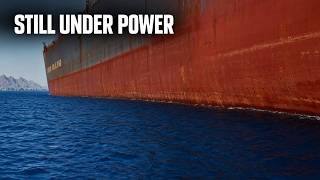
Tanker keeps sailing after waterline explosion near Oman; crew safe