政治 · 军事领导层
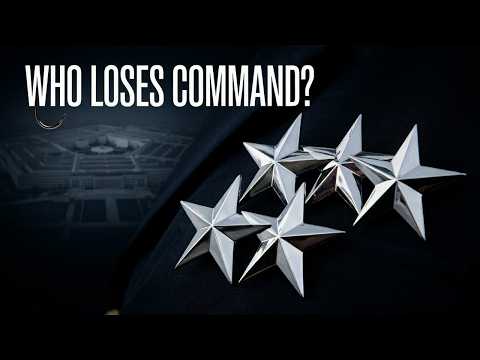
赫格塞思拟削减20%的高级将领——但缺少核算依据
2027年1月1日这一目标把所称的解职人数与下令削减的职位合并计算。没有基准数据和受影响职位清单,就无法证明削减已经完成,也无法证明战备状态有所改善。
新闻追踪第 2 天
1 篇报道41 家媒体57 个来源11 个视频
- 暂无标注日期的事件
Fox News最先报道
TribLIVE.com
Washington Examiner
CBS News
AOL.com
Air & Space Forces Magazine
CNN
MS NOW
The Straits Times
The Jerusalem Post | JPost.com
ABC News
Al Jazeera
Military.com
The Independent
The Seattle Times
C-SPAN
Los Angeles Times
The Washington Sun
Stars and Stripes
Breaking Defense
The Guardian
DefSec Wire
The Hill
PBS NewsHour
ABC News (Australia)
译自英文原文。
原语言视频
文字实录 · 正在加载
皮特·赫格塞思承诺精简军方领导层,同时提议新设一个四星级司令部。更紧迫的问题是,他为削减约20%所作的辩护,把被解职的军官与被下令裁撤的职位混在一起——这两项指标并不能证明指挥架构实际上会缩减多少。5 7
国防部长在2026年9月30日于弗吉尼亚州匡蒂科海军陆战队基地发表的军力状况演讲中宣布了这项削减。据报道,实施期限为2027年1月1日。现场听众共包括600名O-3军官和E-6士兵,此外还有通过广播收听的观众。16 37
预计将宣布相关消息的早间报道,已被他已经宣布此事的报道所取代。澳大利亚ABC新闻10月1日的报道关注的是9月30日的演讲,并非第二次宣布。尚未明确的是完整的实施指令、受影响军官名单,或经独立核实的已完成削减核算。11 1 2
算术并不能证明削减已完成
赫格塞思称,负责数据测算的人员估计全军约有10%的将军和海军上将已被解职,他认为这个数字听起来差不多。他另称,自己已下令再削减10%的核定将官职位。他将两者合并称为削减20%。演讲没有说明统计时段、分母、重叠部分或完成日期。7
被解职的军官可能由他人接替,而职位本身并未取消。核定职位可以被撤销或降级,而不需要解雇任何人。因此,把这两个百分比相加,并不能独立证明高级领导层净缩减了20%。
相关报道本身也体现了这一差别。9月30日,C-SPAN《Washington Today》的报道将赫格塞思所说的解职加职位削减描述为合并后的削减;当晚,PBS NewsHour则称,约20%是2027年初要实现的目标。这是对实施状态的不同描述,并非单纯是早前报道已被后续报道取代。两者都没有提供经过审计的前后对照账目。3 1
绝对规模也未厘清。CBS News估计,约170个领导岗位可能受到影响;退役陆军准将泰·塞杜勒也在CNN单独估计约有170个职位。WBUR在9月30日的摘要则称,将削减约800个职位。其表述明确将800称为削减人数,并非可重新标注为基准、以使算术成立的数字。没有一份标明日期的官方总数,按现役、预备役和国民警卫队分别列出人数并调和这些数字。8 23 49
确切的要求也需要澄清。CBS News和《今日美国》的事前报道称要削减20%,而《华盛顿邮报》称削减幅度最高可达20%。完整指令将能确定这一数字究竟是固定目标还是上限。12
把这项计划称为早前10%目标的翻倍,也简化了更复杂的政策。《将官/将旗军官裁减备忘录》的日期为2025年5月5日;5月7日是转载版本的发布日期。当时的报道指出,该政策设有更广泛的10%岗位削减目标,以及至少削减20%的现役四星上将和海军上将、至少削减20%的国民警卫队将官。更广泛条款的完整执行文字目前无法查证。39 43 41 48
《国会山报》5月5日的报道将现役四星上将与国民警卫队将官分开说明;InsideDefense在5月5日的简略表述则将两类合并为现役和国民警卫队的四星领导人。国民警卫队条款不应被缩减为仅针对四星级人员的类别——这两种表述都不能证明所有国民警卫队人员将被削减20%。《Defense One》称,早前命令没有规定期限;2027年1月1日是新计划的期限。41 46 48
CNN刊载的一位退役上校评估称,把先前和预期的削减合并计算,幅度约为30%,甚至可能更高,同时强调结果仍不确定。这不是修订后的官方目标。由于重叠部分未知、基准不断变化,不能简单地把这些百分比相加。早前关于受影响职位数量的预测,同样不能作为已完成裁撤的记录。23 47
领导人减少,机构却在增加
另一种警告认为,削减领导层可能削弱指挥能力,并助长政治上的趋同。民主党参议员马克·凯利是一名退役海军上校,他于9月29日批评这些削减,称其会降低人们的安全;ABC报道了他将此形容为清洗军中最优秀领导人的说法。退役海军陆战队中校艾米·麦格拉思在MS NOW节目中警告称,这会产生连锁影响,并表示恐惧文化已经形成。这些是评估,并非对整个部队进行衡量后得出的结论。9 10 4
塞杜勒也在CNN指称,赫格塞思干预晋升评审委员会,阻挠军官晋升,尤其针对女性和黑人军官。他表示,正在为有望晋升将军的人员制定一项新测试,并称参谋长联席会议八名成员中有五人已被撤换。相关决定、测试标准、人员名单和统计时段尚未得到独立证实。这些说法值得促使人们审视遴选规则;但若没有支持性记录,就不能据此认定个别决定存在歧视。23
MS NOW另行报道称,陆军部长丹·德里斯科尔在9月30日约一个月前辞职,此前他与赫格塞思之间出现紧张关系。其具体辞职日期和直接公告尚未得到证实;9月10日的一篇报道仍称他是陆军部长。不能将他据报道离任一事视为这项特定命令已证实的后果。4 50
与此同时,赫格塞思宣布计划设立一个四星级司令部,专注于无人机、机器人和自主作战,旨在领导全军范围的装备部署工作。其正式名称、组织归属、指挥官和启动日期均未说明。在撤销其他职位的同时设立新司令部,本身并不矛盾,但缺少净组织规模的核算。5 34
新设的宗教事务办公室同样没有明确的职权范围、人员配置计划或时间表。澳大利亚ABC将一项关于战争未来的研究称为“梅里迪安计划”,并称埃隆·马斯克将共同领导该项目。《Breaking Defense》则称,马斯克、帕尔默·拉基和前众议院议长纽特·金里奇是研究小组负责人,但没有说明各自的具体职责或正式权限。5 2 33
2026年9月6日,我们报道了赫格塞思将中东部署延长至2027年。这仍是一篇有明确日期的报道,而非刚刚核实的兵力人数。新宣布的计划把领导层重组期限与早前报道记录的承诺并列提出。
未知
- 目前没有完整的受影响编制岗位清单、经核实的基准或净削减核算,能够证明计划已实施或效能有所提升。
后续
- 到期时,应区分解职与职位撤销或降级,披露与早前裁撤的重叠部分,并核算新设的司令部和办公室。
本报道的来源
PBS NewsHour,完整节目 1;澳大利亚ABC,宣布相关报道 2;C-SPAN,《Washington Today》 3;MS NOW,演讲及退役军官反应 4;PBS NewsHour,新闻简报 5;《卫报》,裁撤及配套举措 6;C-SPAN,赫格塞思谈裁减 7。
CBS News,领导岗位估算 8;CBS News,事前报道及凯利的批评 9;ABC News,9月30日综述 10;ABC News,预计宣布相关消息的报道 11;ABC News,事前报道汇总 12;路透社,事前报道 13;CBS News,计划中的削减 14;《今日美国》,职位削减计划 15;Fox News,目标及期限 16。
《华盛顿邮报》,高层级整顿 17;《Air & Space Forces Magazine》,更大幅度的削减 18;TribLive,预计宣布相关消息的报道 19;《海峡时报》,事前报道 20;《华盛顿观察家报》,领导层削减 21;《耶路撒冷邮报》,计划中的削减 22;CNN,退役军官访谈 23。
《洛杉矶时报》,确认已宣布 24;ABC News/AP,确认已宣布 25;CBS Colorado,裁撤报道 26;Military.com,职位削减 27;CBC News,确认计划 28;半岛电视台,削减计划解读 29;AOL,声称已完成的削减 30。
国防部举措公告 31;《星条旗报》,匡蒂科演讲 32;《Breaking Defense》,司令部及研究小组 33;《Air & Space Forces Magazine》,自主作战司令部 34;CNN,演讲报道 35;《国会山报》,演讲要点 36;Public转载的国防部报告 37;TribLive,确认已宣布 38。
播出原貌 17 行
- On September 6, we reported Hegseth had extended Middle East deployments into 2027. Now he has announced a roughly twenty-percent cut in generals and admirals. The restructuring targets the military's senior command and oversight ranks while those previously documented commitments extend into next year. Which commands lose senior leadership, and what evidence will show the cuts improve military effectiveness?
- Defense Secretary Pete Hegseth has turned an anticipated overhaul into announced policy—not a verified record that one in five senior officers has already been dismissed. He delivered his state-of-the-force address at Marine Corps Base Quantico in Virginia on September 30, 2026. The in-person audience totaled six hundred O-3 officers and E-6 enlisted personnel combined, alongside a broadcast audience. That was not six hundred people in each category. The reported implementation deadline is January 1, 2027. Earlier accounts anticipated the announcement; later accounts confirmed it happened. Coverage published October 1 concerns the same September 30 address, not a second announcement.
- A firing does not necessarily eliminate a command position. The twenty-percent figure combines two different kinds of change: an estimate that about ten percent of generals and admirals had been fired, and a separately directed ten-percent reduction in authorized general-officer slots. The firing estimate came from number crunchers and was accepted by Hegseth as sounding about right. It was not presented with an officer roster or an independently checked calculation. The period covered, the denominator for each percentage, the overlap between the groups and the completion dates remain unspecified. A dismissed officer can be replaced while the job survives. A slot can disappear—or be downgraded—without anyone being fired. Adding those percentages does not independently demonstrate a twenty-percent net contraction.
- The accounts differ over whether the reduction is already accomplished or still ahead. That is not resolved simply by the later publication time: the descriptions count different mechanisms and leave their baselines unclear. The defensible conclusion is an announced reduction target and a claimed history of removals—not an audited finding that the full plan is complete. Early descriptions also differed between a fixed twenty-percent target and cuts of as much as twenty percent. A complete implementation directive would be needed to settle the exact obligation.
- The earlier policy had three categories, not one uniform ten-percent cut. The General/Flag Officer Reductions memorandum was dated May 5, 2025. May 7 was the publication date of reproductions, not the memorandum's date. Its targets included a broader ten-percent reduction in general and admiral jobs, at least twenty percent of active-duty four-star generals and admirals, and at least twenty percent of National Guard general officers. The complete operative wording of the broader ten-percent clause is unavailable, leaving its denominator, component coverage and qualifications uncertain. Describing the new target as double the earlier one captures the headline percentages, but not all those distinctions. The Guard category was not limited to four-stars and does not establish a twenty-percent cut to all Guard personnel. A separate reference to Guard reductions supplies neither a new Guard-wide troop-cut order nor a clear relationship to this plan. The earlier order was described as having no deadline. January 1, 2027 belongs to the new plan; it should not be retroactively attached to the original memorandum. Nor does a reference to the previous May establish a separate May 2026 order.
- The estimated scale ranges from about one hundred seventy positions to around eight hundred cuts, with no official accounting to reconcile them. Neither of the roughly one-hundred-seventy estimates is an official list of affected billets. The larger figure explicitly describes positions being cut, not the starting population. Relabeling eight hundred as a baseline would change the claim rather than verify it. Its accuracy and compatibility with the smaller estimates remain unestablished. A dated official total, separated into active-duty, reserve and Guard components, is missing.
- Two older numbers cannot fill that gap. A May 13, 2025 projection put the earlier plan at more than one hundred twenty jobs across active duty and the Guard. That was not a count of completed removals and cannot be added to September's estimate. Another May 2025 figure—around forty-four active-duty four-star positions—came from statutory limits, not a verified serving-officer headcount. Applicable legal exceptions and counting rules have not been established, so the available evidence does not identify exactly which changes can be made administratively and which require Congress.
- A cumulative estimate of around thirty percent, possibly more, is not a revised official target. It combines earlier and anticipated reductions despite uncertain overlap. Successive percentage cuts cannot simply be added when their baselines change. The same retired-colonel assessment compares one general or admiral per six thousand troops in World War Two with one per fourteen hundred in the current period. Matching populations, component definitions and underlying calculations have not been independently verified. Those ratios alone cannot prove that today's command structure is wasteful or that removing a particular percentage improves readiness.
- Hegseth's policy argument is that unnecessary bureaucratic layers obstruct military growth and effectiveness. He presents preparing to fight and win as the department's singular mission, frames the personnel changes as accountability and rejects the characterization of them as a purge. A leaner headquarters could improve effectiveness, but that remains a possibility, not a demonstrated outcome. The result depends on which tasks disappear, which shift to remaining commanders, and whether essential expertise and oversight survive. No quantified savings, shorter decision times or measured readiness gains have been established.
- A new four-star command would expand another part of the leadership structure. The announced autonomous-warfare command would focus on drones, robotics and other autonomous systems, leading a military-wide effort to field them. Its exact formal name, placement, commander and operational start date remain unspecified. Adding that command while cutting other senior posts is not necessarily contradictory, but no complete before-and-after accounting shows how it fits the net reduction.
- The new Office of Religious Affairs also lacks an established mandate, staffing plan, reporting structure and timetable. A future-of-warfare study, described as Project Meridian, involves Elon Musk, technology entrepreneur Palmer Luckey and former House Speaker Newt Gingrich. Musk was identified as a co-lead; other descriptions name all three as study-group leaders without assigning individual responsibilities. Their announced involvement does not establish full membership, contracts, formal powers or final recommendations. University education partnerships and a new military base were also described, but no partner universities, base location, construction schedule or funding commitments were established. Six initiatives were announced; the complete list and every exact formal name remain unavailable.
- The opposing warning is that the changes could weaken command and encourage political conformity. The criticism includes a threat to safety and the loss of some of the military's best leaders. Another assessment warns of large ripple effects and a culture of fear, including a claim that fear has already taken hold. Those are assessments, not independently measured findings about the entire force. Readiness, oversight and efficiency depend on the actual posts and commands changed. A warning that many proposed changes require congressional action does not establish which legal provisions govern each initiative.
- The selection process raises another unresolved issue. Allegations include a new test for candidates to become generals, removal of five of eight Joint Chiefs members, and intervention in promotion boards to block officers, especially women and Black officers. The test's criteria and status, the roster and counting period, and specific board decisions and supporting records have not been independently established. Broader descriptions of officers being fired, sidelined or blocked from promotion do not prove those specific allegations or discriminatory intent in individual decisions. A resignation attributed to Army Secretary Dan Driscoll about a month before September 30, amid tensions with Hegseth, is also unresolved. An exact date and direct announcement are missing, and a September 10 account still described him as Army secretary. His reported departure cannot be treated as a verified consequence of this reduction order.
- Quantico was also the site where Hegseth summoned hundreds of generals a year earlier. His earlier disparagement included the phrase “fat generals and admirals,” but a complete surrounding quotation is not established. That language supplies no measure of command performance and no evidence identifying which positions are unnecessary.
- About eighty-percent crew retention does not settle the morale question. Hegseth rejected low-morale concerns as false and used retention aboard the USS Abraham Lincoln in his defense. Eight Navy personnel assigned to the carrier attempted suicide during its two-hundred-eighty-six-day deployment. The deployment was extended beyond its scheduled May end amid the war with Iran; the crew disembarked in Thailand on September 1. Retention and suicide attempts measure different things. These figures do not independently establish morale across the force or a causal relationship with the senior-officer reductions.
- The current material describes the Iran war as entering its eighth month, but establishes no new troop-strength or casualty ledger relevant to these cuts. The deployment extensions we reported September 6 remain dated history, not a freshly verified count of forces deployed today.
- Which commands lose leadership remains unanswered: no complete affected-position list or before-and-after structure has been established. Nor is there evidence yet demonstrating improved military effectiveness. The next concrete test is January 1, 2027. An implementation accounting would need to separate dismissals from abolished or downgraded billets, identify the target's denominator, resolve overlap with earlier cuts and place the new autonomous-warfare command and offices within the resulting structure. Until that accounting exists, the roughly twenty-percent announcement is a policy target, not verified completion. No measured improvement in efficiency, readiness or safety has been established.
来源
57 个来源41 家媒体11 个视频2 篇通稿
- 首次报道于
- Hegseth to announce a 20% cut to generals and admirals
- Hegseth cutting generals and admirals by 20%, including top officers who "clung to the woke department" - CBS Colorado
- U.S. military clears out of Iraq after 12 years of anti-ISIS operation
- U.S. forces withdraw from Iraq after Operation Inherent Resolve began in 2014
Defense Newsdefensenews.com1
Defense Onedefenseone.com1最先
insidedefense.com1
Seapower Magazineseapowermagazine.org1
STARRSstarrs.us1
thepreamble.com1
USA TODAYusatoday.com1
washingtonpost.com1
来源地图
追溯本篇报道的依据。图谱展示其关联;下方链接可打开本文引用的来源。
来源图谱将在您阅读时加载。
译文更新于
修订记录
- r1首次发布。