
Justice · Failed executionContinuing story · report 6 of 6
Two doses, constant pain: Christa Pike speaks after Tennessee’s failed execution
In her first public statement since surviving two pentobarbital doses, Pike describes continuing pain. Her lawyers seek life imprisonment; Governor Bill Lee expects her death sentence to remain.
Transcript · LOADING
Continuing storyDay 37
6 reports248 outlets608 sources123 videos
Full story Update 1Christa Pike’s execution halted; Tennessee asks Supreme Court to lift stay
 Update 2Two Doses, One Failed Execution: Tennessee Pauses After Pike Survives
 Update 3Who Reviews a Failed Execution When the Reviewer Wrote the Rules?
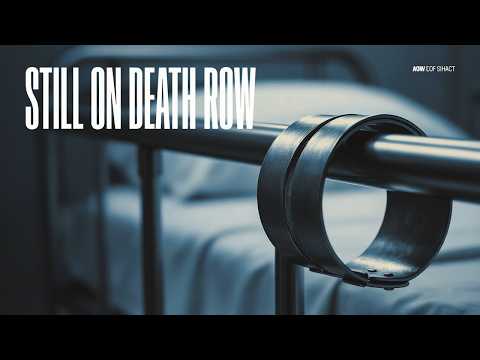 Update 4Christa Pike Is Awake. Could Tennessee Try to Execute Her Again?
 Update 5After Christa Pike’s Failed Execution, Her Rescue Was Called a False Alarm
 Update 6Two doses, constant pain: Christa Pike speaks after Tennessee’s failed executionYou are here
What changed since our last report
17 days later
Then
After Christa Pike’s Failed Execution, Her Rescue Was Called a False AlarmWhat we said was still open
Whether Pike wakes, what injuries she has, and whether any state clinician will confirm her condition.
Still openWhat caused the failure, and whether the drug reached her bloodstream.
Still openThe cause of the failure remains unexplained, including whether the pentobarbital reached her bloodstream as intended.
When Stanton reports, and whether the findings will be public.
Still openNo reporting date for Stanton’s findings, or commitment to publish them in full, is established by the new accounts.
Strada's resignation takes effect at the end of October, and an interim commissioner is to be named.
Still openThe new reporting does not confirm the anticipated leadership transition or identify an interim commissioner.
Whether Lee answers the commutation request before his term ends in mid-January.
Still openLee has stated his expectation that the sentence will remain, but has not announced a final decision on the commutation request. 1
Whether Sutton's intellectual-disability claim gets a hearing.
Still openThere is no new information establishing whether Sutton’s intellectual-disability claim will receive a hearing.
Now
In her first public statement since surviving two pentobarbital doses, Pike describes continuing pain. Her lawyers seek life imprisonment; Governor Bill Lee expects her death sentence to remain.
Two doses of pentobarbital did not kill Christa Pike. A month after Tennessee tried to execute her, she says there has not been a moment without pain. Her lawyers want her death sentence commuted to life imprisonment. Governor Bill Lee has signaled that he expects the sentence to remain. 1
That leaves Pike recovering from an execution attempt without an assurance that she will not face another one. Her first public statement, released through her attorneys on Friday, October 30, gives her own account of that recovery. It does not come with a medical prognosis, an explanation of why the execution failed or a final decision on her request for life imprisonment.
Pike, 50, dictated the statement from the infirmary at the Debra K. Johnson Rehabilitation Center, where she was returned after being hospitalized. She said she entered the execution chamber prepared to die in peace, having never contemplated a life beyond her execution date. Instead, she woke alone and confused in a hospital bed. 1
There hasn’t been a moment since that night when I haven’t been in pain.
“My body hurts. My arms hurt. My hands hurt. My throat hurts. I still struggle to speak,” she said. “And the pain isn’t just physical. There is pain in my mind and in my soul.” These are Pike’s descriptions of her symptoms, not an independent clinical assessment of the extent or permanence of her injuries. 1
Her lawyers had previously described pneumonia, substantial swelling in her arms and an inability to swallow after the September 30 attempt. Friday’s statement adds her continuing difficulty speaking and her assessment that she is getting stronger. “But healing is not the same as being okay,” she said. It does not establish whether the earlier complications have resolved or whether she has regained full use of her arms. 2
What has changed since our reports
On October 8, HeyDay News reported that Pike had awakened and begun speaking six days after the execution attempt, while remaining seriously ill and unable to move either arm. We also reported Davidson County Chancellor I’Ashea Myles’s October 7 order requiring Tennessee officials to preserve evidence from the attempt. Her awakening is therefore not the new development. Her ability to describe what followed, in a public statement of her own, is.
On October 13, we reported roughly half an hour of confusion over whether an ambulance request was genuine. A caller described an unconscious prisoner breathing slowly and with difficulty after execution drugs had been administered. Dispatch was subsequently told the report was false and medical help was not needed. That sequence raises a separate question about the emergency response; it does not, by itself, explain why the lethal injections failed.
Pike’s return to prison is established, but the precise date she left hospital remains unclear. BBC News’s October 30 report places her discharge at the end of September, a date not reconciled with the early-October recovery chronology we previously reported. It should not be treated as settled. The new accounts offer her statement and earlier descriptions from her lawyers, not a new independent medical assessment. 1 2
Pike thanked the medical workers who saved her life and the people who showed her kindness. Her gratitude does not resolve the questions about how emergency help reached her, just as her description of improvement does not establish what treatment or rehabilitation she may still need. 1
A sentence unchanged, an explanation missing
Lee told reporters this week: “I suspect her sentence will be the same as before unless determined otherwise by the courts.” His words set out an expectation, not a court ruling. Nor do they amount to an announced final denial of the attorneys’ commutation request. No reduced sentence or date for another execution attempt has been announced. 1
The governor has called for an investigation and postponed Tennessee’s other lethal injection scheduled for this year. Those actions acknowledge that the failed execution requires examination. Neither changes Pike’s sentence. The available reporting supplies no completed findings, no explanation of whether the drug reached her bloodstream as intended and no timetable for making investigative findings public. 1
There are two decisions here that should not be blurred together: establishing what Tennessee did wrong, if anything, and deciding whether Pike should remain under a sentence of death. An investigation is not clemency. An expectation that a sentence will continue is not an explanation of how an execution left a prisoner critically ill but alive.
The crime for which Pike was sentenced remains essential to this account. In 1995, she and her then-boyfriend, Tadaryl Shipp, beat, tortured and killed 19-year-old Colleen Slemmer, whom they had met at a job-training camp for low-income young people. The killing included a stabbing. Pike was 18. Shipp was legally a juvenile and was spared the death penalty; he remains imprisoned. Pike has spent about 30 years in prison. 1 2
In her statement, Pike accused those responsible for the execution attempt of incompetence, while also acknowledging Slemmer’s family. “I continue to think about my victim’s family and the terrible pain and loss they have endured,” she said. The accusation of incompetence is hers; the new reporting does not establish a specific cause of the failure. Slemmer’s death and her family’s loss are not erased by what happened in the execution chamber. 1
Pike says she does not know why she survived or what comes next. For now, the state has left her with the same death sentence while it investigates the attempt to carry it out. Her immediate task, she said, is narrower: “For now, I am trying to heal, one day at a time.” 1
As aired 15 lines
- Christa Pike describes constant pain after surviving two lethal injections. Her lawyers want her death sentence reduced to life imprisonment, while Tennessee's governor expects it to stay in place. Whether she will recover under that same death sentence is still unresolved.
- On October 8, we reported that Pike had awakened and begun speaking six days after the attempt. She was still seriously ill and unable to move either arm. Now, in her first public statement, she describes continuing pain and difficulty speaking.
- Pike, who's 50, survived two doses of pentobarbital, the execution drug, on September 30. The injections left her critically ill. She was taken to hospital and later returned to prison. Her attorneys released her statement on Friday, October 30, a month after the execution attempt.
- Pike dictated the statement from the infirmary at the Debra K. Johnson Rehabilitation Center. She said she entered the execution chamber prepared to die in peace, then woke alone and confused in a hospital bed.
- She said she'd never contemplated a life beyond her execution date. Now she describes pain in her arms, hands and throat, along with emotional suffering. Her lawyers had earlier described pneumonia, substantial swelling in her arms and an inability to swallow.
- Pike said, “There hasn’t been a moment since that night when I haven’t been in pain.” She also described pain beyond her physical injuries, saying, “There is pain in my mind and in my soul.”
- Pike says she's recovering and getting stronger. But she adds, “But healing is not the same as being okay.” She thanked the medical workers who saved her life and the people who showed her kindness. The struggle she describes follows unanswered questions about how emergency help reached her.
- On October 13, we reported roughly half an hour of confusion over whether an ambulance request was genuine. A caller described an unconscious prisoner breathing slowly and with difficulty. Dispatch was subsequently told the report was false and medical help wasn't needed.
- A judge had already ordered Tennessee officials to preserve evidence from the execution attempt. Davidson County Chancellor I’Ashea Myles issued that order on October 7. The emergency-call sequence adds to the demand for an explanation, but the cause of the failed execution still hasn't been explained.
- Governor Bill Lee expects Pike's death sentence to continue. This week, he said, “I suspect her sentence will be the same as before unless determined otherwise by the courts.” Her attorneys are asking him to commute it to life imprisonment.
- Lee has called for an investigation into the failed execution. He's also postponed Tennessee's other lethal injection scheduled for this year. Pike's death sentence remains in place, and Lee hasn't announced a final decision on her lawyers' request. There's no announced date for another execution attempt.
- Pike has returned to prison, although the exact date she left hospital is unclear. Her statement gives her own account of recovery. Lee hasn't said when investigative findings will be released or whether the full findings will be made public.
- Colleen Slemmer was 19 when Pike and her then-boyfriend, Tadaryl Shipp, beat, tortured and killed her in 1995. The killing included a stabbing. They'd met at a job-training camp for low-income young people. Pike was 18. She's now spent about 30 years in prison.
- Shipp was legally a juvenile when they killed Slemmer, so he was spared the death penalty. He remains imprisoned. Pike blamed incompetence for the execution attempt and said she continues to think about her victim's family and their pain and loss.
- Pike says she doesn't know why she survived or what comes next. Her request for life imprisonment remains unresolved while the state investigates the attempt to execute her. She described her immediate task this way: “For now, I am trying to heal, one day at a time.”
Sources
2 sources2 outlets
BBC Newsbbc.co.uk1First
The Seattle Times — Localseattletimes.com1
Source map
Follow the evidence behind this report. The map shows its connections; the links below open the sources cited in this article.
Source map loads as you read.
Revision log
- r1First published.