Energy · Nuclear waste
Finland’s Onkalo wins operating licence, but disposal must wait
Nearly fourteen years after its construction-licence application, Finland’s pioneering repository has operating permission. Commissioning and regulatory acceptance still stand between Onkalo and permanent spent-fuel disposal.
Transcript · LOADING
Story trackerDay 2
1 report22 outlets50 sources
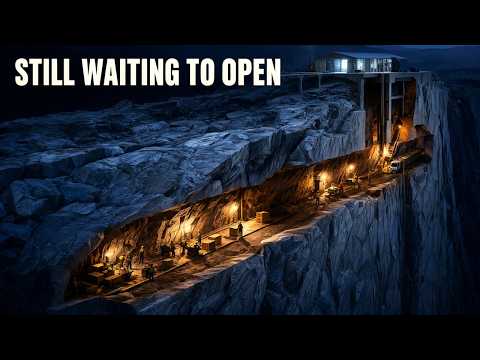
Nearly fourteen years after Posiva applied for permission to build Finland’s permanent spent-fuel repository, the project has reached another threshold: permission to operate it. The company says the Finnish government granted Onkalo an operating licence on October 22, 2026. That advances a long effort to give nuclear fuel a permanent destination—but it does not mean disposal has begun. 18 2
Before spent fuel can be permanently placed underground, Posiva must complete commissioning tests and inspections, and Finland’s Radiation and Nuclear Safety Authority, STUK, must verify and approve that work. No opening date has been set, Al Jazeera reported on October 23, citing the operator. The next milestone is not another announcement of intent; it is regulatory acceptance that the facility and the people running it are ready. 1
Onkalo is intended to become the world’s first permanent underground repository for spent fuel from commercial nuclear power plants. That distinction is narrower—and more meaningful—than calling it the first nuclear-waste disposal site. Other countries already have final-disposal facilities for low- and intermediate-level radioactive waste. Spent reactor fuel is the particular challenge Finland is working to resolve. 6 29 41
A destination beneath Finland’s reactor fleet
The facility is at Olkiluoto in Eurajoki, western Finland. Its above-ground encapsulation plant connects to an underground disposal facility; STUK’s September 2021 description places the intended destination of canisters transferred down the canister-hoist shaft at 420 metres. That is a documented repository level, not a measurement of every tunnel in the complex. 6 29
Onkalo began as an underground research facility, where investigators studied whether Olkiluoto’s bedrock was suitable for final disposal. Research, construction and testing have all served the same eventual purpose. But digging into the rock, assembling disposal equipment and rehearsing its use are different achievements from permanently disposing of radioactive spent fuel. 30
Posiva’s owners are Teollisuuden Voima, known as TVO, and Fortum Power and Heat. Their disposal programme covers spent fuel from the Olkiluoto and Loviisa nuclear power plants and is described as serving Finland’s five reactors. Loviisa is part of that intended programme, even though Fortum holds separate permissions for its power station and associated waste-management facilities. The precise reactor-by-reactor conditions of the final Onkalo licence have not been independently verified for this report. 17 6 1 12
The stated design capacity is 6,500 tonnes of uranium. The unit matters: it measures the uranium associated with the fuel, not the combined weight of fuel, canisters and other packaging. It is also a design figure, not a binding maximum independently established from the final operating licence. 1
The long route to operating permission
- December 31, 201218
Posiva applies for a construction licence for the encapsulation and disposal facility.
- December 30, 202148
With construction under way, Posiva submits its operating-licence application.
- August 4, 2026118
Publication of STUK’s safety assessment moves the operating licence into government preparation.
- October 22, 20262
Posiva announces that the government has granted the operating licence.
Testing the system, not just machinery
Commissioning is more than checking whether individual machines switch on. Posiva’s integrated trial was designed to test equipment, systems, processes and the organisation together, including the personnel expected to operate them. A repository must function as a coordinated operation, not simply a collection of completed components. 35
There has already been substantial preparatory work. On May 3, 2024, Posiva reported that underground ventilation and piping had been completed and commissioned to the extent required for the trial run. That was readiness for a defined test phase—not a declaration that all commissioning was finished. 36
Test operation began on August 30, 2024, using non-radioactive dummy fuel elements. A December 16 update confirmed that the integrated trial had begun at the end of August and that its tests used no spent nuclear fuel. Those accounts establish that rehearsal began; they do not establish completion and final acceptance of the entire trial programme. 34 35
A later approval was similarly specific. On November 25, 2025, Posiva reported that STUK had approved the construction plan for an extruded copper tube forming part of the disposal canister’s copper shell. That was a component-plan approval, not approval of the entire completed canister or permission to start repository operations. Nor should a manufacturing approval be mistaken for demonstrated long-term containment. 39
The October licence announcement is a more consequential step, but its legal particulars still require care. The grant is documented in Posiva’s announcement; the final government decision instrument was not independently obtained for this report. Its effective period, binding quantities and detailed conditions therefore cannot be certified here, and earlier application documents cannot substitute for the final decision. 2 14
Construction is not the whole bill
The financial figures need comparable discipline. Al Jazeera put the site’s estimated cost at $1.16 billion. Separately, French reporting on October 23 described an approximate €1 billion construction cost. These concern the same project and should not be added together; an exact conversion between the estimates has not been established. Neither is a verified total for the facility’s entire operating life. 1 23
A Posiva-associated disposal-facility cost record in the International Nuclear Information System illustrates the broader obligations: underground rock characterisation, above- and below-ground investment, operations, decommissioning the encapsulation plant and closing the repository. Building Onkalo is only one part of paying for permanent disposal. A dated operator baseline connecting all those obligations to the headline construction estimate remains unverified. 21
What remains unresolved is the timetable. There is no verified test-by-test completion schedule, confirmed date for STUK’s final pre-start acceptance or opening date. Posiva, led by chief executive Ilkka Poikolainen, still has to finish the commissioning work and secure the regulator’s approval. October’s licence moves Onkalo closer to its purpose. It does not establish that any radioactive spent fuel has yet been permanently disposed of there. 1
As aired 17 lines
- Finland is preparing to bury spent nuclear fuel 420 metres underground. Posiva says the government has granted Onkalo an operating licence. The project would create the world's first permanent underground disposal route for spent fuel from commercial reactors. When can Finland turn that permission into permanent disposal?
- Onkalo is at Olkiluoto in Eurajoki, western Finland. Its disposal programme serves fuel from the Olkiluoto and Loviisa nuclear power plants. Those plants belong to TVO and Fortum, the companies that own Posiva.
- The programme is intended to serve Finland's five reactors. Its practical purpose is to give their spent fuel a permanent destination. Other countries already have disposal facilities for low- and intermediate-level radioactive waste. Onkalo's first-of-its-kind role concerns spent fuel from commercial nuclear power plants.
- The government granted the licence on October 22, Posiva says. Before disposal begins, the company must complete commissioning tests and inspections. Finland's Radiation and Nuclear Safety Authority, known as STUK, must verify and approve that work.
- Commissioning means checking that the facility and its organisation can carry out their jobs together. Posiva has already tested equipment and procedures using dummy fuel. That work prepares the route for spent fuel, with regulatory acceptance still ahead.
- Posiva, led by chief executive Ilkka Poikolainen, links an above-ground encapsulation plant with an underground disposal facility. A canister-hoist shaft is designed to take disposal canisters down to the repository level, documented at 420 metres.
- That depth describes the planned destination of the canisters. Onkalo began as an underground research facility, where investigators studied whether Olkiluoto's bedrock was suitable for final disposal. The investigation, construction and testing have built toward the same goal: placing spent fuel underground permanently.
- Onkalo's stated design capacity is 6,500 tonnes of uranium. That measures the uranium associated with the fuel. The canisters and other packaging add mass of their own. The figure describes the facility's design capacity.
- Posiva's preparations stretch back well over a decade. The company applied for a construction licence on December 31, 2012. By January 2018, Finland was the only country that had begun building a repository for final disposal of its spent nuclear fuel.
- Posiva submitted its operating-licence application on December 30, 2021, while construction was still under way. That began the request for operating permission. The government grant announced this October came almost five years later.
- Underground ventilation and piping reached the readiness needed for a trial run, Posiva announced on May 3, 2024. The systems had been completed and commissioned far enough to support that test phase. The trial would then bring equipment and people together.
- Test operation began on August 30, 2024, using non-radioactive dummy fuel elements. The integrated trial tested how equipment, systems and processes worked together, alongside the organisation and personnel expected to run them.
- A December 16 update confirmed that the trial had begun at the end of August and used no spent nuclear fuel. Further approvals followed. On November 25, 2025, Posiva announced STUK's approval of a construction plan for an extruded copper tube used in the disposal canister's copper shell.
- The copper approval covered that component's construction plan. STUK's safety assessment was published on August 4, 2026, moving the operating licence into government preparation. October's grant advanced the project again, while leaving commissioning approval as the next gate.
- The site's estimated cost is 1.16 billion dollars. A separate construction estimate puts the building cost at about one billion euros. Both figures concern Onkalo, and they shouldn't be added together. The broader financial commitment continues through operation and eventual closure.
- A disposal facility's lifetime costs can cover underground characterisation, investment above and below ground, and operations. They can also include decommissioning the encapsulation plant and closing the repository. Those obligations extend beyond the work of building it.
- Posiva still has to finish commissioning tests and inspections, and STUK must accept that work before permanent disposal begins. Nobody has set an opening date.
Sources
50 sources22 outlets
posiva.fi10
- Posiva - Historic decision: Finnish Government grants operating licence to Posiva
- Posiva - STUK’s safety assessment takes the world’s first final disposal facility closer to an operating licence
- Introducing ONKALO and its principle of operation
- ANNUAL REPORT
- Posiva - Introducing ONKALO and its principle of operation
- Posiva - Test operation – Countdown to starting final disposal
- Posiva - Trial Run ensures safety of final disposal
- Posiva - Underground final disposal facilities achieve readiness for Trial Run of Final Disposal
- Posiva - Posiva yet another step closer to start of final disposal - STUK approves construction plan for Posiva’s extruded copper tube
- Posiva - Final disposal
iaea.org7
- Cost estimate of Olkiluoto disposal facility for spent nuclear fuel | INIS – International Nuclear Information System
- Experiences from 40 Years of Safeguards-by-Design to the Operation of the Deep Geological Repository in Finland
- SRIS - Spent Fuel and Radioactive Waste Information System
- A sustainable solution for spent fuel and high level waste disposal | IAEA
- Solving the Back End: Finland's Key to the Final Disposal of Spent Nuclear Fuel
- Joint Convention on the Safety of Spent Fuel Management and on the Safety of Radioactive Waste Management. 8th Finnish National Report as referred to in Article 32 of the Convention
- Solving the back end: Finland’s key to the final disposal of spent nuclear fuel
tem.fi5
- MEAE to prepare operating licence for spent nuclear fuel disposal facility of Posiva, taking into account Radiation and Nuclear Safety Authority's safety assessment - Ministry of Economic Affairs and Employment
- DECISION VN/7906/2022
- OPERATING LICENCE APPLICATION
- UNOFFICIAL TRANSLATION
- Posiva to apply for an operating licence for a spent nuclear ...
stuk.fi4
- Oversight reports of final disposal facility | Säteilyturvakeskus STUK
- Encapsulation and final disposal facility | Säteilyturvakeskus STUK
- Säteilyturvakeskuksen turvallisuusarvio Posivan käyttölupahakemuksesta
- Kysymyksiä ja vastauksia Posivan käyttölupahakemuksesta, STUKin lausunnosta ja loppusijoituksesta muutenkin
Al Jazeeraaljazeera.com2
BBC Newsbbc.com1
- First reported
- Finland's plan to bury spent nuclear fuel for 100000 years
dailyfinlanddailyfinland.fi1
France 24france24.com1
- First reported
- Finland grants licence for world's first nuclear waste ...
Interesting Engineeringinterestingengineering.com1
JeChangejechange.fr1
POWER Magazinepowermag.com1
Site Selection Magazinesiteselection.com1
- First reported
- Hiding Place
The Independent Global Nuclear News Agencynucnet.org1
valtioneuvosto.fi1
vietnam.vn1
wikipedia.org1First
- First reported
- Onkalo spent nuclear fuel repository
Yle Uutisetyle.fi1
Source map
Follow the evidence behind this report. The map shows its connections; the links below open the sources cited in this article.
Source map loads as you read.
Revision log
- r1First published.