
Energy · Hormuz blockadeContinuing story · report 3 of 8
Hormuz Locked After U.S.-Iran Deal Expires — Claims Collide
A 60-day U.S.-Iran memorandum expired with no deal, Tehran conditioned reopening Hormuz on U.S. compliance, and Washington insisted the strait is open with no talks underway.
Transcript · LOADING
Continuing storyDay 10
8 reports242 outlets514 sources84 videos
Full story Update 1Iran to US: Lift Sanctions, Pull Back Forces or Strait Stays Shut
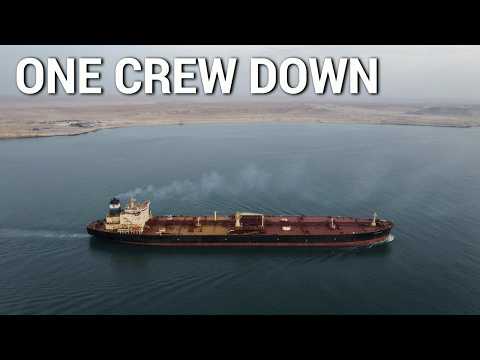 Update 2One Dead in the Strait: Minoan Dignity Strike Tests Who Controls Hormuz
 Update 3Hormuz Locked After U.S.-Iran Deal Expires — Claims CollideYou are here
 Update 460 Days Up, No Deal Signed, and Hormuz Stays ShutNewer
 Update 5Annihilation by Morning, Productive Talks by Night: The Hormuz Bargain After Three Hours in New YorkNewer
 Update 6Trump rejects Iran’s Hormuz offer. Its seven-day clock never startedNewer
 Update 7Yemen’s fighting uproots 200,000 as airports come under attackNewer
 Update 8All 21 Crew Evacuated as GFS Pride Sinks in Hormuz, Leaving a Wreck HazardNewer
What changed since our last report
Within the hour
Then
One Dead in the Strait: Minoan Dignity Strike Tests Who Controls HormuzStill open then
- No verified shooter, weapon type, ship flag beyond Liberia registry details, cargo, or current condition of the vessel.
- No verbatim text for Iran negotiator demands on blockade and frozen assets, and no finalized Oman-Iran statement on managing transit.
We said we'd watch for
- Whether Oman and Iran still publish transit rules after a fatal strike and a seizure.
- Whether owners and insurers keep sending crews through a corridor with two hits on one manager in two weeks.
Now
A 60-day U.S.-Iran memorandum expired with no deal, Tehran conditioned reopening Hormuz on U.S. compliance, and Washington insisted the strait is open with no talks underway.
Now established
- The 60-day Versailles memorandum expired August 17 with no broader deal.
- Iran says Hormuz stays closed until its memorandum conditions are met.
- Trump says no talks are taking place and the strait is open.
- Reporting describes limited traffic and weaker Iranian control, not normal transit.
More than 80% of liquid cargo was still reported moving through the Strait of Hormuz in the days after diplomacy lapsed, a number that captures both the waterway's weight and its exposure.4 This is the narrow passage that carries a major share of the world's oil and gas and the crews who move it daily, and it is not operating normally: traffic is severely restricted, shipping and insurance costs are higher, and safe transit cannot be assumed while rival accounts of open, closed and limited remain unreconciled.57
At the center is a clock that ran out. A 60-day memorandum of understanding signed at Versailles in June set a deadline for progress on Iran's nuclear program, sanctions relief and navigation, and that deadline passed on Monday, August 17, 2026, with no broader deal.89 Afterward, Tehran said the strait stays shut, Washington said it is open, and oil prices stayed elevated on disruption rather than resolution.57
Iran's position was stated bluntly on August 18 by Parliament Speaker Mohammad Bagher Ghalibaf, who is also described as parliament speaker and chief negotiator.11 The Strait of Hormuz will remain closed to maritime traffic until Iranian conditions set forth in the 14-point memorandum signed with the United States are fully met, a position tied to removal of sanctions and military operations.6 NTD confirmed that Qalibaf issued a list of demands on Tuesday while the U.S. blockade continues, using an alternate transliteration of his name.10 A Reuters-sourced Iranian account confirmed after the deadline passed that the strait stays shut, and Iran also threatened to escalate the conflict if no shipping deal is reached.23
The available sources do not provide the complete verbatim text of those reopening terms. The reporting file describes them in general terms around sanctions relief and an end to military operations, while noting that the source text truncates before a full list can be verified.6 That gap matters because any negotiation, replacement memorandum or sanctions decision would turn on precise language that is not yet publicly established in these sources.259
Washington says open, no talks
President Trump gave the opposite account on the two decisive days. He said on Tuesday that no talks were taking place with Iran and insisted the strait was open.25 On Wednesday he said Hormuz was open and the U.S. blockade of Iran had been successful, while reporting described traffic as limited rather than normal.47 He called for Iran's "white flag of surrender" and claimed "total control" in the strait.8
Navigation is therefore disputed three ways, and the sources do not reconcile. Iran says closed until demands are met.6 Trump says open, with mines removed or detonated.45 Independent-tinged reporting describes limited traffic and weaker Iranian control rather than either full closure or full normalcy.47 The United States insists the strait is open despite limited traffic, a formulation that itself concedes disruption while contesting Tehran's closure claim.7
Diplomacy gap remains unresolved
Diplomacy is contradicted at the highest level in the material available for this article. Trump says no talks are ongoing or scheduled.25 An August 17 claim attributed to the U.S. envoy about positive discussions was referenced in our broadcast narration, but none of the ten reporting sources provided here quotes the envoy directly, so his exact words cannot be verified from these sources. The honest result is a clash that the reporting file cannot resolve: a presidential denial of talks set against an envoy account that lacks independent corroboration here.
Other high-visibility details fall into the same unverified category and should not be treated as established. A maritime monitor report of a ship struck by an unknown projectile, including any questions of damage, casualties or attribution, is not covered by the provided sources. The exact wording of any map post and the full verbatim text of Ghalibaf's conditions are likewise not covered by the provided sources. A source of an oil spill on the Qeshm Island shoreline has not been independently determined.7
What is established is narrower but consequential: the interim framework expired without replacement, Tehran conditions reopening on U.S. compliance, Washington denies talks while asserting openness and blockade success, and commercial movement continues at reduced and riskier levels.25947 Whether Washington will negotiate over or meet Iran's conditions, whether the memorandum will be replaced, and what the verifiable status of the blockade and mines actually is are not resolved in these sources.259
Known
Unknown
- No verified envoy wording, struck-vessel findings, complete conditions text, or mine and blockade verification.
- No independently determined source for the Qeshm Island shoreline spill.
Next
- Whether Washington negotiates, replaces the memorandum, or alters sanctions and blockade posture.
- Whether verifiable traffic, mine-clearance and incident data replace competing open-versus-closed claims.
Sources
11 sources11 outlets1 video
ABC listenabc.net.au1
Fox Newsfoxnews.com1
HeyDay News11 video
India Shipping Newsindiashippingnews.com1
India Todayindiatoday.in1
Iran International | Iran Internationaliranintl.news1
Source map
Follow the evidence behind this report. The map shows its connections; the links below open the sources cited in this article.
Source map loads as you read.
Revision log
- r1First published.