ReportContinuing story · report 6 of 7
Trump rejects Iran’s Hormuz offer. Its seven-day clock never started
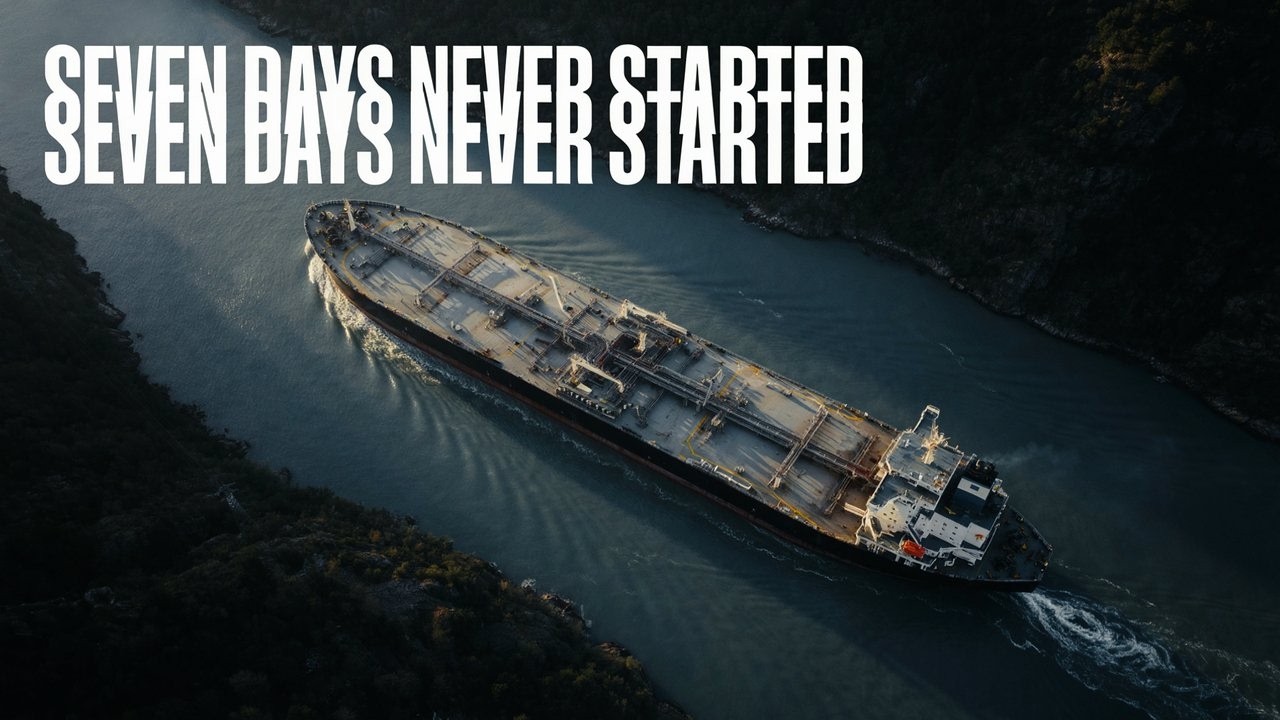
Trump has rejected Iran’s conditional Hormuz offer, but Tehran is waiting for a formal U.S. reply. The proposed seven-day clock has not begun, and shipping is far from routine.
Transcript · LOADING
Continuing storyDay 49
7 reports226 outlets483 sources83 videos
Full story Update 1Iran to US: Lift Sanctions, Pull Back Forces or Strait Stays Shut
 Update 2One Dead in the Strait: Minoan Dignity Strike Tests Who Controls Hormuz
 Update 3Hormuz Locked After U.S.-Iran Deal Expires — Claims Collide
 Update 460 Days Up, No Deal Signed, and Hormuz Stays Shut
 Update 5Annihilation by Morning, Productive Talks by Night: The Hormuz Bargain After Three Hours in New York
 Update 6Trump rejects Iran’s Hormuz offer. Its seven-day clock never startedYou are here
 Update 7Yemen’s fighting uproots 200,000 as airports come under attackNewer
What changed since our last report
4 days later
Then
Annihilation by Morning, Productive Talks by Night: The Hormuz Bargain After Three Hours in New YorkStill open then
- No verified seating account, no signed text, no agreed verification for easing, assets or ceasefire.
- No American acceptance of either Iranian condition list.
We said we'd watch for
- Whether mediators produce a dated text and shippers return before the November 3 clock.
- Whether blockade easing and tanker counts move together or threats resume.
Now
Trump has rejected Iran’s conditional Hormuz offer, but Tehran is waiting for a formal U.S. reply. The proposed seven-day clock has not begun, and shipping is far from routine.
Now established
- Trump publicly rejected Iran’s offer; Araghchi says Tehran awaits an official U.S. position through mediators.
President Donald Trump rejected Iran’s offer to restore normal shipping through the Strait of Hormuz on September 26. Yet the seven-day reopening clock at the center of the offer has not started: Iranian Foreign Minister Abbas Araghchi said it would begin only if the United States accepted the plan. Trump described Iran as wanting to open the strait immediately, without saying which proposed terms he rejected. Araghchi says Tehran is waiting for an official U.S. position through mediators before deciding what to do next. A public refusal is clear; a formal reply through that channel is not. 19 17 74
I rejected their deal. They want to make a deal where they open the strait immediately because they’re losing so badly.
Trump also said he liked making a deal. His account of Iran’s motive is his own, not a verified explanation of Tehran’s proposal. No U.S. acceptance, ceasefire or return to routine commercial passage has been established. The practical distinction is between an offer to reopen a waterway and a waterway that ships can once again use predictably. 10 20
This is a turn from the diplomatic opening we reported on September 23. Our earlier account described about three hours of U.S.–Iran proximity discussions on September 22, alongside the UN General Assembly in New York. Mediators shuttled between delegations; whether senior envoys met face to face was contested. Trump called the discussions productive and spoke of another meeting soon. Iran subsequently sent its new proposal through Qatar. Before Trump’s rejection, a U.S. official described mediated discussions, including nuclear issues, as constructive while saying Washington was in no rush. Those comments were not acceptance, and they should not be mistaken for Washington’s position after the president spoke. 35 37
What Iran put on the table
The reported exchange was conditional, not an offer to open Hormuz first and settle everything else later. Accounts say Iran sought an end to the U.S. naval blockade of its ports, relief from sanctions on Iranian oil sales and a regional ceasefire covering Lebanon, while proposing to restore passage and resume nuclear negotiations. DW News and The Telegraph also reported a demand for the release of at least $12 billion in frozen Iranian funds. The complete written proposal and the accounting behind that sum have not been independently authenticated. Describing the offer as a seven-point plan does not establish the exact text of seven agreed provisions. 5 33 40
Araghchi was explicit about when his proposed period would begin: “The seven-day timeline will start as soon as the United States accepts this plan.” An offer made on September 25 therefore did not set an automatic reopening deadline seven days later. What would happen during those days is less settled. 74
The Guardian’s September 26 account says Araghchi described four to five days of initial steps, a possible opening on day six and nuclear talks on day seven. The Telegraph’s September 25 account puts reopening on day seven, with comprehensive talks after the truce. CNN’s September 25 account describes seven days for U.S. acceptance before talks restart. These are different descriptions of a consequential sequence, not three stages that can safely be assembled into one definitive schedule. No authenticated proposal text resolves them. 9 40 39
Araghchi tied the necessary conditions to a memorandum agreed in June, reportedly covering a ceasefire, shipping, sanctions and nuclear issues. That approach subsequently failed amid renewed strikes and disputes over wording, including control of the strait; the checked accounts do not settle its precise June signing date. Iranian President Masoud Pezeshkian said a ceasefire process could begin with U.S. acceptance, that Iran would honor commitments it made, and that international nuclear inspectors could enter under negotiated arrangements. None of that amounts to inspectors having entered under this offer. The underlying divide remains: Washington seeks zero Iranian enrichment, while Tehran asserts a right to civilian enrichment. 35 20 39
Oil moving is not normal shipping
Hormuz has been described as effectively closed to normal commercial passage since the war began after U.S. and Israeli attacks in late February. Iranian threats and attacks on vessels have depressed traffic. “Effectively closed” does not mean no ship gets through. Roughly a fifth of the world’s oil and gas normally passes through the strait, which makes the difference between selected cargoes moving under wartime conditions and dependable access for ordinary shipping important well beyond the Gulf. 1 17
Visible commodity-ship tracking counted four crossings on September 21, three on September 22—all outbound that day—and nine on September 24. An earlier reported 10-day average was about 15 crossings a day; a later account put a 10-day average around 18. Those snapshots cover shifting windows and may miss vessels that switch off tracking equipment. They are not a count of every ship using the strait, nor a synchronized series showing that normal traffic has returned. 59 55 35
Oil volumes tell a different part of the story. Preliminary Kpler data put crude exports at 33.7 million barrels so far in the week beginning September 20, not a completed week’s total. A separate Kpler-based tally put a seven-day rolling oil-flow average above 13.5 million barrels a day. U.S. officials separately estimated roughly 60 million barrels in 72 hours; the periods, vessel sets and methods have not been reconciled. U.S. Central Command said crude movement exceeded 85% of its prewar level and that dozens of vessels passed daily, while ABC News reported diesel and jet fuel moving much more slowly than crude. None of those oil-volume estimates measures whether all kinds of commercial vessels can sail routinely and safely. 57 58 56 21
Trump claimed 29 ships had exited the previous night and asserted that the United States had total control of the strait. Neither his count and its exact time window nor his total-control claim has been independently verified here. The useful test is not whether a tanker can ever pass. It is whether crews and cargo owners can count on passage without attack risk, wartime escort and uncertainty over sanctions. 19
The pressure behind the refusal
Pezeshkian says the blockade and sanctions are raising prices and causing shortages of basic goods in Iran; those are his descriptions, not an independently checked price or shortage series. U.S. ambassador to the UN Mike Waltz says Iran’s reserves are exhausted and its Revolutionary Guard controls 40–50% of the economy. He also claims 146 countries condemned Iranian attacks on civilian shipping. No identified UN vote or signatory list verifies that tally. A separately reported statement by roughly 80 countries calling for Hormuz to reopen does not verify it either. 39 2 65 107
Pezeshkian wants an agreement before the November U.S. midterm elections but says he distrusts talks with Washington because earlier negotiations were followed, in his account, by attacks and sanctions. The Wall Street Journal, citing officials, reported that Trump told aides renewed bombing after those elections was likely; Reuters said it could not independently confirm that account. Waltz declined to predict whether or when strikes might resume. The report about Trump’s private thinking is neither a strike order nor a date for one. 36 23 7 2
Known
Unknown
- The precise written sequence, an agreed ceasefire and a date for normal shipping to resume remain unestablished.
Next
- Whether mediators deliver a formal response that restarts negotiations—and whether ships can regain routine, safe passage.
As aired 14 lines
- On September 23 we reported mediated U.S.–Iran talks; now Trump has rejected Iran’s Hormuz offer. Roughly a fifth of the world’s oil and gas normally passes through the strait, and routine commercial passage has not returned. Can mediators still turn this rejection into an agreement that restores it?
- Trump publicly rejected the conditional proposal on September 26. He said Iran wanted to open the strait immediately because it was losing badly, and he also said he liked making a deal. He did not explain which terms he rejected. His description of an immediate opening, and his claim about Iran’s motive, are not the same as Iran’s offer of a conditional seven-day process. Iranian Foreign Minister Abbas Araghchi says Tehran will decide its next move after mediators deliver an official U.S. position. None has been established, despite Trump’s public refusal.
- The opening we reported followed about three hours of proximity discussions on September 22, around the United Nations General Assembly in New York. Mediators shuttled between American and Iranian delegations; whether senior envoys met face to face was disputed. Trump called the discussions productive and spoke of another meeting soon. Iran then conveyed its new plan through Qatar. Before the rejection, a U.S. official described mediated discussions, including nuclear issues, as constructive but said Washington was in no rush. That was not acceptance, and Trump’s refusal has overtaken it.
- Iran’s September 25 offer made normal passage contingent on U.S. concessions and a wider halt in fighting. The reported exchange involved lifting the naval blockade of Iranian ports, relief from oil-sales sanctions and a regional ceasefire including Lebanon, followed by reopening Hormuz and restarting nuclear negotiations. Two accounts also put the requested release of frozen Iranian assets at at least twelve billion dollars. Neither that asset accounting nor the complete written proposal has been independently authenticated. Descriptions of a seven-point plan or seven-day truce do not establish seven verified provisions in an agreed document.
- Araghchi was explicit about the starting gun: the seven days would begin only when the United States accepted the plan. Acceptance has not happened. It is not a deadline counting down from the day Iran made its offer.
- The reported sequence differs in a consequential way. One account of Araghchi’s outline puts initial steps at roughly four to five days, a possible opening on day six and nuclear talks on day seven. Another puts reopening on day seven and comprehensive talks afterward. A third describes seven days for Washington to accept conditions before talks restart. No authenticated proposal text settles those competing descriptions, and none supplies an agreed reopening date.
- Araghchi linked the conditions to a memorandum agreed in June, described as covering a ceasefire, shipping, sanctions and nuclear issues. That earlier approach failed amid renewed strikes and disputes over wording, including control of the strait; its precise June signing date is not established. Oman has urged continued dialogue. Iranian President Masoud Pezeshkian says a ceasefire process could begin on U.S. acceptance, Iran would honor commitments it undertook, and international nuclear inspectors could enter under negotiated arrangements. No inspector access has resulted from this offer. Pezeshkian wants an agreement before November’s U.S. midterms, but says earlier talks followed by attacks and sanctions left him distrustful. The underlying nuclear divide remains: Washington seeks zero Iranian enrichment; Iran asserts a right to civilian enrichment, and a senior Iranian official has ruled out compromise.
- Three visible commodity vessels crossed on September 22, all outbound. Trackers counted four on September 21 and nine on September 24. Those are selected daily snapshots, not a complete series or a count of every ship: vessels can switch off their tracking equipment. An earlier reported ten-day average was about fifteen crossings a day; a later ten-day average was about eighteen. The windows and possibly their scope shifted, so neither average establishes a return to normal traffic.
- The strait has been effectively closed to ordinary commercial passage since the war began after U.S. and Israeli attacks in late February. Iranian threats and attacks on vessels have depressed traffic. But effectively closed does not mean empty: some cargoes move, including under wartime escort. For importers, crews and households buying fuel, the test is whether ships of all kinds can sail safely and predictably, without attack risk and sanctions uncertainty.
- The oil figures measure something different from ship counts. Preliminary Kpler data put crude exports at 33.7 million barrels so far in the week beginning September 20; that was not yet a complete seven-day total. A separate Kpler-based tally put a seven-day rolling oil-flow average above 13.5 million barrels a day. U.S. officials estimated about 60 million barrels crossing in 72 hours, and an earlier official account cited nearly 40 million in 48 hours. The periods, vessel sets and methods have not been reconciled.
- U.S. Central Command estimated crude movement above 85 percent of its prewar level and said dozens of vessels passed daily. That military estimate has not been independently reconciled with visible tracking, while diesel and jet-fuel movements were reported to be recovering much more slowly than crude. Trump claimed 29 ships had left the previous night and that the United States had total control of the strait. His ship count, its exact time window and the total-control claim are not independently verified. High barrel volumes cannot, by themselves, prove that routine commercial access has returned.
- The pressure is not confined to ships. Pezeshkian describes rising prices and shortages of basic goods in Iran under U.S. sanctions and the blockade; there is no independently checked price or shortage series here. U.S. ambassador Mike Waltz claims Iran’s currency is falling, reserves are exhausted, air routes and banking links are being curtailed, and the Revolutionary Guard controls 40 to 50 percent of the economy. Those specific assessments have not been independently verified.
- Waltz also claims 146 countries condemned Iranian attacks on civilian shipping, calling it a record. There is no identified U.N. vote, resolution or signatory list verifying that count. A separate joint statement by roughly eighty countries urging Hormuz’s reopening does not verify it either.
- Waltz would not predict whether or when U.S. strikes might resume. Whether Trump told aides he considered renewed bombing after November’s midterms likely has not been independently confirmed; there is neither a strike order nor a set date. The answer to the opening question is still unresolved: Trump has rejected this offer, but Iran awaits a formal response through mediators. There is no accepted ceasefire, agreed reopening date or restored routine passage through Hormuz.
Sources
115 sources79 outlets18 videos8 wire copies
Al Jazeeraaljazeera.com6
- First reported
- Trump ‘rejects’ Iran’s seven-day ceasefire proposal. What’s next?
- Pezeshkian says Iran ‘no longer trusts talks with Washington’ | US-Israel war on Iran News
- Iran war live: Tehran offers US plan to reopen Hormuz within seven days
- Trump rejects Iran’s seven-day roadmap to reopen Strait of Hormuz | US-Israel war on Iran News
- Iran pitches seven-day roadmap to end conflict with US | US-Israel war on Iran News
- Iran says it awaits US response on seven-day roadmap to end war | Conflict News
Reutersreuters.com6
- First reported
- Trump rejects Iranian proposal to open Hormuz and end fighting
- Iran's Araqchi says now up to US to accept 7-day plan
- Shipping traffic via Strait of Hormuz stays below 10-day ...
- Hormuz vessel traffic falls to two, data shows
- The Hormuz crude volume debate masks the real shortage of refined fuels
- Hormuz shipping traffic falls to single digits, data shows
Iran International | Iran Internationaliranintl.com4
- First reported
- Waltz says record 146 countries condemned Iran over attacks on shipping | Iran International
- Trump rejects Iran ceasefire proposal, sees renewed strikes after midterms - WSJ | Iran International
- Araghchi says Hormuz could reopen on sixth day of US acceptance of Iran plan | Iran International
- Hormuz shipping remains below recent average | Iran International
PressTVpresstv.co.uk4
- Pezeshkian: Iran ‘no longer’ trusts US after being attacked twice during talks
- Hormuz traffic falls to single digits despite US claims of increased transit
- Iran FM outlines seven-day plan for conditional reopening of Strait of Hormuz
- Hormuz traffic falls to single digits despite US claims of increased transit
ABC News (Australia)33 videos
CTV News33 videos
NBC Newsnbcnews.com32 videos
1-e8259.azureedge.net2Unverified host
ABC Newsabcnews.com21 video
CBS Newscbsnews.com21 video
euronewseuronews.com21 video
Fox News22 videos
The Guardiantheguardian.com2First
The Indian Expressindianexpress.com2
AFP.comafp.com1
- First reported
- Iran proposes Hormuz plan, Trump reportedly refuses
Ajel Englishajel.sa1
- First reported
- Oil exports through Hormuz steady this week: Kpler data
Al Jazeera Mirroredgeone.app1
arabtimesarabtimesonline.com1
- First reported
- 146 Countries Condemn Iran Over Shipping Attacks, Waltz Says
Associated Press11 video
Baird Maritime / Work Boat Worldbairdmaritime.com1
BBC Newsbbc.com1
BOE Reportboereport.com1
Business Upturnbusinessupturn.com1
caliber.az1
CapWolf -capwolf.com1
- First reported
- Trump Rejects Iran Deal As Hormuz Standoff Tightens
CNAchannelnewsasia.com1
CNN11 video
- First reported
- Iran offers new proposal to restart US talks & reopen Hormuz · video
DW News11 video
- First reported
- Iran offers plan to reopen Strait of Hormuz within seven days · video
East Asia Briefeastasiabrief.com1
- First reported
- Hormuz Tanker Transits Plunge as Freight Costs Spike
Fortunefortune.com1
France 24france24.com1
Helioushelious.io1
https://www.fox8live.comfox8live.com1
- First reported
- Trump rejects Iran’s proposal to reopen the Strait of Hormuz
https://www.wowt.comwowt.com1
- First reported
- Iran has suggested a deal to reopen the Strait of Hormuz ...
indexbox.io1
India Shipping Newsindiashippingnews.com1
Inquirer.cominquirer.com1
- First reported
- Iran proposes 7-day plan to end war
intellinews.com1
Kurdistan24kurdistan24.net1
LA Times Nowlatimesnow.com1
lloydslistintelligence.com1
Los Angeles Timeslatimes.com1
- First reported
- Trump rejects Iran's proposal to reopen the Strait of Hormuz
Mehr News Agencymehrnews.com1
- First reported
- Iran ready for talks but never accept bullying, coercion
Middle East Eyemiddleeasteye.net1
NewKerala.comnewkerala.com1
- First reported
- Pezeshkian Says Iran-US Process Awaits Trump's Acceptance
Newsweeknewsweek.com1
NPRnpr.org1
OilMonsteroilmonster.com1
OilPrice.comoilprice.com1
- First reported
- Hormuz Traffic Running 80% Below Its 10-Day Average
roic.ai1
Rolling Outrollingout.com1
- First reported
- Trump rejects Iran's Strait of Hormuz deal. Bombs may follow
ShipUniverseshipuniverse.com1
TASStass.com1
Tehran Timestehrantimes.com1
The Business Standardtbsnews.net1
- First reported
- Iran no longer trusts talks with Washington: Pezeshkian
The Conflict Pulsetheconflictpulse.com1
The Globe and Mailtheglobeandmail.com1
The Hillthehill.com1
The Hinduthehindu.com1
- First reported
- Trump rejects Iran proposal for deal to reopen Hormuz
The Irish Timesirishtimes.com1
- First reported
- Trump rejects Iran’s proposal to reopen Strait of Hormuz
The Japan Timesjapantimes.co.jp1
- First reported
- Trump rejects Iranian peace proposal, report says
The Seattle Timesseattletimes.com1
The Telegraph11 video
- First reported
- Houthis target Saudi oil facilities as Iran proposes a 7-day truce · video
The Times Of Earthtimesofearth.com1
The Times of Indiaindiatimes.com1
ThePrinttheprint.in1
Times Kuwaittimeskuwait.com1
Trending Politics Conservative News and Commentarytrendingpoliticsnews.com1
washingtontimes.com1
worldports.org1
دايلي بيروت - Daily Beirutdailybeirut.com1
Source map
Follow the evidence behind this report. The map shows its connections; the links below open the sources cited in this article.
Source map loads as you read.
Revision log
- r1First published.