Justice · Town hall fire
Fire collapses Limoges town hall spire as city seeks replacement offices
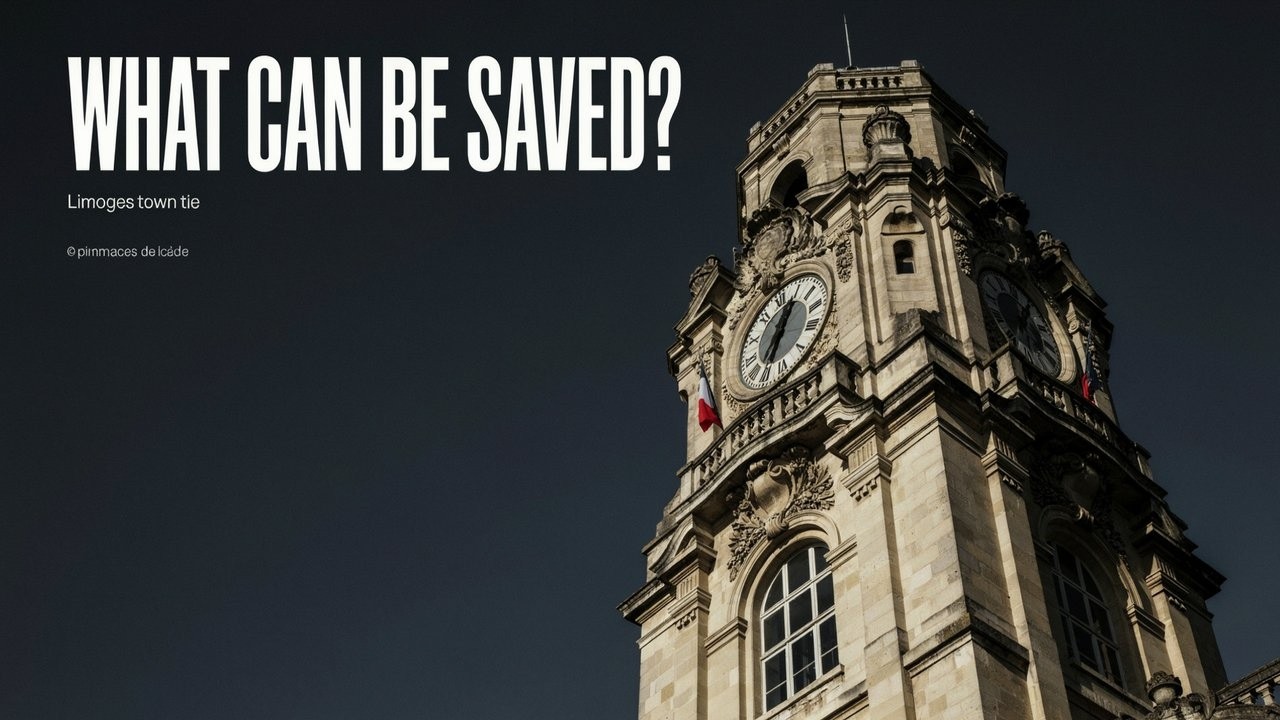
The spire and part of the roof collapsed in the 17 October blaze. Authorities allege deliberate ignition, while the city must determine what can be saved and where its services can operate.
Transcript · LOADING
Story trackerDay 1
1 report28 outlets32 sources

One fire has brought down Limoges town hall’s clock-tower spire and part of its roof—and left the city looking for offices from which to keep serving residents. The blaze on 17 October 2026 severely damaged the nineteenth-century seat of municipal government in the French city, turning a familiar landmark into an emergency whose consequences extend well beyond the skyline. 4 12 28
The prefecture described the town hall as “largely lost” and said the fire had been started deliberately. Both statements require care: the first is a preliminary official assessment of damage, not a completed structural survey; the second is the authorities’ account of the fire’s origin, without the underlying ignition evidence yet disclosed in the reporting available. 1
Firefighters battled the flames late into the night. As of this report’s cutoff at 02:05 UTC on 18 October, no verified confirmation of extinguishment or public all-clear for the building had been established. That does not mean the fire necessarily remained active at that minute; it means the last supported operational account was still of crews fighting it. 1
The incident belongs to 17 October, although the BBC’s video report was published after midnight on 18 October. Franceinfo’s evening account on the 17th already reported the collapse of the campanile and part of the roof. The exact times of ignition, the alarm and the collapse remain unverified. 1 4
What “largely lost” leaves unresolved
The mayor and prefect described the town hall as “very heavily damaged” and “largely lost,” according to AFP’s French-language report. Those words convey the scale of the emergency. They do not settle how much of the surviving building can be recovered, whether any section can safely be occupied or what restoration might cost. 12
The secure physical finding is narrower, though grave enough: the clock-tower spire fell, along with part of the roof. There is no completed structural assessment or final damage inventory in the available reporting. Calling the entire town hall irrecoverable would go beyond what has been established. 4 12
“They have destroyed a magnificent historic building, our shared home,” Mayor Guillaume Guérin said, in a quotation carried by La République du Centre. It captures the civic loss. But his “they” does not identify proven perpetrators, any more than the visible collapse supplies an explanation of how the fire began. 28
The public-safety picture is also incomplete. No verified casualty count or evacuation figure had been established by the cutoff. The absence of those figures is not confirmation that nobody was hurt or that nobody had to leave. Nor was there a verified clearance allowing the damaged building to be used again.
A criminal inquiry, not proven responsibility
Limoges public prosecutor Émilie Abrantes opened an investigation and described the events as “faits criminels”—criminal acts. Le Journal du Centre reported that the case had been assigned to the national police’s division de la criminalité organisée et spécialisée, which handles organized and serious crime. The city also intends to file a complaint. 21 23
That establishes the authorities’ approach to the case. It does not establish an individual’s guilt. The available accounts disclose no ignition mechanism, accelerant finding or complete forensic explanation supporting the prefecture’s deliberate-fire assessment. No named alleged igniter, individual charge, confession or judicial finding connecting someone to the act of setting the fire has been established. 1 21
The fire occurred during nationwide protests in France. Some reporting attributes it to masked protesters or radical individuals, but the available accounts do not supply the underlying eyewitness testimony or ignition footage needed to independently establish those descriptions. Images of a burning building, forced entry or a falling tower cannot, by themselves, identify an arsonist. Responsibility cannot be extended to protesters generally. 12 26 27
Le Journal du Centre reported more than fifteen detentions following the town hall fire and shop looting. That is a combined account of different events, not a fire-specific arrest total. Authorities had not specified how many, if any, of those detained were suspected of igniting the town hall. 21
Keeping the city’s services working
For residents, the immediate test is less dramatic than the collapsing spire but no less important: whether the municipality can provide usable alternatives to its damaged headquarters. Guérin has promised to find working space.
We will organise ourselves to find offices and ensure continuity of service.
That is a commitment, not a completed relocation. No replacement address or reopening date had been established, and there were no confirmed arrangements for weddings or civil-registration services. The fate of particular records and documents also remained unverified; severe damage to the building must not be turned into an assumption that its records were destroyed. 28
Recovery therefore depends on several separate answers: an operational all-clear, an assessment of what can safely be saved, evidence explaining the alleged deliberate ignition, and concrete arrangements for municipal services. The tower’s collapse is already a visible loss. Whether Limoges can limit the disruption to everyday civic life will be measured in safe premises and services residents can actually reach.
As aired 13 lines
- Fire brought down the clock-tower spire at Limoges town hall. The city faces finding replacement offices after flames severely damaged its historic seat of government. How much of the building can be saved, and how will the city keep its services running?
- Part of the roof collapsed along with the spire. The fire struck on October seventeenth, twenty twenty-six. The town hall is a nineteenth-century building, and its loss reaches beyond a familiar feature of the city's skyline.
- Firefighters battled the flames late into the night. By early October eighteenth, officials hadn't confirmed that the fire was out or issued a public all-clear for the building.
- The damaged building houses the city's municipal government in Limoges, in the Haute-Vienne department of France. Residents now face disruption while the mayor works to find somewhere else for staff to carry on serving them.
- The prefecture described the town hall as “largely lost.” The mayor and prefect also called it very heavily damaged. Those were their preliminary assessments as the emergency unfolded. Engineers still have to determine what can safely be recovered.
- The collapse took away the spire and part of the roof. But the officials' description leaves a crucial practical question open. A structural assessment will have to identify which surviving parts can be saved and whether any can safely be used.
- The prefecture says someone deliberately started the fire. Public prosecutor Émilie Abrantes opened a criminal investigation and described the events as criminal acts. National police investigators specializing in organized and serious crime have been assigned the case.
- Abrantes is overseeing the criminal case, while prefect Maurice Barate represents the state in Haute-Vienne. Mayor Guillaume Guérin faces the city's immediate service problem. The city also intends to file a complaint over the destruction of its town hall.
- Officials haven't explained the evidence behind their deliberate-fire assessment or identified who ignited the blaze. The fire happened during nationwide protests, but that timing doesn't identify an arsonist or make protesters generally responsible.
- Barate described a fierce determination to confront or fight. That describes the confrontation he was condemning. Investigators still need to explain the fire's origin and connect anyone they accuse to the act of setting it.
- Police detained more than fifteen people following the fire and shop looting. Authorities haven't specified how many, if any, are suspected of igniting the town hall. Guérin expressed the civic loss by saying, “They have destroyed a magnificent historic building, our shared home.”
- Guérin says the city will organize itself to find offices and ensure continuity of service. His commitment puts the next immediate task on the municipality: finding working space so residents can continue getting help while the damaged town hall is assessed.
- The city hasn't announced a replacement address or reopening date. Recovery now depends on a firefighting all-clear and a structural assessment, while investigators pursue the cause. The mayor's plan is to keep municipal services running from replacement offices.
Sources
32 sources27 outlets3 wire copies
France 24france24.com2
Le Journal du Centrelejdc.fr2
Agenzia ANSAansa.it1
BBC Newsbbc.co.uk1
BFMbfmtv.com1
euronewseuronews.com1
Fox Newsfoxnews.com1
franceinfofranceinfo.fr1
https://www.bangkokpost.combangkokpost.com1
Ici Beyrouthicibeyrouth.com1
Indmedia Newsindmedia.in1
L’Écho Républicainlechorepublicain.fr1
L'Yonne Républicainelyonne.fr1
La République du Centrelarep.fr1
Le HuffPosthuffingtonpost.fr1
Le Populaire du Centrelepopulaire.fr1First
Orange Vidéosorange.fr1
Ouest-France.frouest-france.fr1
RTL.frrtl.fr1
TASStass.com1
Türkiye Todayturkiyetoday.com1
Yahoo Newsyahoo.com1
- First reported
- Town hall in Limoges 'largely lost' to blaze set during ...
Source map
Follow the evidence behind this report. The map shows its connections; the links below open the sources cited in this article.
Source map loads as you read.
Revision log
- r1First published.