
Conflict · SudanContinuing story · report 2 of 2
RSF Drone Siege Cuts Power to 500,000 in Sudan's El Obeid
After battlefield losses, the RSF hit El Obeid and Khartoum with days of drones. The UN says 500,000 face atrocity risk — but key details of this week's damage remain unverified.
Transcript · LOADING
Continuing storyDay 7
2 reports16 outlets20 sources2 videos
Full story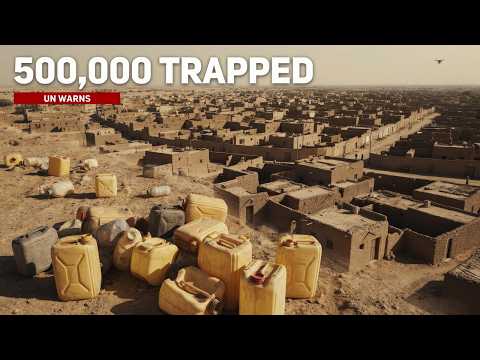

What changed since our last report
6 days later
Then
500,000 Trapped in El-Obeid as U.N. Sees Echoes of El-FasherStill open then
- Verified overall civilian death and displacement tolls specific to the current El-Obeid siege.
- Whether outside pressure or army counterattacks can restore sustained food, water, fuel and medical access.
We said we'd watch for
- Whether drone attacks and sexual violence escalate into a full assault on the city.
- Whether the urgent inquiry produces protection, access, or only documentation.
Now
After battlefield losses, the RSF hit El Obeid and Khartoum with days of drones. The UN says 500,000 face atrocity risk — but key details of this week's damage remain unverified.
Now established
- RSF renewed assault on El Obeid Aug. 12-13 with drones and land attacks after losing ground.
- Drone attacks ran a second day Aug. 13 across Khartoum and other cities amid Kordofan and Blue Nile fighting.
- Army and allies repelled Aug. 14 RSF ground attack at Jabal Hashaba and Umm Arda southwest of El Obeid.
- UN warns about 500,000 civilians face imminent atrocity risk amid siege, shortages and sexual violence.
Half a million people. That is the number the United Nations attaches to El Obeid right now, the population it says faces imminent risk of atrocity crimes as the Rapid Support Forces tighten a siege built from drones, hunger, thirst, and fear. 9 It is a city-scale warning, not a front-line skirmish, and it has been building for weeks before this month's renewed assault made it worse. 9 7
El Obeid is the capital of North Kordofan and an army-held city under siege. 4 7 8 Witnesses say the RSF renewed its assault on the city on August 12-13 with drone and land attacks after losing ground on several fronts. 2 That sequence matters because it frames what followed not as an isolated strike but as a retaliatory escalation, an attempt to regain leverage by hitting where the army must defend. 2
Drones suspected to have been launched by the RSF hit three cities including the capital on Wednesday, with residents reporting explosions and columns of smoke. 3 The geography of that day is important: Khartoum and El Obeid were struck in the same wave, a signal that the campaign is national even as its heaviest consequences fall on the besieged west. 3
The wave did not stop after one night. Drone attacks continued Thursday, August 13, for a second consecutive day across Khartoum and other cities as fighting intensified in Kordofan and Blue Nile. 6 By Friday, August 14, the contest had returned to the ground at El Obeid's edge, where the Sudanese army and allied forces repelled an RSF attack on Jabal Hashaba and Umm Arda, two areas southwest of the city, according to anonymous military sources. 4
To understand why two days of drones matter so much here, you have to go back to July, when El Obeid had already been without electricity for nearly a month as of July 6, alongside fuel shortages and soaring food prices. 7 The UN Human Rights Council ordered an urgent inquiry into alleged abuse around that time. 7 Darkness was not a metaphor. It meant no refrigeration, no pumps, no light for clinics, and a market where movement itself became expensive and dangerous. 7 10
In front of us there were injured people, blood, burnt cars, and smashed cars
That line comes from the BBC's July 7 reporting on constant drone strikes blamed on the RSF, including a strike on a crowded fuel station witnessed by a 27-year-old student identified only as Sarah. 5 It is one of the few on-the-record glimpses of what a drone strike does in a city where fuel is life, where a station is not just cars and jerrycans but the last link to generators, water trucks, and transport out. 5
The same logic runs through the warning issued July 16 by MSF emergency coordinator Liesbeth Aelbrecht, who said drone attacks in El Obeid are hitting the systems that keep civilians alive. 10
Drone attacks in El Obeid are impacting basic services, rising transport costs, and limiting access to safe drinking water and healthcare
Her assessment connects the air war to prices and pipes: when transport costs rise, food and water move less, clinics receive less, and families pay more for less. 10 Residents told reporters they see as many as 40 drones at a time, a figure reported by NPR/OPB on August 7 alongside the UN warning of mass-atrocity risk. 8 Whether 40 is a precise count or the way a terrified night sky feels is impossible to verify from the excerpts, but the direction is consistent across weeks of reporting: more drones, more often, over a city with fewer ways to cope. 8
The UN warning that about 500,000 civilians face imminent risk cites escalating drone attacks, fuel and water shortages, and widespread sexual violence as the RSF tightens the siege. 9 That combination is what atrocity warnings are made of, not a single weapon but the stripping away of escape and survival at once. 9 Fuel and water shortages do not merely make life hard; in a city cut off from steady supply, they decide who can run a clinic, who can drink safely, and who can leave. 9 10
What is established about this week is narrower than the suffering suggests. Renewed RSF assault on El Obeid with drone strikes after battlefield losses is confirmed by witnesses. 2 Stepped-up RSF drone attacks nationwide this week are confirmed across multiple reports. 2 3 6 The scale of about 500,000 residents at risk under siege is confirmed via the UN warning. 9 The city's status as the North Kordofan capital and an army-held city under siege is consistent across the file. 4 7 8
What is not established in these sources is equally important. None of the provided sources contain confirmation of specific fuel tankers destroyed on the road into the city this week, hits on hospitals and power facilities this week, a hospital generator stopping for 10 minutes and endangering premature babies, the figure of 100,000 displaced inside the city, or the personal account of a resident giving birth in a displacement camp after her husband was killed. 2 3 4 6 7 8 9 10 Those details remain unverified on this reporting file, as does the broader framing that El Obeid's fall would deprive the army of its main regional base. 4 7 8 No independent casualty or damage confirmation for those specific claims appears in the sources, and outcomes beyond the army's reported repulse of the August 14 ground attack on the southwestern approaches remain unclear. 4
Known
- RSF renewed assault on El Obeid Aug. 12-13 with drones and land attacks after losing ground. 2
- Drone attacks ran a second day Aug. 13 across Khartoum and other cities amid Kordofan and Blue Nile fighting. 6
- Army and allies repelled Aug. 14 RSF ground attack at Jabal Hashaba and Umm Arda southwest of El Obeid. 4
- UN warns about 500,000 civilians face imminent atrocity risk amid siege, shortages and sexual violence. 9
Unknown
- No verified toll for damage, casualties, or supply levels for this week's specific strikes.
- No verified account of hospital generator failure, tanker destruction, or number displaced inside city.
Next
- Whether drones keep hitting supply and power faster than fuel and water can get through.
- Whether the southwestern approaches hold after the Aug. 14 repulse or face another ground probe.
Sources
11 sources10 outlets1 video
Anadoluaa.com.tr1
Doctors Without Borders | MSF Eastern Africamsf.or.ke1
HeyDay News11 video
Outlook Indiaoutlookindia.com1
TimesLIVEtimeslive.co.za1
Source map
Follow the evidence behind this report. The map shows its connections; the links below open the sources cited in this article.
Source map loads as you read.
Revision log
- r1First published.