
Energy · Hormuz blockadeContinuing story · report 2 of 2
Trump Vows U.S. Ownership of Hormuz, Iran Scoffs as Ship Is Hit
Trump promised to make Hormuz American after defeating Iran. Tehran called it delusional, claimed control, and a ship was reported hit the next day.
Transcript · LOADING
Continuing storyDay 8
2 reports20 outlets22 sources2 videos
Full story
What changed since our last report
8 days later
Then
Iran Says Hormuz Shipping Deal Is Close, But Reopening Is NotStill open then
- No public text, confirmed Omani endorsement of inbound control, or agreed enforcement and liability regime.
- No confirmed timetable for full reopening or for direct US-Iran talks that Tehran links to reopening.
We said we'd watch for
- Whether Muscat publishes coordinates and what Washington says about authority, not just passage.
- Whether any shipping paper is followed by US-Iran contact, the step Tehran ties to full resumption.
Now
Trump promised to make Hormuz American after defeating Iran. Tehran called it delusional, claimed control, and a ship was reported hit the next day.
Now established
- Trump said August 14 he would soon declare Hormuz U.S. territory after Iran's defeat.
- Iran said it will continue to enforce blockade until U.S. stops indulging in delusions.
- UKMTO reported bulk carrier hit by unknown projectile August 15.
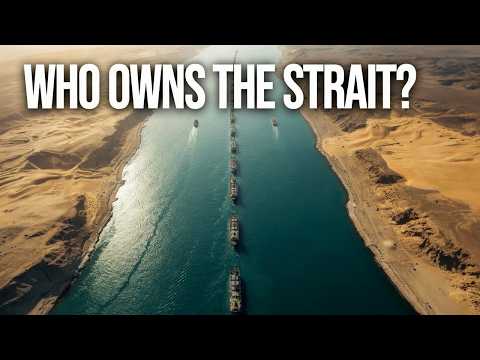
One narrow waterway between Oman and Iran produced two incompatible claims of control in two days, and zero explanation of how American law could turn international water into American territory.9210 That gap between the scale of the assertion and the absence of legal detail is the story.
On August 14, 2026, at an event in New York described in one account as a political rally at a police academy in New York state, President Donald Trump said he would declare the Strait of Hormuz a U.S. territory, framing the move as coming after what he described as Iran's defeat.8910 The language was prospective rather than operational: he said he would act “soon,” after the war was finished, rather than announcing a signed proclamation, an executive order, congressional authorization, or a filing with an international body.8910
The available reporting preserves only a fragment of his exact formulation at the New York event, rendered as beginning with a reference to acting after defeating Iran.9 What is clear across multiple reports is the sequence he proposed: first defeat, then declaration of ownership over the waterway between Oman and Iran.910 Separately, Trump urged Americans to accept slightly higher fuel prices as the cost of preventing Iran from obtaining a nuclear weapon, explicitly linking household energy costs to the stated war aim.3
No source in the reporting file details any legal mechanism that could support a U.S. territorial declaration over the Strait.5 One report poses the question directly in its headline — whether the United States can take over the Strait — without the provided text supplying an answer grounded in treaty law, domestic statute, or precedent.5 That silence matters because a territorial claim over a strait used by other states would normally implicate sovereignty, navigation rights, and the consent or acquiescence of littoral states, none of which is addressed in the accounts of Trump's remarks.8910
No Law Offered For Taking Waters
Iran answered the next day with rejection rather than clarification.2610 Iranian official messaging treated the proposal as unserious and unenforceable, summarized in one headline as the argument that the Strait cannot be seized by a tweet.10 The Foreign Ministry posture was not that negotiations might refine the idea, but that there was nothing to negotiate on this point while Washington was indulging in what Tehran called delusions.2610
The sharpest language attributed to Tehran came from Iran's deputy foreign minister, who tied continuation of Iran's own blockade to American refusal to accept defeat.2 Iran claims de facto control over much of the Strait and says it is enforcing a blockade, a direct counter-claim to Trump's suggestion that Washington will finish defeating Iran and then take the waterway.82 The two sides are therefore not arguing about joint management or tolls or escorts; they are each asserting that the other has lost or will lose control of the same passage.82
As long as you do not accept the reality of defeat and stop indulging in delusions, Iran will continue to enforce the blockade
Iranian Foreign Minister Seyed Abbas Araghchi was quoted by Iranian media saying no negotiations with the United States are underway, closing off the interpretation that a back channel might be quietly narrowing differences over the Strait or the wider war.6 If talks are not happening, then the public declarations are the diplomacy: a U.S. promise of future ownership met by an Iranian promise of continued denial.62
The one concrete wartime incident captured in the file points to why declarations alone do not settle passage.6 The UK Maritime Trade Operations Centre said a bulk carrier was hit by an unknown projectile on August 15, the day after Trump's remarks and the same day as Iran's rebuttal.6 The report does not attribute responsibility, describe the flag or cargo, or assess damage beyond the fact of a strike, but its timing places physical risk alongside rhetorical escalation.6
Trump's parallel appeal on gasoline prices acknowledges that the confrontation has domestic costs even before any territorial change.3 Asking Americans to tolerate slightly higher fuel prices to prevent Iran from obtaining a nuclear weapon reframes pain at the pump as a security contribution, but it also concedes that the administration expects energy markets to transmit the war to voters.3 The file does not provide price levels, import volumes, or estimates of how much of any increase is attributable to Hormuz disruption versus other wartime factors.3
Taken together, the verified record is narrow but instructive.826 A sitting president publicly promised to convert a foreign strait into U.S. territory on a short timeline conditioned on military victory.8910 The adversary called the idea delusional, claimed it already controls much of the waterway, vowed to keep enforcing its blockade, and said no talks are underway.286 A commercial ship was reported hit the next day by an unknown projectile.6 Everything else — how ownership would work, who would recognize it, how commercial traffic would be protected, and how the war ends — is absent from the sourced accounts.56
Known
Unknown
- No legal authority, text, map, or enforcement plan for U.S. ownership has been produced.
- No attribution, casualty, damage, or flag detail is available for the reported ship strike.
Next
- Whether Washington publishes any legal justification for a territorial claim.
- Whether commercial transits continue after the reported August 15 strike.
Sources
11 sources11 outlets1 video
HeyDay News11 video
Outlook Indiaoutlookindia.com1
The Hinduthehindu.com1
USA TODAYusatoday.com1
Source map
Follow the evidence behind this report. The map shows its connections; the links below open the sources cited in this article.
Source map loads as you read.
Revision log
- r1First published.