Política · Referendo de AlbertaCobertura em andamento · reportagem 1 de 2
O voto de Alberta não pode garantir a independência. A participação ainda pode mudar seu futuro.
A pergunta sobre o processo de separação não é vinculante, mas suas implicações políticas são reais. As pesquisas favorecem a permanência no Canadá; o acesso, a participação e o prazo iminente para as cédulas enviadas pelo correio determinarão quem será ouvido.
Vídeo no idioma original

Transcrição · CARREGANDO
Traduzido do original em inglês.
Cobertura em andamentoDia 7
2 reportagens158 veículos392 fontes40 vídeos
Cobertura completa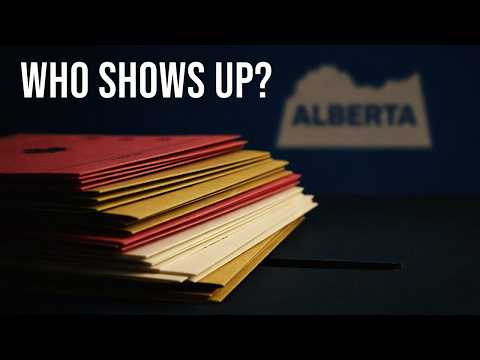

Alberta está votando em uma pergunta que não pode tirá-la do Canadá — e cujo resultado não é juridicamente vinculante para seu governo. Ainda assim, as consequências políticas podem ser substanciais. Com a votação antecipada aberta, a disputa imediata é saber se os habitantes de Alberta querem promover outro referendo sobre a separação e se o apoio medido em pesquisas de opinião se transforma em votos aceitos. 287 16
A votação começou na terça-feira, 13 de outubro, antes do Dia da Eleição, na segunda-feira, 19 de outubro de 2026. Os eleitores recebem 10 cédulas codificadas por cores. A última oferece a opção entre permanecer no Canadá e iniciar o processo legal para um referendo vinculante posterior. Chamar isso de votação pela independência ignora a distinção mais importante. 16 72
Fatos principais
Mandato não é independência
A pergunta 10 diz: “Alberta deve continuar sendo uma província do Canadá ou o Governo de Alberta deve iniciar o processo legal exigido pela Constituição canadense para realizar um referendo provincial vinculante sobre se Alberta deve ou não se separar do Canadá?” A Ordem do Conselho de 28 de maio declara explicitamente que o resultado não é vinculante. Uma vitória da opção pelo processo daria força política, mas não convocaria automaticamente outra votação nem mudaria uma fronteira. 27 287
Mesmo uma votação posterior pela separação não garantiria, por si só, a independência. A Referência sobre a Secessão de Quebec, decidida pela Suprema Corte em 20 de agosto de 1998, estabeleceu que uma maioria clara respondendo afirmativamente a uma pergunta clara sobre a secessão cria um dever constitucional recíproco de negociar de boa-fé — não um direito de sair unilateralmente. 24
A Lei da Clareza, de 2000, não estabelece um limite numérico fixo. A Câmara dos Comuns avalia a pergunta e, após a votação, a maioria, considerando seu tamanho, a participação e outras circunstâncias relevantes. Ottawa não pode iniciar negociações se a Câmara dos Comuns considerar qualquer um dos dois elementos pouco claro. Ainda seriam necessárias uma emenda constitucional e um acordo; direitos indígenas e de tratados, direitos das minorias, fronteiras, dívidas e ativos precisariam ser considerados. Nenhum desses termos está predeterminado. 196 24
Os direitos das Primeiras Nações já limitaram a via da petição. Em 13 de maio, a juíza Shaina Leonard anulou a aprovação de uma petição anterior de iniciativa separatista, incluindo entre os motivos o dever de consultar sobre os impactos nos tratados. As Primeiras Nações não haviam sido consultadas. Uma suspensão parcial em 29 de junho permitiu verificar as assinaturas e divulgar informações ao público, mas não encaminhar a petição integralmente às etapas seguintes; uma ordem de 4 de setembro permitiu a intervenção da Treaty Six Confederacy Development Foundation. Essas decisões processuais não resolveram os recursos quanto ao mérito. 291 26 308
As outras nove perguntas dizem respeito à imigração, aos serviços provinciais, a períodos de espera ou taxas para residentes temporários, à identificação de eleitores e à comprovação de cidadania, além de mudanças constitucionais. A pergunta sete propõe trabalhar com as províncias dispostas a abolir o Senado não eleito. Segundo a Referência sobre a Reforma do Senado da Suprema Corte, de 25 de abril de 2014, a abolição exige o procedimento de emenda por unanimidade, que envolve as instituições parlamentares federais e todas as 10 legislaturas provinciais. Alberta não pode fazê-lo sozinha. 72 285
O senador Scott Tannas duvida que Alberta consiga reunir esse acordo. Jeremy Webber, professor emérito de Direito e ex-reitor da Universidade de Victoria, questiona se a cédula dá uma orientação precisa; a senadora Paula Simons defende a segunda análise legislativa do Senado. As perguntas constitucionais vinculam formalmente o governo de Alberta de uma maneira que a pergunta 10 não vincula, mas não podem substituir o acordo constitucional necessário para implementá-las. 1 55 188
O voto precisa ser efetivamente aceito
A votação antecipada continua até sábado, 17 de outubro, geralmente das 9h às 20h, com algumas variações de local e dia. Os eleitores podem usar qualquer seção de votação antecipada dentro de sua própria divisão eleitoral — não em qualquer lugar de Alberta. No Dia da Eleição, devem votar na seção que lhes foi designada. Consulte o cartão Where to Vote enviado pelo correio ou o serviço de locais de votação da Elections Alberta. 16 19
Os pacotes de cédula especial precisam chegar à Elections Alberta até as 17h, horário de verão de Alberta, na sexta-feira, 16 de outubro. Enviá-los pelo correio nesse dia não basta; os que chegarem atrasados serão rejeitados. A Canada Post recomendou o envio até 9 de outubro. Os pacotes precisam incluir uma declaração assinada e documentos de identificação aceitos; informações ausentes ou divergentes podem invalidá-los, embora os funcionários tentem fazer correções quando possível. 289 22
Confira as informações de rastreamento fornecidas com a confirmação da solicitação antes de optar por votar presencialmente. Há uma alternativa de votação antecipada para um pacote que não tenha sido aceito. Se um pacote não tiver sido marcado como recebido e votado até as 17h de 18 de outubro, o eleitor poderá votar presencialmente no Dia da Eleição. Um voto presencial significa que uma cédula especial que chegue depois será rejeitada; uma cédula especial já verificada retira o eleitor da lista de votantes. Isso protege a oportunidade de votar, não permite que dois votos sejam contabilizados. 289 22
Para ser elegível, é preciso ter cidadania canadense, 18 anos ou mais no Dia da Eleição e residência habitual em Alberta. Para votar presencialmente, a identificação pode ser um documento com foto emitido pelo governo que mostre o nome completo e o endereço físico atual, ou dois documentos que mostrem o nome, sendo que pelo menos um deles deve mostrar o endereço. São aceitos mais de 50 tipos de documentos. O cartão Where to Vote não serve como documento de identificação, e não se aceita mais a confirmação de identidade por terceiros. Há alternativas limitadas, como declarações e votação móvel em instituições, mas não há garantia de uma seção em todas as residências para idosos. 14 23 215
Essa limitação é prática, não abstrata. Heather McPherson, deputada federal do NDP por Edmonton Strathcona, diz que idosos a procuraram após saberem que as seções de votação esperadas em suas residências não estariam disponíveis. O deputado liberal Cory Hogan descreve erros de codificação por cores durante uma demonstração do sistema de 10 cédulas — não como evidência de contagem incorreta de votos já depositados. O analista John Santos cita relatos anedóticos de filas em áreas urbanas e barreiras de transporte que, em sua opinião, poderiam desestimular desproporcionalmente os federalistas. Ele atribui as limitações a recursos e tempo de preparação, não a uma conspiração; não está comprovado nenhum efeito diferencial sobre a participação. 8 4
Os números elevados de votação pelo correio também estão sendo confundidos com participação. O boletim da Elections Alberta de 1º de outubro, com dados de 29 de setembro, registrou pouco mais de 658,000 solicitações totalmente processadas, mais de 652,000 pacotes aprovados e enviados e mais de 5,700 solicitações rejeitadas. Mais de 131,000 pacotes haviam sido devolvidos e validados. A rejeição de uma solicitação não significa rejeição de um voto concluído, e esses números não representam o total de participação em 14 de outubro. 18
A reportagem da CTV de 11 de outubro mencionou mais de 600,000 solicitações anteriores. Em 13 de outubro, a repórter da CBC Julia Wong informou, em números arredondados, que 650,000 pacotes haviam sido enviados, valor compatível com o número oficial; McPherson mencionou separadamente 680,000. A afirmação de um número maior continua sem conciliação por diferenças verificadas de data ou categoria. Nenhum desses números comprova a participação atual ou fraude. A preparação dos funcionários para uma participação de cerca de 85% foi uma premissa de planejamento, não uma taxa observada. 13 9 8 18
Vantagens nas pesquisas não contam votos
A pesquisa online da Leger com 1,001 pessoas, realizada de 2 a 4 de outubro, constatou que 70% escolheriam permanecer, 22% escolheriam o processo e 7% estavam indecisos. A amostra online de 600 pessoas da Ipsos, de 18 a 22 de setembro, encontrou 70%, 20% e 10%. A amostra por telefone e online de 1,200 pessoas de Janet Brown, de 8 a 21 de setembro, encontrou 72%, 23% e 4%; a pesquisa online da Research Co. com 750 eleitores prováveis, de 24 a 26 de agosto, encontrou 74%, 22% e 4%. São retratos distintos, com arredondamentos — não cédulas nem uma única linha de tendência. 144 242 204 226
Em sua entrevista de 11 de outubro, o ex-premiê Jason Kenney advertiu que os separatistas poderiam vencer se a participação fosse de 40% ou menos. Essa é a avaliação política condicional dele, não uma previsão nem um limite eleitoral. Simons diz que alguns progressistas lhe contaram que se absteriam em vez de legitimar o referendo. A objeção deles não elimina a escolha: deixa a decisão nas mãos de quem participar. 104 7
Kenney e a ex-premiê do NDP Rachel Notley apareceram juntos em Edmonton, pedindo unidade. O apelo de Ação de Graças de Mark Carney, em 12 de outubro, declarou: “Não se constroem grandes coisas sobre linhas de fratura.” O primeiro-ministro tem participação prevista em comícios Forever Canadian no BMO Centre de Calgary, em 15 de outubro, e no Edmonton EXPO Centre, em 16 de outubro; Pierre Poilievre planeja fazer campanha pela unidade em Calgary e discursar como palestrante principal em uma conferência em 16 de outubro. Em 14 de outubro, essas aparições ainda estavam por acontecer, e seu efeito eleitoral não foi medido. 2 95 123 138
A incerteza econômica é concreta, mesmo sem uma perda quantificada. O agricultor Stephen Vandervalk, de Fort Macleod, questiona o acesso futuro a portos pela Colúmbia Britânica. O especialista em políticas agrícolas Manuel Juárez Davila alerta para os riscos de romper a integração entre províncias. O ex-ministro federal James Moore alerta para a fuga de capital e a hesitação de investidores, potencialmente até mesmo após uma vitória da opção por permanecer. São riscos e avaliações, não termos comerciais definidos, perdas mensuradas decorrentes do referendo ou fechamento confirmado de rotas de exportação. 34 36 12
Outra controvérsia da campanha diz respeito ao apoio americano. O Globe and Mail noticiou propostas envolvendo água, royalties do petróleo e terras ferroviárias, relacionadas a reuniões de separatistas com autoridades dos EUA. O advogado Jeff Rath e o organizador Mitch Sylvestre negam que tenham sido discutidas ofertas de recursos naturais; Rath chamou a caracterização de “ficção completa”. Não foi comprovado nenhum acordo nem troca de benefícios por evidências independentes. 152 153 158
A premiê Danielle Smith diz que uma vitória da opção por permanecer significa que não haverá referendo vinculante sobre a separação “enquanto eu for premiê” — um compromisso político limitado ao período em que ela ocupar o cargo, não uma proibição para futuros governos. Sylvestre diz que aceitar o resultado não precisa significar o fim de sua campanha e incentivou apoiadores a comprar filiações ao Partido Conservador Unido. As iniciativas discutidas para novembro, destinadas a influenciar o conselho, as indicações de candidatos e os poderes da liderança, continuam sendo cenários, não mudanças adotadas. 114 9
O dia 19 de outubro responderá como votaram os habitantes de Alberta que participaram. Não resolverá negociações constitucionais nem extinguirá um movimento. Antes que qualquer lado possa reivindicar um mandato, o teste mais imediato é saber se os eleitores elegíveis conseguem ter suas escolhas aceitas.
Conforme exibido 61 linhas
- Albertans are casting ten colour-coded ballots on choices that include a path toward separation.
- The final question offers a choice between staying in Canada and pursuing another referendum. Its result is non-binding, while voting arrangements and a fast-approaching mail deadline could determine who gets heard.
- How far can this vote take Alberta, and who can get a ballot accepted before voting closes?
- Alberta has opened 310 advance voting locations. Voting began October 13 and runs through October 17, generally from nine in the morning until eight at night. Some locations and days have different hours.
- Advance voters can use any station within their own electoral division. On Election Day, Monday, October 19, they must use their assigned station. The mailed Where to Vote card and Elections Alberta's voting-location service identify the locations.
- Question ten asks voters whether to remain or begin the legal process for a later binding separation referendum. The government has made this preliminary result non-binding. A process win would give supporters a political mandate to press for another vote.
- The government would still have to decide its next steps. This ballot doesn't automatically schedule another referendum or change Alberta's borders. Even a later vote favouring separation would face a separate constitutional test.
- A later referendum needs a clear question and a clear majority. The House of Commons assesses both. If those conditions are met, Canada and the other provinces have a reciprocal duty to negotiate constitutional change in good faith.
- The Supreme Court set out that duty in its 1998 Quebec secession ruling. The Clarity Act, passed in 2000, sets no fixed numerical threshold. The Commons considers the size of the majority, turnout and other relevant circumstances. Ottawa cannot enter negotiations if the Commons finds the question or majority unclear.
- Any negotiated separation would need constitutional amendment and agreement involving Ottawa and other provinces. Indigenous and treaty rights, minority rights, borders, debts and assets would require attention. Negotiations could fail, leaving Alberta without an agreement to separate.
- First Nations consultation already changed the petition route. Justice Shaina Leonard quashed approval of an earlier separation petition on May 13. First Nations hadn't been consulted about treaty impacts. Errors involving transitional rules and an earlier decision also formed part of her reasons.
- On June 29, appeal judge Alice Woolley allowed signature verification and public reporting to continue. Restrictions on sending the petition onward remained. A September 4 order allowed the Treaty Six Confederacy Development Foundation to intervene. The merits appeals are still unresolved.
- Question seven asks Alberta to work with willing provinces toward abolishing the unelected Senate. Abolition requires the unanimity procedure, involving the Senate, House of Commons and all ten provincial legislatures. Alberta would have to assemble agreement far beyond its own electorate.
- The other questions address immigration control and priorities, access to provincial services, and waiting periods or fees for temporary residents. They also cover voter identification and citizenship proof, judicial appointments and provincial opt-outs. The constitutional questions formally bind the provincial government, but implementation still depends on the constitutional agreement required.
- Senator Scott Tannas doubts Alberta can secure the necessary agreement. University of Victoria law professor emeritus Jeremy Webber questions whether the wording gives a clear directive. Senator Paula Simons defends the Senate's second review of legislation and says premiers could pursue abolition without this referendum.
- Jason Kenney warns that separatists could win if turnout falls to forty per cent or below. He worries motivated separatists and frustrated federalists will vote, while complacent remain supporters stay home. That's his conditional assessment of who might participate.
- Kenney estimates a hard-core separatist constituency at about ten per cent. He thinks mobilizing twenty per cent of eligible voters could be enough in a low-turnout contest. Those are his political estimates. Election officials prepared for about eighty-five per cent participation, a planning assumption rather than actual turnout.
- The October survey found seventy per cent choosing remain, twenty-two per cent choosing the process, and seven per cent undecided. Three earlier surveys also put remain well ahead. They asked separate groups at different times, so they don't form one continuous trend.
- The October online sample included 1,001 people. A September online survey of 600 found seventy per cent remain and twenty per cent process. A telephone-and-online sample of 1,200 found seventy-two per cent remain and twenty-three per cent process.
- The August online survey of 750 likely voters found seventy-four per cent remain, twenty-two per cent process and four per cent unsure. The September surveys had ten and four per cent undecided respectively. Rounding leaves two surveys' listed categories totaling ninety-nine per cent.
- In the October survey, seventy-seven per cent rated their voting likelihood eight to ten out of ten, up from sixty-eight in August. Reported certainty was ninety-one per cent among remain voters and seventy-one among process supporters. Participation still depends on people actually voting.
- Earlier estimates of opposition to independence, support for remaining, and lack of interest in separatism describe different things. Simons put lack of interest at seventy-five to eighty per cent without naming a poll. She says some progressives plan to abstain because they oppose legitimizing the referendum, and warns that abstention leaves the decision to others.
- By September 29, Elections Alberta had processed just over 658,000 special-ballot applications and sent over 652,000 packages. It rejected over 5,700 applications. More than 131,000 completed packages had been returned and validated, with those electors marked as having voted.
- Application rejections include ineligibility, duplicates and invalid addresses or information. They happen before a completed vote is assessed. These figures describe an earlier snapshot, and their rounded totals can't be reconciled by exact subtraction.
- The rounded estimate of 650,000 sent is compatible with the earlier official figure and was described as eleven times the 2023 election number. Heather McPherson put the number sent at 680,000. That larger figure hasn't been explained.
- The earlier figure above 600,000 concerned requests. Issued packages show unusual demand for mail voting. Only returned and validated packages show accepted participation, and none of these dated figures supplies today's turnout.
- Completed special-ballot packages must reach Elections Alberta by five p.m. Alberta time on October 16. Mailing them that day won't meet the deadline. Late arrivals are rejected. Canada Post recommended mailing by October 9, before advance voting even opened.
- Special-ballot applications opened July 20 without requiring voters to give a reason, and mailing began September 1. Completed packages need a signed declaration and accepted identification. Missing, incomplete or mismatching information can invalidate a package. Officials try to contact voters to fix deficiencies where possible.
- A voter whose package hasn't been marked received and voted by five p.m. October 18 can vote in person on Election Day. An advance-voting fallback is also available for an unaccepted package. Tracking supplied with the application confirmation lets voters check their status.
- Once a special ballot is verified and the voter marked voted, that person is removed from the voters list. If an in-person vote happens first, a later-arriving special ballot is rejected. The fallback preserves the opportunity to vote while keeping one accepted vote per elector.
- Eligible voters must be Canadian citizens, eighteen or older on Election Day, and ordinarily resident in Alberta. In person, one government-issued photo document can qualify if it shows the voter's full name, current physical address and photograph.
- Alternatively, two documents can both show the full name, with at least one showing the current physical address. A photo document showing only a mailing address can qualify when the voter is already registered at the physical address.
- More than fifty document types are accepted, including utility bills, bank statements, leases and library or hunting cards. Expired identification can qualify if the identifying information remains correct. The Where to Vote card isn't identification, and vouching is no longer accepted.
- Limited attestation arrangements offer alternatives in some cases. Mobile voting at supportive-living facilities, long-term-care homes and shelters can also use facility confirmation of residence. Availability varies by facility.
- Heather McPherson says seniors contacted her office after learning expected polling stations in their residences wouldn't be available. She fears long lines could keep some from voting. Cory Hogan says administering ten ballots makes him nervous and describes colour-coding mistakes during a demonstration.
- Hogan's example concerned a demonstration, before completed election ballots were counted. Polling analyst John Santos says anecdotal reports of lines in Calgary and Edmonton, plus an out-of-city station serving southern Calgary ridings, could make urban participation harder.
- Santos thinks those barriers could affect federalist voters more, potentially helping separatists outperform the polls. He attributes the constraints to resources and preparation time. Elections Alberta also says logistics prevented it accommodating scrutineers from registered third-party advertisers.
- The actual turnout effect isn't clear yet. Parkland Conservative MP Dane Lloyd says Conservatives for Canada is knocking on more than ten thousand doors weekly, as campaigns try to turn support into participation.
- Jason Kenney and Rachel Notley have appeared together at a Canadian Chamber of Commerce event in Edmonton. The former premiers, once political rivals, urged Canadian unity and warned of economic consequences if the separatist process advances.
- Mark Carney urged unity in his October 12 Thanksgiving message, filmed at his former Edmonton school, St. Francis Xavier. He said, “We have to be strong and we are stronger together,” and, “You can’t build big things on fault lines.”
- Carney cited high-speed rail, new homes and a West Coast pipeline in his argument for building together. He told Albertans they helped build Canada and that it's worth fighting for. His public Thanksgiving statement stressed the rights, freedoms and opportunities of Canadian citizenship. A federal unity advertisement followed the video.
- Carney is scheduled to attend Forever Canadian rallies at Calgary's BMO Centre on October 15 and Edmonton EXPO Centre on October 16. Doors open at five p.m. both days. Founder Thomas Lukaszuk invited him, and his office confirmed the plans.
- Pierre Poilievre is scheduled to campaign for remaining in Canada in Calgary on October 16. He'll deliver the Canada Strong and Free Network keynote. A Danielle Smith address and fireside discussion are expected afterward. These appearances are still ahead.
- Simons described Ottawa's earlier approach as “quiet competence.” Advertising and scheduled rallies now make the appeal more visible. Its effect on voters hasn't been measured.
- Alberta's farm exports depend on transportation through other jurisdictions. Fort Macleod farmer Stephen Vandervalk questions whether an independent Alberta would retain port access, and whether British Columbia would cooperate. Some of his durum wheat and canola go to export markets.
- Most of his malt barley stays in Alberta. Vandervalk, president of Vandervalk Farms and a Wheat Growers Association vice-president, doesn't consider separation realistic. He says fertilizer prices doubled, sometimes tripled, over five years, while diesel costs nearly two and a half times what it did a year earlier.
- Those are Vandervalk's existing cost pressures. Manuel Juárez Davila, director of the University of Calgary's Simpson Centre for Food and Agricultural Policy, warns that disrupting agriculture's integration across provincial boundaries could have a large impact and require new arrangements.
- Separation would raise questions about border controls, trade barriers, export markets and international agreements. Former federal minister James Moore warns of capital flight and says uncertainty is already chilling investment. There's no measured loss attached to that warning.
- Moore thinks support above thirty per cent, approaching forty, for another referendum could unsettle investors even if remain wins. He urges continued federal commitments after the vote. At the Edmonton event, one speaker said a new border would cut off TMX pipeline access. Access would have to be addressed through negotiations.
- Separatist figures reportedly met U.S. State Department officials in April, September and December 2025. A disputed allegation says proposals involved fresh water, oil royalties and land for a railway to Alaska, seeking American help with a transition to sovereignty.
- Alberta Prosperity Project co-founder Dennis Modry described a document outlining possible benefits and transition support. Lawyer Jeff Rath organized the meetings, and Mitch Sylvestre attended one. Both deny offers of oil, water or royalties were discussed, describing talks about aspirations and pipelines.
- Rath called the characterization “complete fiction.” Smith called such offers “absurd” and “ridiculous.” No agreement has emerged from these allegations. The dispute concerns what separatist organizers discussed with American officials and what they sought in return.
- Smith says a remain win would mean no binding separation referendum while she's premier. Asked about another vote, she said, “Not as long as I’m premier.” She also described remain as rejecting the option to begin the legal process.
- Her earlier promise was to listen to the people's will. That commitment lasts through her premiership; future governments would retain their own decisions. Smith has cited four hundred thousand remain petition signatures and three hundred thousand seeking a separation vote. Those claimed totals haven't been audited as unique electors.
- Sylvestre says he'll accept the referendum result but may keep campaigning if dissatisfied. He expects support could reach forty to sixty-five per cent, citing two hundred town halls and a winter Edmonton petition queue of four thousand. Those are his expectations and activity claims.
- He says a ten-to-twelve-per-cent result would change his view. He's encouraged supporters to buy United Conservative Party memberships to increase their influence. His questions about mail ballots have produced no proof of misconduct.
- UCP member Michael Solberg describes a possible November annual-meeting push for separatist influence over the party board and nominations. One idea would move interim-leader appointment power from caucus to the board. These are organizing scenarios, still awaiting party decisions.
- Other organizers discuss leadership reviews or a special general meeting through support from about twenty-two of eighty-seven constituency associations. University of Alberta political scientist Clark Banack has examined the rural and party divisions involved. Earlier party-meeting accounts described applause for separatist questions and boos for Smith's vision of an independent Alberta within a united Canada.
- Kenney now wants the UCP to choose its federalist roots and remove separatist elements after the vote. October 19 can decide how participating Albertans answer the questions. The separatist movement's future inside the governing party will also depend on organizing after the ballots are counted.
- A remain win would test Smith's promise to stop a binding separation referendum while she's premier. A process win would leave government decisions, another possible vote and constitutional requirements ahead. Either outcome leaves future trade terms to negotiations, rather than changing them through this preliminary ballot.
- The immediate uncertainty is how many eligible voters get an accepted ballot. Mail packages must arrive by October 16, advance voting ends October 17, and Election Day is October 19. A voter whose special ballot remains unaccepted can still use the in-person fallback.
Fontes
331 fontes140 veículos13 vídeos17 textos de agência
cbc.ca21
- Q&A: Elections Alberta on special ballots, polling security and voting integrity | CBC News
- The biggest issues rural farmers can't control
- Michael Solberg - Freelance contributor | CBC
- Everything you need to know about the 10 questions in Alberta's Oct. 19 referendum | CBC News
- Albertans are voting on Oct. 19. Here’s the simple version of what you need to know | CBC News
- 'Ridiculous, racist' remark leads to member’s exit from Alberta Prosperity Project events | CBC News
- Carney’s Thanksgiving message directed at Alberta ahead of separation referendum | CBC News
- The National | Carney’s Thanksgiving message to Albertans
- ‘Not as long as I’m premier’: Danielle Smith rules out 2nd separation referendum if Albertans vote to remain | CBC News
- Danielle Smith shuts door on 2nd referendum if Albertans reject separation
- Prime Minister Carney to attend 2 Forever Canadian rallies in Alberta ahead of Oct. 19 referendum | CBC News
- Alberta premier says ‘ridiculous’ for separatists to offer royalties, water to Americans | CBC News
- The Alberta question: How separatists took hold of the province’s governing party | CBC News
- 'Rock solid' majority opposed to Alberta independence: Abacus Data poll | CBC News
- Vote on Alberta’s future brings together former premiers who once sparred in legislature | CBC News
- With time running out, new poll suggests Alberta separatism support is slipping | CBC News
- Alberta separatists remain motivated in face of poll suggesting dip in support | CBC News
- Poll suggests slight majority of UCP voters favours separation as party stares down ‘tough days’ ahead | CBC News
- More than 650,000 requests to vote by mail in referendum: Elections Alberta | CBC News
- Alberta Referendum special ballots are processed and in the mail
- Alberta Court of Appeal says Ottawa's Impact Assessment Act is still unconstitutional | CBC News
Unnamed channel15
- Prime Minister focuses on Alberta in Thanksgiving message
- Low voter turn out could swing Alberta referendum to separatists: Former premier
- Danielle Smith rules out 2nd separation referendum if Albertans vote to remain
- Smith Vows No Further Referendum if Remain Side Wins | Your Morning
- Will There Be ANOTHER Referendum? Danielle Smith Responds
- Danielle Smith shuts door on 2nd referendum if Albertans reject separation
- Western Standard News Update | Alberta independence plan outlines path to nationhood | 18 Sep 2026
- The Alberta question: The road to referendum | the fifth estate
- Danielle Smith takes questions after Alberta separation referendum announced
- Separatist group pitches independence vision | CTV News Calgary at 6 for August 21, 2026
- Alberta referendum: What happens next?
- New poll suggests 'softening' of separatist sentiment ahead of Alberta's referendum
- Premier Kenney discusses referendum results – October 26, 2021
- As referendum looms, 70% of Albertans want the province to remain in Canada
- Danielle Smith is ready for Alberta’s referendum — no matter the result
X (formerly Twitter)x.com14
- Primeira notícia
- That headline is a little torqued out of context. Here's the actual exchange: Vassy: "Just over a week away from this, what's keeping up at night? My answer: "Concern about turnout, because the lower the turnout, the better for the separatist side. If turnout is forty percent or below, I think they could actually win, because it's not impossible for them to get twenty percent of the eligible population out, partly because there's more intensity on the separatist side. "The hard core separatists, which I estimate are about ten per cent of the population, will crawl over broken glass to vote. Plus there are some frustrated federalists who want to use this to 'send a message.' "On the other hand a lot of federalists see the polls and think, 'well, this isn't really a competition, it's three or four to one against separation.' "Also, the ten complex questions on the ballot may mean long wait times, which will disadvantage federalists. Their support tends to be in the most densely popula...
- Alberta’s strongest future is within Canada. Join Forever Canadian in Calgary on October 15 and Edmonton on October 16 to show Prime Minister Mark Carney that we are proud Albertans—and forever Canadians. We hope to see you there! Learn more and register: https://t.co/SydyLBZQzX
- I invited Prime Minister, Mark Carney to our #ForeverCanadian rallies. I can’t wait to receive his RSVP. I know he’s a busy guy, but I also know that you would love to see him. Join us in Calgary on October 15, and in Edmonton on October 16. Please register. #cdnpoli #ableg
- 🚨 BREAKING: Pierre Poilievre is heading to Calgary on October 16 to make the case for Canadian unity ahead of the referendum.
- https://x.com/MarkJCarney/status/2109633871923019924?s=20
- Thanksgiving is a chance to pause and give thanks for who and what we value most. It’s a chance to give thanks for our country — for the rights, freedoms, and opportunities we enjoy because we are Canadian. Happy Thanksgiving, Canada. My statement: https://www.pm.gc.ca/en/news/statements/2026/10/12/statement-prime-minister-carney-thanksgiving
- On that note, here’s a little satire…. https://x.com/markjcarney/status/2109633871923019924?s=46&t=Q5Llke59MTPfOPr3xQemcw
- Prime Minister Carney announces landmark investment to retrofit one million homes, cutting energy costs and emissions: https://www.pm.gc.ca/en/news/news-releases/2026/10/08/prime-minister-carney-announces-landmark-investment-retrofit-one
- X User @CanadianPM
- Learn more about our new $1.2 billion investment to protect our oceans: https://www.pm.gc.ca/en/news/news-releases/2026/09/29/prime-minister-carney-announces-historic-investment-protect-canadas
- Live from Sherbrooke, Québec: Prime Minister Carney announces new measures to deliver clean, affordable, and reliable energy to more Canadians. Tune in: https://ow.ly/i0g750ZVWTM
- Can a province vote to leave Canada? In the 1998 Reference re Quebec Secession, the Supreme Court said that a referendum does not, by itself, make a province independent. But a clear majority voting on a clear question for secession creates a constitutional duty to negotiate.
- Do not let the U.S. sway you. The Oct. 19 vote will not automatically make Alberta leave Canada. It is only the first step in determining whether Alberta wants to hold a binding referendum on separation. Justice Shaina Leonard tossed out Stay Free Alberta’s separation petition earlier this year. She ruled that the chief electoral officer erred in approving it and that splitting off would violate First Nations treaty. #Unity #CanadaStrong
- 5. How is ballot secrecy maintained while all of that identity verification is taking place? At what point are the voter’s name, identification and declaration separated from the sealed envelope containing the actual ballots? Elections Alberta says the accepted inner ballot envelope contains the electoral-division number but no information identifying the elector. A: The steps involved in the special ballot process can be found here: https://t.co/oWynZqchzI For accepted special ballots, the elector’s electoral division number is written on Envelope A (the smaller sealed envelope containing the ballots) and the envelope is placed in a separate container for collection by ballot box clerks. (There is no information on this envelope identifying the elector). This ensures that no vote can be linked to a specific elector.
Elections Albertaab.ca12
- Primeira notícia
- 2026 Provincial Referendum
- Important Referendum Information – May 2026
- Referendum Advance Voting Now Open
- Referendum
- Referendum Information Updates
- Where Do I Vote?
- Special Ballot Requests Now Open for October 19 Referendum
- Voters Reminded of Changes to the Voting Experience as Referendum Special Ballot Mailing Begins
- Alberta Colleges Athletic Conference
- Special Ballots
- Deadline to Apply for Special Ballots Changed to September 25, 2026
- www.elections.ab.ca
The Globe and Mailtheglobeandmail.com10
- Primeira notícia
- Advance polls open for Alberta’s separation referendum
- What about Alberta’s nine other referendum questions?
- Alberta referendum campaigns enter homestretch with speeches and rallies
- How some Alberta separatists are courting U.S. support for independence
- Alberta separatists’ talks with GOP spark outcry, call for legislative change
- Alberta’s separatists would sell us out to the Americans
- The Alberta referendum: a pointless, futile stunt, just like the last one
- Alberta Next Panel recommends referendums on leaving Canada Pension Plan, immigration
- Alberta judge throws out petition for separation referendum
- Elections Alberta notifies thousands of referendum voters about invalid mail-in ballot packs
Western Standardwesternstandard.news9
- Primeira notícia
- Sylvestre endorses Calgary-Shaw UCP nomination candidate
- Pierre Poilievre
- Poll shows 70% of Albertans oppose independence, 22% support
- Nenshi vows no more Alberta independence referendums, accusing Smith of changing the law
- MACLEOD: A new independence party — or a fight inside the UCP
- Binding referendums and official independence position: Interesting policy resolutions proposed for UCP AGM
- UCP MLA confirms support for binding Alberta independence referendum
- UCP AGM 2026
- More than 652,000 special ballots approved for Alberta referendum
CTVNewsctvnews.ca8
- Primeira notícia
- Alberta separation: Concerns rise over agricultural exports, trade
- What could Alberta independence mean for the province’s agricultural industry?
- From soggy fields to skyrocketing diesel, Prairie farmers ...
- Alberta referendum: Carney urges unity in Thanksgiving message
- Alberta referendum: Low Turnout may favour separatists, Kenney says
- Low voter turn out could swing Alberta referendum to separatists: Former premier
- Smith won't hold separation referendum if remain side wins fall vote
- Edmonton infill: Smith defends policy roll backs
scc-csc.ca7
- Reference re Secession of Quebec
- IN THE MATTER OF Section 53 of the DANS L’AFFAIRE DE l’article 53 de la Loi
- Reference re Senate Reform - SCC Cases
- News release of August 20, 1998 - SCC Cases
- Reference re Senate Reform - SCC Cases
- News release of August 20, 1998 - SCC Cases
- Reference re Senate Reform - SCC Cases
calgaryheraldcalgaryherald.com6
- Primeira notícia
- Over 300 advance polls open across Alberta ahead of referendum | Calgary Herald
- Could Albertans return to polls next spring for separation referendum? | Calgary Herald
- Bell: Separatist leader says fight not over with referendum vote | Edmonton Journal
- Alberta referendum: A breakdown of all 10 questions and what you need to know before voting | Edmonton Journal
- Poll suggests remain campaigns gaining traction as referendum nears | Calgary Sun
- Alberta separatists' blueprint for independent nation draws scrutiny | Toronto Sun
Canada News Mediacanadanewsmedia.ca6
- Primeira notícia
- How to vote in Alberta's Oct. 19 referendum
- Alberta polls put separation support at 20 to 26 per cent
- Alberta separatists dispute U.S. meeting report before vote
- Alberta Referendum Oct. 19: How and Where to Vote
- Alberta court says Impact Assessment Act still invalid
- Elections Alberta Apologizes for Special Ballot Errors With 19 Days Left to Apply for a Mail-In Referendum Package
CTV News66 vídeos
- Primeira notícia
- Advance voting now open for Alberta referendum | CTV Your Morning Calgary for Oct. 13, 2026 · vídeo
- Albertans begin casting ballots in historic separation vote · vídeo
- Separatists will 'not be placated by anything': senator | Alberta Primetime · vídeo
- Federal leaders make case for Alberta to stay in Canada |CTV National News for Monday, Oct. 12, 2026 · vídeo
- ‘There would be real consequence to Alberta leaving’: Moore as Alta. referendum vote nears · vídeo
- OSAP freeze worries career college health care students | CTV National News for Sun., Oct. 11, 2026 · vídeo
globalnews.ca6
- Carney addresses Alberta separation referendum in Thanksgiving message
- Mark Carney to attend ‘Forever Canadian’ rallies ahead of Alberta referendum
- Pierre Poilievre | News, Videos & Articles
- Poilievre to campaign for Canadian unity in Alberta next week ahead of referendum
- Read the full transcript of Poilievre’s speech to Conservative convention
- Alberta Premier Smith calls out federal interference in Edmonton housing rules
CBC News55 vídeos
- Primeira notícia
- 'It's important that citizens remain vigilant' on foreign interference: minister | Power & Politics · vídeo
- What does Alberta’s referendum separation question even mean? | About That · vídeo
- What does Alberta’s referendum separation question even mean? | About That · vídeo
- Why some Alberta MPs are 'nervous' about the referendum vote | The House · vídeo
- Win or lose, is Alberta separatism here to stay? | West of Centre · vídeo
CityNews Torontocitynews.ca5
- Primeira notícia
- Alberta separation petition quashed in favour of First Nations
- More than 300 advance polls open across Alberta in historic referendum on separation
- Carney to attend 'Forever Canadian' rallies in Alberta days before referendum
- Alberta is to vote on holding a separation referendum. A timeline on how we got here
- What Albertans need to know before advance referendum voting locations open this week
edmontonjournaledmontonjournal.com5
- Primeira notícia
- Brace for lineups, Alberta referendum advance voting begins Tuesday | Edmonton Journal
- 'Canada can work': Premier Smith pushes 'remain' in Alberta referendum | Edmonton Journal
- Gunter: Alberta separatists, premier, take biggest hits in latest poll | Edmonton Journal
- Lorne Gunter: Alberta separatists seek help from south of border | Edmonton Journal
- How some UCP members are seeking to oust Alberta's premier | Edmonton Journal
Yahoo Newsyahoo.com5
- Primeira notícia
- Carney to attend 'Forever Canadian' rallies in Alberta days before referendum - Yahoo News Canada
- Two-thirds of Albertans would vote to stay in Canada or lean that way, new survey suggests - Yahoo News Canada
- More than 650,000 requests to vote by mail in referendum: Elections Alberta - Yahoo News Canada
- Two sides in Alberta separation debate entrenched, with majority wanting to remain in Canada: poll - Yahoo News Canada
- Ipsos poll on Alberta referendum initiatives shows the majority plan to vote to remain - Yahoo News Canada
canlii.org4
- Reference re Secession of Quebec, 1998 CanLII 793 (SCC), [1998] 2 SCR 217
- Reference re Senate Reform, 2014 SCC 32 (CanLII), [2014] 1 SCR 704
- An Act to Give Effect to the Requirement for Clarity as Set out in the Opinion of the Supreme Court of Canada in the Quebec Secession Reference, SC 2000, c 26
- 2014 SCC 32 (CanLII) | Reference re Senate Reform | CanLII
Centre for Constitutional Studiesconstitutionalstudies.ca4
nationalpostnationalpost.com4
- Primeira notícia
- Poilievre appoints Edmonton MP to lead party's pro-unity campaign ahead of Alberta separatism referendum | Edmonton Journal
- Canada 'stronger together' than apart, Carney says in Thanksgiving message ahead of Alberta visit | The Province
- Danielle Smith's dream: A post-uncertainty Alberta - Yahoo News Canada
- Clarity Act will not apply to Alberta referendum question, says Carney | Fort Saskatchewan Record
uaconnect.ca4
- Primeira notícia
- Advance Polls Open Across Alberta as Voters Prepare for Key Referendum on Provincial Separation | Calgary News
- Alberta's Separation Referendum Vote Set for October 2026: A Closer Look at the Road to this Decision | Calgary News
- Surge in Mail-in Ballot Applications for Alberta Referendum Hits 658,000 | Calgary News
- Alberta Sets Date for Separation Referendum Vote: Key Events Leading to October 2026 Decision | Edmonton News
Prime Minister of Canadagc.ca3
Rocky Mountain Outlookrmoutlook.com3
St. Albert Gazettestalbertgazette.com3
338canada.ca2
ABLawgablawg.ca2
Alberta Civil Liberties Research Centre (ACLRC)aclrc.com2
BBC Newsbbc.co.uk2
Bloomberg.combloomberg.com2
cba-alberta.org2
Dane Lloyd, MPdanelloyd.ca2
Global News22 vídeos
Newsweeknewsweek.com2
School of Public Policyucalgary.ca2
ualberta.ca2
vLexvlex.com2
- Primeira notícia
- Reference Re Secession of Quebec ((1998), 228 N.R. 203 (SCC),228 NR 203,1998 CanLII 793 (SCC),[1998] ACS no 61,JE 98-1716,161 DLR (4th) 385,[1998] 2 SCR 217,[1998] SCJ No 61 (QL),55 CRR (2d) 1,81 ACWS (3d) 798) - vLex Canada
- Athabasca Chipewyan First Nation v. Alberta (Chief Electoral Officer) (2026 ABKB 375) - vLex Canada
ACIC-CACIacic-caci.org1
Airdrie City Viewairdriecityview.com1
Alberta Constitution Projectalbertaconstitution.org1
albertareferendum2026.ca1
APTN Newsaptnnews.ca1
- Primeira notícia
- Elections Alberta has over 655,000 special ballot requests
Australiaeuropesays.com1
Before You Votebeforevoting.ca1
Beritajaberitaja.com1
Budget Reality Checkalbertataxpayers.ca1
C.D. Howe Institutecdhowe.org1
- Primeira notícia
- Whither Exports in a Sovereign Alberta?
calgarychamber.com1
canadashaws.ca1
canliiconnects.org1
Cedar Newscedarnews.net1
Centre for Media, Technology and Democracymediatechdemocracy.com1
CFJC Today Kamloopscfjctoday.com1
CourtDocketcourtdocket.org1
- Primeira notícia
- Reference re Secession of Quebec: Ruling, Principles, and Legacy
CP24cp24.com1
EBSCOebsco.com1
Ecojusticeecojustice.ca1
- Primeira notícia
- Court asked to overturn Mine 14 permits - Ecojustice
El-Balad.comel-balad.com1
EverythingGPeverythinggp.com1
federalcorporation.ca1
Forever Canadianforever-canadian.ca1
Gauntletthegauntlet.ca1
- Primeira notícia
- Explaining the 10 Referendum Questions
globalhire.ca1
- Primeira notícia
- AAIP October 2026 Update: Alberta PR Planning
imdb.com1
Internet Archivearchive.org1
Ipsosipsos.com1
JSS Barristersjssbarristers.ca1
jurist.org1
LawyerInfo.calawyerinfo.ca1
legal500.com1
LegalClaritylegalclarity.org1
- Primeira notícia
- The Clarity Act: Canada’s Rules for Quebec Secession
legalviews.com1
Legerleger360.com1
- Primeira notícia
- Alberta Referendum Poll: 70% want to remain in Canada
Lethbridge News Nowlethbridgenewsnow.com1
Loonie Politicslooniepolitics.com1
McGill Law Journalmcgill.ca1
mitchsylvestre.com1
My Lethbridge Nowmylethbridgenow.com1
New West Public Affairsnewwestpublicaffairs.ca1
newswire.ca1
- Primeira notícia
- Statement by Prime Minister Carney on Thanksgiving
Open Data Canadaopendatacanada.ca1
parklandconference.ca1
Penticton Heraldpentictonherald.ca1
play 103.7 | Harvard Mediaplay1037.ca1
reddeeradvocate.com1
RTE.ierte.ie1
- Primeira notícia
- Will Alberta vote next week to leave Canada?
seniorcarepath.ca1
separationfacts.ca1
SHIFT Media Strategiesshiftmedia.co1
South China Morning Postscmp.com1
- Primeira notícia
- Carney makes case for Canadian unity as Alberta referendum nears
StayOrGoABstayorgoab.ca1
The Hubthehub.ca1
- Primeira notícia
- A first serious look at how Alberta separation might actually work
The Immanent Framessrc.org1
The Walrusthewalrus.ca1
- Primeira notícia
- thewalrus.ca
thewrit.ca1
- Primeira notícia
- Alberta Referendum Poll Tracker - by Éric Grenier
TopNation Immigration Servicestopnation.ca1
- Primeira notícia
- AAIP Processing Times 2026: All Alberta Streams | TopNation
Toronto Starthestar.com1
- Primeira notícia
- I fact checked the dubious claims of Alberta’s separatists
torontosuntorontosun.com1
unimelb.edu.au1
UVic.cauvic.ca1
VOR Newsvornews.com1
- Primeira notícia
- Pierre Poilievre Critiques Reporter Who Questions His Leadership
westlawcanada.com1
WestNet Newswestnet.ca1
Wild Mountain Immigrationwildmountainimmigration.com1
yorku.ca1
Your Sunset Countryyoursunsetcountry.ca1
- Primeira notícia
- The NDP leadership race: our interview with Heather McPherson
Mapa de fontes
Confira as evidências por trás desta reportagem. O mapa mostra suas conexões; os links abaixo abrem as fontes citadas neste artigo.
O mapa de fontes carrega enquanto você lê.
Tradução atualizada em
Histórico de revisões
- r1Publicado pela primeira vez.