报道
也门:逃离战火,孩子也可能失去课堂
家人逃离塔伊兹的战火后,穆尼尔·法里耶靠卖袜子而非上学谋生。最新的流离失所数据展现了更大范围的动荡,却没有说明有多少儿童因此被迫工作。
新闻追踪第 1 天
1 篇报道27 家媒体53 个来源
译自英文原文。
原语言视频
文字实录 · 正在加载
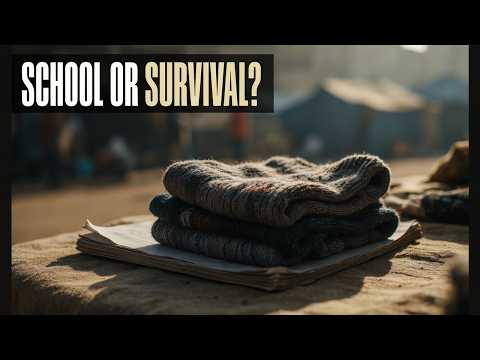
当逃离战火也意味着孩子必须帮忙维持生计时,一个家庭要放弃什么?对13岁的穆尼尔·法里耶来说,答案不仅是也门塔伊兹省的家乡,还有课堂上的时光。《卫报》报道说,他和哥哥如今在一个流离失所者营地外卖袜子和其他廉价商品,而不是上学。他们的父亲加利卜·法里耶说,他让两个儿子去工作,因为家里需要这笔钱才能维持生活。1
穆尼尔曾希望成为家中第一个教师。他的家人逃离阿尔瓦齐耶区的村庄之前,他在教室里就能听见爆炸声和枪声。战火逼近,家人于是离开。他的抱负并没有被人道主义调查抹去,但他的日子已经改变:课堂让位于集市上的工作。这是一个家庭的讲述,并不能证明每个流离失所的孩子都走上了同一条路。1
关键事实
流离失所人数统计显示了什么
胡塞武装与政府方面部队再次交战,迫使一些家庭逃入也门西南部的营地。国际移民组织最新公布的估算数据截至9月28日:自6月西海岸局势升级以来,八个省共有145,308人、分属24,218户家庭流离失所。一周前的可比统计为129,438人、分属21,573户家庭。两次统计相差15,870人和2,645户——一周内人数增加超过12%。1 2
这些统计的范围界定很重要。9月28日的总数并非仅针对塔伊兹,也不意味着这145,308人全是在9月逃离家园。这个数字也无法告诉我们,有多少家庭住在穆尼尔所在的营地。但它确实表明,截至最新统计时,受影响各省的流离失所情况仍在加剧,并未普遍转为返乡。2
其他数字反映的是更早时点的情况,或采用了不同的统计时段。《卫报》9月17日报道的当时流离失所人数为125,000;这一数字已被国际移民组织之后的统计超越。另一项9月25日的估算称,此前三周内有近130,000人流离失所,其中约71,000人为儿童。它统计的是最近一段时间,并非自6月以来八个省的累计人口流动情况。把这71,000名儿童都算作辍学儿童,或将他们加到国际移民组织的总数中,都回答不了这些数字原本无意回答的问题。4 2 32
学校教学受阻不等于辍学
据9月15日的报道,在战事再起之际,超过137,000名学龄儿童的教育面临严重中断。这表明教育普遍受到干扰,但并非永久辍学者或新近开始工作的儿童的经核实人数。在塔伊兹,一些儿童失去了上课的机会,而另一些儿童则像法里耶兄弟一样,被报道正在工作以帮助满足家庭所需。目前没有关于这轮冲突中有多少流离失所儿童开始工作的可靠统计。28 1
也门的教育危机早于最近这轮战事。2026年4月发布的一份全也门报告估计,失学儿童人数为3.2 million。这里无法独立核实这一较早估算所采用的具体操作性定义。不能把它描述成这个月新近离开课堂的3.2 million名儿童,也不能将其与9月教育受阻儿童的数字相加。一个数字反映长期存在的全国性问题;另一个则描述战事再起期间教育受到的冲击。26 30 28
家庭面临的压力不只在于学校是否开放。据《卫报》报道,在塔伊兹,道路受阻扰乱了出行和贸易,并推高了基本商品的价格。对一个已经住在营地里的家庭来说,这使得放弃眼前收入的需求更加困难。现有报道没有量化具体有哪些道路封闭、封闭了多久或价格上涨了多少,因此无法确切判断这些压力在多大程度上促使加利卜·法里耶作出决定。他明确表示,儿子们的工作是全家维持生计所必需的。1
未知
- 新近流离失所的儿童中有多少人在工作,或兄弟俩何时能复学。
后续
- 这个家庭能否安全返乡,以及两个男孩能否重返课堂。
播出原貌 9 行
- Thirteen-year-old Muneer Farie sells socks outside a displacement camp instead of studying. His family fled fighting in Yemen’s Taiz governorate, while the latest displacement count across eight governorates has reached 145,308 people. What do the figures tell us about children losing school—and what remains unknown?
- Muneer and his brother sell socks and other cheap goods to help their family survive in the camp. Their father, Ghaleb Farie, says he asked the boys to work because the family needs the money. Muneer had hoped to become the first teacher in his farming family. Before they fled their village in al-Wazeyah district, he could hear explosions and gunfire from his classroom. Now work has taken the place of lessons for both brothers.
- The family fled as fighting drew close to its village. Renewed clashes between Houthi forces and Yemen’s government-side forces have broken a period of relative calm in the southwest and driven families into camps. But the count of people uprooted reaches well beyond Taiz: it covers eight governorates affected by the West Coast escalation that began in June.
- The September 28 count is 15,870 people and 2,645 households higher than the comparable count one week earlier. That is a rise of more than twelve percent in the number of displaced people. It shows displacement was still growing through September 28; it does not say all 145,308 people fled during September, or that they are all in Taiz. There is no established count for Muneer’s camp.
- Earlier figures describe earlier snapshots or different periods, not competing totals for the same date. A September 17 account used a then-current figure of 125,000. A separate estimate released September 25 covered the preceding three weeks: nearly 130,000 people displaced, including about 71,000 children. That three-week window cannot be substituted for the cumulative eight-governorate count since June. And the roughly 71,000 children displaced cannot automatically be counted as children who stopped attending school.
- As reported September 15, more than 137,000 school-aged children faced major disruption to their education amid the renewed fighting. Some children in Taiz cannot reach classes; others leave lessons to earn money. But disruption is not the same as permanent dropout, and that figure does not tell us how many children have begun working. Muneer and his brother are two specifically described cases, not a measure of child labour across Yemen.
- Schooling was already in crisis before this escalation. An April Yemen-wide estimate put 3.2 million children out of school, after years of civil war had interrupted education. The precise definition behind that older measure has not been independently established. It is not a count of children newly pushed out of class this September, and it must not be added to the figure for children facing disruption from the new fighting.
- Displacement brings other pressures alongside the loss of a classroom. In Taiz, blocked roads are disrupting travel and trade and making basic goods more expensive. That raises the cost of meeting immediate needs for families already forced from home. The specific roads affected, how long they have been blocked and the size of the price rises have not been established here.
- The answer to how many newly displaced children have moved from school into work is still unknown. The education-disruption and child-displacement figures measure different things; neither provides that count. For Muneer and his brother, work has replaced study, and there is no established date when they can return to school or when their family can safely go home.
来源
53 个来源27 家媒体7 篇通稿
International Organization for Migrationiom.int15
- Over 145k Now Displaced in Yemen, 16,000 Increase in Past Week
- Yemen — Rapid Displacement Tracking Update (20 – 26 September 2026) | Displacement Tracking Matrix
- 20260915_Yemen IOM DTM_Flash Updated_Displacement Caused by Escalation in the West Coast_No3
- Yemen Displaced Top 104,000 as IOM Calls for Urgent Action
- 20260916_Yemen IOM DTM_Flash Updated_Displacement Caused by Escalation in the West Coast_No4
- 20260913_Yemen_ IOM DTM_Emergency Displacement from West Coas_V3
- Yemen - Displacement Caused by Escalation in the West Coast — Update Dataset #9 (21 September 2026) | Displacement Tracking Matrix
- New IOM Data: Nearly 130,000 Displaced in Yemen Due to Escalating Conflict
- Other | Displacement Tracking Matrix
- Situation Report | Displacement Tracking Matrix
- Escalation in the Middle East and Beyond — Special Focus on Yemen (07 June - 18 September 2026) | Displacement Tracking Matrix
- 20260914_Yemen IOM DTM_Flash Updated_Displacement Caused by Escalation in the West Coast_No2
- Yemen - Displacement Caused by Escalation in the West Coast — Update Dataset #6 (18 September 2026) | Displacement Tracking Matrix
- KSrelief and IOM Join Forces to Provide Safer Shelter and Vital | IOM Yemen
- IOM Spokesperson: Numbers of Displaced in Yemen Reaches Nearly 94 | IOM Regional Office for Middle East and North Africa
The Guardiantheguardian.com4最先
- 首次报道于
- Children forced to give up school for work as fighting upends daily life in Yemen
- ‘We left everything behind’: 125,000 people displaced as war reignites in Yemen | Yemen
- ‘I hadn’t seen people smiling until I arrived in the UK’: one man’s harrowing journey from Yemen to safety | Yemen
- ‘I’m afraid they’ll bomb the cafe where I work, or bomb me’: a day in the life of a 12-year-old boy in Gaza | Global development
Al Jazeera Mirroredgeone.app1
BBC Sportbbc.com1
BBC Sportbbc.co.uk1
CRBC Newscrbcnews.com1
European Express Newseuropean.express1
Middle East Monitormiddleeastmonitor.com1
News Divenewsdive.net1
Peace Newspeacenews.net1
Quanta Reportquanta.report1
Showcaseprofitpickpath.com1
theguardianwings.pages.dev1未经核实的网站
Yemen Online |yemenonline.info1
Zonebourse Suissezonebourse.com1
منصة أطفال اليمنyemenschildren.net1
来源地图
追溯本篇报道的依据。图谱展示其关联;下方链接可打开本文引用的来源。
来源图谱将在您阅读时加载。
译文更新于
修订记录
- r1首次发布。