Tech · AI infrastructure
First Nations demand a pause as Bell plans fourfold AI campus expansion
Four building shells are already rising south of Regina. Two First Nations want environmental evidence and Treaty-based engagement before Bell’s proposed AI campus grows much larger.
Transcript · LOADING
Story trackerDay 7
1 report22 outlets36 sources5 videos
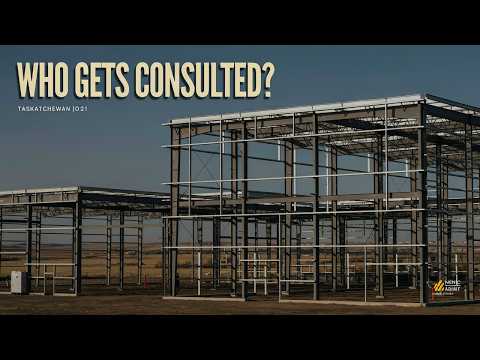
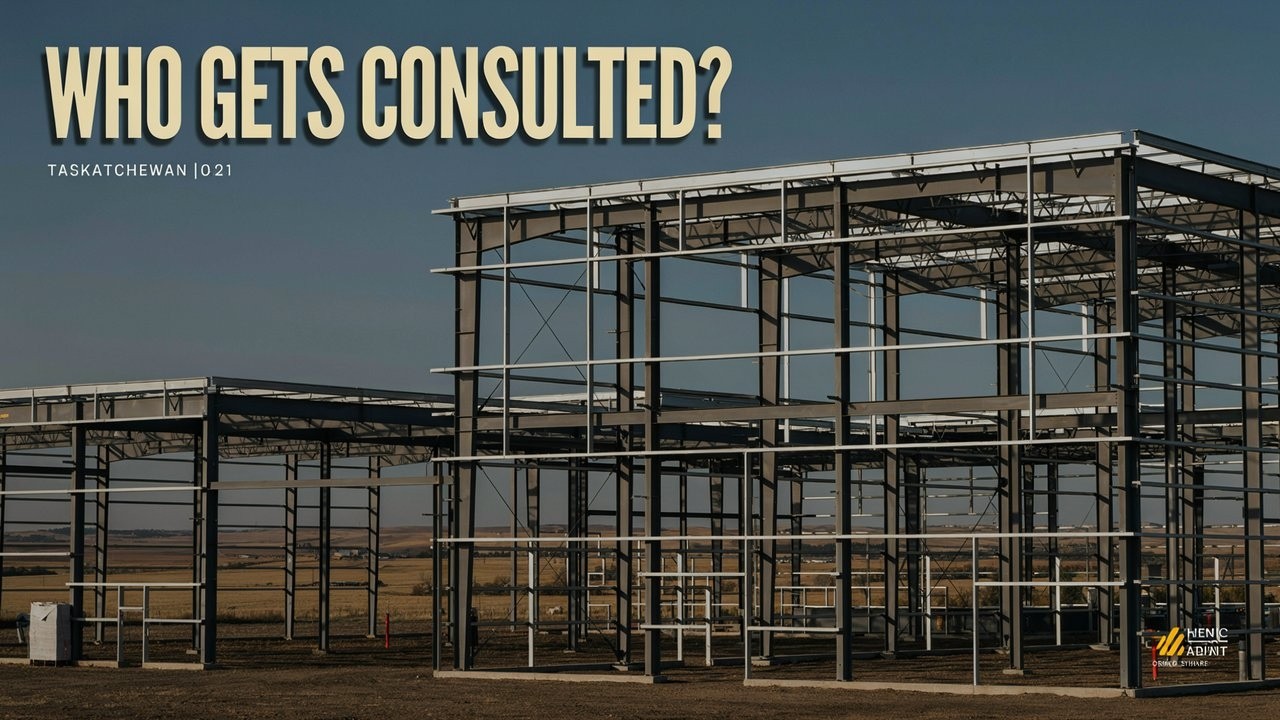
Four building shells were already taking shape south of Regina on October 1. They belong to Bell Canada’s original 300-megawatt artificial-intelligence data centre—not the much larger expansion still working its way through municipal review. The distinction matters: construction has a head start on the argument over what should happen next. 27
Standing Buffalo First Nation and Carry the Kettle First Nation want development halted while environmental concerns and consultation demands are addressed. Bell proposes quadrupling the campus’s announced capacity. First Nations leaders have identified court action as a possible next step if Bell, Saskatchewan and Canada do not pause the project and meet with them. Through October 11, 2026, the available reporting establishes neither a filed lawsuit nor an agreed construction stoppage. 2
This is not simply a dispute about whether computers can be cooled without pumping groundwater. It is about whether a development of this scale should proceed while the Nations say they lack the evidence and engagement needed to judge its consequences.
Standing Buffalo, about 75 kilometres from the site, wants evidence about effects on land, water, air and wildlife. The Nation describes the land as “unceded traditional Dakota territory.” Carry the Kettle says limited regional water supplies and an aquifer beneath much of the area need protection, and alleges Bell and Saskatchewan advanced the project without notice, consent or consultation. Those are the Nations’ positions, not court findings on territorial rights or a breached legal duty. 2 17
Standing Buffalo’s October 2 letter requested technical, environmental and approval documents so it could conduct its own independent assessment. It was addressed to Mirko Bibic, president and chief executive of BCE Inc. and Bell Canada. The request is for access to the evidence behind the project, not another assurance that its design is safe. 16 22
Carry the Kettle’s October 5 statement directed its pause demand to Bell and both governments, setting this condition:
until a proper environmental assessment is complete and our Nation is consulted and accommodated in accordance with the Treaty.
What the cooling assurance actually answers
Bell says the facility neither draws water from nor discharges water to the aquifer. It describes a sealed, closed-loop cooling system and says the coolant lasts more than a decade before replacement. Those are specific company assurances—not independently demonstrated environmental outcomes. 1 2
Saskatchewan’s October project question-and-answer document adds detail: “No municipal water is used for ongoing cooling.” The sealed loop would be filled once with technical fluid that does not need regular refills. Washrooms and kitchens would receive water through a watermain, not wells, with demand described as comparable to an office of about 130 people. No volumetric consumption figure is supplied. 14
That distinction rules out describing the development as using no water. It also leaves important design questions unanswered: the document does not identify the technical fluid, initial fill volume or how the system ultimately rejects heat. A watermain connection does not, by itself, identify the utility water’s ultimate source. 14
The province also says, “Groundwater will be monitored against published baselines.” But the available text does not specify sampling locations, monitoring frequency, thresholds or required corrective action. This is a monitoring commitment, not a completed environmental assessment. And a cooling-system explanation does not resolve questions about construction, land disturbance, air or wildlife across the enlarged campus. 14
A fourfold plan, not current consumption
Bell announced the original 300-megawatt project on March 16, 2026. Its September 14 expansion announcement proposed up to 900 megawatts of additional capacity, producing a full-buildout total of up to 1,200 megawatts, or 1.2 gigawatts. These are planned capacities—not measured electricity consumption or proof that power deliveries have been secured. 28 30
CTV’s October 8 reporting described 1.2 gigawatts as expansion capacity; Bell’s dated release makes clear that it is the enlarged campus total, including the original 300 megawatts. Similarly, Global News’s October 11 account compressed the enlarged building plan into the March announcement. The dated company announcements separate the initial project in March from the expansion in September. 4 1 28 30
The building numbers remain less tidy. Global News reported up to nine additional buildings on October 8, then as many as 15 buildings in its October 10–11 coverage of the enlarged project. Additional buildings and campus-wide buildings are different counts, but the detailed plan needed to reconcile them is not established. Adding the four shells under construction to nine proposed additions would not settle the matter: four shells are a construction snapshot, not a verified final original-site count. 3 2 27
The land figures can be explained more readily. The reported 895-acre expansion parcel adjoins an original site of approximately 160 acres. Together, they amount to approximately 1,055 acres, consistent with CTV’s description of a campus exceeding 1,000 acres. That arithmetic does not establish a completed purchase, a final surveyed footprint or that buildings would cover every acre. 3 5 11
The purchase arrangements remain conditional, with the sale agreement reported under Farm Land Security Board review. CBC identified potential sellers as including a former reeve and the current deputy reeve. Their reported financial interest is not evidence of wrongdoing; individual transaction terms, recusals and conflict-of-interest disclosures have not been established. 9 6
Nor does proposed power capacity establish an approved generating plant. Interim reeve Ray Orb said on October 9 that he did not expect a 900-megawatt power plant at the site. That is his expectation, not a final power-supply decision. 13
Approval still has steps to clear
Sherwood councillors unanimously passed first reading of the expansion rezoning proposal on October 7. Second and third readings remained. Council also unanimously approved public meetings and community engagement; CTV described the next stage as a public hearing, which Orb said would be advertised once scheduled. No hearing date is established through October 11. Advancing the application is not final rezoning approval. 3 4
Municipal leadership had already changed. Global News reported that four of seven councillors quit the previous spring and Saskatchewan appointed interim councillors, after which the original project was approved. Individual resignation dates and the full appointment record were not independently recovered. Whatever that history means for scrutiny of the decisions, original-site approval must not be confused with approval of the expansion. 2
The schedule is conditional too. Bell’s March overview anticipated the original facility beginning to come online in early 2027; March CBC reporting described operations expected by year-end. The precise relationship between those phased expectations is unresolved. Additional buildings could begin in 2027 as customers are secured, with staged construction potentially continuing through 2030 and beyond—not a firm completion appointment. 26 12 3 5
A separate federal-assessment request is already in the public record. Correspondence seeking designation under section 9(1) of the Impact Assessment Act says an initial request went to the federal assessment agency on May 4, followed by May 15 advice to submit directly to the minister. The writer raised groundwater, fish habitat, migratory birds, Indigenous rights and climate concerns. This establishes a request for review, not a designation decision or findings of harm. 21
The writer said no independent provincial or federal assessment had been publicly disclosed to their knowledge. That qualification matters: neither this correspondence nor the Nations’ demands proves that no environmental work has occurred. The available reporting nevertheless establishes no completed independent assessment or substantive government reply resolving the Nations’ requests. Opposition New Democrats have also called for a pause, but political support does not stop construction. 21 24
The next municipal test is an undated hearing and the remaining rezoning readings. The more consequential test is whether Bell and the governments provide the requested documents, meet with the Nations and address their assessment demands. A sealed cooling loop may answer one water question. It does not answer who gets to examine the evidence before a campus already taking physical shape grows substantially larger.
Sources behind this report
Global News: October 10 national report 1; First Nations concerns 2; nine-building expansion proposal 3. CTV News: October 7 Regina newscast 4; expansion details 5.
CBC: proposed land purchase 6. SaskToday: public-review stage 7. CTV: anticipated rezoning vote 8. Leader-Post: conditional land sale 9. CJME: site plan 10. Connect CRE: adjoining parcels 11. CBC: initial project 12. CJME: power-plant comments 13. Saskatchewan: project Q&A 14. Mugglehead: expansion and zoning 15.
CJME: consultation demand 16. CBC: First Nations opposition 17. Yahoo News Canada: First Nations report 18. MBC Radio: Carry the Kettle request 19. Eagle Feather News: October 5 statement 20. Federal registry: ministerial designation-request correspondence 21. MBC Radio: Standing Buffalo document request 22. Canada News Media: Nations’ demands 23. SaskToday: engagement demands 24. Global News: Standing Buffalo letter 25.
Bell: March project overview 26. Saskatchewan: October 1 construction update 27. Bell: initial 300-megawatt announcement 28. Saskatchewan: September backgrounder 29. Bell release via Stockhouse: September 14 expansion 30. SEC: March release exhibit 31. CBC: power, water and local impacts 32. The1News: consultation report 33. TheNews92: letter report 34. CKRM: council-meeting preview 35. Federal assessment registry: project description 36.
As aired 29 lines
- Two First Nations demand Bell halt an AI campus that's already taking shape.
- Construction is underway on the original site, and Bell proposes expanding its planned capacity fourfold. The Nations want environmental evidence and consultation before development goes further.
- Will Bell and the governments address those requests before the campus grows?
- Standing Buffalo First Nation is about 75 kilometres from the site, south of Regina in Sherwood. The Nation describes the land as unceded traditional Dakota territory. Carry the Kettle First Nation says limited regional water supplies and an underlying aquifer need protection.
- Standing Buffalo wants evidence about effects on land, water, air and wildlife. Its October 2 letter requested technical, environmental and approval documents so the Nation could carry out its own independent assessment.
- Standing Buffalo addressed that request to Bell president and chief executive Mirko Bibic. The Nation wants access to the information behind the project's design and approvals, so it can judge the consequences for itself.
- Carry the Kettle says Bell and Saskatchewan moved ahead without notice, consent or consultation. Its October 5 statement asks Bell and both governments to pause development until an environmental assessment is complete and Treaty-based consultation and accommodation take place.
- The provincial opposition New Democrats have also called for a pause. First Nations leaders say they may go to court if Canada, Saskatchewan and Bell don't pause the project and meet with them.
- Bell's original plan called for 300 megawatts. The expansion adds up to 900 megawatts, bringing the proposed total to 1,200 megawatts, or 1.2 gigawatts. That's four times the original announced capacity, at full buildout.
- Bell announced the original project on March 16, 2026, and the expansion on September 14. The enlarged plan came six months after the initial announcement. Bell is describing future capacity; the campus is still being built.
- Saskatchewan's October 1 construction update said four building shells were taking shape at the original 300-megawatt site. That work was underway while the separate expansion proposal was still moving through municipal review.
- The expansion proposal allows up to nine additional buildings. The enlarged project is also reportedly planned for as many as 15 buildings. How those counts fit together is still unclear; four shells under construction don't settle the final campus count.
- The planned buildings would spread across an area compared to eight average-sized golf courses. That comparison conveys scale. The land proposal gives a more concrete measure of how far Bell wants the campus to reach.
- The original site covers approximately 160 acres of agricultural land. Bell's conditional purchase arrangements cover another 895 acres beside it. Together, that's approximately 1,055 acres of proposed holdings, with the sale still conditional.
- The conditional sale agreement is under Farm Land Security Board review. Potential sellers include a former reeve and the current deputy reeve. Their financial interest in the proposed sale carries no finding of wrongdoing. The combined acreage also leaves the eventual developed footprint to be determined.
- Bell says its sealed, closed-loop cooling system won't draw water from or discharge water to the aquifer. It says the coolant lasts more than a decade before replacement. Saskatchewan describes a one-time technical-fluid fill that doesn't need regular refills.
- Those assurances address water moving into and out of the cooling system. The Nations are also asking about construction, land disturbance, air and wildlife across a much larger campus. Bell's cooling explanation alone can't resolve those broader requests.
- The province says washrooms and kitchens would receive water through a watermain rather than wells. It describes demand as comparable to an office of about 130 people. That domestic supply is separate from the technical fluid circulating through the cooling loop.
- Saskatchewan promises to monitor groundwater against published baselines, measurements used to track changes. The province hasn't spelled out how monitoring would trigger corrective action. Standing Buffalo wants the underlying technical and environmental documents to support its own assessment.
- A separate writer has already asked for federal review under the Impact Assessment Act. The request raised groundwater and fish-habitat concerns, migratory birds, Indigenous rights and climate effects. Those are concerns the writer wants examined.
- The writer submitted an initial request to the federal assessment agency on May 4. On May 15, the agency advised sending the request directly to the minister, with copies to the agency. A federal assessment decision hasn't been announced.
- The writer said they knew of no publicly disclosed independent provincial or federal assessment. The Nations are seeking independent environmental evidence, and no completed assessment has been presented to resolve their demands.
- Sherwood councillors unanimously passed first reading of the expansion rezoning on October 7. Second and third readings still have to happen. Council also approved public meetings and community engagement, and the proposal is moving toward a public hearing.
- Interim reeve Ray Orb says the hearing will be advertised once scheduled. On October 9, he also said he didn't expect a 900-megawatt power plant at the site. His expectation leaves the final power-supply decision open.
- Four of Sherwood's seven council members reportedly quit the previous spring, and Saskatchewan appointed interim councillors. The original project was approved after those appointments. Approval and construction on that original site came before the expansion's unfinished rezoning process.
- Other opponents at the municipal stage raised electricity use, psychological impacts and inadequate public consultation. They also sought environmental review and First Nations consultation. The construction schedule depends on more than council votes.
- Bell expects the original facility to begin coming online in early 2027. Additional-building phases could start in 2027 as Bell secures customers. Staged expansion could continue through 2030 and beyond, so the proposed schedule remains conditional.
- Operations were also expected by the end of 2027. Those expectations describe a phased opening; Bell hasn't supplied a single confirmed completion date for the enlarged campus.
- Bell's aquifer assurance hasn't resolved the Nations' requests for documents, consultation and environmental assessment. Bell and the governments haven't announced an agreed construction pause or a resolution of those requests. The public hearing still has no announced date, and First Nations leaders have identified court action as their possible next step.
Sources
36 sources22 outlets5 videos
cbc.ca4
- Bell Canada plans to purchase 895 acres to expand AI data centre outside Regina | CBC News
- Bell Canada to begin construction on Canada's largest AI data centre near Regina this spring | CBC News
- These 2 First Nations are pushing back against Sask. AI data centre
- Bell AI data centre expansion raises questions over power, water and local impact | CBC News
Global News33 videos
Government of Saskatchewansaskatchewan.ca3
CTV News22 videos
MBC Radiombcradio.com2First
Prime Minister of Canadagc.ca2
- Dear Minister, I am writing to formally request that the proposed Bell Canada AI Data Centre in the Rural Municipality of Sherwood, Saskatchewan, be designated for federal impact assessment pursuant to Section 9(1) of the Impact Assessment Act, SC 2019, c 28, s 1 (“IAA”). On May 4, 2026, I submitted a formal designation request to the Impact Assessment Agency of Canada (“IAAC”). On May 15, 2026, the Prairie and Northern Region of IAAC advised that designation requests must be submitted directly to the Minister with copies provided to IAAC. This correspondence constitutes that formal request. The proposed project is a 300-megawatt, 90K-square-foot industrial AI data centre to be constructed on approximately 160 acres of agricultural land in the RM of Sherwood, Saskatchewan. This will allegedly be the largest AI data centre development in Canada. Living within a 9 km radius of this massive structure, and researching the impacts other similar data centres have had in their communities, this project raises substantial concerns within federal jurisdiction, including potential impacts on fish habitat and groundwater systems, migratory birds, Indigenous rights and consultation obligations, and Canada’s climate commitments. To my knowledge, there has been no independent provincial or federal environmental assessment has been publicly disclosed, despite the scale and significance of the development. I’m not sure how a proper environmental assessment could have possibly been done in the 21 days from announcement to approval of the project. Further, construction equipment was onsight and the digging began April 21, 2026. The pre-testing activities were commenced on site prior to approval, including assessments related to piling depth and aquifer penetration? The RM of Sherwood map shows that there are pipelines running through the property and the Enbridge Alberta Clipper is close by. That’s intrinsically safe with all the heavy duty equipment there?
- Bell AI Fabric Data Centre Project - Canada.ca
SaskToday.casasktoday.ca2
620 CKRM - The Voice of Saskatchewan | Harvard Media620ckrm.com1
- First reported
- Bell’s massive AI expansion heads back to Sherwood council
Canada News Mediacanadanewsmedia.ca1
- First reported
- Two First Nations press Bell on Sask. AI data centre
Connect CRE Canadaconnectcre.ca1
- First reported
- New Plans Reveal Bell's 895-Acre Saskatchewan Land Buy
CTVNewsctvnews.ca1
- First reported
- RM weighs rezoning for Bell AI data centre expansion
Eagle Feather Newseaglefeathernews.com1
leaderpost.com1
Muggleheadmugglehead.com1
- First reported
- BCE Inc's Bell Canada lines up 895 acres near Regina
sec.gov1
The News92thenews92.com1
Yahoo Newsyahoo.com1
Source map
Follow the evidence behind this report. The map shows its connections; the links below open the sources cited in this article.
Source map loads as you read.
Revision log
- r1First published.