Disasters · Budhi Gandaki flood
Nepal flood leaves people missing and riverside communities on alert
The Army reports 49 rescued after the Budhi Gandaki flash flood. Missing-person and damage counts remain unreconciled, while residents are urged to move to safety.
Transcript · LOADING
Story trackerDay 1
1 report16 outlets22 sources
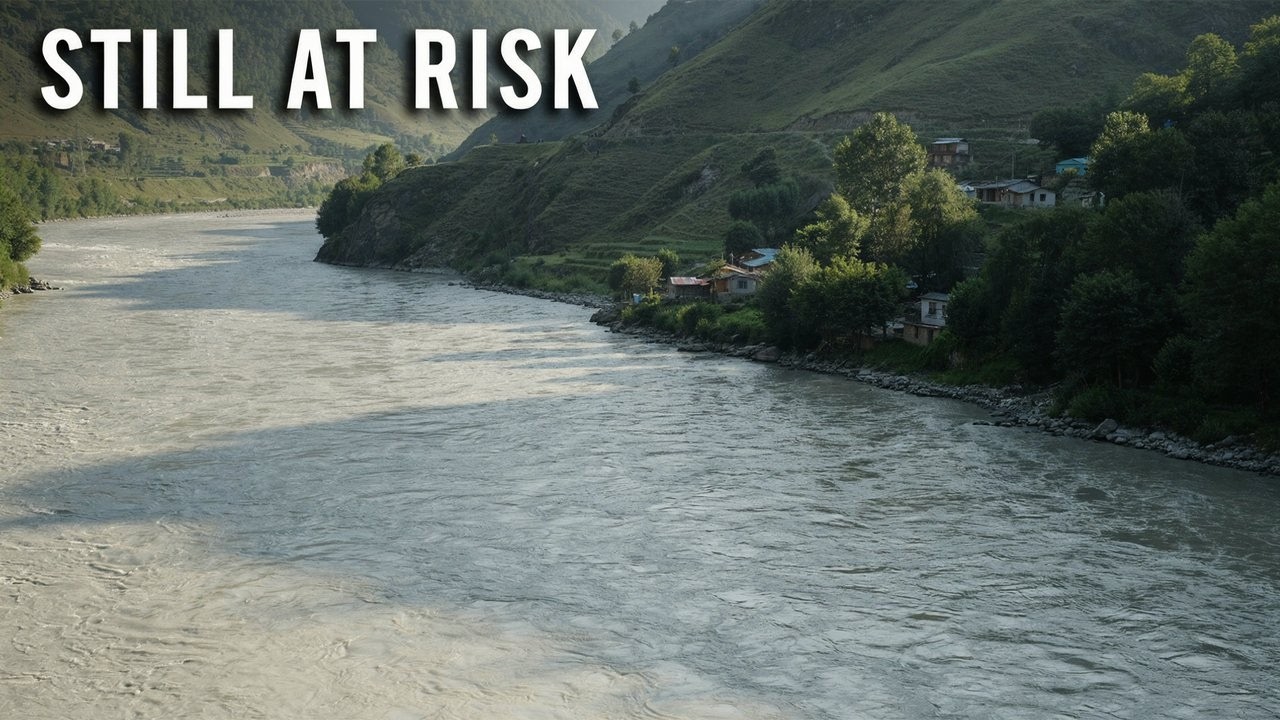
People remained unaccounted for along Nepal’s Budhi Gandaki River after a flash flood carried away homes, destroyed crossings and washed away a hydropower construction camp. For residents still beside the water, the danger was not only what had already been lost: the river was reported above danger level, with fluctuating flows, and authorities were urging them to move to safer ground. 2 4 21
By Sunday, October 11, 2026, the Nepal Army had reported rescuing 49 people. Gorkha district’s top official confirmed five people still missing, according to BBC News. But other preliminary reporting put the missing-person count at at least ten. Those accounts have not been reconciled, and neither figure can responsibly be presented as a final tally. 2 5 7
The earlier Kathmandu Post account, dated October 10 at 23:15 UTC, reported four missing people who had been living in a shed beside the Ungilung river in Chumchet, Chumnubri Rural Municipality Ward 6. BBC News’s October 11 report carried the later five-person balance. That replaces the earlier four-person headline; it does not explain explicitly whether all four shed residents are included in the five. Their identities and any subsequent discovery remain unestablished. 1 2 13
Ratopati and New Business Age also reported at least ten missing on October 11. Their accounts lack the matching observation cutoffs and named-person lists needed to explain the difference. They cannot simply be dismissed as older, nor can their figures be added to five. No deaths have been confirmed in the available reporting, but that is not a finding that everyone survived. 5 7 1 20
immediately move to safer locations and remain on high alert
Home Minister Sudan Gurung’s appeal named Sirdibas, Jagat, Salleri, Kholbesi, Machhikhola, Soti, Arkhet and Arughat. It establishes a warning to riverside communities, not completed evacuation of everyone in them. No precise evacuation boundary or expiry time is established in the available wording. 21
Rescues without a settled final balance
The rescue operation is substantial, but its numbers also require care. Khabarhub reported that the National Disaster Risk Reduction and Management Authority, or NDRRMA, counted 47 people rescued and relocated to safety on Sunday afternoon. Executive Chief Dr. Dharma Raj Upreti described 386 security personnel supported by four Nepali Army helicopters. 3
epardafas described the 47-person figure as an update as of 1:00 pm Sunday, without explicitly identifying the timezone. BBC News published the Army’s 49-person count at 10:34:02 UTC, but did not give the underlying counting time. Publication order alone cannot show that two additional rescues explain the difference. Timing, coverage or counting methods might account for it; none has been established. 9 2
Republica separately reported six people airlifted from Jagat, while the Kathmandu Post described six rescued by air. Those are narrower accounts of helicopter rescue, not competing totals for the whole operation. Their inclusion within 47 or 49 is unknown, so they should not be added. Four helicopters mobilized also does not mean four flights. 22 14 3
The essential distinction is between rescue activity and a completed accounting of everyone affected. The reporting establishes people brought to safety and people still missing. It does not establish a final casualty balance, a complete displaced-population count or that all threatened households have reached safer ground.
Homes and crossings lost together
The flood tore through the Gorkha river corridor and damaged connections with Dhading district. BBC News reported four bridges and nearly two dozen houses swept away. The earlier Kathmandu Post account counted more than ten houses lost across Salleri, Paiyun and Jagat Bagar—a named-settlement subtotal, not necessarily the same geographic inventory. 2 1
Wider estimates are higher. The Himalayan Times reported 35 houses swept away; New Business Age described around 35 in Gorkha, explicitly as preliminary information. A Kathmandu Post follow-up estimated 35–40 across the affected Chumnubri and Dharche municipalities. These are supported reported estimates, but not a verified final inventory. Without common boundaries and counting times, they cannot be combined or arranged into a confident progression of rising losses. 4 7 12
The earlier account also gave a district-official estimate of five to seven houses lost in Jagat and about 20 to 22 homes at risk in Dharche Ward 3. The relevant original passages were not independently recovered, so both remain preliminary details. Crucially, homes at risk are not homes confirmed destroyed. No later ward-specific assessment establishes whether those Dharche households were evacuated, whether their buildings remained standing or whether the threat ended. 1
Bridge inventories differ too. The Kathmandu Post’s earlier police-attributed report counted three: two suspension footbridges and one steel bridge. BBC News reported four. Ratopati and New Business Age carried Assistant Chief District Officer Netra Prasad Sharma’s account of six—two motorable bridges and four suspension bridges. These are separate reported inventories, not losses to add together. 6 2 5 7
Sharma identified road connections between Arughat and Tripurasundari in Dhading, and between Soti and Manbu in the Arughat area. Those descriptions distinguish two crossings, but formal names and a complete suspension-bridge list are unavailable. They do not safely match every crossing to the earlier steel or road-bridge descriptions. For communities losing homes, the destruction of crossings adds another disruption: routes between settlements have been lost too. 5 1
At Salleri, in Chumnubri Ward 3, the construction camp of the 341-megawatt Budhi Gandaki hydropower project was reported washed away, along with some equipment. The capacity figure identifies the project; it is not a measurement of electricity production lost. The established damage concerns the camp and equipment, not a finding that the entire project was destroyed. No verified damage valuation, equipment inventory or construction-delay estimate is available. 8
A blockage burst, but where exactly?
The strongest official explanation comes from the Army’s account, reported by OnlineKhabar: a dry landslide blocked the Budhi Gandaki, and the obstruction subsequently burst, releasing a silt-laden flash flood. That describes water temporarily held back and suddenly released. It does not establish that the hydropower project caused the flood. The Kathmandu Post retained more cautious language about a suspected landslide that may have triggered it. 16 12
The blockage location and channel remain unresolved. Khoj Samachar and Ratopati placed an obstruction between Lokpa and Chumling—rendered “Chhuling” in one account—in Chumnubri Ward 6. Nepal Wire described a tributary blockage. The recovered Army account referred to the main river and Ward 3; its wording does not settle whether that ward identifies the obstruction or a downstream impact area. 18 19 11 16
Nor is there a reliable minute-by-minute sequence. Reporting broadly places the flood early Sunday or at dawn. Local hotel operators estimated a landslide around 5:30 am Sunday; Republica described a blockage release around 4:30 am in Philim, Ward 3. These concern different milestones and locations, and the release estimate precedes the separate landslide estimate. They cannot be treated as a verified chronology or converted into a defensible exact UTC onset. 1 19 22
One account said the river had started flowing again. That is not an all-clear. Renewed blockage remains unverified, while the reported above-danger-level condition and fluctuating flows leave continuing concern for people on the banks. A river moving again is not necessarily a river safe to live beside. 18 4
Known
Unknown
- The missing-person balance, complete damage inventory and safety of threatened households remain unresolved.
Next
- Watch for a named-person search update, ward-specific evacuation assessments and a verified river-status report—not just another aggregate tally.
Sources and reporting behind this account
The Kathmandu Post’s initial damage account and BBC News’s flood report underpin the opening account. The BBC material is supplied through its UK and international pages. 1 2 20
Rescue and deployment reporting comes from Khabarhub, epardafas, Banking News, Republica and the Kathmandu Post’s residents’ escape account. 3 9 10 22 14
Damage and missing-person assessments appear in The Himalayan Times, Ratopati, New Business Age, the Kathmandu Post’s bridge report, its five-things overview and its Chumchet missing-person report. 4 5 7 6 12 13
As aired 21 lines
- A flash flood swept away homes, bridges and a hydropower construction camp in Nepal.
- The Army says it rescued 49 people. Others are still missing, and residents beside the river are being urged to move to safer ground. The urgent questions are where the missing people are, and whether the riverside communities are safe.
- The Budhi Gandaki flood tore through communities in Gorkha district, in central Nepal. It also destroyed crossings connecting communities with Dhading district. Along this river corridor, residents have lost both their homes and routes between settlements.
- The district's top official confirmed five people missing, after an earlier tally of four shed residents. At least ten are reportedly missing in another preliminary estimate. Nobody has explained how those counts fit together, so we can't give a final total.
- The four shed residents had been living beside the Ungilung river in Chumchet, in Chumnubri Ward Six. It's unclear whether they're included in the five-person total. No deaths have been confirmed, but people are still unaccounted for.
- The Army's 49-person rescue count differs from the disaster-management authority's total of 47 rescued and moved to safety. That authority's update was described as current at one Sunday afternoon. Nobody has explained whether timing or coverage accounts for the difference.
- The Army's count was announced Sunday, October eleventh, but its underlying count time wasn't given. So we can't say two more people were rescued after the authority's update. Both figures describe rescue operations during an emergency whose full toll is still being counted.
- Disaster-response chief Dharma Raj Upreti described 386 security personnel and four Army helicopters mobilized. Six people were separately reported airlifted from Jagat. We don't know whether those six are included in either larger rescue total.
- Nearly two dozen houses were reported swept away. An earlier estimate counted more than ten across Salleri, Paiyun and Jagat Bagar. Other preliminary estimates put losses around 35, or 35 to 40 across Chumnubri and Dharche. Their boundaries and counting times differ.
- Those house estimates can't be added together or treated as a steady rise in losses. An earlier district-official estimate put Jagat's losses at five to seven houses. The wider estimates of around 35 and 35 to 40 remain preliminary, with no complete inventory yet.
- Police initially counted three lost crossings, two suspension footbridges and one steel bridge. Another tally gives four bridges. A district official described six, including two road bridges and four suspension bridges. There's no reconciled list showing which crossings each count includes.
- Assistant Chief District Officer Netra Prasad Sharma identified two road connections. One linked Arughat with Tripurasundari in Dhading. The other connected Soti with Manbu. His descriptions identify separate crossings, but don't settle how they match the earlier bridge inventory.
- Destroyed crossings add to the disruption for communities already dealing with homes carried away. The suspension bridges also served people travelling on foot. The bridge counts remain provisional, alongside the housing estimates.
- The flood also washed away a construction camp at Salleri, in Chumnubri Ward Three. It served the 341-megawatt Budhi Gandaki hydropower project. Some equipment was reportedly swept away too. The damage described so far concerns the camp and equipment.
- The Army says a dry landslide blocked the Budhi Gandaki. Water collected behind that obstruction, then the blockage burst and released a silt-laden flash flood. That account gives a physical explanation for the surge that swept through downstream communities.
- The exact blockage site is still unclear. Some descriptions place it near Lokpa and Chumling, in Chumnubri Ward Six, possibly on a tributary. The Army's account refers to Ward Three and the main river. Those locations haven't been reconciled.
- The flood hit early Sunday. Hotel operators placed a landslide around five thirty that morning. A separate estimate puts a blockage release around four thirty in Philim. Those estimates concern different events and places, and don't provide a reliable sequence.
- Water began flowing again after the blockage. But the river was still reportedly above danger level, with fluctuating flows. Nepal was already recovering from devastating floods and landslides near the Tibet border two months earlier.
- About 20 to 22 homes in Dharche Ward Three were reported at risk in an earlier assessment. That warning concerned buildings threatened by the river. We don't yet know whether those households reached safety or whether the river has returned to safe conditions.
- Home Minister Sudan Gurung urged riverside residents to immediately move to safer locations and remain on high alert. His appeal included Sirdibas, Jagat, Salleri and Kholbesi. The missing people are still unaccounted for while riverside communities face this warning.
- Gurung also named Machhikhola, Soti, Arkhet and Arughat. His appeal tells people along the river to move to safer ground and stay alert. The river's reported fluctuating flows and above-danger-level condition mean the threat extends beyond homes and bridges already swept away.
Sources
22 sources16 outlets1 wire copy
Kathmandu Postkathmandupost.com5First
- First reported
- Landslide-triggered flash flood on Nepal's Budhi Gandaki river destroys houses and bridges; four missing
- Budhi Gandaki flood washes away three bridges in Gorkha
- Five things to know about the Budhi Gandaki flash flood
- Four people unaccounted for after Budhi Gandaki floods
- ‘It reminded me of the Bhotekoshi floods’: Gorkha residents recount escape
OnlineKhabar English Newsonlinekhabar.com2
Banking News | Nepal's Banking & Financial Newsbankingnews.com.np1
BBC Newsbbc.co.uk1
- First reported
- Buildings swept away as flash floods hit central Nepal
BBC Newsbbc.com1
- First reported
- Buildings swept away as flash floods hit central Nepal
CNAchannelnewsasia.com1
Farsightfarsightnepal.com1
Khabarhubkhabarhub.com1
Khoj Samacharkhojsamachar.com1
- First reported
- Budhi Gandaki River Resumes Flow After Landslide in Gorkha
Nepal Wirenepalwire.net1
NepalEnergyForumnepalenergyforum.com1
newbusinessage.com1
Source map
Follow the evidence behind this report. The map shows its connections; the links below open the sources cited in this article.
Source map loads as you read.
Revision log
- r1First published.