Politics · California remarks
Trump vows to protect LA and San Diego after remarks prompt threat monitoring
His Texas assurance adds a clear commitment to defend the cities. It does not retract the earlier wording or establish what California’s precautionary monitoring has found.
Transcript · LOADING
Story trackerDay 7
1 report77 outlets121 sources11 videos
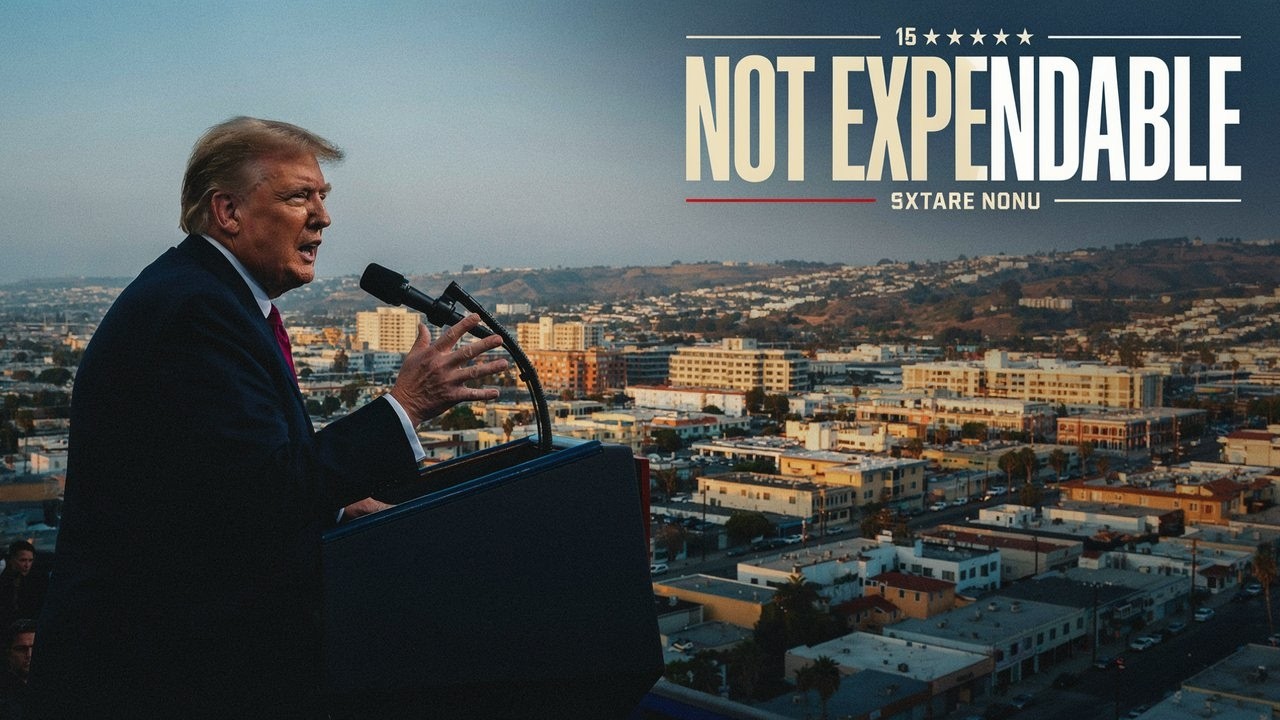
Donald Trump’s argument that the Iran war’s economic costs were a small price for American safety has produced a dispute about something far larger: whether his words treated American cities as expendable. He has now explicitly promised to protect Los Angeles and San Diego, after naming both in a passage that prompted California to order precautionary threat monitoring and drew criticism even from a Republican candidate he endorsed. 15 2 3
At Freeman Coliseum in San Antonio on Wednesday, October 7, Trump again invoked the hypothetical prospect of a missile hitting either city, then said: “We’re not going to let that happen. We protect our cities. We protect our country.” The reassurance was reported October 8; the speech itself was the previous day. It is a substantive assurance, but not a retraction, a new defense measure or evidence that California has ended its monitoring. 26 27
The distinction matters. A president saying he will defend American cities should be unremarkable. Here, it became necessary because his earlier wording moved from higher wartime prices to cities being destroyed—and then repeated the language of a small price.
The sequence behind the dispute
The original remarks came October 5 at the Pinnacle Bank Expo Center at Fonner Park in Grand Island, Nebraska. Trump was discussing the Iran war, its economic costs and preventing Iran from obtaining a nuclear weapon. Organizers scheduled his speech for 6 p.m. Central, but the exact time of the disputed sentences is unverified. 56 73 15
And again, remember, with the war, it’s just artificial. It’s a little bit high. It’s a small price to pay for keeping the world safe, keeping our country safe. They can take out a city. Let them take, let them take out Los Angeles; let them take out San Diego. That’s — this is a very small price to pay, and it’s going to be over with very soon.
The continuous passage, reproduced by The New York Times, is more useful than either a clipped city reference or an economic explanation stripped of what followed. The first price reference concerned wartime costs. The second followed the city names. That sequence explains why critics heard acceptance of catastrophic losses; it does not conclusively establish Trump’s private intent. 15 21
Cheung’s accompanying assertions that Iran had “no nuclear, no navy, no air force, and no money” are not independently established here. Nor did Trump’s predictions that the conflict was “essentially almost over” and would end soon “one way or the other” establish its outcome. Some attendees cheered, including at the city references; their response does not speak for everyone present. 32 9 12
Before the Texas reassurance, Trump supplied no clarification when questioned twice the following day, leaving the White House and returning from Baltimore, CNN reported. The later statement supplies an explicit commitment to protection that was missing from the disputed passage. 4
Monitoring is not a discovered plot
Governor Gavin Newsom directed California’s State Threat Assessment Center to monitor possible threats on October 6, warning that foreign actors might read Trump’s language as an invitation. No specific Iranian plot or attack was identified in the directive. CBS also reported an elevation of California’s alert system, but no technical level, duration or termination has been established. 35 37 8
No subsequently published assessment finding is established either. That leaves two claims equally unsupported: that California discovered an imminent attack, and that its monitoring found nothing. A precautionary order proves neither. 3 4
The president’s remarks were not an established intelligence disclosure. The Guardian cited earlier defense assessments saying Iran lacked a direct mainland missile capability, without identifying the officials or assessment dates. The Hill reported no operational Iranian nuclear weapon or verified intercontinental ballistic missile capable of reaching the mainland. Those qualifications do not prove every attack impossible; they do prevent a hypothetical nuclear scenario from being presented as a verified imminent threat. 13 11
Los Angeles Mayor Karen Bass said the comments could compromise her city’s safety. San Diego Mayor Todd Gloria rejected the premise outright: “San Diego is not collateral damage. We are not expendable. And we are never a ‘small price to pay.’” 13 102
The human stakes need no inflation. Newsom’s press office described more than 10 million residents in the two cities, an incorrect geography. Census estimates for July 1, 2025 put Los Angeles city at 3,869,089 and San Diego city at 1,406,106. 13 75 76
Key facts
Xavier Becerra’s description of approximately 13 million people in the two counties is consistent with the county estimates. Cities and counties are not interchangeable. San Diego’s naval importance is also real, but specific: Naval Base San Diego is the principal homeport for Pacific Fleet surface ships, not Pacific Fleet headquarters, which is in Hawaii. 13 79 41 55
Political consequences, not measured electoral movement
Jim Desmond, a Trump-endorsed Republican congressional candidate and San Diego County supervisor, said he vehemently disagreed with the remarks: “No American city is expendable, and no American family should ever be treated as collateral damage.” His Democratic opponent in California’s 48th District, Marni von Wilpert, called the comments appalling, terrifying and impeachable. Desmond’s objection establishes Republican dissent—not the position of every Republican. 32 5 90
There is no verified electoral shift caused by the speech. Von Wilpert’s reported three-point lead came from a SurveyUSA likely-voter poll conducted August 27–September 1: 45% to Desmond’s 42%, with 13% undecided. The reported credibility interval was approximately five points. The poll predates the remarks, as does the race assessment described by MS NOW as Lean Democratic. 87 5
Likewise, the Reuters/Ipsos poll giving Trump 32% approval and 65% disapproval surveyed 4,506 adults September 30–October 5. Fieldwork ended on the Nebraska rally date. It cannot demonstrate a reaction to those sentences. 95
Newsom and Senator Alex Padilla advocated the Twenty-fifth Amendment, while Senator Cory Booker criticized Republican silence. No Section 4 declaration or impeachment proceeding over these remarks is established as of October 8. Newsom’s “dangerous, if not treasonous” accusation is political condemnation, not a legal finding. 52 8 5 3
Section 4 requires the vice president and the specified majority of executive-department officers—or an alternative body Congress creates—to submit a written declaration of presidential inability. It transfers powers to an Acting President, not the office itself. A governor’s demand or senator’s post does not initiate that transfer. 103 104
The established consequence is concrete but limited: alarming presidential wording, precautionary state monitoring, objections crossing party lines and then an explicit protective assurance. Whether monitoring has uncovered an actionable threat, when it will end and whether voters respond differently remain unresolved. The reassurance changes the record. It does not erase the reason California officials demanded one.
Sources
Broadcast accounts: ABC World News Tonight 1; CBS follow-up 2; Guardian live coverage 3; CNN 4; MS NOW 5; ABC Live Prime 6; CTV 7; CBS Takeout 8; Independent 9; WRAL 10; Hill 11; Scripps 12; Guardian original report 13.
Remarks and context: CNN 14; New York Times 15; Union-Tribune 16; Los Angeles Times 17; NBC Los Angeles 18; Jerusalem Post 19; CBS Los Angeles 20; PolitiFact 21; rally reference 22; Snopes 23; FactCheck.org 24; Forbes 25; Washington Post 26; NBC 27; People 28; Gulf News 29; Detroit News 30; Philadelphia Inquirer 31; Reuters 32; TribLive 33.
California responses: Miami Herald 34; Politico 35; IBTimes 36; Hill 37; Desert Sun 38; Guardian 45; Newsweek 46 52; Fox News 53; AP 67; Newsweek follow-up 68; Nebraska.tv 69; CNA 70; NCIJ 71; IBTimes follow-up 72; Nebraska Examiner 73; GMA 74; Newsom post 97; reposts 98 99; Gloria post, profile and statement 100 101 102.
Geography and population: naval-base references 39 40; Navy 41 55; Times of San Diego 42; Census 43 50 51 54 75 76 77 78 79 80; FRED 44; Pacific Fleet reference 47; California Finance 48; population explorer 49; Brookings 81; rally schedule 56.
Constitutional references: Congress and government publications 57 58 59 60 63 65 103 104 115 116 117 119 120; Heritage 61; Cornell 62 64 66 121; Yale 105; amendment reference 118.
Election reporting: Union-Tribune 87; Ballotpedia 88; Axios 89; Politico 90; New York Times 91; Detroit News 92; Wealth Adviser 93; Just the News 94; CNBC TV18 95; Reuters post 96; RealClearPolitics 106; Cook 107; Midterm Mondays 108. Naval reporting: Guardian 82; WRAL 83; Seattle Times 84; Hamilton Spectator 85; DefenseWatch 86; World Ports 109; USNI 110; Stars and Stripes 111; New York Times 112; Army Recognition 113; National Interest 114.
As aired 48 lines
- Trump now promises to protect the cities he named in his disputed Iran remarks.
- Los Angeles and San Diego together have more than five million residents. His earlier language prompted California to order precautionary threat monitoring and drew objections from a Republican candidate he endorsed.
- What has actually changed: the president’s assurance, California’s security response, or the evidence of a threat?
- Trump has explicitly said the United States will protect both cities. That assurance does not retract his earlier words, announce a new defense measure, or establish that California has ended its monitoring.
- Trump named the cities on October 5. Governor Gavin Newsom ordered monitoring on October 6. Trump delivered his protective assurance on October 7, not October 8: the later date marks its publication, not the Texas speech.
- The reassurance came at Freeman Coliseum in San Antonio, during a rally for Republican Senate nominee Ken Paxton. Trump again invoked the hypothetical danger of a missile hitting San Diego or Los Angeles, then said he would prevent it.
- “We’re not going to let that happen. We protect our cities. We protect our country.” Those words add an explicit commitment to protection. They do not settle what Trump privately intended in the earlier passage.
- The earlier passage moved from higher wartime costs to a city being destroyed, then repeated the language of a small price. That sequence is why the dispute cannot be explained by quoting only the city names—or only the economic argument.
- Trump spoke at the Pinnacle Bank Expo Center at Fonner Park in Grand Island on October 5. The speech lasted nearly an hour and a half. His scheduled start was 6 p.m. Central; the disputed sentences’ exact clock time is unverified.
- Trump was discussing the Iran war, economic costs and preventing Iran from obtaining a nuclear weapon. He described costs as “a little bit high,” then said, “It’s a small price to pay for keeping the world safe, keeping our country safe.”
- He then changed the subject of the sentence to a city: “They can take out a city.” The city references followed immediately, with verbal restarts, before he again described a very small price.
- He said, “Let them take, let them take out Los Angeles; let them take out San Diego. That’s—this is a very small price to pay.” The wording names both cities. It does not establish a concrete policy to allow an attack.
- Shorter versions substitute “him” for “them” and omit the restarts; neither changes which cities he named. Some attendees clapped and cheered, including at the city references. That response does not establish the views of everyone at the rally.
- Trump wanted a “tremendous victory” to verify what the United States had done. He called the conflict “essentially almost over with” and predicted an end very soon, “one way or the other.” Those were assertions and predictions, not established outcomes.
- He also allowed that Iran might continue longer because of its “big threshold for pain.” He subsequently linked the war’s end to gas and gasoline prices and mentioned Venezuelan oil. None of that establishes that the conflict ended.
- The White House’s defense was a counterfactual: Trump meant the danger a nuclear-armed Iran would have posed, not an endorsement of attacks. Communications director Steven Cheung rejected the criticism. His name is Steven Cheung, not Stephen Chung.
- The administration also characterized the passage as separate thoughts. But the actual sequence remains: economic-cost language, city references, repeated price language. The sequence explains the competing interpretations; it cannot conclusively establish private intent.
- Cheung also asserted that Iran had “no nuclear, no navy, no air force, and no money.” Those sweeping claims are not independently established here. Trump initially gave no clarification when questioned twice the following day, leaving the White House and returning from Baltimore.
- No operational Iranian nuclear weapon or verified intercontinental ballistic missile capable of reaching the U.S. mainland is established. Earlier defense assessments described Iran as lacking a direct mainland missile capability, but their officials and dates were unspecified. That does not prove every attack impossible.
- The president’s language was not an established intelligence disclosure. A hypothetical nuclear danger is not proof of an operational weapon, a confirmed launch capability or an imminent attack.
- Newsom directed the State Threat Assessment Center to monitor possible threats on October 6. His concern was that foreign actors might interpret Trump’s language as an invitation. The directive identified no specific Iranian plot or attack.
- California’s alert system was also elevated, but no technical alert level, duration or termination is established. Nor is a subsequent assessment finding. Ordering monitoring does not mean a credible attack has been discovered—or that monitoring has found nothing.
- Newsom called Trump “deranged and dangerous,” then described the remarks as “dangerous, if not treasonous.” These were political denunciations, not a medical diagnosis or a legal finding of treason. His descriptions of occupation and an invitation to attack were also characterizations.
- Newsom demanded that Congress stand up and later called for the Twenty-fifth Amendment. Those demands matter politically, but they do not themselves transfer presidential powers.
- Los Angeles Mayor Karen Bass said the remarks could compromise her city’s safety and rejected treating residents as expendable. San Diego Mayor Todd Gloria said his city was not collateral damage, not expendable and never a small price to pay.
- Bass cited approximately 3.8 million Los Angeles residents and an earlier deployment of 4,000 National Guard troops and Marines. The troop figure was the deployment she invoked in criticism—not a new order or verified current force strength.
- The two cities have 5,275,195 residents combined, not more than 10 million. The July 1, 2025 estimates put Los Angeles city at 3,869,089 and San Diego city at 1,406,106. Newsom’s press office used the wrong combined-city figure.
- Those city estimates were released May 14, 2026, and support Bass’s approximate Los Angeles figure. Cities and counties are different geographies; switching between them more than doubles the combined population.
- Democratic gubernatorial nominee Xavier Becerra cited approximately 13 million residents in the two counties. That description is consistent with the county estimates: Los Angeles County had 9,694,934 residents and San Diego County 3,282,248, totaling 12,977,182.
- The county estimates were released March 26, 2026. A separate fiscal-2025 estimate, released in December 2025, puts San Diego County at 3,336,081. That is a different estimation series, not additional residents to add. Neither series validates more than 10 million in the two cities.
- Naval Base San Diego is a principal homeport for Pacific Fleet surface ships and a hub of Navy Region Southwest port operations. It is not Pacific Fleet headquarters. That headquarters is at Joint Base Pearl Harbor–Hickam in Hawaii.
- Navy Region Southwest’s headquarters at San Diego’s Broadway Complex is a different command. San Diego is a major naval hub; calling it the fleet’s headquarters conflates homeport and command headquarters.
- Trump-endorsed Republican candidate Jim Desmond said he vehemently disagreed with the comments. “No American city is expendable, and no American family should ever be treated as collateral damage.” He said protecting Americans and the homeland was the president’s first responsibility.
- Desmond’s Democratic opponent, San Diego City Council member Marni von Wilpert, called the comments appalling and terrifying and an impeachable offense. Her name is Marni, not Marnie. They face each other in California’s 48th Congressional District.
- Both advanced from the June 2 top-two primary. The district covers inland San Diego and Riverside counties. Darrell Issa did not seek reelection after the Proposition 50 redraw. Desmond’s statement establishes Republican dissent, not the views of every Republican.
- Senator Cory Booker criticized Republican silence. An earlier absence of public responses does not establish that other Republicans endorsed the remarks or stayed silent indefinitely. Senator Alex Padilla called for the Twenty-fifth Amendment; that was advocacy, not an invocation.
- Von Wilpert’s 45%, Desmond’s 42% and the 13% undecided were measured before the remarks. The likely-voter poll ran August 27 through September 1 and was published September 4. It cannot demonstrate a reaction to the October 5 speech.
- A secondary compilation gives a sample of 522. The reported credibility interval was approximately five percentage points, larger than the three-point lead. That lead does not establish a decisive advantage.
- The race was rated Lean Democratic, with a move from Toss-up described as months earlier, but the exact dated change is not independently established. Other assessments were Lean Democratic and Tilt Democratic. These are judgments, not election results or measured speech effects.
- Trump’s 32% approval and 65% disapproval were measured among 4,506 adults from September 30 through October 5. Approval was unchanged from September’s career-low reading. Fieldwork ended on the rally date, so this was not a post-remarks measurement.
- A separately reported registered-voter subset had 36% approval and 64% disapproval. Those denominators are not interchangeable. With the midterms about four weeks away, no verified post-remarks poll establishes that the comments changed voting intentions.
- No Section 4 declaration or impeachment proceeding over these remarks is established as of October 8. A governor’s demand, a senator’s post or a candidate’s accusation is not the constitutional action needed to begin a transfer of powers.
- Section 4 requires the vice president and a majority of the principal executive-department officers to send a written declaration of presidential inability to the Senate president pro tempore and House speaker. The vice president then immediately assumes presidential powers as Acting President.
- The amendment also permits another body created by Congress, but Congress has not created one. Section 4 concerns inability and transfers powers; it does not remove the president from office.
- If the president declares no inability, the vice president and required majority have four days to counter it. Congress then decides, assembling within 48 hours if not in session, with a 21-day decision period.
- That period runs from receipt of the subsequent declaration or the required assembly date. Continuing the Acting President’s exercise of powers requires two-thirds of both houses. Otherwise, the president resumes those powers.
- Impeachment is separate. The House can impeach by majority vote; Senate conviction and removal require two-thirds of senators present. Political condemnation is not a finding of inability, a completed impeachment or a transfer of presidential powers.
- The change is an explicit protective assurance following precautionary monitoring and bipartisan objections—not an established attack or new defense measure. Whether monitoring uncovered an actionable threat or will be stood down remains unresolved. No electoral effect caused by the remarks is established.
Sources
121 sources74 outlets11 videos3 wire copies
Census.govcensus.gov10
- First reported
- U.S. Census Bureau QuickFacts: Los Angeles city, California; San Diego city, California; San Francisco city, California; United States
- U.S. Census Bureau QuickFacts: Los Angeles County, California
- U.S. Census Bureau QuickFacts: Los Angeles County, California
- U.S. Census Bureau QuickFacts: San Diego County, California
- City and Town Population Totals: 2020-2025
- Vintage 2025 Total Population Estimates for Incorporated Places and Minor Civil Divisions; Housing Unit Estimates for the Nation, States and Counties
- Press Kit: Vintage 2025 Total Population and Components of Change Estimates for U.S. Counties, Puerto Rico Municipios, and Metropolitan and Micropolitan Statistical Areas
- Population and Housing Unit Estimates Datasets
- Slow Growth Impacts Nation’s Largest Counties Hardest
- www2.census.gov
congress.gov10
- Twenty-Fifth Amendment Section 3 | Constitution Annotated | Congress.gov | Library of Congress
- Amdt25.2.4 Presidential Succession and Debates over the Constitution’s Ratification
- www.congress.gov
- Overview of Twenty-Fifth Amendment, Presidential Vacancy and Disability | Constitution Annotated | Congress.gov | Library of Congress
- Twenty-Fifth Amendment Section 4 | Constitution Annotated | Congress.gov | Library of Congress
- The Twenty-Fifth Amendment: Sections 3 and 4—Presidential Disability | Congress.gov | Library of Congress
- Overview of Twenty-Fifth Amendment, Presidential Vacancy ...
- Presidential Disability Under the Twenty-Fifth Amendment
- U.S. Constitution - Article I | Resources | Constitution Annotated | Congress.gov | Library of Congress
- U.S. Constitution | Constitution Annotated | Congress.gov | Library of Congress
X (formerly Twitter)x.com6
- First reported
- Exclusive: President Trump's approval rating fell to 32% — the lowest of his political career — as fellow Republicans soured on his handling of the cost of living amid the unpopular Iran war, a new Reuters/Ipsos poll found https://reut.rs/4xGPL6G
- After sending the National Guard and Marines to occupy California, Donald Trump is now saying our foreign enemies should “take out” Los Angeles and San Diego. He is deranged and dangerous.
- https://x.com/gavinnewsom/status/2107288831112466787?s=46&t=8ExwV-cWccbsYZ9_N5vuHw
- https://x.com/gavinnewsom/status/2107288831112466787
- Seriously, again? How many times do we have to say it? San Diego is not a prop. San Diego is not a target. San Diego is not your applause line. We are a proud military city full of real people. Stop using us in your reckless war talk.
- X User @MayorToddGloria
LII / Legal Information Institutecornell.edu4
The Guardiantheguardian.com4
- First reported
- Republican Ken Paxton reportedly blames Iran war and high gas prices for campaign struggles as Trump heads to Texas – live
- Trump suggests Iran could ‘take out’ Los Angeles or San Diego
- Trump’s LA and San Diego comments ‘dangerous, if not treasonous’, says Newsom – US politics live | US politics
- USS Lincoln carrier to return to port in San Diego after record-breaking deployment – US politics live | US news
CBS Newscbsnews.com32 videos
- First reported
- Trump suggests allowing Iran to "take out" LA and San Diego during campaign rally - CBS Los Angeles
- Trump now says "we protect our cities" after saying Iran could bomb LA and San Diego · video
- Trump faces backlash for LA and San Diego comments, Kansas Senate race heats up, more | The Takeout · video
The Athleticnytimes.com3
ABC News22 videos
- First reported
- ABC World News Tonight with David Muir Full Broadcast - Oct. 6, 2026 · video
- ABC News Live Prime: Oct. 6, 2026 · video
CNNcnn.com21 video
GovInfogovinfo.gov2
- In case of the removal of the President from office or of his death or resignation, the Vice President shall be come President. Whenever there is a vacancy in the office of the Vice Presi dent, the President shall nominate a Vice President who shall take office upon confirmation by a majority vote of both Houses of Congress. Whenever the President transmits to the President pro tem pore of the Senate and the Speaker of the House of Representa tives his written declaration that he is unable to discharge the powers and duties of his office, and until he transmits to them a written declaration to the contrary, such powers and duties shall be discharged by the Vice President as Acting President. Whenever the Vice President and a majority of either the principal officers of the executive departments or of such other body as Congress may by law provide, transmit to the Presi dent pro tempore of the Senate and the Speaker of the House of Representatives their written declaration that the President is unable to discharge the powers and duties of his office, the Vice President shall immediately assume the powers and duties of the office as Acting President. Thereafter, when the President transmits to the President pro tempore of the Senate and the Speaker of the House of Rep resentatives his written declaration that no inability exists, he shall resume the powers and duties of his office unless the Vice President and a majority of either the principle officers of the
- [PDF] 25th Amendment US Constitution - GovInfo.gov
International Business Times UKibtimes.co.uk2
navy.mil2
The Hillthehill.com21 video
arcgis.com1
armyrecognition.com1
Axiosaxios.com1
Ballotpediaballotpedia.org1
Brookingsbrookings.edu1
Central Nebraska Todaycentralnebraskatoday.com1
CNAchannelnewsasia.com1
CNBCTV18cnbctv18.com1
Cook Political Reportcookpolitical.com1
CTV News11 video
- First reported
- Alberta separatists celebrate PQ victory | CTV News Edmonton at Six for Oct. 6, 2026 · video
FactCheck.orgfactcheck.org1
fas.org1
Fox Newsfoxnews.com1
GlobalMilitary.netglobalmilitary.net1
Good Morning Americagoodmorningamerica.com1
Governor of Californiaca.gov1
gulfnews.com1
Inquirer.cominquirer.com1
Just The Newsjustthenews.com1
KHGInebraska.tv1
Los Angeles Timeslatimes.com1
MS NOW11 video
- First reported
- Lawrence: Trump's nuclear attack comments are why the 25th Amendment exists · video
NBC Los Angelesnbclosangeles.com1
NBC Newsnbcnews.com1
NCIJ Network |ncijnetwork.com1
Nebraska Examinernebraskaexaminer.com1
- First reported
- Trump asks Nebraska to 'pretend' he's on the midterm ballot
People.compeople.com1
politifact.com1
realclearpolitics.com1
Scripps News11 video
- First reported
- President Trump suggests he would let Iran 'take out' Los Angeles or San Diego · video
Snopessnopes.com1
Stars and Stripesstripes.com1
- First reported
- Navy ships deploy as Trump weighs renewed strikes on Iran
The Hamilton Spectatorthespec.com1
- First reported
- The long-deployed USS Lincoln is returning home to San Diego
The Independent11 video
- First reported
- Trump invites Iran to 'take out' Los Angeles and San Diego · video
The Jerusalem Post | JPost.comjpost.com1
The National Interestnationalinterest.org1
- First reported
- Beleaguered USS Abraham Lincoln Isn’t Coming Home Just Yet
The Seattle Timesseattletimes.com1
- First reported
- The long-deployed USS Lincoln is returning home to San Diego
TheDefenseWatch.comthedefensewatch.com1
- First reported
- Hegseth Honors USS Lincoln After 321-Day Deployment
timesofsandiego.com1
TribLIVE.comtriblive.com1
USNI Newsusni.org1
Wealth Adviserwealthadviser.co1
worldports.org1
WRAL11 video
- First reported
- California leaders call President Trump's remarks 'deranged and dangerous' · video
WRAL Newscastscapitolbroadcasting.com1
Yale Law Schoolyale.edu1
Source map
Follow the evidence behind this report. The map shows its connections; the links below open the sources cited in this article.
Source map loads as you read.
Revision log
- r1First published.