Conflictos · Ataques diurnos en Kyiv
Dos muertos en la academia científica de Kyiv; una clínica cercana sobrevive con las puertas cerradas
Nataliia Bukalo fue una de las dos personas muertas en la academia científica de Ucrania. Un ataque separado dejó con vida al personal y a los visitantes de Dobrobut, pero también a heridos y una clínica cerrada.
Vídeo en su idioma original
Transcripción · CARGANDO
Traducido del original en inglés.
Seguimiento de la noticiaDía 5
1 informe82 medios144 fuentes
Nataliia Bukalo trabajaba en la sede de la Academia Nacional de Ciencias de Ucrania desde 2016. El 28 de septiembre, un ataque con un dron ruso mató a la asistente de 44 años del primer vicepresidente de la academia, Volodymyr Horbulin. Dejó marido e hija; también se informó que su esposo, Vyacheslav, resultó gravemente herido en el ataque. 102 108
El fuego dejó atrapado al personal dentro de la sede central de la academia en Kyiv, y obligó a la gente a escapar por las ventanas. Dos personas murieron y seis resultaron heridas. Aproximadamente una hora después, un segundo dron ruso propulsado por reactor impactó en un centro médico Dobrobut cercano e incendió espacios clínicos y docentes. Según el operador, todo el personal y los visitantes sobrevivieron, pero en la actualización del día siguiente una mujer seguía en cuidados intensivos. 53 4 3 49 144
La versión más reciente establecida modifica en dos aspectos importantes el panorama inicial: el balance de muertos en la academia pasó de uno a dos, mientras que la muerte que se había informado en el centro médico no está respaldada. El reportaje de The Guardian del 28 de septiembre había informado de al menos una persona muerta en cada lugar; ese mismo día, Dobrobut declaró que todos sus empleados y visitantes estaban vivos. Las dos muertes confirmadas ocurrieron en la academia. 1 49 11
Datos clave
El primer dron impactó en el edificio del Presidium de la academia, en 54 Volodymyrska Street, en el distrito de Shevchenkivskyi, poco antes o alrededor de las 13:30, hora de Kyiv, del lunes 28 de septiembre de 2026. El segundo impactó en Dobrobut, en 40 Antonovycha Street, cerca de la estación de metro Olimpiiska, a varias manzanas de distancia. Fueron impactos separados en direcciones distintas, no dos descripciones del mismo edificio en llamas. 21 3 47
En la academia, los pisos segundo y tercero quedaron parcialmente destruidos y el fuego envolvió los niveles superiores de la sede de tres plantas. Dos personas fueron bajadas con una escalera. Los muros siguieron en pie, pero los daños fueron importantes. Se trataba de la sede de trabajo de la institución; su destrucción no significa que se hayan destruido todos los institutos o laboratorios de la academia. 28 53 29
El presidente de la academia, Anatoliy Zagorodny, temió inicialmente que sus colegas siguieran atrapados. Se trataba de una incertidumbre urgente durante el incendio, no del estado más reciente de las labores de rescate. Los bomberos extinguieron las llamas esa noche, los rescatistas recuperaron un segundo cuerpo entre los escombros y se informó que las labores de rescate de emergencia habían concluido el 28 de septiembre. El fin de la operación de emergencia no devolvió la sede a su uso. 1 28 129
Los informes sobre víctimas cambiaron a medida que avanzaban las labores de respuesta. El recuento inicial en la academia fue de una mujer muerta y tres personas heridas. Las cifras intermedias de heridos llegaron a cuatro y cinco antes de que el balance del servicio de emergencias alcanzara seis. El informe de Interfax de las 20:21 todavía indicaba una muerte y seis heridos en la academia; la actualización de RBC-Ukraine de las 23:21 confirmó dos muertes. Esas son horas de publicación, no horas establecidas de fallecimiento o recuperación de cuerpos. La cifra de seis heridos sustituye a la de tres; no son seis víctimas adicionales. 40 57 42 4 11
El comunicado de la academia del 29 de septiembre dejó clara la cifra conocida de muertos: “El ataque ruso se cobró la vida de dos personas”. No describió a ambas víctimas como académicos titulares. Taras Kremin, comisionado para la Protección de la Lengua Estatal, había utilizado antes esa descripción, pero el servicio de prensa de la academia no la confirmó. Hay dos muertes confirmadas; que fueran dos académicos fallecidos no lo está. 51 12 17
Bukalo nació en Buzaky, Volinia, el 19 de octubre de 1981. Se anunció que su despedida tendría lugar el 30 de septiembre a las 10:00, hora de Kyiv, en 9 Oranzhereina Street, y que luego sería enterrada en Volinia. Para la hora de cierre informativo de este reportaje, el 30 de septiembre a las 08:15 UTC, la hora prevista de inicio ya había pasado, pero no se había verificado que la ceremonia hubiera concluido. La segunda persona muerta no había sido identificada públicamente en las actualizaciones disponibles. 102 107 109
Horbulin, primer vicepresidente de la academia y exsecretario del Consejo de Seguridad Nacional y Defensa de Ucrania, sobrevivió con heridas leves causadas por vidrios rotos. El dron impactó en una habitación situada un piso por encima de su oficina; se informó que el 28 de septiembre ya estaba en casa. Su supervivencia y la muerte de su asistente son consecuencias documentadas, no pruebas de que él fuera el objetivo previsto. 13 94
Sobrevivir no mantuvo la atención disponible
En Dobrobut, los pisos superiores albergaban su Academia y los inferiores prestaban servicios clínicos ambulatorios. Tanto las áreas docentes como las clínicas se incendiaron. Las ventanas que daban al patio desde el primer hasta el tercer piso estallaron, el equipo resultó dañado y también se incendió el techo de un edificio residencial cercano de cuatro plantas. La red describió el incidente como el segundo ataque contra su sede de Antonovycha. 44 4 49
Las cifras del centro médico se refieren a grupos relacionados, pero con distinto alcance. Dobrobut informó inicialmente de siete heridos, entre ellos seis empleados. Posteriormente, el Servicio Estatal de Emergencias contabilizó ocho heridos en la dirección y sus inmediaciones, incluidos el centro médico y el edificio residencial vecino, entre ellos un residente rescatado. El 29 de septiembre, Dobrobut dijo que diez personas habían recibido atención tras el ataque. Estas cifras no deben sumarse ni tratarse como totales finales de heridos intercambiables. 49 4 144
Nueve de esas diez personas ya estaban en casa. Una mujer seguía en cuidados intensivos, en estado grave pero estable. Estar en casa no significa que las otras nueve no hubieran resultado heridas o no necesitaran más tratamiento. Antes del cierre informativo del 30 de septiembre no se había establecido ninguna actualización pública posterior sobre el estado de la mujer. 144
La clínica de Antonovycha seguía cerrada en su actualización del 29 de septiembre, mientras se evaluaban los daños y se preparaba un plan de recuperación. Las actividades de la Academia Dobrobut continuaron en línea o en otras ubicaciones, pero no se estableció que se hubieran restablecido los servicios presenciales para pacientes. Un aviso de reapertura que parecía tranquilizador se refería al 29 de agosto de 2025, después de un ataque anterior, y no a la recuperación tras el ataque de septiembre. 144 68
La distinción importa más allá de corregir una fecha. Sobrevivir en un centro médico no equivale a conservar el acceso a la atención. El incendio terminó; la interrupción de los servicios aún no, según la última actualización operativa fechada.
También es necesario delimitar la cifra de víctimas en el conjunto de Kyiv. La cifra de heridos en toda la ciudad pasó de 14 a 19 y luego a 24 durante el 28 de septiembre. El recuento posterior incluyó a tres niños; seis personas fueron hospitalizadas, dos de ellas menores. Estos totales abarcan ataques en todo Kyiv, no solo en la academia y Dobrobut. No pueden sumarse a las cifras específicas de cada lugar ni utilizarse para afirmar que los tres niños heridos estaban dentro de alguna de las dos instituciones. 57 20 22
Ciencia, guerra y la cuestión del objetivo
La sede de la academia también era un edificio histórico: el arquitecto Oleksandr Beretti la construyó en 1851–52 como internado para niñas de la condesa Levashova, y en 1891–92 se añadió un tercer piso. La academia ucraniana se fundó en 1918; el edificio se le transfirió en febrero de 1919 y ese mismo año se convirtió en la sede de su Presidium. El ataque dañó más que un conjunto de oficinas, aunque aún se desconocen las necesidades totales de reparación. 120 121 124
No estamos vinculados con el ejército. Este es un ataque contra la ciencia. Es terrorismo.
La caracterización de Zagorodny es independiente de las pruebas sobre el objetivo programado de cualquiera de las dos armas. Algunos institutos afiliados a la academia han apoyado tecnologías de guerra, incluidos drones y blindaje para vehículos, según informó The New York Times el 29 de septiembre. Eso no demuestra que se llevara a cabo una operación militar dentro del edificio del Presidium ni que la clínica fuera un objetivo militar demostrado. Ese día, el Ministerio de Defensa de Rusia describió ataques contra infraestructuras de combustible y telecomunicaciones y varios centros de datos en Kyiv, pero no mencionó públicamente al Presidium, Dobrobut ni Horbulin como objetivos previstos. 41 112
Lo que sí está establecido es el impacto directo durante el día en instalaciones científicas y médicas. La respuesta de la academia fue exigir medidas en el mundo científico. En su llamamiento del 29 de septiembre, pidió a academias, universidades, centros de investigación, fundaciones, organizaciones científicas internacionales y editoriales “que no reanuden ni legitimen la cooperación institucional con instituciones científicas y educativas del Estado ruso mientras Rusia esté librando una guerra de agresión contra Ucrania”. Se refiere a los vínculos institucionales con organismos del Estado ruso mientras dure la guerra, no a todo contacto científico individual. 53 51
Lo que sabemos
Lo que no sabemos
- Aún no se han establecido la identidad de la segunda víctima de la academia, la evolución posterior de Vyacheslav Bukalo y de la mujer en cuidados intensivos ni el calendario de las reparaciones.
Lo que viene
- Esté atento a las actualizaciones clínicas fechadas, la identificación de la segunda víctima y un anuncio verificado del restablecimiento de los servicios presenciales para pacientes en Antonovycha.
Tal como se emitió 17 líneas
- Flames cut off staff inside Ukraine’s science academy, forcing them to escape through windows. Two people died and six were injured. A separate drone struck a nearby medical centre, interrupting patient care and leaving one woman in intensive care. With the academy rescue operation complete, what remains unresolved for the victims, and when can medical services return?
- Two Russian jet-powered drones struck different buildings several blocks apart on September twenty-eighth, twenty twenty-six. The first hit the National Academy of Sciences’ Presidium headquarters at fifty-four Volodymyrska Street, in Kyiv’s Shevchenkivskyi district, just before or around one-thirty in the afternoon. Roughly an hour later, another hit Dobrobut at forty Antonovycha Street, near Olimpiiska metro, in Holosiivskyi district. These were separate impacts, not two names for the same attack. The two deaths occurred at the academy. The initial claim that someone also died at the medical centre is not supported; all Dobrobut employees and visitors survived.
- The academy’s second and third floors were partly destroyed. Fire engulfed the upper levels of the three-storey headquarters, burning extensively above the first floor. Staff escaped through windows, and two people were brought down by ladder. The walls remained standing, but the damage was significant. This was an attack on the institution’s working-day headquarters, not evidence that every academy institute or laboratory had been destroyed.
- The academy death toll rose from one to two after rescuers recovered a second body from the rubble that evening. Injury counts moved from three through four and five to six. Six replaces the initial three; it does not mean six additional injuries. At twenty twenty-one, the public count still listed one death alongside six injuries. At twenty-three twenty-one, the death count had risen to two. Those are update times, not established times of death or body recovery. Firefighters extinguished the fire, and emergency rescue work was completed that evening. Initial fears that colleagues remained trapped were overtaken by that completed operation. Descriptions of recovery continuing on September twenty-ninth did not reflect the later official rescue status. Completion of rescue work does not mean the headquarters was repaired or normal operations resumed.
- Nataliia Mykolaivna Bukalo was one of the two people killed. She was forty-four, an assistant to academy first vice-president Volodymyr Horbulin, and had worked at the Presidium since twenty sixteen. Born on October nineteenth, nineteen eighty-one, in Buzaky in Volyn, she left a husband and daughter. Her husband, Vyacheslav Bukalo, was also seriously injured. The second person killed had not been publicly identified by September thirtieth.
- Horbulin survived with minor injuries from shattered glass. The drone struck a room one floor above his office, and he was already at home on September twenty-eighth. He is a former secretary of Ukraine’s National Security and Defense Council. His injuries and his assistant’s death do not establish that he was the intended target. Nor does confirmation of two deaths validate the early description of two deceased academicians. The academy did not confirm that both victims held that title; its subsequent statement described two people killed.
- Bukalo’s farewell was announced for September thirtieth at ten in the morning, Kyiv time, at nine Oranzhereina Street, with burial to follow in Volyn. By the information cutoff, September thirtieth at eight-fifteen UTC, the scheduled start had passed. Completion of the ceremony had not been verified.
- The damaged headquarters had served the academy since nineteen nineteen. Architect Oleksandr Beretti built it in eighteen fifty-one and fifty-two as Countess Levashova’s boarding school for girls. A third floor was added in eighteen ninety-one and ninety-two. The academy itself was founded in nineteen eighteen; the building was transferred to it in February nineteen nineteen and became its Presidium seat that year. The distinction matters: the institution’s founding and its occupation of this headquarters were separate events.
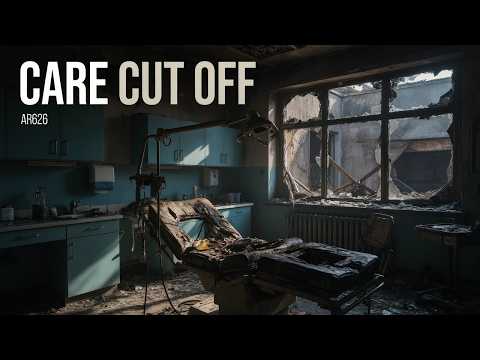
- Fire damaged both medical care and teaching space at Dobrobut. Its Academy occupied the upper floors, with outpatient clinical services below. Courtyard-facing windows on the first through third floors were blown out, and medical equipment was damaged. The roof of a nearby four-storey residential building also caught fire. The medical network described this as the second attack on its Antonovycha site. The consequences extended beyond putting out the flames: patients lost on-site access to a damaged clinic.
- Ten people had received care after the Dobrobut strike by September twenty-ninth, but that is not an interchangeable final injury count. The initial clinic tally was seven injured, including six employees. The emergency-service tally was eight injured at and near the address, covering the medical centre and neighbouring residential building, including a rescued resident. The later ten-person figure counts people receiving care. These groups must not be added together. Calling all ten injured, without preserving the care wording, would erase an important difference in scope.
- One woman remained in intensive care in serious but stable condition in the September twenty-ninth update. Nine of the ten people who received care were already at home. Being home does not establish that they were uninjured or needed no further treatment. No later public condition update for the woman was established before the September thirtieth cutoff.
- The Antonovycha clinic remained closed in its September twenty-ninth operating update. Damage assessment and recovery planning were underway, with no restored on-site services established. Dobrobut Academy activities continued online or at other locations. A reopening notice dated August twenty-ninth, twenty twenty-five, concerned recovery after an earlier attack. It cannot establish reopening after this September’s strike. No September twenty twenty-six reopening was verified.
- Kyiv’s citywide injury count rose from fourteen to nineteen and then twenty-four during September twenty-eighth. Nineteen injured, with six receiving hospital treatment, was an intermediate snapshot. The later count included three injured children, with six people hospitalized, two of them children. These figures cover attacks across Kyiv, not just the academy and Dobrobut. They cannot be added to the site-specific counts or used to place all three injured children inside either institution. Earlier nationwide totals of at least seven dead and more than fifty wounded also covered a much wider area; they were not Kyiv-only figures.
- Some academy-affiliated institutes have supported wartime technologies, including drones and vehicle armour. That broader research activity does not establish that a military operation was taking place in the Presidium building, that Horbulin was selected as a target, or that the clinic was a military objective. Calling the strike terrorism is a characterization separate from proof of either weapon’s programmed aim. The stated Russian targets that day were fuel and telecommunications infrastructure and several data centres in Kyiv. Neither the academy Presidium, Dobrobut nor Horbulin was publicly named as an intended target.
- The headquarters stands near the National Opera, St Volodymyr’s Cathedral, the German embassy and Ukrtelecom offices. Their proximity locates the impact in Kyiv’s central institutional district; it does not establish which building either drone was programmed to hit. Direct impacts on scientific and medical premises during the day are established. The precise intended aim of either weapon remains unknown.
- The academy is asking the international scientific community to withhold renewed or legitimized institutional cooperation with Russian state science and education while the war continues. Its September twenty-ninth appeal addresses academies, universities, research centres, scientific foundations, international scientific organisations and publishers. That is a demand concerning institutional ties with Russian state bodies, not a demand to sever every individual scientific contact. The academy had already cut cooperation with Russian scientific organisations and scientists in twenty twenty-two. The Russian academy’s membership in ALLEA, the European federation of academies, remained suspended.
- The immediate rescue uncertainty at the academy is resolved: a second victim was recovered and the emergency operation ended on September twenty-eighth. The remaining unknowns are the second victim’s identity, subsequent medical updates for Vyacheslav Bukalo and the woman in intensive care, and the scale and timetable of repairs. There is no verified date for patients to return to the Antonovycha clinic. Its staff and visitors survived, but its doors remained closed in the September twenty-ninth operating update.
Fuentes
144 fuentes82 medios6 textos de agencia
dobrobut.com10
- Оновлення щодо наслідків російської атаки ❤️ Новини ММ «Добробут»
- Dobrobut on Antonovycha Temporarily Closed Due to the Aftermath of the Attack ❤️ News of the MN "Dobrobut"
- Dobrobut on Antonovycha Street Has Reopened ❤️ News of the MN "Dobrobut"
- Контакти — клініка «Добробут»
- Dobrobut Opens a New Large Family Clinic in the Heart of Kyiv ❤️ News of the MN "Dobrobut"
- Clinics of Dobrobut medical network :: MN «Dobrobut»
- ❤️ News of the MN "Dobrobut"
- "Добробут" на Антоновича тимчасово припинив роботу через наслідки обстрілу ❤️ Новини ММ «Добробут»
- Обновление о последствиях российской атаки ❤️ Новости МС «Добробут»
- Update on the Aftermath of the Russian Attack ❤️ News of the MN "Dobrobut"
Interfax-Ukraineinterfax.com.ua9
- Primera información
- Eight injured near Dobrobut building in Kyiv, six at National Academy of Sciences; one killed – service
- Two academicians killed in strike on National Academy of Sciences – State Language Protection Commissioner
- Assistant to former NSDC chief Horbulin killed in strike on National Academy of Sciences; Horbulin himself injured – media
- Zaluzhny reports several killed in Russian strike on National Academy of Sciences building
- One woman killed, 3 injured in strike on NAS building – Klitschko
- National Academy of Sciences calls on global scientific community not to resume cooperation with Russian state scientific institutions
- Klitschko: Number of victims in Kyiv downtown grows to four, to 14 throughout the city
- Ukraine's National Commission for UNESCO condemns damage to National Academy of Sciences building caused by Russian attack
- Casualties, fatalities reported at UAV strike site in Kyiv's Shevchenkivskyi district – district administration
RBC-Ukrainerbc.ua5
- Primera información
- Death toll rises after Russian strike on National Academy of Sciences building in Kyiv
- Russian drone strikes National Academy of Sciences building in central Kyiv
- Russian forces strike Dobrobut clinic in Kyiv
- Добробут у Києві атакувала Росія - заява Зеленського | РБК-Україна
- НАН України атакувала РФ 28 вересня - кількість загиблих зросла | РБК-Україна
ukrinform.net5
- Primera información
- Russian strike on National Academy of Sciences building in central Kyiv kills one, injures three
- Russian strike on National Academy of Sciences building in central Kyiv kills one, injures five
- Ukrinform - Ukrainian National News Agency
- Strike on science academy in Kyiv: Ex-NSDC Secretary Horbulin injured, his aide killed
- Russian strike on Dobrobut medical center in Kyiv injures seven people
X (formerly Twitter)x.com5
- Primera información
- A Russian strike against the building of the National Academy of Sciences of Ukraine. A rescue operation is underway: crews are putting out the fire and searching for people who may have been trapped inside. All services are deployed. Today in Kyiv, a pharmaceutical company and gas stations were also attacked; in Dnipro, a business center; and in other cities and regions, civilian facilities, businesses, and communications infrastructure were targeted as well. Sadly, people have been killed… My condolences to their families and loved ones. Russia will definitely face a response to this. And every one of Ukraine’s partners must see from this terror, from these strikes, that supporting Ukraine means truly supporting people’s lives – supporting the principle that terror must never be normalized, anywhere. Russia must be held accountable for all of this and face real consequences. I thank everyone who helps Ukraine!
- 🇷🇺🇺🇦 Russian drones struck Kyiv’s National Academy of Sciences Monday, killing at least two people, with recovery efforts at the site ongoing on Tuesday, according to Reuters. President Volodymyr Zelenskyy said Russian strikes killed at least nine people nationwide on Monday and wounded more than 80, including at a Kyiv medical facility, with separate strikes killing three people in Dnipro, killing another in Synelnykove, and wounding 32 in Zaporizhzhia. Russia’s Defence Ministry separately said it struck cargo vessels bound for Odesa and Chornomorsk along with telecom and data infrastructure in Kyiv, while Ukraine reported hitting Russian oil facilities in Krasnodar and two defense plants. Ukrainian President Volodymyr Zelenskiy claimed on Monday that more than 8,000 North Korean troops are currently on Russian territory and another 10,000 are being “selected for training and subsequent deployment to Russia,” citing “new data” on the buildup. Zelenskyy had s...
- Кілька днів тому Наталя Букало дзвонила та вітала мене з днем народження. І я досі не можу повірити, що вона загинула… Той клятий дрон серед білого дня влучив у будівлю Національної академії наук і забрав її життя. Хто хоч раз телефонував Володимиру Горбуліну, знав її голос. А всіх, хто приходив на зустріч, завжди зустрічали із посмішкою. Світла, сильна та щира, такою я памʼятаю Наталю. Мої співчуття родині, колегам та друзям… Світла пам'ять, Наталю. Говорив і з Володимиром Павловичем, для якого Наталя була рідною людиною. Побажав йому сил і як...
- I remember Natalia well. And I know how proud she was to work for Volodymyr Horbulin. My heart goes out to her family — and young daughter in particular. Just tragic.
- 😢🇺🇦❤️🇨🇦
UA.NEWSua.news4
- Primera información
- Zelenskyy announced the number of casualties strike on Presidium of Academy of Sciences
- Kherson Bids Farewell to Fallen Police Officer Anatoliy Zagrodsky
- Medical provided an update on condition of those injured during attack on Dobrobut Clinic
- The Academy of Sciences reported on those killed and missing at the site strike
LIGA.netliga.net3
- Primera información
- Russian attack on Kyiv on September 28: two academicians of the National Academy of Sciences of Ukraine killed | Ukrainian News
- Лікарня "Добробут" у Києві частково зруйнована через атаку РФ – семеро поранених | Новини України
- Атака РФ на Київ 28 вересня – загинули двоє науковців НАН України | Новини України
Ukrainian National News (UNN)unn.ua3
- Primera información
- "Dobrobut" suspends operations after a Russian attack | УНН
- As a result of the strike on the National Academy of Sciences of Ukraine, former NSDC Secretary Horbulin was injured, and his assistant was killed | УНН
- The number of victims as a result of Russia’s attack on the National Academy of Sciences of Ukraine has risen — the body of a deceased person was found under the rubble | УНН
Al Jazeeraaljazeera.com2
Censor.NETcensor.net2
Kyiv Postkyivpost.com2
wikipedia.org2Primero
Київ від минулого до майбутньогоkyivpastfuture.com.ua2
ABC listenabc.net.au1
- Primera información
- Russian drone hits Kyiv scientific centre near embassies - ABC News
Apa.azapa.az1
Brit Briefbritbrief.co.uk1
CBS Newscbsnews.com1
- Primera información
- Russian drones strike Kyiv science academy and hospital
Devdiscoursedevdiscourse.com1
dpa-international.com1
EUobservereuobserver.com1
Fine Day Radio 102.3 WNJDfinedayradio.com1
Forbes.uaforbes.ua1
h.ua1
hromadskehromadske.ua1
IMIimi.org.ua1
- Primera información
- RFE/RL correspondent witnesses drone strike in Kyiv
International Science Councilcouncil.science1
LB.ualb.ua1
- Primera información
- Volodymyr Horbulin injured in Russian strike on NAS building in Kyiv
Naturenature.com1
news.cn1
NVnv.ua1
opendatabot.ua1
TASStass.com1
The Art Newspaper - International art news and eventstheartnewspaper.com1
- Primera información
- Ukraine’s historic Academy of Sciences severely damaged by Russian drone
The Guardiantheguardian.com1
The Irish Timesirishtimes.com1
The Japan Timesjapantimes.co.jp1
- Primera información
- Kyiv Science Academy hit, 10 dead as Russian jet-drones strike across Ukraine
The Kyiv Independentkyivindependent.com1
The Starthestar.com.my1
The Straits Timesstraitstimes.com1
- Primera información
- Kyiv Science Academy hit as Russian jet-drones strike across Ukraine
thetimesunion.com1
UAZMIuazmi.com1
Ukraine Top News | Ukraine news todayin.ua1
- Primera información
- Наталія Букало загинула під час удару РФ по будівлі НАН у Києві – Rayon.in.ua
ukrinform.de1
UkrMedia Newsukrmedia.news1
UNITED24 Mediaunited24media.com1
Visnik Nacional noi academii nauk Ukrai ninasu-periodicals.org.ua1
ВУЕvue.gov.ua1
- Primera información
- Президії Національної академії наук України будинок у Києві
Історична правдаistpravda.com.ua1
Межаmezha.net1
Новости Николаева cегодняkorabelov.info1
Прямий Онлайнprm.ua1
- Primera información
- Russia strikes NAS in Kyiv: there are dead and injured

Mapa de fuentes
Consulta las pruebas que respaldan este informe. El mapa muestra sus conexiones; los enlaces de abajo abren las fuentes citadas en este artículo.
El mapa de fuentes se carga mientras lees.
Traducción actualizada el
Historial de revisiones
- r1Primera publicación.