Política · Comentarios sobre California
Trump promete proteger Los Ángeles y San Diego tras unos comentarios que provocaron vigilancia de amenazas
Su garantía en Texas añade un compromiso claro de defender las ciudades. No se retracta de las palabras anteriores ni establece qué ha descubierto la vigilancia preventiva de California.
Vídeo en su idioma original
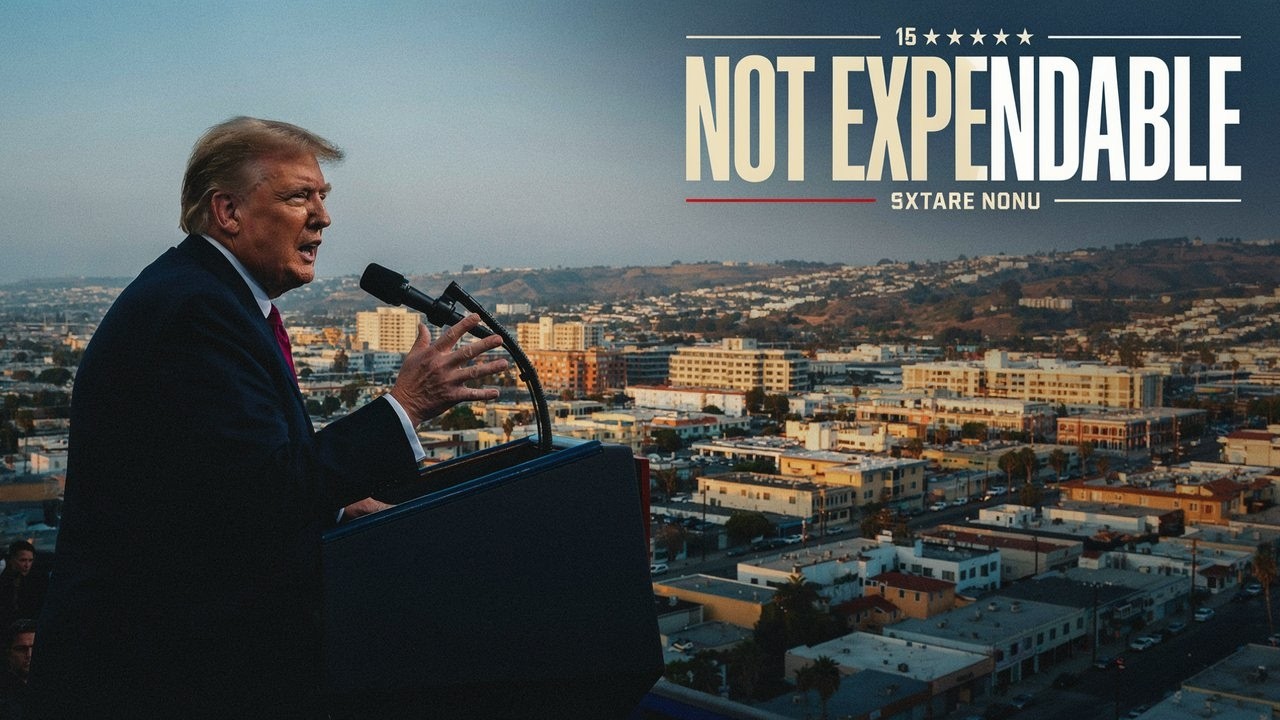
Transcripción · CARGANDO
Traducido del original en inglés.
Seguimiento de la noticiaDía 7
1 informe77 medios121 fuentes11 vídeos
El argumento de Donald Trump de que los costos económicos de la guerra con Irán eran un precio pequeño por la seguridad de Estados Unidos ha provocado una disputa sobre algo mucho más grave: si sus palabras trataron a las ciudades estadounidenses como prescindibles. Ahora ha prometido explícitamente proteger Los Ángeles y San Diego, después de mencionar ambas en un pasaje que llevó a California a ordenar una vigilancia preventiva de posibles amenazas y que recibió críticas incluso de un candidato republicano al que respaldó. 15 2 3
El miércoles 7 de octubre, en el Freeman Coliseum de San Antonio, Trump volvió a mencionar la posibilidad hipotética de que un misil impactara en cualquiera de las dos ciudades y luego dijo: «No vamos a permitir que eso ocurra. Protegemos nuestras ciudades. Protegemos nuestro país». La garantía se informó el 8 de octubre; el discurso fue el día anterior. Es una garantía sustancial, pero no una retractación, una nueva medida de defensa ni una prueba de que California haya terminado su vigilancia. 26 27
La distinción importa. Que un presidente diga que defenderá las ciudades estadounidenses debería ser algo normal. En este caso, se volvió necesario porque sus palabras anteriores pasaron de hablar de mayores costos en tiempos de guerra a hablar de ciudades destruidas, y luego repitieron la expresión «un precio pequeño».
La secuencia que dio origen a la disputa
Los comentarios originales se hicieron el 5 de octubre en el Pinnacle Bank Expo Center de Fonner Park, en Grand Island, Nebraska. Trump hablaba de la guerra con Irán, sus costos económicos y la prevención de que Irán obtuviera un arma nuclear. Los organizadores programaron su discurso para las 6 p. m., hora central, pero no se ha verificado la hora exacta de las frases controvertidas. 56 73 15
Y, de nuevo, recuerden que, con la guerra, es algo artificial. Está un poco alto. Es un precio pequeño que pagar para mantener al mundo seguro, mantener seguro a nuestro país. Pueden destruir una ciudad. Que destruyan, que destruyan Los Ángeles; que destruyan San Diego. Ese es —es un precio muy pequeño que pagar, y esto terminará muy pronto.
El pasaje completo, reproducido por The New York Times, es más útil que una referencia aislada a las ciudades o que una explicación económica que omita lo que vino después. La primera mención del precio se refería a los costos de la guerra. La segunda vino después de los nombres de las ciudades. Esa secuencia explica por qué los críticos oyeron una aceptación de pérdidas catastróficas; no establece de manera concluyente la intención privada de Trump. 15 21
Las afirmaciones que Cheung hizo además, según las cuales Irán no tenía «armas nucleares, marina, fuerza aérea ni dinero», no se han establecido aquí de manera independiente. Tampoco las predicciones de Trump de que el conflicto estaba «prácticamente casi terminado» y terminaría pronto «de una manera u otra» establecieron su desenlace. Algunos asistentes vitorearon, incluso cuando se mencionaron las ciudades; su reacción no representa a todas las personas presentes. 32 9 12
Antes de la garantía en Texas, Trump no ofreció ninguna aclaración cuando le preguntaron dos veces al día siguiente, mientras salía de la Casa Blanca y regresaba de Baltimore, informó CNN. La declaración posterior ofrece un compromiso explícito de protección que faltaba en el pasaje controvertido. 4
La vigilancia no equivale al descubrimiento de un complot
El gobernador Gavin Newsom ordenó el 6 de octubre al Centro Estatal de Evaluación de Amenazas de California vigilar posibles amenazas, advirtiendo que actores extranjeros podrían interpretar las palabras de Trump como una invitación. La orden no identificó ningún complot o ataque iraní específico. CBS también informó de un aumento del nivel de alerta de California, pero no se ha establecido ningún nivel técnico, duración ni finalización. 35 37 8
Tampoco se ha establecido que se haya publicado después una evaluación con conclusiones. Así, dos afirmaciones carecen por igual de sustento: que California descubrió un ataque inminente y que su vigilancia no encontró nada. Una orden preventiva no demuestra ninguna de las dos cosas. 3 4
Los comentarios del presidente no fueron una revelación de inteligencia confirmada. The Guardian citó evaluaciones de defensa anteriores según las cuales Irán carecía de capacidad para lanzar misiles directamente contra el territorio continental, sin identificar a los funcionarios ni las fechas de las evaluaciones. The Hill informó que Irán no tenía un arma nuclear operativa ni un misil balístico intercontinental verificado capaz de alcanzar el territorio continental. Esas precisiones no demuestran que todo ataque sea imposible; sí impiden presentar un escenario nuclear hipotético como una amenaza inminente verificada. 13 11
La alcaldesa de Los Ángeles, Karen Bass, dijo que los comentarios podrían comprometer la seguridad de su ciudad. El alcalde de San Diego, Todd Gloria, rechazó de plano esa premisa: «San Diego no es daño colateral. No somos prescindibles. Y nunca somos un “precio pequeño que pagar”». 13 102
No hace falta exagerar lo que está en juego para la población. La oficina de prensa de Newsom describió a las dos ciudades como hogar de más de 10 millones de residentes, una descripción geográfica incorrecta. Las estimaciones del censo al 1 de julio de 2025 situaban la población de la ciudad de Los Ángeles en 3,869,089 y la de la ciudad de San Diego en 1,406,106. 13 75 76
Datos clave
La descripción de Xavier Becerra de aproximadamente 13 millones de personas en los dos condados concuerda con las estimaciones de población de los condados. Ciudades y condados no son términos intercambiables. La importancia naval de San Diego también es real, pero específica: la Base Naval de San Diego es el principal puerto base de los buques de superficie de la Flota del Pacífico, no la sede de esa flota, que está en Hawái. 13 79 41 55
Consecuencias políticas, no cambios electorales medidos
Jim Desmond, candidato republicano al Congreso respaldado por Trump y supervisor del condado de San Diego, dijo que discrepaba vehementemente de los comentarios: «Ninguna ciudad estadounidense es prescindible, y ninguna familia estadounidense debería ser tratada jamás como daño colateral». Su rival demócrata en el distrito 48 de California, Marni von Wilpert, calificó los comentarios de indignantes, aterradores y merecedores de un juicio político. La objeción de Desmond demuestra que hay disenso republicano, no que todos los republicanos compartan esa postura. 32 5 90
No hay ningún cambio electoral verificado atribuible al discurso. La ventaja de tres puntos de von Wilpert que se informó procedía de una encuesta de votantes probables de SurveyUSA realizada del 27 de agosto al 1 de septiembre: 45% frente al 42% de Desmond, con 13% de indecisos. El margen de credibilidad informado era de aproximadamente cinco puntos. La encuesta es anterior a los comentarios, al igual que la evaluación de la contienda que MS NOW describió como «Lean Democratic». 87 5
Del mismo modo, la encuesta de Reuters/Ipsos que dio a Trump 32% de aprobación y 65% de desaprobación sondeó a 4,506 adultos del 30 de septiembre al 5 de octubre. El trabajo de campo terminó el día de la concentración en Nebraska. No puede demostrar una reacción a esas frases. 95
Newsom y el senador Alex Padilla defendieron la aplicación de la Vigesimoquinta Enmienda, mientras que el senador Cory Booker criticó el silencio de los republicanos. Al 8 de octubre, no se había establecido ninguna declaración conforme a la Sección 4 ni ningún procedimiento de juicio político relacionado con estos comentarios. La acusación de Newsom de que fueron «peligrosos, si no traicioneros» es una condena política, no una conclusión jurídica. 52 8 5 3
La Sección 4 exige que el vicepresidente y la mayoría especificada de los funcionarios de los departamentos ejecutivos —o un órgano alternativo que cree el Congreso— presenten una declaración escrita de incapacidad presidencial. Transfiere las facultades a un presidente en funciones, no el cargo en sí. La exigencia de un gobernador o una publicación de un senador no inicia esa transferencia. 103 104
La consecuencia confirmada es concreta, pero limitada: palabras alarmantes del presidente, vigilancia preventiva estatal, objeciones que cruzaron las líneas partidarias y, después, una garantía explícita de protección. Sigue sin resolverse si la vigilancia ha descubierto una amenaza que requiera medidas, cuándo terminará y si cambiará la reacción de los votantes. La garantía modifica lo que consta. No borra el motivo por el que funcionarios de California la exigieron.
Fuentes
Cobertura de medios: ABC World News Tonight 1; seguimiento de CBS 2; cobertura en directo de The Guardian 3; CNN 4; MS NOW 5; ABC Live Prime 6; CTV 7; CBS Takeout 8; Independent 9; WRAL 10; Hill 11; Scripps 12; reportaje original de The Guardian 13.
Comentarios y contexto: CNN 14; New York Times 15; Union-Tribune 16; Los Angeles Times 17; NBC Los Angeles 18; Jerusalem Post 19; CBS Los Angeles 20; PolitiFact 21; referencia a la concentración 22; Snopes 23; FactCheck.org 24; Forbes 25; Washington Post 26; NBC 27; People 28; Gulf News 29; Detroit News 30; Philadelphia Inquirer 31; Reuters 32; TribLive 33.
Respuestas de California: Miami Herald 34; Politico 35; IBTimes 36; Hill 37; Desert Sun 38; The Guardian 45; Newsweek 46 52; Fox News 53; AP 67; seguimiento de Newsweek 68; Nebraska.tv 69; CNA 70; NCIJ 71; seguimiento de IBTimes 72; Nebraska Examiner 73; GMA 74; publicación de Newsom 97; republicaciones 98 99; publicación, perfil y declaración de Gloria 100 101 102.
Geografía y población: referencias a la base naval 39 40; Navy 41 55; Times of San Diego 42; Census 43 50 51 54 75 76 77 78 79 80; FRED 44; referencia a la Flota del Pacífico 47; California Finance 48; explorador de población 49; Brookings 81; calendario de la concentración 56.
Referencias constitucionales: publicaciones del Congreso y del Gobierno 57 58 59 60 63 65 103 104 115 116 117 119 120; Heritage 61; Cornell 62 64 66 121; Yale 105; referencia a la enmienda 118.
Información electoral: Union-Tribune 87; Ballotpedia 88; Axios 89; Politico 90; New York Times 91; Detroit News 92; Wealth Adviser 93; Just the News 94; CNBC TV18 95; publicación de Reuters 96; RealClearPolitics 106; Cook 107; Midterm Mondays 108. Información naval: The Guardian 82; WRAL 83; Seattle Times 84; Hamilton Spectator 85; DefenseWatch 86; World Ports 109; USNI 110; Stars and Stripes 111; New York Times 112; Army Recognition 113; National Interest 114.
Tal como se emitió 48 líneas
- Trump now promises to protect the cities he named in his disputed Iran remarks.
- Los Angeles and San Diego together have more than five million residents. His earlier language prompted California to order precautionary threat monitoring and drew objections from a Republican candidate he endorsed.
- What has actually changed: the president’s assurance, California’s security response, or the evidence of a threat?
- Trump has explicitly said the United States will protect both cities. That assurance does not retract his earlier words, announce a new defense measure, or establish that California has ended its monitoring.
- Trump named the cities on October 5. Governor Gavin Newsom ordered monitoring on October 6. Trump delivered his protective assurance on October 7, not October 8: the later date marks its publication, not the Texas speech.
- The reassurance came at Freeman Coliseum in San Antonio, during a rally for Republican Senate nominee Ken Paxton. Trump again invoked the hypothetical danger of a missile hitting San Diego or Los Angeles, then said he would prevent it.
- “We’re not going to let that happen. We protect our cities. We protect our country.” Those words add an explicit commitment to protection. They do not settle what Trump privately intended in the earlier passage.
- The earlier passage moved from higher wartime costs to a city being destroyed, then repeated the language of a small price. That sequence is why the dispute cannot be explained by quoting only the city names—or only the economic argument.
- Trump spoke at the Pinnacle Bank Expo Center at Fonner Park in Grand Island on October 5. The speech lasted nearly an hour and a half. His scheduled start was 6 p.m. Central; the disputed sentences’ exact clock time is unverified.
- Trump was discussing the Iran war, economic costs and preventing Iran from obtaining a nuclear weapon. He described costs as “a little bit high,” then said, “It’s a small price to pay for keeping the world safe, keeping our country safe.”
- He then changed the subject of the sentence to a city: “They can take out a city.” The city references followed immediately, with verbal restarts, before he again described a very small price.
- He said, “Let them take, let them take out Los Angeles; let them take out San Diego. That’s—this is a very small price to pay.” The wording names both cities. It does not establish a concrete policy to allow an attack.
- Shorter versions substitute “him” for “them” and omit the restarts; neither changes which cities he named. Some attendees clapped and cheered, including at the city references. That response does not establish the views of everyone at the rally.
- Trump wanted a “tremendous victory” to verify what the United States had done. He called the conflict “essentially almost over with” and predicted an end very soon, “one way or the other.” Those were assertions and predictions, not established outcomes.
- He also allowed that Iran might continue longer because of its “big threshold for pain.” He subsequently linked the war’s end to gas and gasoline prices and mentioned Venezuelan oil. None of that establishes that the conflict ended.
- The White House’s defense was a counterfactual: Trump meant the danger a nuclear-armed Iran would have posed, not an endorsement of attacks. Communications director Steven Cheung rejected the criticism. His name is Steven Cheung, not Stephen Chung.
- The administration also characterized the passage as separate thoughts. But the actual sequence remains: economic-cost language, city references, repeated price language. The sequence explains the competing interpretations; it cannot conclusively establish private intent.
- Cheung also asserted that Iran had “no nuclear, no navy, no air force, and no money.” Those sweeping claims are not independently established here. Trump initially gave no clarification when questioned twice the following day, leaving the White House and returning from Baltimore.
- No operational Iranian nuclear weapon or verified intercontinental ballistic missile capable of reaching the U.S. mainland is established. Earlier defense assessments described Iran as lacking a direct mainland missile capability, but their officials and dates were unspecified. That does not prove every attack impossible.
- The president’s language was not an established intelligence disclosure. A hypothetical nuclear danger is not proof of an operational weapon, a confirmed launch capability or an imminent attack.
- Newsom directed the State Threat Assessment Center to monitor possible threats on October 6. His concern was that foreign actors might interpret Trump’s language as an invitation. The directive identified no specific Iranian plot or attack.
- California’s alert system was also elevated, but no technical alert level, duration or termination is established. Nor is a subsequent assessment finding. Ordering monitoring does not mean a credible attack has been discovered—or that monitoring has found nothing.
- Newsom called Trump “deranged and dangerous,” then described the remarks as “dangerous, if not treasonous.” These were political denunciations, not a medical diagnosis or a legal finding of treason. His descriptions of occupation and an invitation to attack were also characterizations.
- Newsom demanded that Congress stand up and later called for the Twenty-fifth Amendment. Those demands matter politically, but they do not themselves transfer presidential powers.
- Los Angeles Mayor Karen Bass said the remarks could compromise her city’s safety and rejected treating residents as expendable. San Diego Mayor Todd Gloria said his city was not collateral damage, not expendable and never a small price to pay.
- Bass cited approximately 3.8 million Los Angeles residents and an earlier deployment of 4,000 National Guard troops and Marines. The troop figure was the deployment she invoked in criticism—not a new order or verified current force strength.
- The two cities have 5,275,195 residents combined, not more than 10 million. The July 1, 2025 estimates put Los Angeles city at 3,869,089 and San Diego city at 1,406,106. Newsom’s press office used the wrong combined-city figure.
- Those city estimates were released May 14, 2026, and support Bass’s approximate Los Angeles figure. Cities and counties are different geographies; switching between them more than doubles the combined population.
- Democratic gubernatorial nominee Xavier Becerra cited approximately 13 million residents in the two counties. That description is consistent with the county estimates: Los Angeles County had 9,694,934 residents and San Diego County 3,282,248, totaling 12,977,182.
- The county estimates were released March 26, 2026. A separate fiscal-2025 estimate, released in December 2025, puts San Diego County at 3,336,081. That is a different estimation series, not additional residents to add. Neither series validates more than 10 million in the two cities.
- Naval Base San Diego is a principal homeport for Pacific Fleet surface ships and a hub of Navy Region Southwest port operations. It is not Pacific Fleet headquarters. That headquarters is at Joint Base Pearl Harbor–Hickam in Hawaii.
- Navy Region Southwest’s headquarters at San Diego’s Broadway Complex is a different command. San Diego is a major naval hub; calling it the fleet’s headquarters conflates homeport and command headquarters.
- Trump-endorsed Republican candidate Jim Desmond said he vehemently disagreed with the comments. “No American city is expendable, and no American family should ever be treated as collateral damage.” He said protecting Americans and the homeland was the president’s first responsibility.
- Desmond’s Democratic opponent, San Diego City Council member Marni von Wilpert, called the comments appalling and terrifying and an impeachable offense. Her name is Marni, not Marnie. They face each other in California’s 48th Congressional District.
- Both advanced from the June 2 top-two primary. The district covers inland San Diego and Riverside counties. Darrell Issa did not seek reelection after the Proposition 50 redraw. Desmond’s statement establishes Republican dissent, not the views of every Republican.
- Senator Cory Booker criticized Republican silence. An earlier absence of public responses does not establish that other Republicans endorsed the remarks or stayed silent indefinitely. Senator Alex Padilla called for the Twenty-fifth Amendment; that was advocacy, not an invocation.
- Von Wilpert’s 45%, Desmond’s 42% and the 13% undecided were measured before the remarks. The likely-voter poll ran August 27 through September 1 and was published September 4. It cannot demonstrate a reaction to the October 5 speech.
- A secondary compilation gives a sample of 522. The reported credibility interval was approximately five percentage points, larger than the three-point lead. That lead does not establish a decisive advantage.
- The race was rated Lean Democratic, with a move from Toss-up described as months earlier, but the exact dated change is not independently established. Other assessments were Lean Democratic and Tilt Democratic. These are judgments, not election results or measured speech effects.
- Trump’s 32% approval and 65% disapproval were measured among 4,506 adults from September 30 through October 5. Approval was unchanged from September’s career-low reading. Fieldwork ended on the rally date, so this was not a post-remarks measurement.
- A separately reported registered-voter subset had 36% approval and 64% disapproval. Those denominators are not interchangeable. With the midterms about four weeks away, no verified post-remarks poll establishes that the comments changed voting intentions.
- No Section 4 declaration or impeachment proceeding over these remarks is established as of October 8. A governor’s demand, a senator’s post or a candidate’s accusation is not the constitutional action needed to begin a transfer of powers.
- Section 4 requires the vice president and a majority of the principal executive-department officers to send a written declaration of presidential inability to the Senate president pro tempore and House speaker. The vice president then immediately assumes presidential powers as Acting President.
- The amendment also permits another body created by Congress, but Congress has not created one. Section 4 concerns inability and transfers powers; it does not remove the president from office.
- If the president declares no inability, the vice president and required majority have four days to counter it. Congress then decides, assembling within 48 hours if not in session, with a 21-day decision period.
- That period runs from receipt of the subsequent declaration or the required assembly date. Continuing the Acting President’s exercise of powers requires two-thirds of both houses. Otherwise, the president resumes those powers.
- Impeachment is separate. The House can impeach by majority vote; Senate conviction and removal require two-thirds of senators present. Political condemnation is not a finding of inability, a completed impeachment or a transfer of presidential powers.
- The change is an explicit protective assurance following precautionary monitoring and bipartisan objections—not an established attack or new defense measure. Whether monitoring uncovered an actionable threat or will be stood down remains unresolved. No electoral effect caused by the remarks is established.
Fuentes
121 fuentes74 medios11 vídeos3 textos de agencia
Census.govcensus.gov10
- Primera información
- U.S. Census Bureau QuickFacts: Los Angeles city, California; San Diego city, California; San Francisco city, California; United States
- U.S. Census Bureau QuickFacts: Los Angeles County, California
- U.S. Census Bureau QuickFacts: Los Angeles County, California
- U.S. Census Bureau QuickFacts: San Diego County, California
- City and Town Population Totals: 2020-2025
- Vintage 2025 Total Population Estimates for Incorporated Places and Minor Civil Divisions; Housing Unit Estimates for the Nation, States and Counties
- Press Kit: Vintage 2025 Total Population and Components of Change Estimates for U.S. Counties, Puerto Rico Municipios, and Metropolitan and Micropolitan Statistical Areas
- Population and Housing Unit Estimates Datasets
- Slow Growth Impacts Nation’s Largest Counties Hardest
- www2.census.gov
congress.gov10
- Twenty-Fifth Amendment Section 3 | Constitution Annotated | Congress.gov | Library of Congress
- Amdt25.2.4 Presidential Succession and Debates over the Constitution’s Ratification
- www.congress.gov
- Overview of Twenty-Fifth Amendment, Presidential Vacancy and Disability | Constitution Annotated | Congress.gov | Library of Congress
- Twenty-Fifth Amendment Section 4 | Constitution Annotated | Congress.gov | Library of Congress
- The Twenty-Fifth Amendment: Sections 3 and 4—Presidential Disability | Congress.gov | Library of Congress
- Overview of Twenty-Fifth Amendment, Presidential Vacancy ...
- Presidential Disability Under the Twenty-Fifth Amendment
- U.S. Constitution - Article I | Resources | Constitution Annotated | Congress.gov | Library of Congress
- U.S. Constitution | Constitution Annotated | Congress.gov | Library of Congress
X (formerly Twitter)x.com6
- Primera información
- Exclusive: President Trump's approval rating fell to 32% — the lowest of his political career — as fellow Republicans soured on his handling of the cost of living amid the unpopular Iran war, a new Reuters/Ipsos poll found https://reut.rs/4xGPL6G
- After sending the National Guard and Marines to occupy California, Donald Trump is now saying our foreign enemies should “take out” Los Angeles and San Diego. He is deranged and dangerous.
- https://x.com/gavinnewsom/status/2107288831112466787?s=46&t=8ExwV-cWccbsYZ9_N5vuHw
- https://x.com/gavinnewsom/status/2107288831112466787
- Seriously, again? How many times do we have to say it? San Diego is not a prop. San Diego is not a target. San Diego is not your applause line. We are a proud military city full of real people. Stop using us in your reckless war talk.
- X User @MayorToddGloria
LII / Legal Information Institutecornell.edu4
The Guardiantheguardian.com4
- Primera información
- Republican Ken Paxton reportedly blames Iran war and high gas prices for campaign struggles as Trump heads to Texas – live
- Trump suggests Iran could ‘take out’ Los Angeles or San Diego
- Trump’s LA and San Diego comments ‘dangerous, if not treasonous’, says Newsom – US politics live | US politics
- USS Lincoln carrier to return to port in San Diego after record-breaking deployment – US politics live | US news
CBS Newscbsnews.com32 vídeos
- Primera información
- Trump suggests allowing Iran to "take out" LA and San Diego during campaign rally - CBS Los Angeles
- Trump now says "we protect our cities" after saying Iran could bomb LA and San Diego · vídeo
- Trump faces backlash for LA and San Diego comments, Kansas Senate race heats up, more | The Takeout · vídeo
The Athleticnytimes.com3
ABC News22 vídeos
- Primera información
- ABC World News Tonight with David Muir Full Broadcast - Oct. 6, 2026 · vídeo
- ABC News Live Prime: Oct. 6, 2026 · vídeo
CNNcnn.com21 vídeo
GovInfogovinfo.gov2
- In case of the removal of the President from office or of his death or resignation, the Vice President shall be come President. Whenever there is a vacancy in the office of the Vice Presi dent, the President shall nominate a Vice President who shall take office upon confirmation by a majority vote of both Houses of Congress. Whenever the President transmits to the President pro tem pore of the Senate and the Speaker of the House of Representa tives his written declaration that he is unable to discharge the powers and duties of his office, and until he transmits to them a written declaration to the contrary, such powers and duties shall be discharged by the Vice President as Acting President. Whenever the Vice President and a majority of either the principal officers of the executive departments or of such other body as Congress may by law provide, transmit to the Presi dent pro tempore of the Senate and the Speaker of the House of Representatives their written declaration that the President is unable to discharge the powers and duties of his office, the Vice President shall immediately assume the powers and duties of the office as Acting President. Thereafter, when the President transmits to the President pro tempore of the Senate and the Speaker of the House of Rep resentatives his written declaration that no inability exists, he shall resume the powers and duties of his office unless the Vice President and a majority of either the principle officers of the
- [PDF] 25th Amendment US Constitution - GovInfo.gov
International Business Times UKibtimes.co.uk2
navy.mil2
The Hillthehill.com21 vídeo
arcgis.com1
armyrecognition.com1
Axiosaxios.com1
- Primera información
- San Diego House race: Desmond and von Wilpert Q&A - Axios San Diego
Ballotpediaballotpedia.org1
Brookingsbrookings.edu1
- Primera información
- Big city growth is slowing, reversing a post-pandemic resurgence
Central Nebraska Todaycentralnebraskatoday.com1
CNAchannelnewsasia.com1
CNBCTV18cnbctv18.com1
Cook Political Reportcookpolitical.com1
CTV News11 vídeo
- Primera información
- Alberta separatists celebrate PQ victory | CTV News Edmonton at Six for Oct. 6, 2026 · vídeo
FactCheck.orgfactcheck.org1
- Primera información
- The Context for Trump's 'Take Out' Los Angeles, San Diego Remarks
fas.org1
Fox Newsfoxnews.com1
- Primera información
- Newsom demands 25th Amendment after Trump's California city remarks
GlobalMilitary.netglobalmilitary.net1
Good Morning Americagoodmorningamerica.com1
Governor of Californiaca.gov1
gulfnews.com1
Inquirer.cominquirer.com1
- Primera información
- What, exactly, did Trump say about Iran taking out Los Angeles?
Just The Newsjustthenews.com1
- Primera información
- Trump's approval stays at record low in latest Reuters/Ipsos poll
KHGInebraska.tv1
- Primera información
- 'You buffoons': Trump team defends remarks about Iran 'taking ...
Los Angeles Timeslatimes.com1
- Primera información
- Trump suggests letting Iran 'take out' Los Angeles, San Diego at campaign rally
MS NOW11 vídeo
- Primera información
- Lawrence: Trump's nuclear attack comments are why the 25th Amendment exists · vídeo
NBC Los Angelesnbclosangeles.com1
- Primera información
- ‘Let them take out Los Angeles’: President Trump defends ongoing war with Iran
NBC Newsnbcnews.com1
NCIJ Network |ncijnetwork.com1
- Primera información
- Did Trump say of Iran, 'Let 'em take out' LA and San Diego? - NCIJ Network
Nebraska Examinernebraskaexaminer.com1
- Primera información
- Trump asks Nebraska to 'pretend' he's on the midterm ballot
People.compeople.com1
politifact.com1
realclearpolitics.com1
Scripps News11 vídeo
- Primera información
- President Trump suggests he would let Iran 'take out' Los Angeles or San Diego · vídeo
Snopessnopes.com1
- Primera información
- Did Trump say of Iran, 'Let 'em take out' LA and San Diego? | Snopes.com
Stars and Stripesstripes.com1
- Primera información
- Navy ships deploy as Trump weighs renewed strikes on Iran
The Hamilton Spectatorthespec.com1
- Primera información
- The long-deployed USS Lincoln is returning home to San Diego
The Independent11 vídeo
- Primera información
- Trump invites Iran to 'take out' Los Angeles and San Diego · vídeo
The Jerusalem Post | JPost.comjpost.com1
The National Interestnationalinterest.org1
- Primera información
- Beleaguered USS Abraham Lincoln Isn’t Coming Home Just Yet
The Seattle Timesseattletimes.com1
- Primera información
- The long-deployed USS Lincoln is returning home to San Diego
TheDefenseWatch.comthedefensewatch.com1
- Primera información
- Hegseth Honors USS Lincoln After 321-Day Deployment
timesofsandiego.com1
TribLIVE.comtriblive.com1
USNI Newsusni.org1
Wealth Adviserwealthadviser.co1
- Primera información
- Reuters/Ipsos: Trump's Disapproval Hits a Record Low on the Eve of the Elections
worldports.org1
- Primera información
- US Adds Carrier And 10,000 Troops To Mideast | World Ports Organization
WRAL11 vídeo
- Primera información
- California leaders call President Trump's remarks 'deranged and dangerous' · vídeo
WRAL Newscastscapitolbroadcasting.com1
Yale Law Schoolyale.edu1
Mapa de fuentes
Consulta las pruebas que respaldan este informe. El mapa muestra sus conexiones; los enlaces de abajo abren las fuentes citadas en este artículo.
El mapa de fuentes se carga mientras lees.
Traducción actualizada el
Historial de revisiones
- r1Primera publicación.