سياسة · تصريحات كاليفورنيا
ترامب يتعهد بحماية لوس أنجلوس وسان دييغو بعد تصريحات أثارت مراقبة للتهديدات
يضيف تأكيده في تكساس التزامًا واضحًا بالدفاع عن المدينتين. لكنه لا يتراجع عن الصياغة السابقة ولا يثبت ما توصلت إليه مراقبة كاليفورنيا الاحترازية.
الفيديو بلغته الأصلية
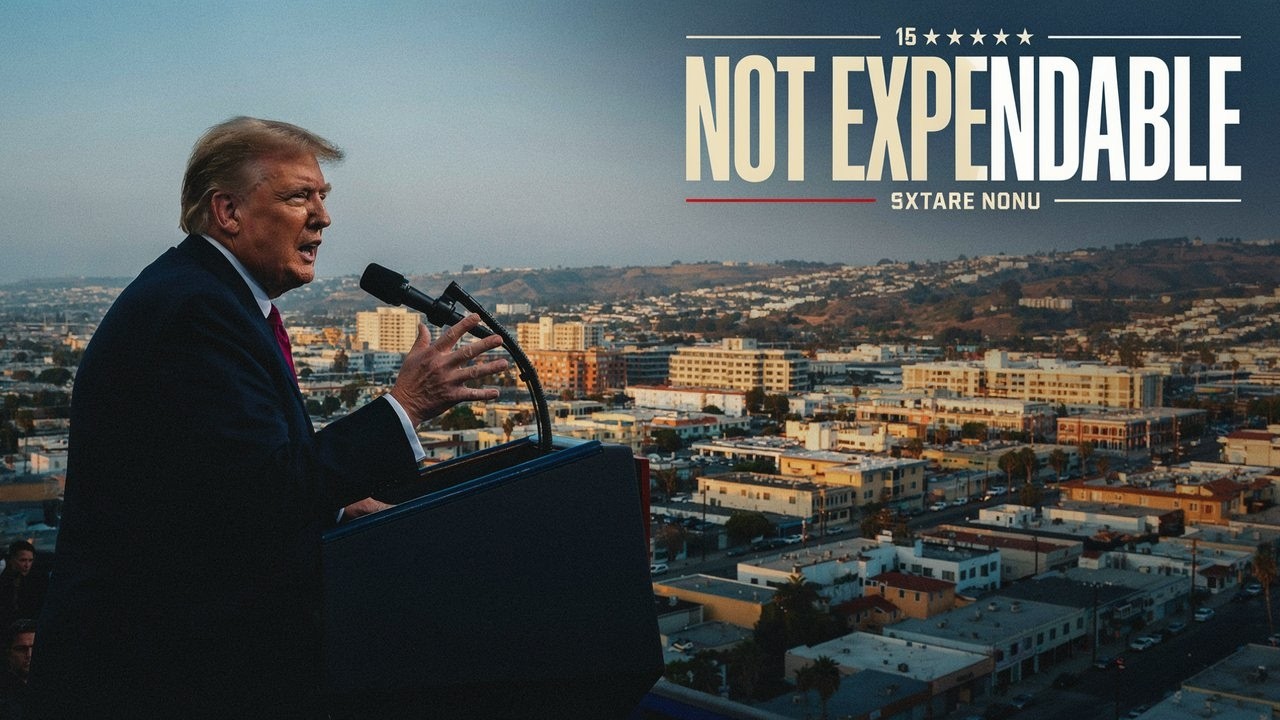
النص المفرّغ · جارٍ التحميل
مترجم عن الأصل الإنجليزي.
متابعة القصةاليوم 7
1 تقرير77 وسيلة إعلامية121 مصدرًا11 فيديو

أثار جدل دونالد ترامب بأن التكاليف الاقتصادية لحرب إيران ثمن زهيد مقابل سلامة الأمريكيين خلافًا حول أمر أكبر بكثير: هل تعاملت كلماته مع المدن الأمريكية على أنها قابلة للتضحية؟ وقد تعهّد الآن صراحة بحماية لوس أنجلوس وسان دييغو، بعدما ذكرهما معًا في مقطع دفع كاليفورنيا إلى إصدار أمر بمراقبة احترازية للتهديدات، وأثار انتقادات حتى من مرشح جمهوري أيده. 15 2 3
في ملعب فريمان كوليسيوم بسان أنطونيو، يوم الأربعاء 7 أكتوبر، استحضر ترامب مجددًا الاحتمال الافتراضي لسقوط صاروخ على أي من المدينتين، ثم قال: «لن نسمح بحدوث ذلك. نحن نحمي مدننا. نحن نحمي بلدنا». ونُقلت هذه التطمينات في 8 أكتوبر؛ أما الخطاب نفسه فأُلقي في اليوم السابق. وهذا تأكيد جوهري، لكنه ليس تراجعًا عن التصريحات، ولا إجراءً دفاعيًا جديدًا، ولا دليلًا على أن كاليفورنيا أوقفت مراقبتها. 26 27
وهذا التمييز مهم. لا ينبغي أن يكون قول رئيس إنّه سيدافع عن المدن الأمريكية أمرًا مستغربًا. لكن الأمر هنا أصبح ضروريًا لأن صياغته السابقة انتقلت من ارتفاع أسعار الحرب إلى تدمير المدن، ثم كررت وصف ذلك بأنه ثمن زهيد.
تسلسل الأحداث وراء الخلاف
أُدلي بالتصريحات الأصلية في 5 أكتوبر في مركز بيناكل بنك إكسبو في فونر بارك بمدينة غراند آيلاند، نبراسكا. وكان ترامب يناقش حرب إيران وتكاليفها الاقتصادية ومنع إيران من الحصول على سلاح نووي. وحدد المنظمون موعد خطابه في السادسة مساءً بالتوقيت المركزي، لكن التوقيت الدقيق للجمل موضع الخلاف غير موثّق. 56 73 15
ومرة أخرى، تذكروا أن الأمر مع الحرب مصطنع فحسب. إنه مرتفع قليلًا. إنه ثمن زهيد مقابل الحفاظ على سلامة العالم والحفاظ على سلامة بلدنا. يمكنهم تدمير مدينة. فليدمروا، فليدمروا لوس أنجلوس؛ فليدمروا سان دييغو. هذا — هذا ثمن زهيد جدًا، وسينتهي الأمر قريبًا جدًا.
إن نقل المقطع كاملًا، كما فعلت نيويورك تايمز، أجدى من اقتطاع الإشارة إلى المدن أو تجريد الشرح الاقتصادي مما تلاها. تعلقت الإشارة الأولى إلى الثمن بتكاليف الحرب. أما الإشارة الثانية فجاءت بعد ذكر أسماء المدن. ويوضح هذا التسلسل سبب سماع المنتقدين قبولًا بخسائر كارثية؛ لكنه لا يثبت بصورة قاطعة نية ترامب الشخصية. 15 21
ولا يوجد ما يثبت بصورة مستقلة هنا الادعاءات المصاحبة التي أطلقها تشيونغ، بأن إيران «لا تملك سلاحًا نوويًا ولا بحرية ولا سلاحًا جوّيًا ولا مالًا». كما أن تنبؤات ترامب بأن الصراع «انتهى تقريبًا فعليًا» وأنه سينتهي قريبًا «بطريقة أو بأخرى» لا تثبت نتيجته. وصفّق بعض الحاضرين، بما في ذلك عند الإشارة إلى المدينتين؛ لكن رد فعلهم لا يمثل جميع الموجودين. 32 9 12
قبل التطمين في تكساس، لم يقدم ترامب أي توضيح عندما وُجّه إليه السؤال مرتين في اليوم التالي، أثناء مغادرته البيت الأبيض وعند عودته من بالتيمور، وفقًا لـCNN. ويوفر التصريح اللاحق تعهدًا صريحًا بحماية المدينتين، وهو ما غاب عن المقطع موضع الخلاف. 4
المراقبة لا تعني اكتشاف مؤامرة
وجّه الحاكم غافين نيوسوم مركز تقييم التهديدات في ولاية كاليفورنيا إلى مراقبة التهديدات المحتملة في 6 أكتوبر، محذرًا من أن جهات أجنبية قد تفسر كلام ترامب على أنه دعوة. ولم يحدد التوجيه أي مؤامرة أو هجوم إيراني بعينه. كما أفادت شبكة CBS برفع مستوى نظام التنبيه في كاليفورنيا، لكن لم يُحدَّد المستوى التقني أو المدة أو موعد إنهائه. 35 37 8
ولا يوجد أيضًا ما يثبت صدور تقييم لاحق منشور توصل إلى نتيجة. لذلك يظل ادعاءان بلا سند بالقدر نفسه: أن كاليفورنيا اكتشفت هجومًا وشيكًا، وأن مراقبتها لم تكشف عن شيء. فالأمر الاحترازي لا يثبت أيًا منهما. 3 4
لم تكن تصريحات الرئيس إفصاحًا استخباراتيًا مثبتًا. واستشهدت صحيفة ذا غارديان بتقييمات دفاعية سابقة أفادت بأن إيران لا تملك قدرة مباشرة على ضرب البر الرئيسي بصواريخ، من دون تحديد المسؤولين أو تواريخ التقييمات. وأفادت ذا هيل بعدم وجود سلاح نووي إيراني جاهز للاستخدام أو صاروخ باليستي عابر للقارات موثَّق قادر على الوصول إلى البر الرئيسي. ولا تثبت هذه التحفظات استحالة كل هجوم؛ لكنها تحول دون عرض سيناريو نووي افتراضي على أنه تهديد وشيك مؤكد. 13 11
قالت عمدة لوس أنجلوس كارين باس إن التعليقات قد تعرّض سلامة مدينتها للخطر. ورفض عمدة سان دييغو تود غلوريا الفرضية تمامًا، قائلًا: «سان دييغو ليست أضرارًا جانبية. نحن لسنا قابلين للتضحية. ولن نكون أبدًا «ثمنًا زهيدًا للدفع».» 13 102
لا حاجة إلى تهويل المخاطر البشرية. فقد ذكر المكتب الصحفي لنيوسوم أن عدد سكان المدينتين يتجاوز 10 مليون نسمة، وهو وصف جغرافي غير صحيح. وتقديرات مكتب الإحصاء في 1 يوليو 2025 تضع عدد سكان مدينة لوس أنجلوس عند 3,869,089 ومدينة سان دييغو عند 1,406,106. 13 75 76
الحقائق الأساسية
يتوافق وصف خافيير بيسيرا لنحو 13 مليون شخص في المقاطعتين مع تقديرات عدد سكان المقاطعتين. فالمدن والمقاطعات ليست شيئًا واحدًا. كما أن الأهمية البحرية لسان دييغو حقيقية، لكنها محددة: قاعدة سان دييغو البحرية هي الميناء الرئيسي لسفن الأسطول السطحي في المحيط الهادئ، وليست مقر قيادة أسطول المحيط الهادئ، الموجود في هاواي. 13 79 41 55
تداعيات سياسية، لا تحوّل انتخابي مقاس
قال جيم ديسموند، المرشح الجمهوري للكونغرس الذي أيده ترامب والمشرف على مقاطعة سان دييغو، إنه يعارض التصريحات بشدة: «لا مدينة أمريكية قابلة للتضحية، ولا ينبغي أبدًا التعامل مع أي أسرة أمريكية على أنها أضرار جانبية». ووصفت منافسته الديمقراطية في الدائرة 48 بولاية كاليفورنيا، مارني فون ويلبرت، التعليقات بأنها مروعة ومخيفة وتستوجب العزل. ويثبت اعتراض ديسموند وجود معارضة جمهورية، لا أنه يمثل موقف كل جمهوري. 32 5 90
لا يوجد تحول انتخابي موثّق نتج عن الخطاب. فالنتيجة التي أفادت بتقدم فون ويلبرت بثلاث نقاط جاءت من استطلاع لناخبين مرجح أن يصوتوا أجرته SurveyUSA بين 27 أغسطس و1 سبتمبر: 45% مقابل 42% لديسموند، مع 13% لم يقرروا بعد. وكان هامش المصداقية المعلن نحو خمس نقاط. وسبق الاستطلاع تصريحات ترامب، كما سبقها تقييم السباق الذي وصفته MS NOW بأنه يميل إلى الديمقراطيين. 87 5
وبالمثل، فإن استطلاع رويترز/إيبسوس الذي أظهر تأييد 32% لترامب وعدم تأييد 65% له شمل 4,506 بالغين بين 30 سبتمبر و5 أكتوبر. وانتهى العمل الميداني في يوم التجمع الانتخابي في نبراسكا. ولا يمكنه إثبات رد فعل على تلك الجمل. 95
دعا نيوسوم والسيناتور أليكس باديلا إلى تفعيل التعديل الخامس والعشرين، فيما انتقد السيناتور كوري بوكر صمت الجمهوريين. ولا يوجد ما يثبت صدور إعلان بموجب القسم 4 أو بدء إجراءات عزل بشأن هذه التصريحات حتى 8 أكتوبر. واتهام نيوسوم بأنها «خطيرة، إن لم تكن خيانة» هو إدانة سياسية، لا حكم قانوني. 52 8 5 3
يشترط القسم 4 أن يقدم نائب الرئيس والأغلبية المحددة من كبار المسؤولين في الإدارات التنفيذية، أو هيئة بديلة ينشئها الكونغرس، إعلانًا مكتوبًا بعجز الرئيس عن أداء مهامه. وينقل صلاحياته إلى رئيس بالإنابة، لا المنصب نفسه. ولا يبدأ هذا النقل بطلب حاكم أو منشور لسيناتور. 103 104
والنتيجة الثابتة ملموسة لكنها محدودة: صياغة رئاسية مثيرة للقلق، ومراقبة احترازية من الولاية، واعتراضات تجاوزت الخطوط الحزبية، ثم تأكيد صريح على الحماية. ولا يزال من غير المعروف ما إذا كانت المراقبة قد كشفت عن تهديد يستدعي التحرك، ومتى ستنتهي، وما إذا كان الناخبون سيستجيبون على نحو مختلف. يضيف التطمين إلى سجل الوقائع، لكنه لا يمحو السبب الذي دفع مسؤولي كاليفورنيا إلى المطالبة به.
المصادر
التغطية الإذاعية والتلفزيونية: ABC World News Tonight 1؛ متابعة CBS 2؛ التغطية المباشرة لصحيفة ذا غارديان 3؛ CNN 4؛ MS NOW 5؛ ABC Live Prime 6؛ CTV 7؛ CBS Takeout 8؛ إندبندنت 9؛ WRAL 10؛ هيل 11؛ سكريبس 12؛ التقرير الأصلي لصحيفة ذا غارديان 13.
التصريحات والسياق: CNN 14؛ نيويورك تايمز 15؛ يونيون-تريبيون 16؛ لوس أنجلوس تايمز 17؛ NBC لوس أنجلوس 18؛ جيروزالم بوست 19؛ CBS لوس أنجلوس 20؛ بوليتي فاكت 21؛ مرجع التجمع 22؛ سنوبس 23؛ فاكت تشيك.أورغ 24؛ فوربس 25؛ واشنطن بوست 26؛ NBC 27؛ بيبول 28؛ غلف نيوز 29؛ ديترويت نيوز 30؛ فيلادلفيا إنكوايرر 31؛ رويترز 32؛ تريب لايف 33.
ردود كاليفورنيا: ميامي هيرالد 34؛ بوليتيكو 35؛ IBTimes 36؛ هيل 37؛ ديزرت صن 38؛ ذا غارديان 45؛ نيوزويك 46 52؛ فوكس نيوز 53؛ أسوشيتد برس 67؛ متابعة نيوزويك 68؛ Nebraska.tv 69؛ CNA 70؛ NCIJ 71؛ متابعة IBTimes 72؛ نبراسكا إكزامينر 73؛ GMA 74؛ منشور نيوسوم 97؛ إعادة النشر 98 99؛ منشور غلوريا وملفه وتصريحه 100 101 102.
الجغرافيا والسكان: مراجع القاعدة البحرية 39 40؛ البحرية الأمريكية 41 55؛ تايمز أوف سان دييغو 42؛ مكتب الإحصاء 43 50 51 54 75 76 77 78 79 80؛ FRED 44؛ مرجع أسطول المحيط الهادئ 47؛ إدارة مالية كاليفورنيا 48؛ مستكشف السكان 49؛ بروكينغز 81؛ جدول التجمع 56.
مراجع دستورية: منشورات الكونغرس والحكومة 57 58 59 60 63 65 103 104 115 116 117 119 120؛ هيريتيج 61؛ كورنيل 62 64 66 121؛ ييل 105؛ مرجع التعديل 118.
تغطية الانتخابات: يونيون-تريبيون 87؛ بالوتبيديا 88؛ أكسيوس 89؛ بوليتيكو 90؛ نيويورك تايمز 91؛ ديترويت نيوز 92؛ ويلث أدفايزر 93؛ جاست ذا نيوز 94؛ CNBC TV18 95؛ منشور رويترز 96؛ ريال كلير بوليتيكس 106؛ كوك 107؛ ميدترم موندايز 108. التغطية البحرية: ذا غارديان 82؛ WRAL 83؛ سياتل تايمز 84؛ هاملتون سبيكتاتور 85؛ ديفنس ووتش 86؛ وورلد بورتس 109؛ USNI 110؛ ستارز آند سترايبس 111؛ نيويورك تايمز 112؛ آرمي ريكوغنيشن 113؛ ناشيونال إنتريست 114.
كما بُثّ 48 سطرًا
- Trump now promises to protect the cities he named in his disputed Iran remarks.
- Los Angeles and San Diego together have more than five million residents. His earlier language prompted California to order precautionary threat monitoring and drew objections from a Republican candidate he endorsed.
- What has actually changed: the president’s assurance, California’s security response, or the evidence of a threat?
- Trump has explicitly said the United States will protect both cities. That assurance does not retract his earlier words, announce a new defense measure, or establish that California has ended its monitoring.
- Trump named the cities on October 5. Governor Gavin Newsom ordered monitoring on October 6. Trump delivered his protective assurance on October 7, not October 8: the later date marks its publication, not the Texas speech.
- The reassurance came at Freeman Coliseum in San Antonio, during a rally for Republican Senate nominee Ken Paxton. Trump again invoked the hypothetical danger of a missile hitting San Diego or Los Angeles, then said he would prevent it.
- “We’re not going to let that happen. We protect our cities. We protect our country.” Those words add an explicit commitment to protection. They do not settle what Trump privately intended in the earlier passage.
- The earlier passage moved from higher wartime costs to a city being destroyed, then repeated the language of a small price. That sequence is why the dispute cannot be explained by quoting only the city names—or only the economic argument.
- Trump spoke at the Pinnacle Bank Expo Center at Fonner Park in Grand Island on October 5. The speech lasted nearly an hour and a half. His scheduled start was 6 p.m. Central; the disputed sentences’ exact clock time is unverified.
- Trump was discussing the Iran war, economic costs and preventing Iran from obtaining a nuclear weapon. He described costs as “a little bit high,” then said, “It’s a small price to pay for keeping the world safe, keeping our country safe.”
- He then changed the subject of the sentence to a city: “They can take out a city.” The city references followed immediately, with verbal restarts, before he again described a very small price.
- He said, “Let them take, let them take out Los Angeles; let them take out San Diego. That’s—this is a very small price to pay.” The wording names both cities. It does not establish a concrete policy to allow an attack.
- Shorter versions substitute “him” for “them” and omit the restarts; neither changes which cities he named. Some attendees clapped and cheered, including at the city references. That response does not establish the views of everyone at the rally.
- Trump wanted a “tremendous victory” to verify what the United States had done. He called the conflict “essentially almost over with” and predicted an end very soon, “one way or the other.” Those were assertions and predictions, not established outcomes.
- He also allowed that Iran might continue longer because of its “big threshold for pain.” He subsequently linked the war’s end to gas and gasoline prices and mentioned Venezuelan oil. None of that establishes that the conflict ended.
- The White House’s defense was a counterfactual: Trump meant the danger a nuclear-armed Iran would have posed, not an endorsement of attacks. Communications director Steven Cheung rejected the criticism. His name is Steven Cheung, not Stephen Chung.
- The administration also characterized the passage as separate thoughts. But the actual sequence remains: economic-cost language, city references, repeated price language. The sequence explains the competing interpretations; it cannot conclusively establish private intent.
- Cheung also asserted that Iran had “no nuclear, no navy, no air force, and no money.” Those sweeping claims are not independently established here. Trump initially gave no clarification when questioned twice the following day, leaving the White House and returning from Baltimore.
- No operational Iranian nuclear weapon or verified intercontinental ballistic missile capable of reaching the U.S. mainland is established. Earlier defense assessments described Iran as lacking a direct mainland missile capability, but their officials and dates were unspecified. That does not prove every attack impossible.
- The president’s language was not an established intelligence disclosure. A hypothetical nuclear danger is not proof of an operational weapon, a confirmed launch capability or an imminent attack.
- Newsom directed the State Threat Assessment Center to monitor possible threats on October 6. His concern was that foreign actors might interpret Trump’s language as an invitation. The directive identified no specific Iranian plot or attack.
- California’s alert system was also elevated, but no technical alert level, duration or termination is established. Nor is a subsequent assessment finding. Ordering monitoring does not mean a credible attack has been discovered—or that monitoring has found nothing.
- Newsom called Trump “deranged and dangerous,” then described the remarks as “dangerous, if not treasonous.” These were political denunciations, not a medical diagnosis or a legal finding of treason. His descriptions of occupation and an invitation to attack were also characterizations.
- Newsom demanded that Congress stand up and later called for the Twenty-fifth Amendment. Those demands matter politically, but they do not themselves transfer presidential powers.
- Los Angeles Mayor Karen Bass said the remarks could compromise her city’s safety and rejected treating residents as expendable. San Diego Mayor Todd Gloria said his city was not collateral damage, not expendable and never a small price to pay.
- Bass cited approximately 3.8 million Los Angeles residents and an earlier deployment of 4,000 National Guard troops and Marines. The troop figure was the deployment she invoked in criticism—not a new order or verified current force strength.
- The two cities have 5,275,195 residents combined, not more than 10 million. The July 1, 2025 estimates put Los Angeles city at 3,869,089 and San Diego city at 1,406,106. Newsom’s press office used the wrong combined-city figure.
- Those city estimates were released May 14, 2026, and support Bass’s approximate Los Angeles figure. Cities and counties are different geographies; switching between them more than doubles the combined population.
- Democratic gubernatorial nominee Xavier Becerra cited approximately 13 million residents in the two counties. That description is consistent with the county estimates: Los Angeles County had 9,694,934 residents and San Diego County 3,282,248, totaling 12,977,182.
- The county estimates were released March 26, 2026. A separate fiscal-2025 estimate, released in December 2025, puts San Diego County at 3,336,081. That is a different estimation series, not additional residents to add. Neither series validates more than 10 million in the two cities.
- Naval Base San Diego is a principal homeport for Pacific Fleet surface ships and a hub of Navy Region Southwest port operations. It is not Pacific Fleet headquarters. That headquarters is at Joint Base Pearl Harbor–Hickam in Hawaii.
- Navy Region Southwest’s headquarters at San Diego’s Broadway Complex is a different command. San Diego is a major naval hub; calling it the fleet’s headquarters conflates homeport and command headquarters.
- Trump-endorsed Republican candidate Jim Desmond said he vehemently disagreed with the comments. “No American city is expendable, and no American family should ever be treated as collateral damage.” He said protecting Americans and the homeland was the president’s first responsibility.
- Desmond’s Democratic opponent, San Diego City Council member Marni von Wilpert, called the comments appalling and terrifying and an impeachable offense. Her name is Marni, not Marnie. They face each other in California’s 48th Congressional District.
- Both advanced from the June 2 top-two primary. The district covers inland San Diego and Riverside counties. Darrell Issa did not seek reelection after the Proposition 50 redraw. Desmond’s statement establishes Republican dissent, not the views of every Republican.
- Senator Cory Booker criticized Republican silence. An earlier absence of public responses does not establish that other Republicans endorsed the remarks or stayed silent indefinitely. Senator Alex Padilla called for the Twenty-fifth Amendment; that was advocacy, not an invocation.
- Von Wilpert’s 45%, Desmond’s 42% and the 13% undecided were measured before the remarks. The likely-voter poll ran August 27 through September 1 and was published September 4. It cannot demonstrate a reaction to the October 5 speech.
- A secondary compilation gives a sample of 522. The reported credibility interval was approximately five percentage points, larger than the three-point lead. That lead does not establish a decisive advantage.
- The race was rated Lean Democratic, with a move from Toss-up described as months earlier, but the exact dated change is not independently established. Other assessments were Lean Democratic and Tilt Democratic. These are judgments, not election results or measured speech effects.
- Trump’s 32% approval and 65% disapproval were measured among 4,506 adults from September 30 through October 5. Approval was unchanged from September’s career-low reading. Fieldwork ended on the rally date, so this was not a post-remarks measurement.
- A separately reported registered-voter subset had 36% approval and 64% disapproval. Those denominators are not interchangeable. With the midterms about four weeks away, no verified post-remarks poll establishes that the comments changed voting intentions.
- No Section 4 declaration or impeachment proceeding over these remarks is established as of October 8. A governor’s demand, a senator’s post or a candidate’s accusation is not the constitutional action needed to begin a transfer of powers.
- Section 4 requires the vice president and a majority of the principal executive-department officers to send a written declaration of presidential inability to the Senate president pro tempore and House speaker. The vice president then immediately assumes presidential powers as Acting President.
- The amendment also permits another body created by Congress, but Congress has not created one. Section 4 concerns inability and transfers powers; it does not remove the president from office.
- If the president declares no inability, the vice president and required majority have four days to counter it. Congress then decides, assembling within 48 hours if not in session, with a 21-day decision period.
- That period runs from receipt of the subsequent declaration or the required assembly date. Continuing the Acting President’s exercise of powers requires two-thirds of both houses. Otherwise, the president resumes those powers.
- Impeachment is separate. The House can impeach by majority vote; Senate conviction and removal require two-thirds of senators present. Political condemnation is not a finding of inability, a completed impeachment or a transfer of presidential powers.
- The change is an explicit protective assurance following precautionary monitoring and bipartisan objections—not an established attack or new defense measure. Whether monitoring uncovered an actionable threat or will be stood down remains unresolved. No electoral effect caused by the remarks is established.
المصادر
121 مصدرًا74 وسيلة إعلامية11 فيديو3 نصوص وكالات
Census.govcensus.gov10
- أول نقل
- U.S. Census Bureau QuickFacts: Los Angeles city, California; San Diego city, California; San Francisco city, California; United States
- U.S. Census Bureau QuickFacts: Los Angeles County, California
- U.S. Census Bureau QuickFacts: Los Angeles County, California
- U.S. Census Bureau QuickFacts: San Diego County, California
- City and Town Population Totals: 2020-2025
- Vintage 2025 Total Population Estimates for Incorporated Places and Minor Civil Divisions; Housing Unit Estimates for the Nation, States and Counties
- Press Kit: Vintage 2025 Total Population and Components of Change Estimates for U.S. Counties, Puerto Rico Municipios, and Metropolitan and Micropolitan Statistical Areas
- Population and Housing Unit Estimates Datasets
- Slow Growth Impacts Nation’s Largest Counties Hardest
- www2.census.gov
congress.gov10
- Twenty-Fifth Amendment Section 3 | Constitution Annotated | Congress.gov | Library of Congress
- Amdt25.2.4 Presidential Succession and Debates over the Constitution’s Ratification
- www.congress.gov
- Overview of Twenty-Fifth Amendment, Presidential Vacancy and Disability | Constitution Annotated | Congress.gov | Library of Congress
- Twenty-Fifth Amendment Section 4 | Constitution Annotated | Congress.gov | Library of Congress
- The Twenty-Fifth Amendment: Sections 3 and 4—Presidential Disability | Congress.gov | Library of Congress
- Overview of Twenty-Fifth Amendment, Presidential Vacancy ...
- Presidential Disability Under the Twenty-Fifth Amendment
- U.S. Constitution - Article I | Resources | Constitution Annotated | Congress.gov | Library of Congress
- U.S. Constitution | Constitution Annotated | Congress.gov | Library of Congress
X (formerly Twitter)x.com6
- أول نقل
- Exclusive: President Trump's approval rating fell to 32% — the lowest of his political career — as fellow Republicans soured on his handling of the cost of living amid the unpopular Iran war, a new Reuters/Ipsos poll found https://reut.rs/4xGPL6G
- After sending the National Guard and Marines to occupy California, Donald Trump is now saying our foreign enemies should “take out” Los Angeles and San Diego. He is deranged and dangerous.
- https://x.com/gavinnewsom/status/2107288831112466787?s=46&t=8ExwV-cWccbsYZ9_N5vuHw
- https://x.com/gavinnewsom/status/2107288831112466787
- Seriously, again? How many times do we have to say it? San Diego is not a prop. San Diego is not a target. San Diego is not your applause line. We are a proud military city full of real people. Stop using us in your reckless war talk.
- X User @MayorToddGloria
LII / Legal Information Institutecornell.edu4
The Guardiantheguardian.com4
- أول نقل
- Republican Ken Paxton reportedly blames Iran war and high gas prices for campaign struggles as Trump heads to Texas – live
- Trump suggests Iran could ‘take out’ Los Angeles or San Diego
- Trump’s LA and San Diego comments ‘dangerous, if not treasonous’, says Newsom – US politics live | US politics
- USS Lincoln carrier to return to port in San Diego after record-breaking deployment – US politics live | US news
CBS Newscbsnews.com3فيديوهان
- أول نقل
- Trump suggests allowing Iran to "take out" LA and San Diego during campaign rally - CBS Los Angeles
- Trump now says "we protect our cities" after saying Iran could bomb LA and San Diego · فيديو
- Trump faces backlash for LA and San Diego comments, Kansas Senate race heats up, more | The Takeout · فيديو
The Athleticnytimes.com3
ABC News2فيديوهان
GovInfogovinfo.gov2
- In case of the removal of the President from office or of his death or resignation, the Vice President shall be come President. Whenever there is a vacancy in the office of the Vice Presi dent, the President shall nominate a Vice President who shall take office upon confirmation by a majority vote of both Houses of Congress. Whenever the President transmits to the President pro tem pore of the Senate and the Speaker of the House of Representa tives his written declaration that he is unable to discharge the powers and duties of his office, and until he transmits to them a written declaration to the contrary, such powers and duties shall be discharged by the Vice President as Acting President. Whenever the Vice President and a majority of either the principal officers of the executive departments or of such other body as Congress may by law provide, transmit to the Presi dent pro tempore of the Senate and the Speaker of the House of Representatives their written declaration that the President is unable to discharge the powers and duties of his office, the Vice President shall immediately assume the powers and duties of the office as Acting President. Thereafter, when the President transmits to the President pro tempore of the Senate and the Speaker of the House of Rep resentatives his written declaration that no inability exists, he shall resume the powers and duties of his office unless the Vice President and a majority of either the principle officers of the
- [PDF] 25th Amendment US Constitution - GovInfo.gov
International Business Times UKibtimes.co.uk2
navy.mil2
The Hillthehill.com2فيديو واحد
arcgis.com1
armyrecognition.com1
Axiosaxios.com1
Ballotpediaballotpedia.org1
Brookingsbrookings.edu1
Central Nebraska Todaycentralnebraskatoday.com1
CNAchannelnewsasia.com1
CNBCTV18cnbctv18.com1
Cook Political Reportcookpolitical.com1
CTV News1فيديو واحد
FactCheck.orgfactcheck.org1
fas.org1
Fox Newsfoxnews.com1
GlobalMilitary.netglobalmilitary.net1
Good Morning Americagoodmorningamerica.com1
Governor of Californiaca.gov1
gulfnews.com1
Inquirer.cominquirer.com1
Just The Newsjustthenews.com1
KHGInebraska.tv1
Los Angeles Timeslatimes.com1
MS NOW1فيديو واحد
NBC Los Angelesnbclosangeles.com1
NBC Newsnbcnews.com1
NCIJ Network |ncijnetwork.com1
Nebraska Examinernebraskaexaminer.com1
realclearpolitics.com1
Scripps News1فيديو واحد
Snopessnopes.com1
Stars and Stripesstripes.com1
The Hamilton Spectatorthespec.com1
The Independent1فيديو واحد
- أول نقل
- Trump invites Iran to 'take out' Los Angeles and San Diego · فيديو
The Jerusalem Post | JPost.comjpost.com1
The National Interestnationalinterest.org1
The Seattle Timesseattletimes.com1
TheDefenseWatch.comthedefensewatch.com1
timesofsandiego.com1
TribLIVE.comtriblive.com1
USNI Newsusni.org1
Wealth Adviserwealthadviser.co1
worldports.org1
WRAL1فيديو واحد
WRAL Newscastscapitolbroadcasting.com1
Yale Law Schoolyale.edu1
خريطة المصادر
تتبّع الأدلة التي يستند إليها هذا التقرير. تعرض الخريطة صلاته، وتفتح الروابط أدناه المصادر المذكورة في المقال.
تُحمّل خريطة المصادر أثناء قراءتك.
حُدّثت الترجمة في
سجل التعديلات
- r1نُشر للمرة الأولى.