Justice · Campus safety
Cornell bans fraternity-house parties, but accountability questions remain
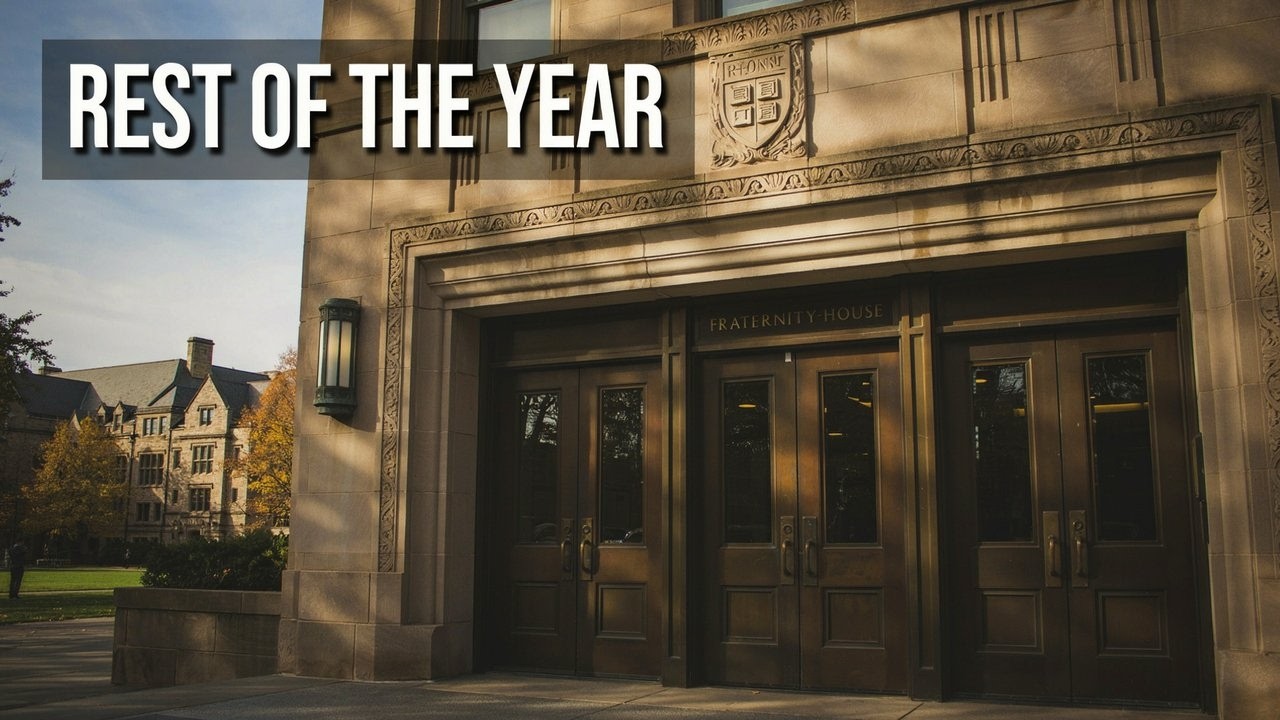
The October 13 prohibition reaches fraternity houses across Cornell. New investigation and survivor-support commitments leave questions about the earlier response unresolved.
Transcript · LOADING
Story trackerDay 1
1 report22 outlets27 sources

On October 8, HeyDay News reported that Cornell President Michael Kotlikoff supported New York Attorney General Letitia James’s criminal investigation into Jane Doe’s sexual-assault allegations, while the university’s trustees had selected Sally Q. Yates to review Cornell’s handling of assault claims. Five days later, Cornell has moved beyond announcing inquiries: it has prohibited parties and social events at fraternity houses for the remainder of the 2026–27 academic year. 1 8
The October 13 announcement changes campus rules while leaving the central accountability questions unresolved. It also promises changes to investigations, more help for people reporting sexual misconduct and an outside prevention review. It supplies no result from either earlier inquiry, criminal charging decision or finding of civil liability.
The distinction matters. A university can restrict where parties happen immediately. Demonstrating that students can report an assault, obtain support and trust the response requires more than an announcement.
Doe, a former Cornell student using a pseudonym, filed her civil lawsuit in September 2026. She alleges that several men drugged and raped her at a fraternity-house party in 2024. Governor Kathy Hochul’s special-prosecutor order identifies the alleged incident as occurring on October 19–20, 2024, in Tompkins County. The lawsuit’s filing year and the alleged assault year are different. 1 11
Our October 8 report described allegations against seven men associated with Chi Phi and their denial of wrongdoing. Those allegations remain unadjudicated; Cornell’s new policy does not establish the defendants’ guilt.
It is clear that women on our campus continue to question whether they are safe. We must meet this moment by acknowledging where we have fallen short and taking meaningful action.
Kotlikoff opened his October 13 statement by apologizing for the harm Doe suffered in 2024 and describing it as an act of sexual violence within Cornell’s community. That is the president’s acknowledgment of harm and institutional responsibility, not a court judgment determining any named defendant’s liability. 2
What the prohibition actually covers
The restriction applies to parties and social events held at fraternity houses across Cornell, extending beyond Chi Phi. Its endpoint is the rest of the academic year, including part of 2027—not simply the remaining months of calendar year 2026. No exact expiration date has been established. 8 26
The available policy descriptions do not establish whether the rule reaches fraternity-sponsored events elsewhere, which fraternity councils it covers or whether exceptions apply. Nor is a prohibition on house parties evidence that fraternity residences have been closed or their residents expelled.
Enforcement needs clarification. BBC News’s October 13 account describes suspension of students who violate the policy. The Hill’s October 13 report says any fraternity violating the prohibition will face immediate emergency suspension. Individual and chapter suspension are different sanctions; the available wording does not establish whether both apply or the process for imposing them. Neither account means every fraternity or fraternity member has already been suspended. 1 4
These are consequential details, not technical footnotes. Students and chapters need to know what conduct is prohibited and who faces punishment. A sweeping restriction is only as clear as its boundaries and enforcement rules.
Beyond the fraternity house door
Cornell announced a role for New York State Police trauma-informed officers in investigating campus sexual-assault allegations. NBC News also reports that the university will bring in “experienced, trauma-informed criminal investigators,” while NPR and The Hill describe additions to Cornell’s police unit or staff. 1 3 5 4
How those arrangements fit together remains unclear. The reporting does not establish which cases state officers will lead, how referrals will work, how staffing will be divided or when the arrangement will be fully operational. It would be premature to describe this as a transfer of every campus sexual-assault investigation away from Cornell police.
The university also said it would add staff to help people report sexual misconduct and navigate support systems. That addresses a burden distinct from investigating a crime: finding a reporting route and obtaining help after using it. Staff numbers, job titles, hiring dates, specific services and access arrangements have not been established. 1
National prevention experts are to review Cornell’s approach, but their identities, remit, completion date and any commitment to publish findings remain unknown. This prevention review is separate from Yates’s already announced examination of the university’s handling of sexual-assault claims. 1 14
Doe’s lawyer, Thomas Giuffra, described the measures as helpful toward her goal of improving Cornell’s response to abuse claims, but said they came too late to protect her. That is the announcement’s unavoidable limitation: restrictions imposed in October 2026 cannot undo an alleged assault in October 2024. 1
The earlier response still needs explaining
Tompkins County District Attorney Matthew Van Houten declined to pursue charges. In NBC reporting published October 3, he said he relied on Doe’s initial six-page police statement. The report also says he did not review additional witness statements and other evidence Cornell police collected. 13
Evidence collected is not necessarily evidence transmitted, received or reviewed. The available record does not establish exactly what Cornell sent Van Houten, when it was sent or whether he received all the additional material. His stated reliance on the initial statement is not a complete legal or evidentiary explanation for declining charges.
CNY Central’s October 2 reporting described the case as having been closed in 2024, without establishing the precise decision date. On October 9, reporting carried by Legal News described Giuffra’s allegation that campus police had “misled” Doe about the investigation’s status in the weeks after she reported the assault. That remains an allegation, not a verified finding of deception. The party ban answers neither question. 19 17
Hochul appointed James special prosecutor through Executive Order 64 on October 1; they provided a public update on October 2. The appointment transferred responsibility for this case from Van Houten, not his elected office itself. James is directed to investigate and, if warranted, present evidence to a grand jury and prosecute. “If warranted” is essential: the appointment does not decide that charges should be filed or that the accused are guilty. 11 12
Yates, a former U.S. deputy attorney general and acting attorney general, leads the trustees’ separate institutional review. Her role was already reported by the Associated Press on October 6; coverage on October 13 does not make it a new appointment. Neither that review nor James’s criminal inquiry has an established completion date in the available reporting. 14 16
Cornell has changed the rules for fraternity-house social life and committed to strengthening investigation and support. What it has not yet demonstrated is how those commitments will operate—or explained the full course of Doe’s earlier report. The test is not simply whether fraternity houses become quieter. It is whether the university’s response becomes clearer, more usable and more accountable.
Sources for this report
BBC News: Cornell bans all fraternity parties over gang sex assault allegations. 1
Cornell University: Immediate measures to strengthen campus safety and better support survivors. 2
NBC News: Cornell bans fraternity parties for the rest of the year amid sexual assault probe. 3
The Hill: Cornell announces suspension of all frat parties amid Jane Doe lawsuit. 4
NPR: Amid rape allegations, Cornell bans fraternity parties and events. 5
CNN: Cornell suspends fraternity social events for the rest of the academic year. 6
Al Jazeera: Cornell suspends fraternity parties after alleged campus gang rape case. 7
The Cornell Daily Sun: Cornell Suspends All Fraternity Parties, Social Events for 2026-27 School Year. 8
TIME: Cornell Halts Fraternity Parties After Jane Doe’s Lawsuit. 9
Click2Houston: Cornell suspends fraternity parties, gives state police role in investigating campus assault reports. 10
Governor Kathy Hochul, New York State: Executive Order 64 appointing a special prosecutor for the alleged October 19–20, 2024 assault. 11
Governor Kathy Hochul, New York State: Video, audio, photos and rush transcript of the Cornell investigation update. 12
NBC News: DA did not review additional evidence Cornell police collected. 13
Associated Press: Sally Yates to review Cornell’s handling of sex assault claims. 14
WTVM: What to know about the investigation into Cornell University gang rape allegations. 15
The Cornell Daily Sun: Former Deputy Attorney General Sally Yates to Lead Cornell Trustees’ Independent Review. 16
Legal News: Cornell gang-rape accuser was “misled” about criminal investigation. 17
ABC News: Gov. Hochul questions DA in Cornell “gang rape” case. 18
CNY Central: How much did the Tompkins County DA know before closing the case in 2024? 19
Associated Press: Cornell suspends fraternity parties, gives state police role in investigating campus assault reports. 20
BBC News: Cornell cancels fraternity parties over sexual assault case. 21
The Washington Post: Cornell bans fraternity houses from hosting parties as rape investigation continues. 22
WDC News 6: Cornell cancels fraternity parties over sexual assault case. 23
CBS New York: Cornell suspends fraternity parties, gives state police role in investigating campus assault reports. 24
PBS News: Cornell suspends fraternity parties, gives state police role in investigating campus assault reports. 25
CBC News: Cornell suspends all frat parties as alleged gang rape fuels continued calls for action. 26
Cornell University: Statements from Interim President Michael Kotlikoff. 27
As aired 15 lines
- On October 8, we reported Cornell's two inquiries. Today Cornell has banned fraternity-house parties. The restriction reaches fraternity houses across the university, alongside new commitments to investigate assaults and help survivors.
- What changes for students now, and what still needs explaining about Cornell's response to Jane Doe?
- Cornell has prohibited parties and social events at fraternity houses for the remainder of the 2026–27 academic year. President Michael Kotlikoff announced the rule on October 13. It reaches beyond Chi Phi, the fraternity named in Doe's lawsuit.
- Doe is a former Cornell student using a pseudonym. She filed her civil lawsuit in September 2026. She alleges seven men associated with Chi Phi drugged and raped her at a fraternity-house party. The men deny wrongdoing. The alleged assault occurred on October 19 and 20, 2024, in Tompkins County.
- Kotlikoff said, “I am deeply sorry for the harm Jane Doe suffered in 2024, and appalled that this act of sexual violence occurred within our Cornell community.” He also acknowledged that Cornell had fallen short.
- He said women on campus continue to question whether they're safe, and promised meaningful action. His statement expresses the university's response to Doe's allegations. The court hasn't decided the defendants' liability. The ban lasts through the rest of the school year, extending into 2027.
- Violators face suspension, but it's unclear whether that applies to individual students, fraternity chapters, or both. Those penalties affect different people and organizations. Cornell still needs to clarify how it will enforce the prohibition.
- The announced rule covers events held at fraternity houses. Cornell hasn't clarified how it applies to fraternity-sponsored events elsewhere. For students reporting an assault, the other changes concern who investigates and who helps them find support. Cornell says it's bringing in criminal investigators trained to work with people who've experienced trauma.
- New York State Police officers will have a role in investigating campus sexual-assault allegations. Cornell also plans experienced, trauma-informed criminal investigators within its police operation. And it says additional staff will help people report sexual misconduct and navigate support systems.
- That help addresses the work of finding a reporting route and getting assistance after making a report. Cornell also plans a review by national prevention experts. They'll examine its approach to prevention, while a separate review examines the university's handling of sexual-assault claims. Neither commitment yet shows how the earlier response failed or what has been corrected.
- District Attorney Matthew Van Houten declined to pursue charges after relying on Doe's initial six-page police statement. Doe's lawyer, Thomas Giuffra, says Cornell's new measures help her goal of improving its response to abuse claims, but came too late to protect her.
- Van Houten didn't review additional witness statements and other evidence Cornell police collected. It isn't clear what Cornell sent him or what he received. The case was closed in 2024. On October 9, Giuffra alleged campus police had misled Doe about the investigation's status in the weeks after she reported the assault.
- Letitia James now has responsibility for the criminal case. Governor Kathy Hochul appointed her special prosecutor on October 1. Separately, Cornell's trustees selected Sally Yates, a former deputy and acting U.S. attorney general, to examine the university's handling of sexual-assault claims.
- Hochul and James gave a public update on October 2. James's appointment transferred this case from Van Houten while he remained district attorney. She can present evidence to a grand jury and prosecute if warranted. Yates's role was already public by October 6. On October 8, we reported that Kotlikoff backed James's inquiry and trustees had selected Yates.
- Cornell's new announcement changes the rules for fraternity-house social events immediately. Students are still waiting to learn how the state officers and campus investigators will divide their work. Cornell hasn't given a start date for the added reporting-support staff, and neither accountability inquiry has a completion date.
Sources
27 sources22 outlets2 wire copies
Governor Kathy Hochulny.gov2
- No. 64: Appointing a Special Prosecutor to Investigate and, If Warranted, Prosecute Matters Relating to an Alleged Sexual Assault Occurring in Tompkins County on October 19-20, 2024 | Governor Kathy Hochul | New York State
- Video, Audio, Photos & Rush Transcript: Governor Hochul and Attorney General James Provide an Update on the Cornell Sexual Assault Investigation | Governor Kathy Hochul | New York State
NBC Newsnbcnews.com2
ABC Newsabcnews.com1
Al Jazeeraaljazeera.com1
BBC Newsbbc.com1
- First reported
- Cornell cancels fraternity parties over sexual assault case
BBC Newsbbc.co.uk1
CBS Newscbsnews.com1
https://www.wtvm.comwtvm.com1
KPRCclick2houston.com1
PBS Newspbs.org1
The Hillthehill.com1
TIMEtime.com1
- First reported
- Cornell Halts Fraternity Parties After Jane Doe’s Lawsuit
WDC NEWS 6wdcnews6.com1
WSTMcnycentral.com1First
- First reported
- How much did the Tompkins County DA know before ...
Source map
Follow the evidence behind this report. The map shows its connections; the links below open the sources cited in this article.
Source map loads as you read.
Revision log
- r1First published.