Conflict · Sudan miners
Sudan opens inquiry after at least 72 civilian miners reported killed
A survivor fled repeated strikes on a Sudanese gold-mining workplace. An inquiry must now establish the toll and responsibility; the accusation against Egypt remains unverified.
Transcript · LOADING
Story trackerDay 4
1 report27 outlets35 sources

Gold miner Abdelaziz Youssef described fleeing up a mountain as a jet repeatedly struck the workplace at Jabal al-Uqaydat, near Sudan’s border with Egypt. Emergency Lawyers, a Sudanese rights group, says at least 72 civilian miners were killed in the October 10, 2026 attack. That is a preliminary minimum, not a completed count; the group warned it could rise. 34 1
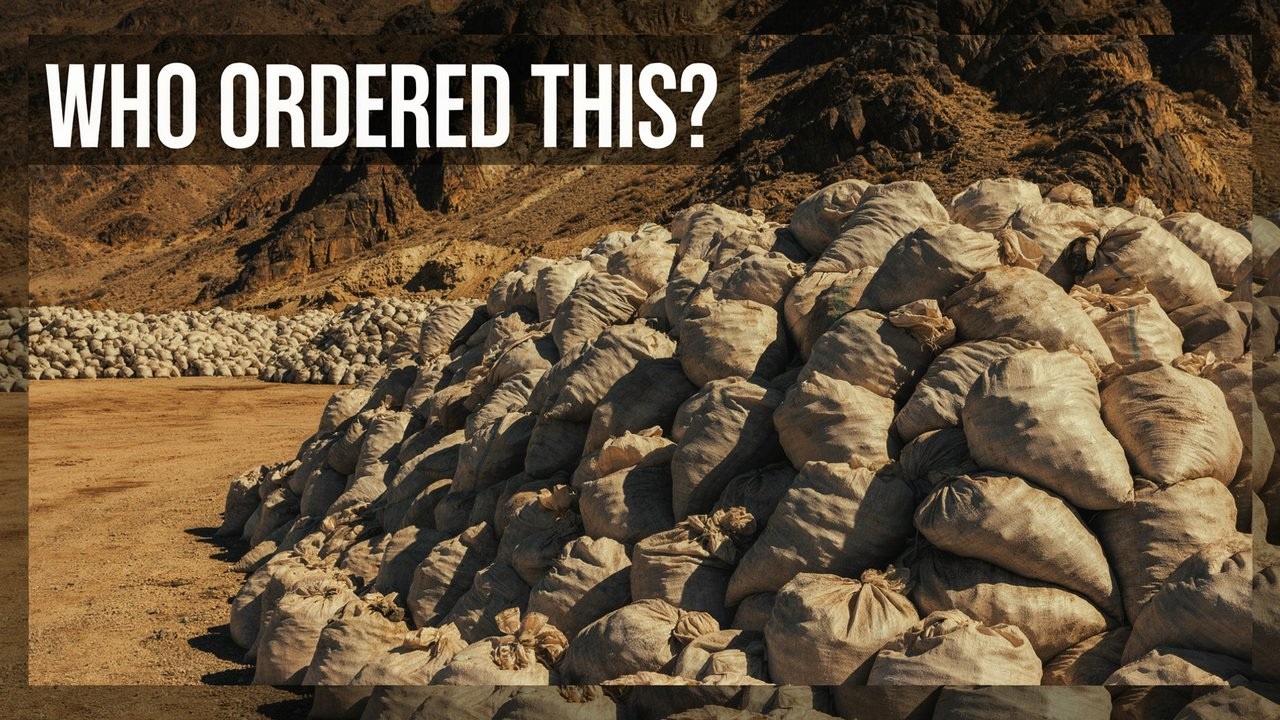
Aftermath footage described in New York Times reporting, syndicated by the Daily Gazette and DNYUZ, showed badly mutilated bodies of young men among sacks of mineral ore. The scene was a small-scale gold-mining workplace. Its military use has not been established, nor has the number of people working there, the number who escaped or the full area struck. Those gaps matter to an investigation. They do not erase the reported civilian loss. 28 27
Sudan has now ordered a fact-finding inquiry. General Abdel Fattah al-Burhan, the country’s army chief and de facto leader, announced it on Monday, October 12, calling the miners’ deaths a “painful incident.” The inquiry changes the official response, but it has not established a final toll or identified the attacking force in the reporting available through October 13. Emergency Lawyers’ accusation against Egypt’s air force remains unverified. 5 9 7 1
From the attack to official responses
- October 10, around 8 a.m. Sudan time34
Youssef told AFP a jet appeared over Jabal al-Uqaydat and launched strikes.
- October 11211
Emergency Lawyers reported a preliminary toll of at least 72 civilians and accused Egypt’s air force.
- October 1232226
Burhan ordered an inquiry. Egypt’s military described an anti-illegal-mining campaign in the Eastern Desert and along the Sudan border.
Counting the dead, not just claims
Reuters and AFP could not independently verify the reported death toll or responsibility. Dabanga’s October 13 account separately attributes a description of dozens killed to the United Nations Office for the Coordination of Humanitarian Affairs. “Dozens” and “at least 72” need not conflict: one is a broad description, the other a numerical minimum. Neither supplies a verified final count. 1 2
Al Jazeera’s October 11 newsfeed report also attributes more than 50 injuries to rights groups. There is no independently verified injury total, complete victim list or established account of injury severity and treatment outcomes. Establishing who died and who survived is therefore a central task, not a footnote to identifying the aircraft. 32
Youssef’s account gives the attack a human chronology. AFP’s October 11 dispatch, carried by NAMPA, places the aircraft’s appearance around 8 a.m. local time, or 06:00 GMT. AfricanQuarters’ reporting of his account says the jet struck five times before he ran up the mountain. Continental Bulletin instead gives around 6 a.m. local time and describes more than five missiles. The direct AFP account preserves the local-time distinction; strike episodes and missiles are not interchangeable counts. None of these descriptions establishes the aircraft’s nationality. 34 16 20
The original AFP-based account also reported that a June strike killed 23 people at the same site. That is a separate reported toll, not a number to add to October’s deaths. The exact June date, independent confirmation of the deaths, responsibility and precise same-site identification remain unestablished. The claimed recurrence deserves examination, but it does not prove that one force carried out both attacks. 1
A campaign statement is not an answer
Burhan’s committee includes representatives of the Public Prosecution and relevant judicial and security authorities. Its stated subject is the miners’ deaths near the Egyptian border. The complete mandate, investigative powers, evidence-preservation measures and arrangements for publishing findings are not established. No completion deadline or completed findings are available in the reporting through October 13. 5 10 7
Egypt also spoke publicly on October 12, superseding the October 11 account that neither country’s authorities had commented. Anadolu described the military’s announcement as an operation against illegal gold mining in the Eastern Desert, accompanied by an emphasis on strong ties with Sudan. Al Manassa reported it as the third phase of an expanded security campaign. AFP-based reporting described an operation along Egypt’s border with Sudan. 1 22 26 11
The geography matters. A campaign in the Eastern Desert or along Egypt’s border does not itself acknowledge a strike inside Sudan. Jabal al-Uqaydat is identified as Sudanese in the principal accounts. DNYUZ’s October 12 publication of New York Times reporting places the mine in River Nile state; SOFX instead places it in Red Sea state. That discrepancy remains unresolved, and no verified coordinates or strike-by-strike map are available. 8 27 29
Nor does calling a campaign an effort against illegal mining establish that these workers were committing an offense, that this site was a military objective or that lethal force against the people there was lawful. Those are questions about the particular workplace and attack. A campaign label cannot answer them.
What the physical evidence can establish
A possible munition offers a lead, not a verdict. The Sudan Times reported on October 13 that a New York Times examination of footage apparently showed an unexploded Egyptian-made NASR 400 bomb. The NYT-attributed reporting syndicated by the Daily Gazette and DNYUZ is dated October 12; October 13 is the date of the Sudan Times summary, not the established date of the underlying investigation. 17 28 27
The available account does not supply the full authentication and geolocation analysis, the clip’s provenance, or the markings, dimensions and specialist assessment needed to audit the identification. A separate AFP-captioned aftermath screengrab, from video obtained October 12, does not authenticate the bomb footage. Even a confirmed Egyptian-made weapon would not, by itself, identify who operated the aircraft. 17 8
Known
Unknown
- The final casualty count, precise strike locations and attacking force remain unverified.
Next
- Whether investigators identify the victims, preserve and authenticate physical evidence, and publish findings that connect the attack to those responsible.
The inquiry’s consequential task is to connect people, places and evidence: who was killed, where the weapons landed, and who ordered and carried out the attack. Repeating the accusation against Egypt would not establish responsibility. Repeating Egypt’s campaign description would not explain why civilian miners are reported dead.
Sources for this report
Khaleej Times/AFP: preliminary toll and accusation. 1 Dabanga: inquiry, humanitarian account and Egyptian response. 2 Sudan Tribune: inquiry announcement. 3 Africanews: Burhan’s inquiry. 4 Radio Tamazuj: committee and miners’ deaths. 5
Mada Masr: deaths, inquiry and anti-mining campaign. 6 UANWORLD: inquiry status. 7 The Straits Times: border operation and strike-site caption. 8 AFP/NAMPA: October 12 inquiry dispatch. 9 Radio Tamazuj: alternate publication of the inquiry account. 10
Hindustan Times/AFP: Egyptian border operation. 11 Kulu Media: crackdown and Sudan inquiry. 12 Khaleej Times: initial survivor reporting. 13 Arab News: rights-group casualty account. 14 Al Jazeera: October 11 casualty report. 15
AfricanQuarters: survivor’s repeated-strike account. 16 The Sudan Times: apparent bomb identification. 17 Dawn: rights-group casualty report. 18 ChronicleAI: mining-camp account. 19 Continental Bulletin: timing and strike description. 20
AFP/NAMPA: preliminary civilian toll. 21 Anadolu: Egyptian military campaign announcement. 22 Al Jazeera: border insecurity reporting. 23 24NewsHD/AFP: Egyptian operation account. 24 African Insider/AFP: Egyptian operation account. 25
As aired 14 lines
- A gold miner fled up a mountain to escape repeated airstrikes.
- Emergency Lawyers says at least 72 civilian miners died at a gold-mining workplace near the Egyptian border. The count is preliminary and not yet confirmed. Sudan has ordered an investigation, while the group warns the toll could rise.
- Who launched the strikes, and what can Sudan's investigation resolve about the miners' deaths?
- The reported attack hit Jabal al-Uqaydat on October 10. Miners there were extracting gold on a small scale. Rights groups also put injuries at more than 50. The people at the center of the investigation were working when the aircraft arrived.
- Surviving miner Abdelaziz Youssef described a jet appearing around eight in the morning, Sudan local time. He said it struck five times and he ran up the mountain. His account describes repeated attacks, but doesn't identify the aircraft's nationality. The five strikes he described also don't tell us how many weapons were used.
- Egypt's military describes its campaign as operating in the Eastern Desert and along the Sudan border. Jabal al-Uqaydat is identified as a Sudanese mining site. Investigators need to pin down where the strikes landed before connecting that workplace to the border campaign.
- The mine's state is disputed, with River Nile state and Red Sea state both named. Its exact position hasn't been resolved. Aftermath footage has been described as showing mutilated bodies of young men among sacks of mineral ore. That scene conveys the human loss, but can't provide a complete count of everyone killed.
- A June strike was also reported to have killed 23 people at the same site. That earlier toll is separate from October's. The claimed recurrence gives investigators another incident to examine, although the June attack's location and responsibility still need confirmation.
- General Abdel Fattah al-Burhan ordered the fact-finding inquiry on October 12. Sudan's army chief and de facto leader called the miners' deaths a “painful incident.” His committee includes the Public Prosecution and relevant judicial and security authorities.
- The inquiry gives Sudan an official route to investigate the deaths. The United Nations humanitarian office separately described dozens killed. That broad description can fit Emergency Lawyers' minimum of 72. Investigators still have to identify the victims and determine a final toll.
- Emergency Lawyers accuses Egypt's air force of carrying out the attack. Egypt's military described the third phase of its anti-illegal-mining campaign on October 12. It called other accounts misleading rumors and emphasized ties with Sudan, without confirming deaths.
- Egypt's announcement leaves responsibility for this particular strike unresolved. Describing mining as illegal also leaves investigators with specific questions about this workplace. They need evidence about the people present and the decisions behind the attack to assess whether lethal force was lawful.
- Footage has been described as apparently showing an unexploded Egyptian-made NASR 400 bomb. Its identification and location still need verification. Even if the weapon was made in Egypt, that alone wouldn't identify who operated the aircraft.
- The investigation has to connect physical evidence to this site and to the force that attacked it. As of October 13, Sudan had released no completed findings and announced no deadline for the committee to report.
Sources
35 sources27 outlets1 wire copy
NAMPAnampa.org4
- Khartoum, Oct 12, 2026 (AFP) - Sudan army chief orders probe into border airstrike that killed 72
- Khartoum, Oct 11, 2026 (AFP) - 72 killed in airstrike on gold mine on Sudan-Egypt border: rights group
- Khartoum, Oct 11, 2026 (AFP) - 72 killed in airstrike on gold mine on Sudan-Egypt border: rights group
- Khartoum, Oct 11, 2026 (AFP) - Dozens of Sudanese feared dead after airstrikes on border gold mine
Khaleej Times/AFPkhaleejtimes.com2First
Radio Tamazujradiotamazuj.org2
The Sudan Timesthesudantimes.com2
24 News HD24newshd.tv1
African Insiderafricaninsider.com1
Africanewsafricanews.com1
africanquarters.co1
arabnews.jp1
ChronicleAIchronicleai.org1
Continental Bulletincontinentalbulletin.com1
Dabangadabangasudan.org1
Dawndawn.com1
Gazette News Group, Inc.dailygazette.com1
Hindustan Timeshindustantimes.com1
Kulu Mediakulu-media.com1
- First reported
- Egypt Gold Mining Crackdown Amid Sudan Deaths Probe
Mada Masrmadamasr.com1
SOFXsofx.com1
SourceRatedsourcerated.com1
- First reported
- Dozens Killed in Airstrikes Near Sudan-Egypt Border
The Straits Timesstraitstimes.com1
UANWORLDuanworld.com1
- First reported
- Sudan opens fact-finding probe into border airstrike deaths
Source map
Follow the evidence behind this report. The map shows its connections; the links below open the sources cited in this article.
Source map loads as you read.
Revision log
- r1First published.