Conflict · Riyadh airport attacksContinuing story · report 3 of 3
Riyadh’s Airport Remains Suspended as Saudi Arabia Investigates Deadly Defense Breaches
A reported weekly toll of at least 20, continuing flight suspensions and an air-defense inquiry put civilian safety at the center of Saudi Arabia’s confrontation with the Houthis.

Transcript · LOADING
Continuing storyDay 11
3 reports226 outlets502 sources115 videos
Full story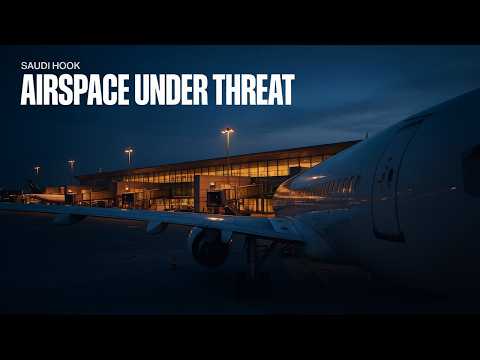


What changed since our last report
46 hours later
Then
Riyadh Airport Was Closed for Safety Checks. Then It Was Hit Again.What we said was still open
The cause of the Riyadh fire, any damage at Khurais, and whether the Saudi government or Aramco will say anything on damage.
Still openThe cause of the earlier Riyadh oil-site fire and damage at Khurais remain unverified. No supplied Saudi or Aramco damage statement resolves those earlier incidents; the airport’s Sunday fire is a separate unresolved event.
Whether the claimed gains around Dhubab and the strait are real or will last, and what the offensive has cost in lives.
Still openThe available reporting does not independently establish durable control around Dhubab and the strait, or a reconciled death toll from the offensive.
Whether the 70-plus Taiz toll and the encirclement are confirmed beyond sources cited by AFP.
Still openNo new independent confirmation establishes the previously discussed 70-plus Taiz toll or the claimed encirclement.
Any Saudi or Aramco statement on damage, and independent confirmation of control around Dhubab and the strait.
Still openThe requested official damage account and independent confirmation of territorial control remain missing. New airport reporting does not close either gap.
Now
A reported weekly toll of at least 20, continuing flight suspensions and an air-defense inquiry put civilian safety at the center of Saudi Arabia’s confrontation with the Houthis.
What moved
- An attack hit the domestic-terminal complex serving Terminals 3 and 4. Accounts give 12 or 13 deaths and more than 300 injuries.
- An unidentified projectile struck Terminal 4, causing a fire. Saudi-authority accounts report one Pakistani resident or national killed and 11 people injured.
More than a decade into the Saudi-Houthi conflict, Riyadh’s airport has become a place where the war reaches ordinary travelers. An analyst interviewed by CBC described a summer breakdown of the truce between the Houthis and Saudi-backed Yemeni forces, followed by escalation since July. By the evening of October 13, 2026, BBC News and Fox News were reporting at least 20 deaths in attacks on King Khalid International Airport over the preceding week. Saudi authorities are investigating how weapons reached passenger facilities despite the kingdom’s extensive air defenses. 20 4 3
That is a reported weekly toll, not 20 deaths in Saturday’s terminal attack. Airport operations remain reported suspended, while hundreds of flight cancellations and thousands of stranded travelers have turned the security failure into a continuing civilian disruption. Washington is weighing whether to move from assisting Saudi Arabia to directly joining its campaign against the Houthis. 20 18 38 2
On October 12, we reported that Sunday’s unidentified projectile had struck Terminal 4 and started a fire, but that its casualty count was unavailable. New reporting supplies that count: one person killed and 11 injured. It also describes a longer suspension. What it does not supply is a complete casualty chronology, a verified reopening or a final explanation of the defense failures. 21 49 4
Three distinct airport incidents
- Thursday, October 820
Three people were reported killed. A parked Saudia aircraft was damaged; descriptions of destruction remain unsupported by a recovered technical assessment.
- Saturday, October 1026115
An attack hit the domestic-terminal complex serving Terminals 3 and 4. Accounts give 12 or 13 deaths and more than 300 injuries.
- Sunday, October 114921
An unidentified projectile struck Terminal 4, causing a fire. Saudi-authority accounts report one Pakistani resident or national killed and 11 people injured.
A toll without a complete ledger
The Hill’s October 11 account gave an initial minimum of 12 deaths and more than 300 injuries. ABC News, in reporting published October 13, gave 13 deaths, including an American, and hundreds wounded. A minimum of 12 is compatible with 13. The unresolved discrepancy concerns the exact competing tallies we previously aired: 12 dead and 309 injured versus 13 dead and 308 injured. Contemporary research corroborates accounts of both 12 and 13 deaths, but does not resolve those precise injury totals. There is no established explanation involving a critically injured patient’s subsequent death. 1 15 153 451
Secretary of State Marco Rubio confirmed on Saturday night, October 10, that an American citizen was among those killed. That confirmation does not establish the victim’s identity, occupation or circumstances at the terminal. 456 426
Sunday’s casualty account is corroborated by AP reporting carried by WRAL, Al Jazeera and the BBC. Some later reports repeat one death and 11 injuries without clearly pinning the incident date; those repetitions cannot be counted as additional attacks. The severity of Sunday’s injuries and subsequent patient outcomes remain unknown. 407 452 21 61
The broader totals also need their dates and boundaries attached. NBC News’s reporting published early October 13 gave 14 deaths in weekend attacks; Bloomberg Television later that morning gave at least 18, also described as a weekend airport toll. Neither account explains the difference. The BBC’s evening account of at least 20 covers the preceding week and supersedes earlier figures as the latest reported wider total—not as a correction to every individual incident. These numbers cannot be added together. 18 12 4
Nor can interceptions be added to the count of successful airport strikes. Bloomberg’s late October 13 account described two missiles and three drones intercepted that day, with the drones heading toward Riyadh. Separately, the coalition reported destroying a cruise missile near the airport around Sunday’s incident. No established reconstruction links that missile or its debris to the Terminal 4 fire. 2 49
What the defenses failed to protect
Saudi Arabia’s defense spending in 2025 was approximately $83 billion, according to The Economic Times; the BBC described it as more than $83 billion. The underlying expenditure dataset is unavailable here, so the useful fact is the scale, not a falsely precise comparison between spending and each weapon intercepted. 469 4
AP reporting relayed by MS NOW describes an initial probe indicating that drones were launched before a mixture of cruise and ballistic missiles reached the airport. The BBC carried an analyst’s assessment of sequencing intended to confuse sensors and radar. Independent reporting describes the general difficulty of repeated, simultaneous mixed attacks, but that does not prove all three weapon types were used in every strike. The missile variant remains unconfirmed. 10 4 467
Reports that batteries were moved to protect palaces and energy infrastructure remain unverified operational claims. Saudi Arabia’s vast territory and dispersed infrastructure complicate coverage; neither that geography nor an alleged redeployment establishes the particular cause of the airport breach. The investigation must explain what happened, rather than substitute a plausible theory for findings. 4
October 17 is not an all-clear
The Sunday-evening closure deadline described in our October 12 report is no longer an adequate guide. New accounts describe suspension until Saturday, October 17, or until further notice. Secondary reporting gives a notice endpoint of 21:00 UTC on October 17—midnight in Riyadh at the start of October 18—but the original aviation notice, identifier and operative terms have not been recovered. Its expiry would not itself establish that terminals are safe or flights are operating. 21 7 484
IndiGo’s reported cancellations cover Riyadh, Jeddah, Dammam and Madinah until October 17. The Times of India and BusinessToday corroborate that four-city account, although the original airline advisory and precise cutoff remain unavailable. Etihad and Qatar Airways also temporarily suspended some Saudi services. These are carrier decisions, not proof that every Saudi airport or all Saudi airspace is closed. 483 492 6
Reported warnings likewise differ: Canada advised against non-essential travel to Saudi Arabia; Australia told citizens in Riyadh to shelter in place and later advised against travel there; the U.S. Embassy urged extreme caution at Saudi airports. Reporting described the FAA warning as identifying hazards at any altitude. The original Canadian, Australian and FAA notices were not recovered, preventing a complete check of their current boundaries and effective periods. 20 38 65 17 68
Images require the same discipline. FRANCE 24’s October 12 fact-check identified two supposed airport-attack videos as AI-generated and photographs labeled Riyadh as showing an earlier attack’s aftermath in Kuwait. Genuine Riyadh footage also exists, including official CCTV aftermath footage and separately attributed Al Arabiya English footage of pilgrims preparing to board. Fabricated imagery does not make the attacks fictitious; it makes those particular images unusable as evidence. 22 494 495
The choice that could widen fighting
Saudi Arabia and its coalition blame the Houthis, who claimed Saturday’s attack and other airport operations. That does not independently establish responsibility, weapons or command arrangements for every later incident. Saudi retaliation reportedly included a strike on the Houthi-controlled airport in Sana’a. The Houthis’ claim of more than 100 Saudi airstrikes in Yemen in a day, causing deaths and injuries, remains unverified. 17 12 16
A warning does not transfer responsibility for a strike to its victims, establish that everyone could leave or demonstrate that a civilian terminal became a lawful military objective. The airport shutdown shows that civilian mobility has been disrupted. It does not establish Houthi control of Saudi airspace.
American intelligence assistance is repeatedly described. Retired General Jack Keane also described targeting support and advocated stronger action; former ambassador Michael Ratney said Saudi Arabia wanted U.S. airstrike assistance. Those assessments and arguments are not operational orders. NPR reported on October 12 that requested refueling support had not been approved; Bloomberg’s October 13 accounts described refueling assistance, without establishing when approval or particular missions occurred. 3 5 73 12
Trump’s earlier “We may” left direct participation undecided. By late October 13, Bloomberg reported that he indicated action against the Houthis after the November 3 elections. His exact later wording and an operational authorization were not independently recovered; the same account still described no direct U.S. offensive engagement. Analysts warn that intervention could provoke renewed attacks on Red Sea shipping, a risk rather than an established new blockade. 11 2 20
The next practical checkpoint is October 17. Passengers need an actual operating notice and actual service resumptions—not merely a date passing. Civilians need a reconciled casualty ledger and a credible explanation of how passenger facilities will be protected.
Earlier questions remain unresolved
As aired 38 lines
- On October 12, we reported Sunday's airport fire. Officials now count one dead and eleven injured.
- The reported toll across a week of airport attacks has reached at least twenty, including an American. Operations remain suspended, with hundreds of flights canceled and thousands of travelers stranded.
- Saudi investigators must explain how weapons reached passenger terminals, while Washington weighs whether to join the fighting.
- King Khalid International Airport serves the Saudi capital. The deadliest terminal attack hit its domestic passenger complex, serving Terminals Three and Four. People were killed and hundreds wounded in facilities used by ordinary travelers and airport workers.
- Saturday's death count still ranges from twelve to thirteen. Saudi authorities initially gave twelve dead and more than three hundred injured. Other accounts give thirteen deaths. Some patients were critically injured, and nobody has explained the difference between those death counts.
- Earlier tallies put the injuries at three hundred nine alongside twelve deaths, or three hundred eight alongside thirteen. Those were the conflicting figures previously aired. The newer casualty descriptions still give more than three hundred injuries, without resolving those exact totals.
- Secretary of State Marco Rubio confirmed that an American citizen was among those killed. He made that confirmation Saturday night, October 10, and condemned the Houthi attacks. The American victim's identity and circumstances at the terminal haven't been announced.
- Three Saudis died in the October 8 strike, including a Saudia captain. The October 10 terminal attack killed twelve or thirteen and injured more than three hundred. The October 11 strike killed one Pakistani national and injured eleven.
- The captain killed in the earlier strike was Hamoud Ali al-Kalthami. A parked Saudia aircraft was damaged. Descriptions ranged from damage to destruction, but its final technical assessment hasn't been made public. The airline had said no passengers were aboard.
- Sunday's projectile hit Terminal Four, also called Passenger Hall Number Four, and started a fire. A coalition spokesperson separately said air defenses destroyed a cruise missile near the airport. Investigators haven't identified what ignited the terminal fire or linked it to that interception.
- Weekend counts of fourteen sit alongside broader totals of sixteen and eighteen. The latest figure is at least twenty over a week. Their counting periods differ, so they can't be added or treated as a single rising count.
- A complete incident-by-incident casualty total is still missing. The weekly figure also doesn't tell us how many weapons successfully hit the airport. Saudi Arabia has reported further interceptions, including a ballistic missile aimed at Riyadh's main airport.
- A late-day account describes two missiles and three drones intercepted, with all three drones heading toward Riyadh. Those are defensive actions. Each successful interception prevents a weapon from reaching its intended target; it doesn't add another terminal casualty event.
- Saudi Arabia reportedly spent about eighty-three billion dollars on defense in 2025. An analyst estimates that eighty-five to ninety percent of Houthi launches were intercepted across the country. That estimate covers a wider campaign, with no clear counting period.
- Saudi investigators are examining how weapons got through. An initial investigative account describes drones launched before cruise and ballistic missiles reached the airport. Different threats arriving in sequence can complicate radar tracking and interception, especially when attacks repeat.
- Saudi Arabia's large territory and widely dispersed infrastructure stretch defensive coverage. Claims that batteries were moved to protect palaces and energy sites are not yet confirmed. Investigators haven't announced a technical cause for the airport failures or identified the missile variant.
- Saudi Arabia and its coalition blame the Houthis. The group claimed Saturday's attack and other airport operations. It has warned airlines and travelers away from Saudi airports and airspace, and says the airport campaign will continue while Saudi attacks continue.
- IndiGo canceled flights to and from Riyadh, Jeddah, Dammam and Madinah until October 17. Etihad and Qatar Airways also suspended some Saudi services, including Riyadh. Travelers face different restrictions depending on their airline and destination.
- Riyadh's suspension has extended beyond the Sunday-evening deadline previously given. New closure accounts cite October 17 or further notice. A reported aviation-notice endpoint falls at midnight starting October 18 in Riyadh, but passengers still need an actual reopening and operating flights.
- The disruption also reaches airport workers, families and passengers connecting through Riyadh. Hundreds of flights have been canceled and thousands of travelers stranded, but there's no precise latest total covering everyone affected.
- Canada advised against non-essential travel to Saudi Arabia. Australia told citizens in Riyadh to shelter in place, then raised its advice to do not travel. The U.S. Embassy warned Americans to use extreme caution at Saudi airports.
- The FAA warning described Saudi airspace as potentially hazardous at any altitude. These warnings address different risks and places. Airlines have canceled specific routes, while Riyadh has suspended airport operations; other Saudi airports aren't all subject to the same restrictions.
- Two fabricated videos circulated as airport attacks. One six-second clip drew more than two million views on a single X post. Another drew 1.7 million. Those figures were snapshots of their reach, and both clips were identified as AI-generated.
- The first clip showed disproportionate vehicles, physically unrealistic debris and an unusually symmetrical fireball. The second included an apparent passage through a glass door, and a floating-looking hand and phone near a man's ear. Those images can't demonstrate what happened at the airport.
- Photos presented as Riyadh showed Kuwait International Airport after a June Iranian drone attack. Genuine Riyadh footage also exists, including official CCTV aftermath footage and separate footage of Umrah pilgrims preparing to board. Authentic recordings still need their own context and casualty information.
- Saudi Arabia vowed a decisive response and reportedly struck the Houthi-controlled airport in Sana'a. The conflict has lasted more than a decade. Further escalation could also threaten shipping around Bab el-Mandeb, where the Red Sea meets the Gulf of Aden.
- The Houthis claim Saudi Arabia carried out more than one hundred airstrikes in Yemen in a day, causing deaths and injuries. Analysts describe a truce breaking down during the summer and fighting escalating since July. They estimate Houthi-held areas contain about two-thirds of Yemen's population.
- A Houthi spokesperson said the airport attacks aim to impose an air blockade and pressure Saudi Arabia to end the war. He expressed regret for civilian deaths but denied responsibility, blaming Saudi Arabia for keeping airports operating after the group's warnings.
- The interviewer challenged that claim with accounts and footage of civilians, including Muslim pilgrims. Warning passengers away doesn't transfer responsibility for a strike to its victims. The spokesperson also threatened U.S. forces if Washington directly joins the conflict.
- Former Defense Secretary Mark Esper says Washington is providing intelligence to Saudi Arabia. Retired General Jack Keane describes intelligence and some targeting assistance, alongside Saudi air support and Yemeni-government ground operations. Keane advocates stronger attacks on Houthi drone and missile capabilities.
- Former U.S. ambassador Michael Ratney says Saudi Arabia wants American help with airstrikes. He says it has so far rejected Benjamin Netanyahu's offer of Israeli assistance. Ratney warns that further Houthi retaliation could undermine confidence in Saudi travel, tourism and investment.
- Ratney describes Iranian support through money, intelligence, weapons and advisers. The Houthi spokesperson denies that Iran directs the group's fighting. Those statements address different relationships, and leave the command behind particular airport attacks unresolved.
- Trump earlier said, “We may,” and, “We'll take a look,” when asked about joining Saudi strikes. By late October 13, he reportedly indicated action against the Houthis after the elections. The U.S. midterms are November 3.
- Washington hasn't announced an order to begin direct strikes in this campaign. The latest account still described American involvement as support, including intelligence and aerial refueling. Esper's assessment that election timing makes Trump cautious doesn't commit the president to a military timetable.
- Analysts warn that direct U.S. involvement could bring renewed Houthi attacks on Red Sea shipping. A conditional scenario puts Brent at one hundred twenty dollars a barrel if fighting widens and supply routes are disrupted. That outcome would depend on further escalation.
- Egyptian Foreign Minister Badr Abdelatty pledged “all kinds of support” and solidarity with Saudi Arabia. He said Egypt would respond positively if asked, while emphasizing de-escalation and political solutions. He left the form of that support unspecified.
- The United Nations condemned attacks on Saudi civilian infrastructure. In Yemen, it says funding cuts closed seventy-two percent of women's and girls' safe spaces. Emergency assistance reached about one hundred forty-three thousand people, while seventy-three thousand dignity kits were urgently needed.
- Saudi investigators still haven't explained the defense failures, and Washington's direct intervention decision remains open. October 17 is the next practical checkpoint for airport operations and IndiGo's cancellations. Passengers still can't treat that date as confirmation that their flights will resume.
Sources
502 sources226 outlets115 videos10 wire copies
Fox Newsfoxnews.com1716 videos
- First reported
- Houthis kill 14 in Saudi Arabia airport strikes, including American
- Gen. Keane: This has GOT TO STOP · video
- ‘TOUGH CALL’: Trump hints US could join Saudi fight against Houthis · video
- BREAKING: Saudi airport HIT by second Houthi attack in 2 days · video
- NEW: Trump announces IMMEDIATE energy ceasefire between Russia, Ukraine · video
- DEADLY ESCALATION: Trump faces MAJOR decision after Houthi attack · video
- DETAILS: Trump, Putin STRIKE DEAL over Russian diesel · video
- NEW: Saudi Arabia confirms THIRD ATTACK on major airport, Houthis claim responsibility · video
- Trump weighs action against Houthis after Riyadh airport attack · video
- BREAKING: Houthis launch NEW STRIKES on Saudi Arabia · video
- DEVELOPING: Trump weighs action after 'SIGNIFICANT ESCALATION' in Mideast · video
- DEVELOPING: Trump weighs renewed STRIKES on Iran ahead of midterms · video
- WATCH: USS Abraham Lincoln pulls into California port · video
- Houthi missile strike KILLS 3 in Saudi Arabia · video
- BREAKING: Houthi attack on Saudi Arabia’s main airport kills 12, injures 300 · video
- Trump SLAMS Zelenskyy: 'Time for Ukraine to get a new president' · video
- Jack Keane: This is TROUBLING · video
Al Jazeeraaljazeera.com16
- First reported
- Iran war live: Riyadh airport hit again; Tehran says US reply 'inadequate'
- Saudi Arabia says three foreign nationals killed in airport attacks
- Yemen war live: UN agency says 200,000 Yemenis displaced as fighting rages
- Yemeni gov’t forces aim for Sanaa, but Houthi defeat will be a challenge | Houthis News
- Yemen forces claim to seize Dhubab, sites near Bab al-Mandeb from Houthis | Conflict News
- Houthis claim strike on Aramco site as Yemen fighting intensifies
- Saudi Arabia says Houthi attacks on airports killed three foreign nationals
- Saudi-led coalition says it intercepts three Houthi ballistic missiles
- Saudi Arabia says three wounded in attacks on airports near Yemen border | Houthis News
- Why is fighting intensifying in Yemen’s Taiz governorate?
- Yemeni government forces claim 1,860 Houthis ‘neutralised’
- Yemen war live: Saudi coalition says 2 missiles aimed at Riyadh intercepted | Houthis News
- Saudi Arabia reopens Riyadh airport after Houthi attack kills three | Aviation News
- Saudi Arabia says 1 dead, 11 injured in latest attack on Riyadh airport | Conflict News
- Why are Houthi missiles breaking through Saudi Arabia’s air defences? | Drone Strikes News
- Why are the Houthis striking Saudi airports? | Aviation News
Bloomberg Television1515 videos
- First reported
- Houthis Hit Saudi Aramco Headquarters in Missile Attack · video
- Chipmakers Under Pressure; Saudi Arabia Intercepts Missiles · video
- Chip Selloff Deepens Before Wall Street Earnings · video
- Saudi Intercepts Houthi Attacks as Pressure Grows on US · video
- Saudi Arabia Reports Fresh Attacks as Wider Conflict Could Push Oil to $120 · video
- Chip Selloff bleeds into Asia · video
- Former US Envoy Warns of broader Middle East Conflict · video
- Trump Claims Russia-Ukraine Agree to ‘Energy’ Truce, Houthi Attacks on Saudi Airports Escalate · video
- China Reaches Deal with EU on Hybrid Car Shipments · video
- Riyadh Airport Hit Again After Deadly Houthi Attack Leaves People Killed, Hundreds Injured · video
- Deadly Houthi Attacks on Saudi Arabia; EU Caps Chinese Hybrid Car Imports · video
- Saudi Airport Attacks Raise Stakes for Regional Conflict · video
- Houthi Attacks Hit Riyadh, Abha Airports, Killing Three; Tanker Attack Pushes Oil Higher · video
- US Moves Bombers From UK Airbase as Threats Linger · video
- Brazil Election Heads to Runoff, Bessent Downplays Concerns on Yields, AI · video
BBC Newsbbc.com139 videos
- First reported
- Saudi Arabia says Riyadh airport strike killed 12 and wounded 309, including an American
- BBC News article on the airport attacks
- Yemen government announces major operation to ... - BBC
- Yemeni government forces say they have 'secured' Bab al-Mandab Strait
- The attacks exposing Saudi Arabia's biggest weakness · video
- What we know about Houthi attacks on Saudi Arabia airports · video
- Why is Trump calling for Zelensky to go? | BBC Newscast · video
- Saudi capital airport attack kills 12 people and more than 300 injured · video
- President Trump says the US won't attack Iran before crucial midterm elections · video
- Saudi nationals killed as Iran-backed Houthis in Yemen step up airport attacks · video
- Fighting intensifies between Iran-backed Houthis and Saudi-led government forces in Yemen · video
- US bombers withdraw from Fairford airbase · video
- Inside Yemen's front-line city as Houthis battle for control · video
The Guardiantheguardian.com11
- First reported
- The Gulf has entered a new era of instability. If its leaders think they can rely on old alliances, they are wrong | Nesrine Malik
- Riyadh airport hit again after deadly Houthi missile attack, Saudi authorities say
- Middle East crisis live: Houthis warn passengers against using Saudi airport after deadly attack on Riyadh
- Three Saudis killed in Riyadh airport attack claimed by Houthis
- Dozens reportedly injured in Yemeni Houthi attack at Riyadh airport
- Saudi-backed forces recapture key areas around strait from Houthis in Yemen
- Air campaign against Houthis under way in Yemen, says Saudi-led coalition
- Yemen’s Saudi-backed government launches military drive to retake all Houthi-held territory
- Middle East crisis: Riyadh airport hit again as Houthis claim attacks, including strike that killed 12 – as it happened
- Middle East crisis live: Riyadh airport reportedly hit again, day after deadly attack that killed 12 | Houthis
- Houthi attack on Riyadh airport will force rethink of Donald Trump’s strategy | Yemen
ABC Newsabcnews.com97 videos
- First reported
- Missile strikes passenger terminal at Riyadh airport, many wounded
- Trump announces US, Houthis to stop bombing each other -- Houthis argue they will 'evaluate' ceasefire proposal
- Saudi Arabia threatens 'serious response' to attacks on its airports · video
- ABC News Live Prime: October 12, 2026 · video
- Good Morning America Full Broadcast — Sunday, October 11, 2026 · video
- ABC World News Tonight with David Muir Full Broadcast - Oct. 11, 2026 · video
- 1 dead, 11 injured in attack on Saudi airport, officials say · video
- At Least 4 Dead as Hurricane Isaias Bashes Florida and Alabama. What You Need to Know - October 12 · video
- Good Morning America Full Broadcast - Friday, October 9, 2026 · video
Arab Newsarabnews.com9
- First reported
- Riyadh airport attacked killed 12 people and wounded over 300 more, says Saudi civil aviation agency
- Attacks on Riyadh and Abha airports kill three civilians and injure 36, Saudi aviation authority says
- Arab News | Oil slips as Middle East crude exports rise, G7 to release stocks
- Arab News | 82 Houthi military targets destroyed as coalition vows attacks on civilians ‘will not go unpunished’
- Arab News | Arab, GCC leaders condemn deadly Houthi attacks on Saudi airports
- 82 Houthi military targets destroyed as coalition vows attacks on civilians ‘will not go unpunished’
- Houthi ballistic missiles targeting Riyadh, Khamis Mushait intercepted
- Arab News | Riyadh airport attack killed 12 people and wounded over 300 more, says Saudi civil aviation agency
- Arab News | Saudia pilot killed in attack on Riyadh airport
Asharq Al-Awsataawsat.com8
- First reported
- GACA: Resident Killed, 11 Others Wounded in Two New Attacks on Riyadh, Dammam Airports
- A projectile hits Terminal 4 at Riyadh's King Khalid airport
- Coalition: Houthi Attacks on Civilian Objects Will Not Go Unpunished
- Coalition: Three Ballistic Missiles Launched by Houthi Militia Toward Riyadh and Khamis Mushait Intercepted, Destroyed
- 12 Killed, 309 Injured in Attack on Riyadh Airport; Coalition Vows Response
- Rubio: We Condemn Houthi Attacks ...We Stand with Saudi Arabia
- GACA: Operations at Riyadh Airport Temporarily Suspended after Attack
- Trump Says Houthi Attack on Riyadh Airport ‘Unacceptable’
Deutsche Welledw.com8
- First reported
- Saudi authorities say Riyadh airport attack killed 12 and injured 309; Trump says US may join strikes on Houthis
- Yemen's Houthis claim strike on Riyadh airport, three killed
- Saudi Arabia: Several injured after attack on Riyadh Airport
- Saudi Arabia: Second strike hits Riyadh airport
- Yemen: US fighting costly battle against the Houthis
- Houthis warn airlines after deadly Riyadh airport strike
- Yemen's Houthis warn passengers not to use Saudi airports
- Fact check: Fake viral videos of Riyadh airport attacks
SBS Newssbs.com.au86 videos
- First reported
- Saudi Arabia's Riyadh airport out of action after third attack
- New Houthi attacks pull Saudi Arabia further into expanding Iran conflict
- Another missile attack on Riyadh airport | Morning News Bulletin 12 October 2026 · video
- Russian drones hit Ukraine power station after 'energy ceasefire' | SBS speaks to Estonia diplomat · video
- Deadly strike on Saudi Arabia's Riyadh airport | Trump calls for Ukraine elections · video
- Two buses blown up by Russia on Ukraine's frontline city | Houthis claim strike on airport · video
- Houthis strike Saudi airports | Zelenskyy condemns ‘vile’ Russian attacks | Israel marks October 7 · video
- Brazil's election goes to second round | Yemen govt forces begin major operation against Houthis · video
The Telegraphtelegraph.co.uk86 videos
- First reported
- Houthis
- Saudi coalition admits bombing of Yemen funeral that left 140 dead
- MI5 warns Iran targeting UK military sites & the war’s looming food price crisis · video
- Trump weighs US strikes after Houthi missiles shut Saudi’s Riyadh airport | Iran war latest news · video
- Pentagon prepares 3-day Iran blitz as Houthi missiles kill Riyadh airport pilot | war latest news · video
- Houthi strikes shut down Yemen airport & how October 7 has changed Israel | Iran war latest news · video
- Iran war exposes US Navy’s ‘chronic problems’ as Houthis strike Saudi airports | latest news today · video
- Saudi deploys 100 fighter jets in Yemen blitz after Iran’s Houthis attack oil | war latest news · video
CNNcnn.com73 videos
- First reported
- Explosions heard in Saudi capital as Riyadh airport is reported closed
- السعودية تكشف حصيلة ضحايا استهداف مطاري أبها والملك خالد يومي الثلاثاء والأربعاء | CNN Arabic
- EXCLUSIVE: US expands intel, targeting support for Saudi campaign against Iranian ally | CNN Politics
- Cost of US military offensive against Houthis nears $1 billion with limited impact | CNN Politics
- Hormuz attacks, US bombers moved, Houthis & more | Experts on Iran · video
- Bab al-Mandeb Strait retaken from Iran-backed Houthis: Yemen · video
- Saudi-backed Yemeni forces begin offensive against Iran-backed Houthis · video
Dawndawn.com7
- First reported
- Three killed as Houthis hit multiple Saudi airports - Newspaper - DAWN.COM
- 3 killed in attacks on Saudi Arabia's King Khalid, Abha airports: civil aviation body - DAWN.COM
- EXPLAINER-Makkah pact and defence of the Kingdom - Newspaper - DAWN.COM
- Makkah accord nations agree to deploy rapid force - Newspaper - DAWN.COM
- Turkiye's FM Fidan says Istanbul assessing aid to Saudi Arabia as part of Makkah agreement - World - DAWN.COM
- At least 12 dead, over 300 wounded in attack on Riyadh airport - World - DAWN.COM
- Pilot among 3 Saudi nationals killed in attacks on Riyadh airport, authorities say - World - DAWN.COM
FRANCE 24 English77 videos
- First reported
- No, these pictures do not show the Houthi attacks on Riyadh King Khalid Airport • FRANCE 24 English · video
- Saudi-led coalition says new attack at Riyadh airport causes fire, day after strike kills 12 · video
- Saudi Arabia: Riyadh airport struck again by Yemen's Houthis • FRANCE 24 English · video
- Riyadh airport strike kills 12, Saudi Arabia threatens 'decisive' response • FRANCE 24 English · video
- Hegseth says Fort Hood shooter's military execution will be "livestreamed" • FRANCE 24 English · video
- Houthi strikes on Riyadh airport killed three Saudis as war escalates • FRANCE 24 English · video
- Saudi-backed Yemeni forces expel the Houthis from several areas around key strait, officials say · video
International Organization for Migrationiom.int7
- First reported
- Yemen Displacement Tops 200,000, Needs Soar and Funding | IOM Yemen
- Over 145k Now Displaced in Yemen, 16,000 Increase in Past Week | IOM Regional Office for Middle East and North Africa
- Yemen Displacement Tops 200,000, Needs Soar and Funding Alarmingly Dries Up
- Over 145k Now Displaced in Yemen, 16,000 Increase in Past Week
- Yemen - Displacement Caused by Escalation in the West Coast — Update Dataset #16 (4 October 2026) | Displacement Tracking Matrix
- Other | Displacement Tracking Matrix
- New IOM Data: Yemen Displacement Reaches 184,000 | IOM Yemen
ABC News (Australia)66 videos
- First reported
- Trump weighs attacks on Houthis after US citizen killed in Saudi airport strike | ABC NEWS · video
- Houthis warn 'worse is yet to come' as Saudis extend airport closure | ABC NEWS · video
- Twelve dead, 300 injured and flights cancelled after airport attack | ABC NEWS · video
- Why are Houthi rebels targeting Saudi Arabian airports? | ABC NEWS · video
- Second strike on Saudi airport leaves heavy casualties and forces closure | ABC NEWS · video
- Yemeni forces retake coastal areas from Houthi militants | The World | ABC NEWS · video
Anadolu Agencyaa.com.tr6
- First reported
- Saudi Arabia confirms attack on King Fahd International Airport in Dammam amid Houthi strikes
- Riyadh's King Khalid airport is hit by a second deadly strike, and Dammam's airport is also attacked
- Saudi-led coalition says projectile fell near airport in eastern Saudi Arabia
- Brent rises above $101 as storm, Houthi attacks fuel supply concerns
- Houthis claim missile, drone attacks on Saudi Aramco sites
- Fire erupts at Riyadh airport after projectile strike: Saudi-led coalition
gulfnews.com6
- First reported
- Gulf News report on the Abha and Riyadh airport attacks
- Airlines Suspend Flights to Riyadh Following Houthi Airport Attack
- Saudia Pays Tribute to Pilot Killed in Riyadh Airport Attack, Confirms Aircraft Damage
- Riyadh Airport Attack: 12 Dead, Hundreds Injured as Saudi Coalition Vows Decisive Response
- Etihad, Emirates, flydubai and Air Arabia announce flight disruptions after Riyadh airport attack
- Turkey and Pakistan to Deploy Troops to Saudi Arabia Amid Houthi Threats
NBC Newsnbcnews.com63 videos
- First reported
- Houthis threaten Saudi oil sites and attack Riyadh airport as airlines suspend flights
- Riyadh airport attacked again and evacuated as explosions rock the Saudi capital
- Trump operation against Houthis cost more than $1 billion
- Top Story with Tom Llamas - Oct. 12 | NBC News NOW · video
- Saudi airport struck again after deadly attack that killed American · video
- NBC Nightly News with Tom Llamas Full Episode - Oct. 8 · video
Sky News66 videos
- First reported
- Houthis: 'The Saudis did not listen to our warnings' · video
- One dead and 11 injured in new attack on Saudi airport - a day after 13 killed in missile strikes · video
- At least 12 people killed and over 300 injured in Riyadh airport attack · video
- Trump says Ukraine should 'get a new leader' as Zelenskyy slams US diesel deal with Putin · video
- Fatal Houthi strikes on Riyadh a 'dangerous escalation', says defence secretary · video
- 'We are in a very difficult, much harder world' warns former general · video
The Times of Indiaindiatimes.com6
- First reported
- Saudi Arabia says attack on Riyadh airport killed 12 and wounded more than 300
- Oil slips as Middle East crude exports rise, G7 to release stocks - The Economic Times
- ‘Last warning to global airlines’: Houthis attack Riyadh airport, warn over Saudi airspace - Times of India
- Saudi Arabia defence spending: Saudi Arabia spends $83 billion on defence. Why are missiles and drones still getting through? - The Economic Times
- Why Saudi Arabia's $83 billion military fails to deter Houthis despite advanced arsenal
- Saudi-Houthi crisis: IndiGo cancels flights to Riyadh, Jeddah, Dammam and Madinah | India News
BBC Newsbbc.co.uk5
- First reported
- Saudi capital airport hit by second Houthi strike in two days
- Riyadh airport attack another dangerous moment in already tense conflict
- Twelve killed in attack on airport in Saudi capital Riyadh
- Yemen government announces major operation to retake Houthi territory
- Three people killed in attacks on Saudi Arabia airports, officials say
DW News55 videos
- First reported
- New Saudi airport attacks raise stakes for Washington · video
- What now for Saudi Arabia after deadliest attack since start of Iran War · video
- Pakistan's risky double role: Defending Saudi Arabia, mediating with Iran · video
- Saudi Arabia blames Houthis for major airport attack · video
- Can Yemen turn the tide against the Houthis? · video
Global News55 videos
- First reported
- Global National: Oct. 12, 2026 | Russia strikes Ukraine despite Trump's "energy ceasefire" · video
- Riyadh airport attack kills at least 12, strands Saudi-bound passengers · video
- Global National: Oct. 11, 2026 | Trump claims Russia-Ukraine ceasefire brokered · video
- Global National: Oct. 10, 2026 | At least 4 dead after Hurricane Isaias makes landfall · video
- Global National: Oct. 8, 2026 | Feds announce $2B for energy-efficient retrofits to 1M homes · video
Reuters via Al-Monitoral-monitor.com5
- First reported
- Riyadh airport attack toll rises to 12 dead and 309 wounded; Trump weighs joining strikes on the Houthis
- Attack on Saudi airport leaves 12 dead, dozens wounded, sources say
- Yemeni government launches offensive to seize all areas from Iran-backed Houthis - AL-MONITOR: The Middle Eastʼs leading independent news source since 2012
- Yemen, Saudi Arabia strike Houthis as counteroffensive gets underway - AL-MONITOR: The Middle Eastʼs leading independent news source since 2012
- Saudi Arabia reports injuries in new attack at Riyadh airport, day after strike kills 13 - AL-MONITOR: The Middle Eastʼs leading independent news source since 2012
reuters.com5
- Plane billows smoke at Riyadh airport as Houthis escalate attacks | Reuters
- More than 200,000 people displaced since fighting in Yemen began, says UN agency | Reuters
- Saudi crown prince sought US military help from Trump with Houthis, sources say | Reuters
- Yemen's Houthis say they attacked Aramco facility in Riyadh with missiles, drones | Reuters
- Turkey's foreign minister says Ankara weighing Saudi defence support, rules out offensive role | Reuters
The Nationalthenationalnews.com5
- First reported
- Yemen's Al Alimi announces military operations to retake ...
- Riyadh airport closure: Emirates, Etihad and other UAE airlines cancel flights
- Riyadh airport closure: UAE flight cancellations extend into Tuesday
- Saudi Arabia faces challenge of repeated and simultaneous attacks
- Saudi Arabia faces challenge of repeated and simultaneous attacks
CNAchannelnewsasia.com4
- First reported
- One dead in new attack on Saudi airport, a day after Houthi strike kills 13
- Airport strike in Riyadh kills 12, Saudi coalition vows 'decisive' response
- Yemen presidency announces military drive to retake all Houthi territory
- Riyadh airport suspends operations after attack leaves several wounded
Devdiscoursedevdiscourse.com4
- Plane billows smoke at Riyadh airport as Houthis escalate attacks
- Houthi spokesperson warns workers at Saudi oil sites, renews threats to airlines, airports
- Lufthansa, Air India suspend flights to Riyadh after Houthi attacks
- Rubio says attacks on Saudi Arabia "must stop now", confirms US citizen killed | International
euronewseuronews.com42 videos
- First reported
- Houthis claim missile strike on Riyadh airport as explosions heard in Saudi capital
- Turkey and Pakistan to send troops to Saudi Arabia under defence pact
- Europe Today: Trump claims Ukraine-Russia energy ceasefire as Baltics stay on alert · video
- 'Whole world is paying' for Iran war, Qatar warns as mediation efforts continue · video
France 24/AFPfrance24.com4
- First reported
- Blasts shake Riyadh as Houthis claim another strike on the capital's airport
- Saudi says three dead in airport attacks claimed by Houthis
- Explosions heard in Saudi capital Riyadh after Houthis' deadly attacks on airports - France 24
- No, these pictures do not show the Houthi attacks on Riyadh King Khalid Airport - Truth or Fake - France 24
India Todayindiatoday.in4
- First reported
- Turkey Saudi Arabia Mecca pact: Ankara studies air defence support against Houthis
- Riyadh airport attack: 12 killed, over 300 injured as Saudi suspends flights
- Mecca Pact activated: Pakistan, Turkey to rapidly deploy troops to Saudi Arabia
- Houthis Saudi air defences: How Riyadh airport was hit despite Patriot and THAAD
NPRnpr.org4
- First reported
- Deadly Houthi attacks on Saudi Arabia raise stakes for US
- DOJ launches antitrust probe of TV networks. And, Trump says Ukraine needs new leader
- Attack on Riyadh airport killed 12 people and wounded over 300 more, Saudi authorities say
- Trump weighs joining the fight against Houthis after Riyadh airport attack
TASStass.com4
- First reported
- Houthis threaten new strikes on Saudi oil facilities
- Saudia pilot killed in attack on Riyadh airport — TV - World
- Houthis say they attacked Saudi Aramco facilities, airports in Saudi Arabia - World
- Houthis urge Saudi Arabia to cancel flights, declaring country’s airports as their targets - World
The Hillthehill.com43 videos
- First reported
- Houthis claim missile and drone strikes on Saudi sites as Red Sea fighting widens
- Houthis strike Riyadh airport, leaving at least a dozen dead · video
- Feds raid DC home of Rep. Ilhan Omar - The Hill | NEWSNATION · video
- Trump: US may join Saudi Arabia STRIKES on Houthis after AIRPORT ATTACK | RISING · video
Türkiye Todayturkiyetoday.com4
CBC News33 videos
Middle East Eyemiddleeasteye.net3
Reuters33 videos
The New Indian Expressnewindianexpress.com3
Ajel Englishajel.sa2
CBS Newscbsnews.com21 video
Channel 4 News22 videos
- First reported
- Riyadh airport hit again as Saudi-Houthi conflict escalates · video
- Saudi-backed forces attack Houthi targets in Yemen counterattacks · video
CTV News22 videos
Egypt Independentegyptindependent.com2
Focus on Travel Newsftnnews.com2
The Express Tribunetribune.com.pk2
The Indian Expressindianexpress.com2
The Maritime Executivemaritime-executive.com2
TradeArabiatradearabia.com2
@onmanoramaonmanorama.com1
24 News HD24newshd.tv1
93.3 The Drive933thedrive.com1
96.5 KRMGkrmg.com1
AeroCorneraerocorner.com1
- First reported
- Houthis Claim Riyadh Airport Hit, Warn Airlines
AeroTimeaerotime.aero1
- First reported
- Saudi airport attacks kill three, injure 36 in Riyadh, Abha
AGBIagbi.com1
- First reported
- Airlines use Saudi Arabian airspace despite war escalation
Air & Space Forces Magazineairandspaceforces.com1
- First reported
- US Has Struck Over 1,000 Houthi Targets in Renewed Campaign
airwaysmag.com1
AKHBAR.COMakhbar.com1
- First reported
- Projectile hits Terminal 4 of Riyadh airport, causing fire
Akhbrna Newsakhbrna.ae1
Almajallamajalla.com1
arabnews.pk1
ARY Newsarynews.tv1
Associated Press11 video
- First reported
- Saudi Arabia's international airport suffers repeated Houthi attacks · video
avi-go.com1
aviationweek.com1
- First reported
- Saudi Airport Attacks Trigger Cancellations, Airspace ...
Brecorderbrecorder.com1
Business Todaybusinesstoday.in1
canadianminingreport.com1
cgtn.com1
chinadailyhkchinadailyhk.com1
Daily Pakistan English Newsdailypakistan.com.pk1
Daily Sabahdailysabah.com1
Dateline Wiredatelinewire.com1
- First reported
- Saudi Arabia Suspends Riyadh Airport Operations After
Deccan Chronicledeccanchronicle.com1
Deep Arrivaldeeparrival.com1
Defense Newsdefensenews.com1
destinationksa.com1
DocStoXdocstox.com1
- First reported
- AI Express, Air India extend cancellation of Riyadh flights
Economy Middle Easteconomymiddleeast.com1
Emerging Travel Newsemergingtravel.news1
EnergyPulseopensentiment.org1
ETV Bharat Newsetvbharat.com1
Fact Crescendo Afghanistan Englishfactcrescendo.com1
FlightAwareflightaware.com1
Fortunefortune.com1
Free Malaysia Today | FMTfreemalaysiatoday.com1
gaca.gov.sa1
gdnonline.com1First
goSkagitgoskagit.com1
- First reported
- www.goskagit.com
Greater Kashmirgreaterkashmir.com1
gulfbusiness.com1
gulftodaygulftoday.ae1
- First reported
- Saudia Airlines confirms pilot killed, aircraft damaged i...
hi INDiAhiindia.com1
Hindustan Timeshindustantimes.com1
HNGN - Headlines & Global Newshngn.com1
House of Saudhouseofsaud.com1
- First reported
- King Khalid Airport Closed Ahead of EU-GCC Summit
HuffPosthuffpost.com1
humenglish.com1
Indian White Paperindianwhitepaper.com1
indianeconomicobserver.com1
International Business Times, Singapore Editionibtimes.sg1
Internet Archivearchive.org1
Investing.com 香港investing.com1
investingLiveinvestinglive.com1
Iran International | Iran Internationaliranintl.com1
Israel & Jewish News - JNSjns.org1
- First reported
- Rubio decries ‘reprehensible’ Houthi attack on Saudi airport
Israel.comisrael.com1
Jarayidjarayid.com1
- First reported
- Riyadh Airport operations extended 24h
JBizNewsjbiznews.com1
jeddahobserver.com1
kayhan.ir1
- First reported
- Yemen Strikes Aramco Near Riyadh, Cripples Oil Lifeline
Khaleej Timeskhaleejtimes.com1
KhanListkhanlist.com1
KSA.comksa.com1
KyunTrendkyuntrend.in1
- First reported
- When will Riyadh airport open? Indian flight status
L'Orient Todaylorientlejour.com1
Lana Timelanatime.com1
- First reported
- هجومان على مطاري أبها والرياض: 3 قتلى و36 مصاباً
Legit.ng - Nigeria news.legit.ng1
lse.co.uk1
MarketSpeakermarketspeaker.com1
Misbarmisbar.com1
MS NOW11 video
- First reported
- Trump campaigns in Ohio to half-packed arena as pushback to his Russian diesel deal grows · video
mykxlg.com1
- First reported
- www.mykxlg.com
Naharnetnaharnet.com1
NASA FIRMSnasa.gov1
NEO TV | Voice of Pakistanneonews.pk1
News Saudianewssaudia.com1
news.cn1
Newsernewser.com1
Newsquawknewsquawk.com1
NonRev Travel Newsnonrevtravelnews.com1
OilMonsteroilmonster.com1
Oman Observeromanobserver.om1
- First reported
- Flights operations at Riyadh affected after attacks
Rajkaranrajkaran.in1
- First reported
- Air India and Air India Express extend Riyadh flight…
Reconstructed Newsreconstructed.news1
- First reported
- Riyadh airport attack: how the Houthis got through
Reflectorreflector.com1
ReliefWebreliefweb.int1
RFIrfi.fr1
RT Internationalrtnewsru.com1
RTÉ News11 video
- First reported
- Irish man among injured as 12 killed in Riyadh airport attack · video
SAMAA TVsamaa.tv1
Saudi Arabia OFWsaudiarabiaofw.com1
Saudi Journalsaudi-journal.com1
saudidaily.news1
SaudiPressAgencyspa.gov.sa1
SBS World Newssbs.co.kr1
Scoopfeedsscoopfeeds.com1
Scripps News11 video
- First reported
- Today: A raid on Ilhan Omar's home and Trump's diesel deal with Russia under the microscope · video
SEE News — Sada Elbalad Englishsee.news1
Sheba Intelligenceshebaintelligence.uk1
Silent Dossiersilentdossier.com1
- First reported
- Riyadh Airport Strike: Trump Says 'We May' as World Reacts
soz6soz6.com1
TALi Newstali.news1
tankerbrief.com1
Tfaseel Newstfaseel.news1
The Financial Expressfinancialexpress.com1
The Hinduthehindu.com1
The Independentindependent.co.uk1
The Jerusalem Post | JPost.comjpost.com1
The Mighty 790 KFGO | KFGOkfgo.com1
The Seattle Timesseattletimes.com1
The Soufan Centerthesoufancenter.org1
The Times Of Earthtimesofearth.com1
The Travelerthetraveler.org1
The Tribunetribuneindia.com1
TIMEtime.com1
Times of Omantimesofoman.com1
Top Story: Breaking News in Pakistan and the World Todaytopstory.com.pk1
Travel Touristertraveltourister.com1
- First reported
- Riyadh Airport Oct 11 LIVE: 12 Killed,Kuwait Airways Cancels
TrendKiatrendkia.com1
United Nations11 video
- First reported
- Yemen, Saudi Arabia, Djibouti & other topics - Daily Press Briefing (12 Oct 2026) · video
Updater Newsupdater.news1
- First reported
- Missile strikes Riyadh airport terminal, wounding dozens
USNI Newsusni.org1
VisaVergevisaverge.com1
- First reported
- Aden Airport Strike Diverts Yemenia Flight to Jeddah
Washington Examinerwashingtonexaminer.com1
What's On Saudi Arabiawhatsonsaudiarabia.com1
- First reported
- Saudi Arabia flight cancellations: What to know -
wikipedia.org1
- First reported
- Fall of Mokha - Wikipedia
Yemen Monitoryemenmonitor.com1
Yemen TVyementv.tv1
Yeni Şafak Englishyenisafak.com1
ynetglobalynetnews.com1
الخليج 24alkhalij24.co1
Source map
Follow the evidence behind this report. The map shows its connections; the links below open the sources cited in this article.
Source map loads as you read.
Revision log
- r1First published.