政治 · インドの選挙権継続報道 · 全4件中4件目のレポート
インドの選挙権を訴える抗議指導者に拘禁5日間、裁判所の審査は待機
ジャンタル・マンタルで拘束が再び行われたことで、司法上の保護と実際の抗議活動へのアクセスとの隔たりが浮き彫りになる一方、膨大な有権者名簿の除外数には慎重な説明が求められている。
原語の動画
文字起こし · 読み込み中
英語の原文から翻訳されています。
継続報道88日目
4 件のレポート117 社のメディア290 件の情報源15 本の動画
ニュースの全体- 日付のある出来事はまだありません
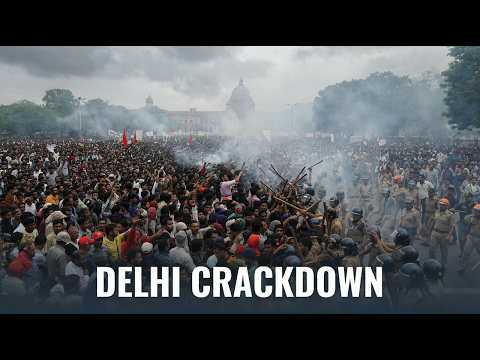


前回のレポートからの変化
3日後
今回
ジャンタル・マンタルで拘束が再び行われたことで、司法上の保護と実際の抗議活動へのアクセスとの隔たりが浮き彫りになる一方、膨大な有権者名簿の除外数には慎重な説明が求められている。
確定したこと
- 抗議取り締まりをめぐる審理は10月15日に再設定された。最終的な法廷侮辱の認定は確認されていない。
インドの若者主導のコックローチ運動は、教育、試験問題の漏えい、汚職をめぐる動員から始まり、その後、選挙制度への異議申し立てへと広がった。いまや、誰に投票権があるのかをめぐる争いは、どこで抗議できるのかという問題と切り離せなくなっている。指導者のサウラヴ・ダスとアシュトシュ・ランカの2人は、2026年10月14日、ニューデリーのジャンタル・マンタルの抗議活動会場に立ち入った後、司法拘禁5日間を命じられた。 56 245
10月12日の報道では、最高裁が適法な移動、交通へのアクセス、平和的集会を保護する指示を出した一方、当局者に週末の取り締まりについて説明を求める法廷侮辱の通知も出したと伝えた。10月13日に予定されていた続報の審理は、V・モハナ判事の体調不良により延期された。当局者には10月14日夕方までに回答するよう求められ、その写しは申立人側の弁護士に送付された。審理は10月15日に移された。この審理の結果は確定していない。 15 237 238
主な事実
新たな拘束であり、有罪判決ではない
時系列を訂正する必要がある。最初の報道では、抗議参加者がジャンタル・マンタルに入った日を10月12日と推定していた。より具体的な報道によると、立ち入りと拘束は10月13日で、警察が会場の集会指定を解除した翌日だった。拘束されたのは14人。ダス、ランカ、同じコックローチ・ジャンタ党の指導者アジンキャ・シンデの3人に加え、ボランティア11人だった。指導者3人にボランティア14人が加わったのではない。警察は、彼らが門またはバリケードを乗り越え、許可なく立ち入ったと主張している。 263 266 248
ダスとランカは10月14日午前約8:30、マンディル・マルグ警察署で特別行政判事のもとに出頭した。判事は司法拘禁5日間を命じ、収容先をティハール刑務所とした。報じられた理由は、釈放すればさらなる違反や他者への扇動につながるおそれがあるという、予想される行動に関するものだった。これは予防的な逮捕と勾留をめぐる手続きであり、刑事裁判を経て有罪が確定したものではない。その後の釈放も、拘禁期間が正確にいつ満了するかも確認されていない。 264 246 243
シンデの立場については報道が食い違っている。マネーコントロールは指導者3人全員が拘禁5日間となったと報じた一方、ヒンドゥスタン・タイムズの10月15日付報道は、3人の党員が収監されたと大まかに伝えた。タイムズ・オブ・インディアの10月14日と15日の人物別報道では、シンデは「保釈保証人を立てて釈放」とされ、ダスとランカは司法拘禁となったと区別されている。命令書の全文がないため、シンデの保釈条件と所在は未解決のままだ。 247 250 246 243
これは拘束の再開であり、週末から途切れず拘束されていたわけではない。先に報じたように、ダスとランカは10月11日、デリー・カントンメントでの手続きの後、アビジート・ディプケとともに釈放された。警察は、₹50,000の保証金と、1年間の平穏維持および善行の条件を説明した。ディプケは、抗議をしないという誓約書への署名を否定した。これはすべての保釈条件を否定したのではなく、より限定的な否定である。新たな事案で3人目の指導者として名前が挙がったのはディプケではなくシンデだ。 163 166 248
最高裁が10月11日に出した指示は、違法な拘束を禁じ、セクション163に基づく規制区域の外での平和的かつ非武装の集会を保護していた。また、公共秩序上の要件に従った適法な移動、通常どおりの地下鉄と鉄道の運行、法令に沿ったインターネットサービス、不当なバリケードの見直し、職務を行う記者と弁護士の保護も求めていた。これらの保護措置があるからといって、すべての拘束が違法になるわけでも、当局が法廷侮辱を犯したことが確定するわけでもない。 15 21
抗議する権利には、実際に使える場所が必要
ジャンタル・マンタルを集会指定地から外したことで、集会の実務的な条件が変わった。警察は代替地を3カ所発表したが、その名称、利用可能性、許可条件は確認されておらず、変更を裏付ける正確な法的根拠も確認されていない。ラフル・ガンディーは10月14日、ジャンタル・マンタルを「取り戻す」と誓った。これは政治的な公約であり、抗議活動の場としての役割を復活させる決定が下されたことを示すものではない。 1 251 268
許可をめぐる問題にも、まだ答えは出ていない。コックローチ・ジャンタ党は10月12日、警察の承認を得た日程を求め、24時間以内に提示されなければ再び抗議を呼びかけると発表した。日程の確定、承認済みの日付、またはこの条件付きの警告が明確に実行されたことは確認されていない。この発表自体は、予定されたデモではなかった。 10
当局は10月12日の野党行進を前に、安全上の理由で地下鉄駅6カ所を閉鎖し、20カ所で交通規制または迂回を発表した。この6駅の閉鎖は新たな規制であり、前週末に影響を受けた45駅とは別のものだった。月曜日に閉鎖された駅の名称、閉鎖期間、再開時刻は確認されていない。裁判所は公共秩序のための適法な規制を認めていたため、閉鎖は遵守状況への疑問を生じさせるものの、それ自体が法廷侮辱を証明するわけではない。 10 72 15
行進の規模も定まっていない。NPRは10月12日、数千人が最高裁に向かって行進したと報じた。ブルームバーグ・テレビジョンの10月13日の報道は、デリー中心部の行進参加者を数百人と表現した。いずれの報道も、推計を整合させる共通の集計範囲を示していない。参加者は、選挙人名簿の特別集中改訂の中止と、ギャンネシュ・クマール中央選挙管理委員長の辞任を求めた。 1 8
報道では野党側の提出物は請願書または覚書と呼ばれているが、正式な登録簿への提出、受理、審理日程への掲載は確認されていない。ガーディアンが報じた国民会議派の説明によると、スーリヤ・カント最高裁長官は面会の申し入れを断り、代表団に司法手続きに進むよう指示したという。面会を断られたことは、選挙をめぐる申し立てを退ける判決ではない。抗議規制をめぐる訴訟も、改訂の有効性についての判決ではない。 1 10 241
巨大な有権者数が示すもの
対立の中心にある数字は、何を示しているのかを明確に区別する必要がある。ImpactMojoの10月14日付「Off the Roll」集計によると、31の州および連邦直轄領で、草案名簿から133,903,307件の名前が除外された。この数字は、最終的に不当に削除された名前が1億3,390万人分あること、資格のある人が重複を除いて排除されたこと、あるいは投じられた票が無効にされ廃棄されたことを示すものではない。これまでの「有権者1億3,000万人以上が名簿から削除された」という説明は、この数字が何を測っているのかを断定しすぎていた。 234 253
この集計には、改訂日や段階が異なるデータが含まれている。10月14日は報告日であり、全国共通の草案公表日ではない。全国合計と、それぞれの個人が一度だけ数えられているかどうかは、独立した再構成によって検証されていない。未回答、転居、死亡、重複登録など、記録された理由は行政上の分類であり、それぞれの除外が正しかったかを独立に検証するものではない。 234 255
この手続きは、当局の説明とリスクの双方を理解する手がかりとなる。投票所レベルの職員が世帯調査票を回収し、返送された票は草案名簿に反映される一方、票が返送されなかった人の名前は名簿から外される。様式6は登録の申請に、様式7は異議申し立てに使われる。選挙管理委員会とナレンドラ・モディ首相率いるインド人民党は不正操作を否定し、改訂は重複登録や資格のない人の名前を除くためだと説明している。野党は、資格のある有権者、とりわけイスラム教徒やその他の少数派が不均衡に排除されていると主張している。不当な排除の総数も、信頼できる人口統計上の内訳も確定していない。 256 7 10
特別な登録復活キャンペーンは10月2日までに報じられており、10月7日の報道では、改訂が完了した20州で、追加のSIR申告を求めず通常の様式6を使って行われると伝えられた。これは重要となりうる救済策だが、登録復活の完了件数は明らかになっていない。申請の道筋が用意されていても、資格のある人が投票に間に合うように登録を回復できたことにはならない。 257 258
フェーズIIの以前の数字は、別のものとして扱わなければならない。4月の報道では、12の管轄区域で総計約72 million件が削除され、20 million件を超える登録が追加され、差し引きで約52 million件減少したとされた。追加登録には、新規登録だけでなく、名前の復活も含まれる可能性がある。これらの数字を10月のより広範な草案上の除外数に加算したり、不当な排除が証明された数として扱ったりすることはできない。 236 230
見出しの数字以外にも、具体的な統治上の懸念がある。インディアン・エクスプレスの調査は、委員のスクビル・シン・サンドゥとヴィヴェク・ジョシが10カ月にわたり記録した意見または異議が14件あったと明らかにした。選挙管理委員会はそれらを提案と呼び、決定は全会一致だったと述べた。内部で懸念が示されていたことと、正式な決定が全会一致だったことは両立しうる。意見書と決定記録の全容が欠けているため、手続き上の疑問は未解決のままだが、それだけで異議のある削除すべてに政治的な指示があったことを証明するものではない。 229 227 233
不明な点
- 週末の拘束者名簿を照合したものも、拘禁施設の人数を検証したものも、依然として存在しない。
- バリケード、サービス、専門職としてのアクセスに関する包括的な遵守は確認されていない。先に報じた記者の現場報告についても、録音時刻は検証されていない。嫌がらせの申し立てについて、新たに裏付けられた認定はない。
今後の展開
- 当局の説明と裁判所の監視によって、交通、通信、平和的集会への実効的かつ適法なアクセスが確保されるかどうか。
この2つの争点には、それぞれ異なる答えが必要だ。選挙をめぐる検証では、誰が不当に排除されたのか、救済策が機能したのかを明らかにしなければならない。市民的自由をめぐる検証では、人々が不当な妨害や拘束を受けずに、適法に手続きへ異議を申し立てられたのかを明らかにしなければならない。書面上の保護措置を指摘するだけでは、どちらの問いにも答えられない。いずれも、その保護措置が必要とする人々に実際に機能しているかどうかにかかっている。
放送時の内容 43行
- On October 12, we reported protest protections. Now two leaders face five days’ custody. India’s confrontation reaches both access to the ballot and the freedom to demonstrate. The unresolved question is whether the court’s protections give protesters usable access while the electoral dispute continues.
- Police removed Jantar Mantar’s designation as a rally venue on October 12. Protesters entered the following day, and police detained 14 people. Saurav Das and Ashutosh Ranka received their custody orders on October 14, with Tihar jail named as their destination.
- The entry and detentions happened on October 13. The earlier October 12 date needs correcting. The group included three Cockroach Janta Party leaders, Das, Ranka and Ajinkya Shinde, alongside 11 volunteers. Police allege they climbed gates or barricades and entered without permission.
- A Special Executive Magistrate at Mandir Marg Police Station ordered Das and Ranka held for five days. The stated concern was that release could lead to further violations and instigation of others. The proceedings concerned preventive detention and anticipated conduct.
- Shinde’s status is disputed. He’s been described both as jailed and as placed under a peace bond. His conditions and whereabouts haven’t been explained. Das and Ranka haven’t been reported released, and the five-day description doesn’t give a confirmed release date.
- Das and Ranka had already been released on October 11, alongside Abhijeet Dipke. That earlier proceeding took place before a magistrate at Delhi Cantonment. Shinde is the third leader named in the new incident. Dipke was the third in the earlier one.
- Police described the earlier release conditions as a 50,000-rupee surety and one year of peace and good behaviour. Dipke denied signing an undertaking not to protest. His denial leaves the separate police account of a peace bond unresolved.
- Opposition supporters marched toward the Supreme Court on October 12 demanding a halt to the voter-roll revision. Crowd estimates range from hundreds in the central-Delhi procession to thousands marching toward the court. There’s no common counting boundary that reconciles them.
- Protesters want Chief Election Commissioner Gyanesh Kumar to resign. Rahul Gandhi described the campaign as a defence of the constitution, while Congress called it a fight against “vote theft.” Opposition leaders sought to put alleged electoral irregularities before the court.
- Congress says Chief Justice Surya Kant declined its request for a meeting and directed the delegation toward judicial proceedings. The electoral allegations await judicial consideration. The court proceedings examining protest restrictions concern a separate issue.
- The Supreme Court’s October 11 directions protected lawful movement and peaceful, unarmed assembly outside restricted areas. They required normal Metro and rail operations, subject to lawful public-order needs, and internet services operating in accordance with law.
- The court also ordered authorities to prevent illegal detention, review barricades and protect journalists and lawyers doing their jobs. Those protections leave room for lawful restrictions. Judges still have to examine whether particular measures crossed the line.
- Authorities closed six Metro stations before Monday’s march and announced traffic restrictions or diversions at 20 locations. Police also announced three alternative rally sites after removing Jantar Mantar’s designation. Whether those alternatives offer protesters usable access still needs explaining.
- The six station closures were a fresh October 12 restriction. Over the preceding weekend, entry and exit restrictions had affected 45 of the Metro’s 303 stations for about 25 hours. Those stations reopened late on October 10, before Sunday’s court hearing.
- Weekend detention estimates ranged from around 2,000 to more than 7,000, without a reconciled roster. More than 20,000 police personnel were deployed in central Delhi. That deployment figure counts officers. It can’t resolve how many protesters were detained.
- The government said most detainees had been released by about six that Saturday evening. That left the status of others unclear. The separate claim of 45 detention centres remains unconfirmed; the established 45-location figure concerns affected Metro stations.
- A separate mobile-internet restriction was scheduled within four kilometres of the Janpath–Kartavya Path crossing. It ran from ten at night on October 9 until the same time on October 10. Its actual reach was disputed.
- The scheduled internet restriction and the district’s assembly restrictions covered different things. There’s no measured larger internet footprint, or confirmed fresh blackout after Sunday’s directions. Developer Rahul Kumar estimated that more than 200 protesters used a Bluetooth mesh messaging app.
- That app passes messages between nearby devices. Kumar’s user estimate hasn’t been independently measured, and it doesn’t show that the app maintained communications throughout the restricted area. Protesters’ practical ability to communicate remains part of the access dispute.
- The youth movement had mobilised by July over education, entrance-examination leaks and corruption. Its demands broadened to electoral reform. Organisers have sustained repeated demonstrations and say they’ll continue until the election chief resigns.
- Researcher Arushi Svasta estimated more than 450 demonstrations across 26 states and union territories since September 23. That estimate, and her description of the protests as peaceful, are disputed. It isn’t a settled national protest count.
- Across 31 states and union territories, the draft-roll tally reaches 133.9 million names. Claims and appeals can change those rolls. How many eligible people ultimately lost their place on the final register remains unknown.
- Earlier descriptions of 130 million people removed from the register overstated what that number tells us. It counts draft-stage omissions across different revision dates. It also remains unclear whether the total counts each person only once. The tally concerns registration entries before voting.
- Bihar’s draft record dates to August 1, 2025. It lists 78.9 million electors before revision and 6,559,626 draft-stage removals. October 14 is the national compilation’s report date. The states didn’t all publish their drafts together.
- Among entries classified by reason, 71.5 percent were marked shifted, absent or other. Another 20.9 percent were marked dead, and 7.6 percent enrolled more than once. Those are administrative labels. Their accuracy hasn’t been checked person by person.
- Those percentages cover reason-classified entries, rather than necessarily the entire national tally. The same compilation estimates that rolls previously covered 98.3 percent of adults in 19 states with population projections. That broad coverage estimate can’t decide any individual’s eligibility.
- Booth-level officers visit households and collect enumeration forms. Returned forms feed the draft roll, while names tied to unreturned forms are left off it. Voters can seek inclusion through Form 6. Form 7 is used for objections.
- The Election Commission and Narendra Modi’s BJP deny manipulation. They say revision removes duplicate and ineligible names, and wrongly deleted voters can re-enrol. Opposition parties allege eligible voters, especially Muslims and other minorities, are being removed to benefit the BJP.
- The number of eligible people wrongly excluded, and a reliable demographic breakdown, remain unresolved. A special inclusion drive was described by October 2. By October 7, it covered 20 states where revision was complete, using ordinary Form 6 without the extra revision declaration.
- The earlier Phase II exercise recorded about 72 million gross deletions and more than 20 million inclusions. Together, those changes produced a net reduction of about 52 million. Some inclusions may have been new enrolments, so they can’t all be counted as restorations.
- That phase began on October 27, 2025, across nine states and three union territories, with roughly 510 million electors. Its net reduction was 10.2 percent. Those figures describe a different stage and geography from October’s national draft tally.
- Uttar Pradesh’s Phase II net reduction was 20.4 million. A narrower category, removals following Form 7 objections and adjudication, totalled 6,316,000 across the phase. West Bengal accounted for 3,315,000 of those removals.
- Adding those measures to the national draft tally would mix different populations and stages. The inclusion drive offers a way back onto the rolls, but nobody has supplied a completed total showing how many eligible voters recovered access in time to vote.
- Inside the Election Commission, two commissioners recorded concerns 14 times over ten months. The Commission called those notes suggestions and said its decisions were unanimous. Recorded disagreement during deliberations can coexist with a formally unanimous final decision.
- Sukhbir Singh Sandhu and Vivek Joshi raised the concerns. The Commission initially didn’t dispute the notes’ existence, dates or contents. It later repeated that revision decisions were unanimous and said proposed digital initiatives would receive further discussion and checks.
- The Commission still faces questions about who changed Form 6 and who filed appeals in West Bengal. It also hasn’t explained why the full Commission didn’t meet from May to August. Those procedural questions remain separate from proving political direction of individual deletions.
- Svasta also cited 2.7 million West Bengal removals and said 90 percent of challengers were restored after the election. Those claims remain disputed, with the relevant dates and population unclear. The separate Form 7 total measures a specifically defined removal category.
- For Uttar Pradesh ahead of its 2027 election, she cited 8.8 million additions and 7.1 million online applications. She said information was unavailable for another 1.7 million additions. Those figures are disputed. Online applications alone don’t capture every possible route onto the rolls.
- Connaught Place reopened on October 12 after a weekend security closure. Traders said customers remained scarce. One complained about wasted time and a declining economy. That describes a trader’s experience; there’s no quantified sales loss attached to it.
- Members of Montreal’s Indian diaspora gathered at Norman Bethune Square in solidarity. They condemned what they called state violence and urged Canada to prioritise human rights in its dealings with India. A Canadian trade mission had been scheduled to begin October 12.
- Organisers in Delhi said they would seek a police-approved date for peaceful protest. Their October 12 warning promised another protest call if no date came within 24 hours. Police haven’t announced an approved date in these developments.
- Gandhi vowed on October 14 to “reclaim” Jantar Mantar. The venue’s protest designation hasn’t been restored. Protesters have judicial protections for lawful assembly, but they’re still confronting new closures, the loss of their established rally venue and renewed detention.
- Justice V. Mohana’s illness delayed the October 13 hearing. Officials received until the evening of October 14 to answer contempt notices, with copies going to petitioners’ lawyers. The court hasn’t issued a final contempt finding. Its follow-up hearing is scheduled for October 15.
情報源
268 件の情報源112 社のメディア13 本の動画2 件の配信記事
India Todayindiatoday.in13
- 最初の報道
- Delhi metro shutdown protest: Supreme Court sees prima facie contempt, seeks replies
- Supreme Court Delhi protests: Keep Metro, internet normal, no illegal detentions
- SIR protests Delhi: CJP widens agitation after release, Supreme Court bars illegal detention
- CJP protest Delhi: Supreme Court warns against illegal detentions, keeps Metro open
- No barricades unless warranted, metro to run normally: SC to govt amid CJP stir
- Peaceful protesters shall not be illegally detained: Supreme Court’s big order amid Delhi protest curbs
- Supreme Court Delhi protests order: No illegal detention, Metro and internet normal
- Supreme Court march: Opposition protests vote theft, seeks Gyanesh Kumar resignation
- Supreme Court Delhi metro protest: contempt plea, habeas petition heard in special sitting
- Delhi metro shutdown protest: Supreme Court sees prima facie contempt, seeks replies
- Supreme Court Special Hearing Live: SC says barricades should be removed across Delhi, internet can't be shut
- Collegium recommends 4 chief justices, senior advocate V Mohana for elevation to Supreme Court
- SC notice to government, Delhi Police and DMRC over protest curbs, detentions
The Times of Indiaindiatimes.com12
- 最初の報道
- From peaceful protests to free movement: 9 directions SC issued amid CJP stir in Delhi | India News
- Another showdown in Delhi? INDIA bloc to hold protest over CEC; CJP gives 24-hour ultimatum - Times of India
- Delhi Jantar Mantar protest: Section 163 in force, 11 Metro stations closed, traffic curbs announced; what commuters need to know - Times of India
- 'No illegal detentions, restore internet, metro services': Supreme Court after Delhi protest crackdown - top quotes | India News
- 'Not for snooping': Solicitor General Tushar Mehta defends Jantar Mantar videography in Delhi high court amid surveillance row | Delhi News
- Govt orders internet shutdown within 4-kilometer radius of Janpath–Kartavya Path ahead of anti-CEC protest - Times of India
- CJP's 'Jantar Mantar 2.0': Delhi Police releases all detainees except party leaders, legal process to follow - Times of India
- Under fire, EC orders special drive to add genuine electors 'left out' during SIR | India News
- Net deletions due to SIR 5.2cr (10%) in 12 states/UTs; 2 crore included in Phase 2 | India News
- Delhi Metro Curbs: Supreme Court Postpones Delhi Metro Hearing Amid Protests, ETGovernment
- Saurav Das, Ashutoh Ranka sent to 5-day custody; if released on bail, they will violate law, instigate others: Court | Delhi News
- 'Obstructed cops, social media instigation': Delhi Police on why CJP leaders were sent to Tihar jail | India News
Hindustan Timeshindustantimes.com11
- 最初の報道
- No illegal detention of protesters in Delhi; metro, internet to run normally: Supreme Court | India News
- Section 163 imposed in parts of New Delhi ahead of CJP's Parliament march: What it means and what's prohibited | India News
- Delhi police register 20 FIRs over Jantar Mantar protest attempts | India News
- 'Asked to call my parents at 3.30 am': Dipke refutes cops’ claim after video shows him refuse offer to return home | India News
- Abhijeet Dipke heads back to village after grandmother's death following release from detention: 'CJP won't back down' | India News
- Contempt plea in SC over Delhi Metro, rail curbs; home secretary, Delhi Police chief named | India News
- Election Commission presents united front in face of mounting criticism | India News
- Judge unwell, Supreme Court defers hearing on Delhi protest crackdown till Thursday | India News
- CJP's Saurav Das, Ashutosh Ranka sent to 5-day judicial custody day after entering Jantar Mantar | India News
- CJP, Congress push to restore protests at Jantar Mantar amid arrest of leaders | India News
- 'Presumption that accused might commit crime': Why court sent Saurav Das, Ashutosh Ranka to 5-day judicial custody | India News
X (formerly Twitter)x.com11
- 最初の報道
- PUBLIC ADVISORY In view of reports of a proposed march to Parliament by CJP on 20.07.2026 (Monday), Delhi Police hereby categorically clarifies that no permission has been sought or granted for any such protest march/procession. Prohibitory order under Section 163 BNSS (erstwhile section 144 CrPC) is in force in the New Delhi District. *Accordingly, protest marches, processions, demonstrations and assemblies of five or more persons are strictly prohibited*, except at the designated protest site at Jantar Mantar, with prior permission. As Parliament session is commencing from 20 July, strict security arrangements are in place to ensure public safety, security of protectees, and the protection of vital government installations. Any person violating these prohibitory orders shall be liable for prosecution under Section 223 BNS and other applicable provisions of law. Delhi Police appeals to all citizens to respect the law, refrain from participating in any unauthorised gathering or marc...
- Fact: https://x.com/OnlyFactIndia/status/2108828267960730105?s=20
- NEW | Scenes from the ground at the CJP protest in Delhi. Video by @Vedaant_Lakhera
- Follow the live updates here: https://thewire.in/rights/jantar-mantar-2-0-live-women-journalists-allege-sexual-harassment-during-protest-aisa-calls-for-citizens-march
- Delhi Police protest row escalates After groping claims, now AI video AI video claims rock Delhi protest One nabbed over fake AI video #DelhiPolice #DelhiProtest #5Live #VivekBhagat | @Sonal_MK
- #Watch | Amid protests in Delhi against CEC and voting rights, Manisha, a protester on the streets of Delhi, questioned how a government can work for the people if it is not formed through their votes. She raised concerns over the electoral process and stressed the importance of protecting people's right to vote. Video: @aniketschauhan1
- Delhi Police detain protesting journalists and YouTubers staging a sit-in. India Today's @aviralhimanshu and Shambhavi Srivastava with more details. #DelhiPolice #Protest #ITVideo @AnjaliPandey #TheBurningQuestion
- BREAKING: #SupremeCourt to hold a special Sunday hearing tomorrow in a contempt plea filed by Shailendra Mani Tripathi against Union Home Secretary Govind Mohan over alleged non-compliance with Supreme Court orders concerning the Delhi protests. A special Bench of Justices Joymalya Bagchi and V Mohana will hear the matter on October 11.
- Justice Joymalya Bagchi (dictating order): Internet facilities shall remain undisturbed, as per law....When we are saying internet facilities shall remain undisturbed, we are not taking away the powers under the Information Technology Act. Smooth movement of people in the city shall not be hindered, shall be permitted in accordance with law. Four, there shall not be illegal detention, save and except by procedure established by law, particularly with regard to assemblage of people beyond the area within which it's imposed.. Assembly shall be permitted in accordance with law, particularly in respect of peaceful assemblage of people beyond the area where Section 163 BNSS is in operation, in accordance with law.
- CJP Stir Fallout: Latest Updates from SC Hearing - Solicitor General Tushar Mehta begins arguments in SC - S-G Tushar Mehta: Lawyers were released around 2 PM - Tushar Mehta: All metro stations are open, operations not restricted - SC to issue notice on contempt plea - Top Court seeks compliance reports
- Bar & Bench has now been informed that lawyers are being released post SCBA and SG Tushar Mehta’s intervention.
Unnamed channel10
- Inside New Delhi’s Crackdown on Protesters
- Delhi Protests Go Viral, Security Forces Carry On Trying to Gag Marchers
- What next as youth storm Delhi | Scroll LIVE
- Decode Full Show: देखिए Decode, Sudhir Chaudhary के साथ; Oct 06, 2026|Episode Today |Congress Vs CJP
- Delhi Jantar Mantar Drama: Journalists, YouTubers Detained Over FIR Demand | CJP Protest 2.0
- Delhi Uptodate News - Playlists
- TV9 Delhi NCR
- Delhi Turns Into a Fortress Ahead of October 10 Protest (MISSION IMPOSSIBLE!) | Jist
- Dilli Unfiltered
- दिल्ली पुलिस की तरफ से SG तुषार मेहता की दलील #delhipolice #tusharmehta #indiatv#breakingnews
The Indian Expressindianexpress.com9
- 最初の報道
- No illegal detention of protesters, allow free movement of people: Supreme Court | Legal News
- Delhi Police Deny Permission for Saturday Protests at Jantar Mantar
- CJP protest in Delhi: 2,000 detained as capital faces lockdown
- ECI responds to commissioners’ objections
- pdf.indianexpress.com
- Anti-CEC protest: Rahul Gandhi vows resistance over SIR, Jantar Mantar
- Jantar Mantar protest: 14 CJP members detained after entering site
- Delhi Protest Live Updates: ‘Tihar is a possibility’, says CJP legal head as Ashutosh Ranka, Saurav Das arrested
- CJP’s Saurav Das, Ashutosh Ranka arrested, sent to 5-day judicial custody for entering Jantar Mantar
business-standard.com7
- SC directs normal Metro, rail services amid Delhi protest petitions | India News - Business Standard
- Railways restores normal services in Delhi, all Metro stations reopened | India News - Business Standard
- Delhi protests: SC says no illegal detention, orders Metro, internet back | India News - Business Standard
- Sonam Wangchuk released, prohibitory orders withdrawn: SG Mehta tells HC | India News - Business Standard
- SC to hear all lawyers in plea over Delhi Metro curbs during CJP protest | India News - Business Standard
- Delhi protests: SC to hear contempt plea against authorities on Sunday | India News - Business Standard
- SIR draft roll exclusions bring electorate to 2015 level, shows data | India News - Business Standard
The Economic Timeseconomictimes.com7
- CJP Protest Live Updates, Day 2: Delhi Police says CJP leaders released on Rs 50,000 surety bond, must maintain peace for one year
- Delhi Metro: Delhi Metro reopens all stations after day-long security restrictions amid CJP protest
- Delhi Metro stations open or closed today: Latest DMRC update on entry and exit gates, interchange facilities amid CJP protest restrictions
- Cockroach Janata Party's protest puts Delhi on high alert, with 25,000 personnel, Metro curbs and internet restrictions
- Delhi protests: SC to pass interim order to ensure normal Metro services, free movement; says will hear all parties
- Internet services to be suspended from tonight in Central Delhi for 24 hours amid CJP’s October 10 Jantar Mantar protest call
- Delhi protests: SC says petitioners seeking contempt action against authorities have made out 'prima-facie' case
Bloomberg Television6動画6本
- 最初の報道
- India Courts Global Investment Amid Escalating Protest Crackdown · 動画
- Chip Selloff bleeds into Asia · 動画
- Saudi Airport Attacks Raise Stakes for Regional Conflict · 動画
- India's Cockroach Janta Party Renews Call for Poll Body Chief to Quit · 動画
- China Reaches Deal with EU on Hybrid Car Shipments · 動画
- Trump Claims Russia-Ukraine Agree to ‘Energy’ Truce, Houthi Attacks on Saudi Airports Escalate · 動画
mintlivemint.com6
- 最初の報道
- Delhi Protests: SC issues contempt notice over alleged October 9 order breach, illegal detention of protesters | Today News
- Delhi Metro update: DMRC says entry and exit of all stations now open amid protest against CEC Gyanesh Kumar | Today News
- CJP protest 2.0: Supreme Court holds special Sunday sitting to hear contempt plea, detentions — All you need to know | Today News
- CJP October 10 Delhi protest news: Internet to be suspended in 4-km radius of Janpath-Kartvya Path starting 10 pm Friday | Today News
- CJP protests: Why were the Supreme Court lawyers released by Delhi Police? Here's what CJI Surya Kant said | Today News
- ‘Jantar Mantar belongs to people of India’: Rahul Gandhi vows to 'reclaim' protest site | Today News
TimesNowtimesnownews.com6
- 最初の報道
- Section 163 BNSS Explained: Can Delhi Police Ban The CJP Protest In New Delhi? | Times Now
- Delhi Metro Reopens 45 Stations After 25-Hour Closure Amid Anti-CEC Protests | Times Now
- ‘What Is The Rationale?’ SC Questions 45 Shut Delhi Metro Stations, Seeks Immediate Internet Restoration | Times Now
- 'Oct 10 Will Go Down As Beginning of End Of This Dictatorship': Abhijeet Dipke Warns Govt | Times Now
- Mobile Internet Suspended Within 4-Km Radius Of Janpath-Kartavya Path Crossing For 24 Hours | Times Now
- When Justice Mohana Traced Her Journey From A ‘Barsati’ In Karolbagh To Supreme Court Judgeship | Times Now
Bar and Benchbarandbench.com5
- 最初の報道
- India's Supreme Court orders Delhi to stop illegal detentions after crackdown on protests against election chief
- CJP protest crackdown, detentions: Live updates from Supreme Court's Sunday hearing
- BREAKING: Prima facie contempt case made out over Delhi Metro restrictions during protests, says Supreme Court
- Delhi CJP protest: Detained lawyers released after SCBA, SG intervene
- Delhi court sends CJP's Saurav Das, Ashutosh Ranka, Ajinkya Shinde to judicial custody for 5 days
Live Lawlivelaw.in5
- 最初の報道
- CEC Protest: Supreme Court Directs No Illegal Detention Of Peaceful Protesters, Normal Metro & Rail Services, Free Movement, Undisturbed Internet
- 'Prima Facie Case Made Out' : Supreme Court Issues Notice To Authorities In Contempt Plea Over Metro Closure For October 10 Protests
- Supreme Court Sunday Hearing Against Detentions & Curbs During Delhi Protests [Live Updates]
- www.livelaw.in
- Supreme Court Dismisses Plea Seeking Hindi As Official Language Of Apex Court
The Tribunetribuneindia.com5
- 最初の報道
- 11 layers of barricades turn Jantar Mantar into fortress
- SC issues contempt notice to Union Home Secretary, Delhi Police chief and DMRC chairperson over 'violation' of order
- SC issues contempt notice to Centre, Delhi Police chief over violating its directions on railway curbs
- Contempt pleas against clampdown in Delhi: SC says will hear all parties, ensure no inconvenience
- 14 CJP members detained after ‘trespass’ at Jantar Mantar; Das, Ranka sent to judicial custody
ABP Live Englishabplive.com4
- 最初の報道
- Remove Barricades, No Illegal Detentions, Undisturbed Internet: SC Orders Amid CJP Protest
- EXPLAINED: जंतर-मंतर, राम लीला मैदान समेत कहीं भी दिल्ली में प्रोटेस्ट करने के क्या हैं नियम, जानिए कानून | EXPLAINED Rules For Protesting Anywhere In Delhi Including Jantar Mantar And Ramlila Maidan Know The Law
- Abhijeet Dipke, Saurav Das And Ashutosh Ranka Must Furnish Rs 50,000 Bond: Court
- ‘CJP Will Hit The Streets Again’: Dipke Says He Hasn’t Signed Bond
news18.com4
- ‘Delhi Metros, Trains Should Run Until…’: SC’s Directives On Internet, Barricades & Detentions After Saturday's Curbs | India News - News18
- No Supporter To Receive Abhijeet Dipke, Ashutosh Ranka & Saurav Das: ‘No Gatherings’ Clause To Hurt CJP? | India News - News18
- Protests in Delhi: SC passes slew of directions, directs no illegal detention | Agency-feeds News - News18
- ‘13.39 Crore Voters Deleted Through SIR’: EC Responds To Oppn’s Claim, Says Those Eligible Can Get Name Added
Rediffrediff.com4
- 最初の報道
- CJP to continue stir, alleges 'emergency-like situation'
- CJP stir: Ensure Metro, Internet; no illegal detentions, SC tells Centre - Rediff.com India News
- Contempt plea in SC against security clampdown in Delhi - Rediff.com India News
- SC grants more time to Centre on Delhi protest petitions - Rediff.com India News
SIR analysis for Indiaofftheroll.in4
The Hinduthehindu.com4
- 最初の報道
- SC mandates free movement, no illegal detentions, ‘subject to public order’
- Cockroach Janta Party and the Return of Street Politics - Frontline
- Consolidated voters’ list of 9 States and 3 UTs that underwent SIR Phase II trimmed by 10.2%
- CJP leaders Saurav Das, Ashutosh Ranka among 14 detained, booked after Jantar Mantar protest; FIRs over INDIA bloc march
The Wirethewire.in4
- 最初の報道
- 'We're an Electoral Autocracy': Meet the Cockroaches at the First Cockroach Janta Party Protest
- Order 'Unpublished' in Yet Another Internet Shutdown, This Time 4-Kms Around Jantar Mantar
- Supreme Court Issues Contempt Notice Over Curbs in Delhi, Arrest of Leaders During Anti-SIR Protest
- Significant Net Addition, Cloud Over Appeals: Five Points Emerge From the Uttar Pradesh SIR's Final Figures
moneycontrol.com3
- Contempt petition filed in Supreme Court alleges 45 metro stations shut and rail curbs despite court order, seeks action against officials
- Who is V Mohana? First-gen lawyer in women permanent commission army case, to become second woman elevated to SC
- CJP leaders sent to 5-day judicial custody for trespassing at Jantar Mantar- Moneycontrol
Supreme Court Observerscobserver.in3
The New Indian Expressnewindianexpress.com3
- 最初の報道
- Delhi Protests: SC bars illegal detention, orders barricade removal, restoration of internet services
- Delhi Protest: SC bars illegal detention, orders barricade removal, restoration of internet services
- LIVE | Delhi Protest Day 2: Police continue to detain protesters even as SC bars illegal detention; Dipke says 'haven't signed any bonds'
The Statesmanthestatesman.com3
- 最初の報道
- 'Won't back down': Abhijit Dipke's defiant message after release as he heads home following grandmother's death
- CJP's Abhijit Dipke, Das and Ranka released on Rs 50,000 bond; must maintain 'good behaviour' for a year
- Delhi Metro shutdown: Supreme Court plea seeks contempt action against Home Secretary, police chief, DMRC chairperson
FRANCE 24 English2動画2本
Free Press Journalfreepressjournal.in2
SCC Timesscconline.com2
ANI Newsaninews.in1
Associated Press1動画1本
BareLaw.inbarelaw.in1
BBC Newsbbc.co.uk1
Bhaskar Englishbhaskarenglish.in1
Business Todaybusinesstoday.in1
Business Upturnbusinessupturn.com1
BusinessLinethehindubusinessline.com1
Cityairnewscityairnews.com1
CNBCTV18cnbctv18.com1
Daily Times Of Bangladeshtob.news1
Dainik Jagran Englishdainikjagranmpcg.com1
Deccan Heralddeccanherald.com1
DNA Indiadnaindia.com1
Dynamite Newsdynamitenews.com1
Fact Netfact.net.in1
Global News1動画1本
Ground Newsground.news1
HashFamehashfame.com1
HT Syndicationhtsyndication.com1
India Gazetteindiagazette.com1
India Legalindialegallive.com1
India's Newsindiasnews.net1
KalingaTVkalingatv.com1
Law Trend - Legal News Networklawtrend.in1
Mathrubhumi Englishmathrubhumi.com1
MillenniumPostmillenniumpost.in1
National Heraldnationalheraldindia.com1
News Today | First with the newsnewstodaynet.com1
NHK WORLD-JAPAN1動画1本
Northeast Livenortheastlivetv.com1
OdishaBytesodishabytes.com1
Pratidinpratidintime.com1
Punjab News Expresspunjabnewsexpress.com1
Republic Worldrepublicworld.com1
s3waas.gov.in1
SBS News1動画1本
The Business Standardtbsnews.net1
The Hans Indiathehansindia.com1
The Independent1動画1本
The Manila Timesmanilatimes.net1
The News Millthenewsmill.com1
TheNews21thenews21.com1
wikipedia.org1
- 最初の報道
- V. Mohana - Wikipedia
Yes Punjab Newsyespunjab.com1
情報源マップ
この報道の根拠をたどります。マップで情報のつながりを確認し、下のリンクから記事で引用された情報源を開けます。
記事を読む間に情報源マップを読み込みます。
翻訳更新:
改訂履歴
- r1初公開。