司法 · デリーの抗議規制継続報道 · 全3件中3件目のレポート
デリーの地下鉄は再開した。それでも最高裁は説明を求めている。
地下鉄へのアクセスは日曜日の審理前に再開した。裁判所の介入が問うのは別の点だ。規制は適法だったのか、そして先の命令は守られたのか。
原語の動画

文字起こし · 読み込み中
英語の原文から翻訳されています。
継続報道85日目
3 件のレポート104 社のメディア234 件の情報源3 本の動画
ニュースの全体- 日付のある出来事はまだありません


前回のレポートからの変化
82日後
前回
試験問題漏えい156件、「有罪判決ゼロ」:学生の蜂起はいかに首相公邸前へ押し寄せたのか当時の未解明点
- もみ合いの際にガンディーが負った負傷の有無と詳細。報道では激しい口論と、ガンディー自身が言及したパンチについて伝えられているが、出血や具体的な傷を独自に確認した報道機関はない。
- 7月20日の警棒攻撃による被害者数(負傷者、拘束者)の詳細。野党関係者は数字を挙げているが、提示された報道はその内訳を示していない。
- 拘束された人々がその後、どの施設(競技場、警察署など)を経由して手続きされたのかという正確な経路。
注視するとしていた点
- CJPと連携する野党の攻勢による政治的圧力を、教育相と内相が乗り切れるかどうか。
- 7月22日の議会機能停止後、議会がどのように再開するのか、またCJPの要求が正式に議論されるかどうか。
- 次のCJPデモに対する政府の対応が、政治危機の引き金となった警棒攻撃の手法から転換するかどうか。
今回
地下鉄へのアクセスは日曜日の審理前に再開した。裁判所の介入が問うのは別の点だ。規制は適法だったのか、そして先の命令は守られたのか。
デリーの地下鉄の改札がすでに再開していたのなら、なぜインド最高裁は日曜日に特別審理を開く必要があったのか。
駅の再開は、駅を閉鎖したことが裁判所命令に違反したかどうかの答えにはならない。抗議参加者を釈放したことも、拘束が適法だったと証明するものではない。2026年10月11日、最高裁はデリーの抗議弾圧に介入し、適法な移動、平和的な集会、職務上のアクセスを守るとともに、以前の交通に関する指示の後に課された規制について、3人の上級当局者に説明を求めた。差し迫った混乱は一部収束していたが、責任を問う手続きは終わっていなかった。 1 135
ジョイマリヤ・バグチ判事とV・モハナ判事は、ゴビンド・モハン連邦内務次官、アヌラーグ・クマール・デリー警察長官、D・タラ・デリー・メトロ鉄道公社会長に法廷侮辱の通知を出した。法廷が認めたのは手続きを進める一応の根拠であり、回答を求めるのに十分な初期的理由という意味であって、いずれかの当局者が法廷侮辱を行ったとの最終認定ではない。弁護士のシャイレンドラ・マニ・トリパティ氏は、地下鉄と鉄道の全面運休を禁じた10月9日の指示に従わなかったとの申し立てをめぐり、請願を提出した。 133 135
当局者は、法廷侮辱事件と関連する拘束案件が次回審理に付される10月13日までに、反論宣誓供述書と、先の命令への対応を扱う遵守報告書を提出しなければならない。現時点では、本人の出廷は免除されている。期限までに求められているのは、すべて正常だという新たな説明だけではなく、記録に裏付けられた説明だ。 136 133
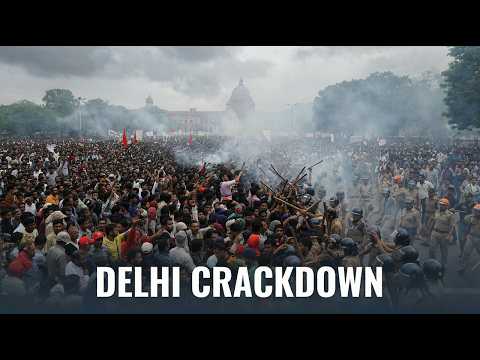
衝突は、コックローチ・ジャンタ党がギャネシュ・クマール選挙管理委員長の辞任を求め、選挙人名簿の特別集中改訂に反対したことをめぐって起きた。同党によるジャンタル・マンタルでの集会は許可されなかった。こうした要求は抗議の背景を説明するものだが、裁判所の介入は選挙不正を認定したものでも、有権者名簿をめぐる争いを判断したものでもない。 14 48
列車が走っていても駅が開いているとは限らない
主な事実
交通をめぐる争点は、公式発表の表現によって見えにくくなりがちな違いにある。列車が運行していても、乗客が駅に入れないことはある。トゥシャール・メータ法務長官は、運行本数を減らすことなく、列車は時刻表どおりに運行したと主張した。しかし、ネットワーク全体303駅のうち45駅で出入りが規制されており、約7分の1に当たる。これは相当なアクセス制限だったが、すべての列車が止まった、あるいはネットワーク全体が閉鎖されたことを示すものではない。 1 12
10月9日の当初の請願が対象としていたのは規制を検討中の57駅で、実際に規制されたのは45駅だった。駅への出入り制限は、10月9日金曜日の午後9時ごろに始まった。当初発表された土曜日午後6時ごろの終了予定は午後10時まで延長され、規制時間は約25時間となった。時刻はいずれもインド標準時。 161 58 64
デリー・メトロは土曜夜、全駅の出入口が開き、影響を受けた乗換施設も利用可能になったと発表した。メータ氏は裁判所に対し、午後10時ごろまでに全駅が再開し、インターネットサービスもその夜に復旧したと述べた。したがって、再開は日曜日の審理より前であり、日曜日の指示によって初めて実現した成果とは言えない。 57 1
公共の秩序を乱すおそれがある場合に憲法第19条第2項に基づいて規制を課す必要が生じない限り、地下鉄および鉄道施設は通常どおり運営されなければならない。
この留保は重要だ。法廷は通常運行を求めつつ、明示された公共秩序上の例外を維持した。将来のあらゆる規制を禁じたわけではない。同様に、例外があることだけで、10月9日以降の規制が裁判所の指示に従っていたかどうかが決まるわけでもない。これこそ、当局者が法廷侮辱の手続きで説明を求められている点だ。
保護の対象は抗議活動にとどまらない
裁判所は、法律と交通規則に従った自由で円滑な移動を求め、バリケードの即時見直しを命じた。正当な治安維持や交通上の必要性がない場所では、障害物を撤去しなければならない。これはデリーのバリケードがすべて違法だとの宣言ではなく、必要な規制と正当化できない通行妨害を区別するよう求めたものだ。 1 30
拘束に関する指示も、適法な手続きを維持するものだ。これらは、バーラティヤ・ナガリク・スラクシャ・サンヒター(BNSS)第163条が施行されている区域の外で、平和的かつ非武装の集会を行う権利を明確に保護する。第163条は、旧刑事訴訟法の第144条を引き継いだ集会規制権限だ。この指示は、有効な規制を無視することを認めるものでも、以前の拘束がすべて違法だったと認定するものでもない。 7 50
第163条による規制はニューデリー地区に適用された。モバイルインターネットの停止は別の措置で、ジャナパト通りとカルタヴィヤ・パトの交差点を中心とする半径4キロメートルの範囲を対象に、10月9日午後10時から10月10日午後10時まで実施される予定だった。この範囲は、集会規制の認証済み境界ではない。通信サービスの停止と地区の禁止命令は、法的根拠も適用範囲も異なっていた。 12 164
裁判所は、情報技術法に基づく権限を明示的に留保したうえで、法律に従ってインターネットサービスを妨げてはならないと述べた。弁護士とジャーナリストが職務を遂行するのを妨害してはならない。最高裁自体の近くに第163条に関する掲示が残っている場合は撤去するよう命じ、司法へのアクセスを守った。 113 4
釈放されても適法性は決着しない
メータ氏は、人身保護を求める申し立ての対象者――拘束された人の出廷または釈放を求める申し立て――の大半はすでに釈放されたと述べた。同氏によれば、10月10日午後2時ごろに連行された人々は午後6時ごろに釈放された。これは土曜日の釈放状況に関する説明であり、日曜日に新たな期限が設けられたわけではない。政府側は、これにより多くの人身保護請求はもはや維持できないと主張した。しかし、入手できる説明には釈放者の完全な名簿も、なお拘束されている人数も示されていない。 11 33
規模は依然として未確定だ。『バー・アンド・ベンチ』は、請願者やメディアによる7,000人超の拘束と45か所の拘束施設という主張を報じたが、どちらの数字も検証されていない。『インディアン・エクスプレス』は約2,000人との数字を報じた。集計時点、定義、集計方法がそろっていないため、監査可能な合計にまとめたり、釈放率の計算に使ったりすることはできない。また、拘束施設とされる45か所は、影響を受けた45の地下鉄駅とはまったく別のものだ。 1 139
市民司法プロジェクト(CJP)の指導者3人については、具体的な釈放が確認されている。アビジート・ディプケ(Abhijit Dipkeとも表記)、サウラヴ・ダス、アシュトシュ・ランカは、デリー・カントンメントの特別行政判事のもとに出頭した後、10月11日に釈放された。3人の釈放は予防的手続きを通じたものであり、最高裁が3人を名指しで釈放したことを示すものではない。警察は、5万ルピーの保証金と、1年間にわたり平穏と善行を保つ義務があったと説明した。CJPの法務責任者ラトナ・シン氏も、1年間の平穏維持条件を確認した。 131 149 19
ディプケ氏は「抗議しない」という誓約書に署名したことを否定し、運動は「再び街頭に繰り出す」と述べた。平穏を保つ条件と、決して抗議しないとの約束は同じではないため、この否定だけで釈放時の保証に関する警察の説明と矛盾するわけではない。CJPが抗議運動を拡大する意向を示したことは、発表された計画であって、予定された抗議活動が実際に行われた証拠ではない。 152 14
現場での困難は、『インディペンデント』の取材報告に描かれている。同紙の記者は、警察が抗議参加者を拘束し、1人ずつ選んでいるように見えたこと、また、許可された側のバリケードにいたにもかかわらず、記者らを押し戻したことを記した。記者によれば、6つか7つのバリケードを通り、その後さらに1キロメートル歩いた。道沿いには閉店した店が並び、インターネットも使えなかった。これらの観察内容は独立に確認されていない。 2
重要なのは、映像が10月11日に公開されたからといって、撮影時期が分かるわけではないことだ。映像は、命令後の不服従を証明することも、土曜夜に発表された復旧を直接否定することもできない。日曜日の他の報道は拘束や妨害が続いたと伝え、人民党(RJD)の国会議員マノジ・クマール・ジャー氏の請願は、女性の抗議参加者に対するセクハラの疑いを提起した。入手できる記録からは、これらの出来事について特定の裁判所判断が下されたことは確認できない。 2 28 11
これは、ヘイデイ・ニュースが以前から報じてきた市民的自由をめぐる状況の続きだ。2026年7月20日、私たちは、学生主導の国会行進が許可されなかった後、デリー警察が第163条を適用し、警棒での殴打を行ったと報じた。7月22日には、説明責任を求めて7月21日に座り込みを行った後、ラフル・ガンディー氏が拘束されたと報じた。これらは以前の衝突であり、10月の拘束者数ではない。今回新たなのは、日曜日の司法介入と、10月9日の命令への対応について当局者に説明を求めたことだ。
放送時の内容 29行
- On July 20, we reported baton charges. Now the Supreme Court demands answers. Its intervention protects commuters, peaceful protesters and the professionals trying to reach them, while requiring three senior officials to explain transport restrictions.
- What has actually reopened, and what must authorities still explain?
- India's Supreme Court held a special Sunday hearing on October 11. It ordered lawful freedom of movement and protection against illegal detention after the crackdown on the Cockroach Janta Party's protest.
- The July events were an earlier confrontation. On July 22, we reported Rahul Gandhi's detention after his July 21 sit-in demanding accountability. The October intervention concerns fresh restrictions and whether authorities obeyed an earlier court order.
- Justices Joymalya Bagchi and V. Mohana required authorities to review barricades immediately. Barriers must come down wherever legitimate law-and-order or traffic needs don't justify them. People must be allowed to move freely within the law and traffic rules.
- The court specifically protected peaceful, unarmed assemblies outside areas covered by Section 163. That's the assembly-restriction power in India's criminal procedure law that replaced Section 144. Detentions must follow lawful procedure, and individual detentions still face examination.
- Lawyers and journalists must be allowed to do their jobs. The court also required internet access within the law, while retaining Information Technology Act powers. Any Section 163 notice board still near the Supreme Court must be removed.
- Those protections reach beyond the protest itself. A detained person needs access to legal help. Reporters need to move and communicate to scrutinize police conduct.
- The Cockroach Janta Party demanded Chief Election Commissioner Gyanesh Kumar's resignation. It also opposed Special Intensive Revision, the exercise revising electoral rolls. Police denied permission for its Jantar Mantar gathering. The court's intervention leaves that electoral dispute undecided.
- Authorities imposed assembly restrictions across New Delhi district. Separately, the mobile-internet suspension covered a four-kilometre radius around the Janpath–Kartavya Path crossing. That suspension used telecommunications powers, with a different geographic scope and legal basis.
- The mobile-internet suspension was scheduled from 10 p.m. October 9 until 10 p.m. October 10. Petitioners alleged that police also detained people beyond the area covered by the assembly restrictions.
- The court issued contempt notices to Union Home Secretary Govind Mohan, Delhi Police Commissioner Anurag Kumar and Metro chairperson D. Thara. It found enough initial grounds to proceed. The judges haven't yet decided whether any official committed contempt.
- Advocate Shailendra Mani Tripathi brought the contempt petition. It concerns alleged defiance of the October 9 direction against a complete prohibition on Metro and railway services ahead of the protest.
- The earlier petition contemplated restrictions at 57 stations. Authorities implemented entry and exit restrictions at 45 of 303 stations, about one in seven. The government says trains kept running to schedule. Passengers could still lose access even while trains operated.
- The station restrictions lasted about 25 hours, from Friday evening into Saturday night. Authorities extended the announced Saturday end from 6 p.m. to 10 p.m. The reopening came before Sunday's hearing, but the earlier restrictions still face judicial scrutiny.
- Delhi Metro announced that every station's entry and exit gates were open, and affected interchange facilities were available. Solicitor General Tushar Mehta told the court internet service had also been restored that night.
- The judges required normal Metro and rail services, with an exception for necessary public-order regulation. Authorities must justify restrictions within that legal framework. Reopening the gates doesn't resolve whether they complied with the October 9 direction.
- Mehta said most people covered by the detention challenges had already been released. He described people picked up around 2 p.m. and freed around 6 p.m. on October 10, the Saturday before the hearing.
- The government argued that many requests to produce or free detainees consequently no longer survived. Release can resolve someone's immediate custody, but the legality of that detention can still be examined.
- Petitioners claim more than 7,000 detentions. Other estimates put the count around or above 2,000. The counting methods aren't clear, and officials haven't supplied a reconciled total. Petitioners also allege 45 detention centres, a figure nobody has confirmed.
- The alleged detention-centre count happens to match the 45 affected Metro stations. They're separate measures. The station count gives no support to the facility allegation.
- Three CJP leaders did leave custody on October 11. Abhijeet Dipke, Saurav Das and Ashutosh Ranka were released after appearing before the Special Executive Magistrate at Delhi Cantonment through preventive proceedings.
- Police described a 50,000-rupee surety bond and a requirement to maintain peace and good behaviour for one year. CJP legal head Ratna Singh also confirmed the one-year peace condition.
- Dipke denied signing an undertaking that said they wouldn't protest. He said the movement would hit the streets again. His objection concerned a pledge to stop protesting, while police described a peace condition. CJP announced plans to widen the agitation nationally.
- Police allegedly detained protesters one by one and pushed journalists back despite their being on a barricade's permitted side. Those scenes haven't been dated, so they can't show whether police breached Sunday's directions.
- Shops were reportedly closed, and internet wasn't working. The described route involved six or seven barricades, followed by another kilometre on foot. The timing also prevents those observations from directly contradicting Saturday night's restoration announcements.
- RJD lawmaker Manoj Kumar Jha alleged sexual harassment of women protesters in a petition. Other allegations concern continued detentions and obstruction. The court hasn't made specific findings on those incidents.
- Metro gates and interchanges were officially announced open before the hearing. The government says internet service and most detainees' freedom had also been restored. Whether people consistently regained those freedoms in practice, and whether police completed the barricade review, still needs an account from authorities.
- The three officials must file their responses and a compliance report by October 13. The contempt case and connected detention proceedings return to court that day. For now, the judges have excused the officials from appearing personally.
情報源
212 件の情報源100 社のメディア1 本の動画2 件の配信記事
India Todayindiatoday.in13
- 最初の報道
- Delhi metro shutdown protest: Supreme Court sees prima facie contempt, seeks replies
- Supreme Court Delhi protests: Keep Metro, internet normal, no illegal detentions
- SIR protests Delhi: CJP widens agitation after release, Supreme Court bars illegal detention
- CJP protest Delhi: Supreme Court warns against illegal detentions, keeps Metro open
- No barricades unless warranted, metro to run normally: SC to govt amid CJP stir
- Peaceful protesters shall not be illegally detained: Supreme Court’s big order amid Delhi protest curbs
- Supreme Court Delhi protests order: No illegal detention, Metro and internet normal
- Supreme Court march: Opposition protests vote theft, seeks Gyanesh Kumar resignation
- Supreme Court Delhi metro protest: contempt plea, habeas petition heard in special sitting
- Delhi metro shutdown protest: Supreme Court sees prima facie contempt, seeks replies
- Supreme Court Special Hearing Live: SC says barricades should be removed across Delhi, internet can't be shut
- Collegium recommends 4 chief justices, senior advocate V Mohana for elevation to Supreme Court
- SC notice to government, Delhi Police and DMRC over protest curbs, detentions
X (formerly Twitter)x.com11
- 最初の報道
- PUBLIC ADVISORY In view of reports of a proposed march to Parliament by CJP on 20.07.2026 (Monday), Delhi Police hereby categorically clarifies that no permission has been sought or granted for any such protest march/procession. Prohibitory order under Section 163 BNSS (erstwhile section 144 CrPC) is in force in the New Delhi District. *Accordingly, protest marches, processions, demonstrations and assemblies of five or more persons are strictly prohibited*, except at the designated protest site at Jantar Mantar, with prior permission. As Parliament session is commencing from 20 July, strict security arrangements are in place to ensure public safety, security of protectees, and the protection of vital government installations. Any person violating these prohibitory orders shall be liable for prosecution under Section 223 BNS and other applicable provisions of law. Delhi Police appeals to all citizens to respect the law, refrain from participating in any unauthorised gathering or marc...
- Fact: https://x.com/OnlyFactIndia/status/2108828267960730105?s=20
- NEW | Scenes from the ground at the CJP protest in Delhi. Video by @Vedaant_Lakhera
- Follow the live updates here: https://thewire.in/rights/jantar-mantar-2-0-live-women-journalists-allege-sexual-harassment-during-protest-aisa-calls-for-citizens-march
- Delhi Police protest row escalates After groping claims, now AI video AI video claims rock Delhi protest One nabbed over fake AI video #DelhiPolice #DelhiProtest #5Live #VivekBhagat | @Sonal_MK
- #Watch | Amid protests in Delhi against CEC and voting rights, Manisha, a protester on the streets of Delhi, questioned how a government can work for the people if it is not formed through their votes. She raised concerns over the electoral process and stressed the importance of protecting people's right to vote. Video: @aniketschauhan1
- Delhi Police detain protesting journalists and YouTubers staging a sit-in. India Today's @aviralhimanshu and Shambhavi Srivastava with more details. #DelhiPolice #Protest #ITVideo @AnjaliPandey #TheBurningQuestion
- BREAKING: #SupremeCourt to hold a special Sunday hearing tomorrow in a contempt plea filed by Shailendra Mani Tripathi against Union Home Secretary Govind Mohan over alleged non-compliance with Supreme Court orders concerning the Delhi protests. A special Bench of Justices Joymalya Bagchi and V Mohana will hear the matter on October 11.
- Justice Joymalya Bagchi (dictating order): Internet facilities shall remain undisturbed, as per law....When we are saying internet facilities shall remain undisturbed, we are not taking away the powers under the Information Technology Act. Smooth movement of people in the city shall not be hindered, shall be permitted in accordance with law. Four, there shall not be illegal detention, save and except by procedure established by law, particularly with regard to assemblage of people beyond the area within which it's imposed.. Assembly shall be permitted in accordance with law, particularly in respect of peaceful assemblage of people beyond the area where Section 163 BNSS is in operation, in accordance with law.
- CJP Stir Fallout: Latest Updates from SC Hearing - Solicitor General Tushar Mehta begins arguments in SC - S-G Tushar Mehta: Lawyers were released around 2 PM - Tushar Mehta: All metro stations are open, operations not restricted - SC to issue notice on contempt plea - Top Court seeks compliance reports
- Bar & Bench has now been informed that lawyers are being released post SCBA and SG Tushar Mehta’s intervention.
Unnamed channel10
- Inside New Delhi’s Crackdown on Protesters
- Delhi Protests Go Viral, Security Forces Carry On Trying to Gag Marchers
- What next as youth storm Delhi | Scroll LIVE
- Decode Full Show: देखिए Decode, Sudhir Chaudhary के साथ; Oct 06, 2026|Episode Today |Congress Vs CJP
- Delhi Jantar Mantar Drama: Journalists, YouTubers Detained Over FIR Demand | CJP Protest 2.0
- Delhi Uptodate News - Playlists
- TV9 Delhi NCR
- Delhi Turns Into a Fortress Ahead of October 10 Protest (MISSION IMPOSSIBLE!) | Jist
- Dilli Unfiltered
- दिल्ली पुलिस की तरफ से SG तुषार मेहता की दलील #delhipolice #tusharmehta #indiatv#breakingnews
The Economic Timeseconomictimes.com7
- CJP Protest Live Updates, Day 2: Delhi Police says CJP leaders released on Rs 50,000 surety bond, must maintain peace for one year
- Delhi Metro: Delhi Metro reopens all stations after day-long security restrictions amid CJP protest
- Delhi Metro stations open or closed today: Latest DMRC update on entry and exit gates, interchange facilities amid CJP protest restrictions
- Cockroach Janata Party's protest puts Delhi on high alert, with 25,000 personnel, Metro curbs and internet restrictions
- Delhi protests: SC to pass interim order to ensure normal Metro services, free movement; says will hear all parties
- Internet services to be suspended from tonight in Central Delhi for 24 hours amid CJP’s October 10 Jantar Mantar protest call
- Delhi protests: SC says petitioners seeking contempt action against authorities have made out 'prima-facie' case
The Times of Indiaindiatimes.com7
- 最初の報道
- From peaceful protests to free movement: 9 directions SC issued amid CJP stir in Delhi | India News
- Another showdown in Delhi? INDIA bloc to hold protest over CEC; CJP gives 24-hour ultimatum - Times of India
- Delhi Jantar Mantar protest: Section 163 in force, 11 Metro stations closed, traffic curbs announced; what commuters need to know - Times of India
- 'No illegal detentions, restore internet, metro services': Supreme Court after Delhi protest crackdown - top quotes | India News
- 'Not for snooping': Solicitor General Tushar Mehta defends Jantar Mantar videography in Delhi high court amid surveillance row | Delhi News
- Govt orders internet shutdown within 4-kilometer radius of Janpath–Kartavya Path ahead of anti-CEC protest - Times of India
- CJP's 'Jantar Mantar 2.0': Delhi Police releases all detainees except party leaders, legal process to follow - Times of India
business-standard.com6
- SC directs normal Metro, rail services amid Delhi protest petitions | India News - Business Standard
- Railways restores normal services in Delhi, all Metro stations reopened | India News - Business Standard
- Delhi protests: SC says no illegal detention, orders Metro, internet back | India News - Business Standard
- Sonam Wangchuk released, prohibitory orders withdrawn: SG Mehta tells HC | India News - Business Standard
- SC to hear all lawyers in plea over Delhi Metro curbs during CJP protest | India News - Business Standard
- Delhi protests: SC to hear contempt plea against authorities on Sunday | India News - Business Standard
Hindustan Timeshindustantimes.com6
- 最初の報道
- No illegal detention of protesters in Delhi; metro, internet to run normally: Supreme Court | India News
- Section 163 imposed in parts of New Delhi ahead of CJP's Parliament march: What it means and what's prohibited | India News
- Delhi police register 20 FIRs over Jantar Mantar protest attempts | India News
- 'Asked to call my parents at 3.30 am': Dipke refutes cops’ claim after video shows him refuse offer to return home | India News
- Abhijeet Dipke heads back to village after grandmother's death following release from detention: 'CJP won't back down' | India News
- Contempt plea in SC over Delhi Metro, rail curbs; home secretary, Delhi Police chief named | India News
TimesNowtimesnownews.com6
- 最初の報道
- Section 163 BNSS Explained: Can Delhi Police Ban The CJP Protest In New Delhi? | Times Now
- Delhi Metro Reopens 45 Stations After 25-Hour Closure Amid Anti-CEC Protests | Times Now
- ‘What Is The Rationale?’ SC Questions 45 Shut Delhi Metro Stations, Seeks Immediate Internet Restoration | Times Now
- 'Oct 10 Will Go Down As Beginning of End Of This Dictatorship': Abhijeet Dipke Warns Govt | Times Now
- Mobile Internet Suspended Within 4-Km Radius Of Janpath-Kartavya Path Crossing For 24 Hours | Times Now
- When Justice Mohana Traced Her Journey From A ‘Barsati’ In Karolbagh To Supreme Court Judgeship | Times Now
Live Lawlivelaw.in5
- 最初の報道
- CEC Protest: Supreme Court Directs No Illegal Detention Of Peaceful Protesters, Normal Metro & Rail Services, Free Movement, Undisturbed Internet
- 'Prima Facie Case Made Out' : Supreme Court Issues Notice To Authorities In Contempt Plea Over Metro Closure For October 10 Protests
- Supreme Court Sunday Hearing Against Detentions & Curbs During Delhi Protests [Live Updates]
- www.livelaw.in
- Supreme Court Dismisses Plea Seeking Hindi As Official Language Of Apex Court
mintlivemint.com5
- 最初の報道
- Delhi Protests: SC issues contempt notice over alleged October 9 order breach, illegal detention of protesters | Today News
- Delhi Metro update: DMRC says entry and exit of all stations now open amid protest against CEC Gyanesh Kumar | Today News
- CJP protest 2.0: Supreme Court holds special Sunday sitting to hear contempt plea, detentions — All you need to know | Today News
- CJP October 10 Delhi protest news: Internet to be suspended in 4-km radius of Janpath-Kartvya Path starting 10 pm Friday | Today News
- CJP protests: Why were the Supreme Court lawyers released by Delhi Police? Here's what CJI Surya Kant said | Today News
ABP Live Englishabplive.com4
- 最初の報道
- Remove Barricades, No Illegal Detentions, Undisturbed Internet: SC Orders Amid CJP Protest
- EXPLAINED: जंतर-मंतर, राम लीला मैदान समेत कहीं भी दिल्ली में प्रोटेस्ट करने के क्या हैं नियम, जानिए कानून | EXPLAINED Rules For Protesting Anywhere In Delhi Including Jantar Mantar And Ramlila Maidan Know The Law
- Abhijeet Dipke, Saurav Das And Ashutosh Ranka Must Furnish Rs 50,000 Bond: Court
- ‘CJP Will Hit The Streets Again’: Dipke Says He Hasn’t Signed Bond
Bar and Benchbarandbench.com4
- 最初の報道
- India's Supreme Court orders Delhi to stop illegal detentions after crackdown on protests against election chief
- CJP protest crackdown, detentions: Live updates from Supreme Court's Sunday hearing
- BREAKING: Prima facie contempt case made out over Delhi Metro restrictions during protests, says Supreme Court
- Delhi CJP protest: Detained lawyers released after SCBA, SG intervene
The Tribunetribuneindia.com4
- 最初の報道
- 11 layers of barricades turn Jantar Mantar into fortress
- SC issues contempt notice to Union Home Secretary, Delhi Police chief and DMRC chairperson over 'violation' of order
- SC issues contempt notice to Centre, Delhi Police chief over violating its directions on railway curbs
- Contempt pleas against clampdown in Delhi: SC says will hear all parties, ensure no inconvenience
news18.com3
- ‘Delhi Metros, Trains Should Run Until…’: SC’s Directives On Internet, Barricades & Detentions After Saturday's Curbs | India News - News18
- No Supporter To Receive Abhijeet Dipke, Ashutosh Ranka & Saurav Das: ‘No Gatherings’ Clause To Hurt CJP? | India News - News18
- Protests in Delhi: SC passes slew of directions, directs no illegal detention | Agency-feeds News - News18
The New Indian Expressnewindianexpress.com3
- 最初の報道
- Delhi Protests: SC bars illegal detention, orders barricade removal, restoration of internet services
- Delhi Protest: SC bars illegal detention, orders barricade removal, restoration of internet services
- LIVE | Delhi Protest Day 2: Police continue to detain protesters even as SC bars illegal detention; Dipke says 'haven't signed any bonds'
The Statesmanthestatesman.com3
- 最初の報道
- 'Won't back down': Abhijit Dipke's defiant message after release as he heads home following grandmother's death
- CJP's Abhijit Dipke, Das and Ranka released on Rs 50,000 bond; must maintain 'good behaviour' for a year
- Delhi Metro shutdown: Supreme Court plea seeks contempt action against Home Secretary, police chief, DMRC chairperson
The Wirethewire.in3
Free Press Journalfreepressjournal.in2
SCC Online®scconline.com2
Supreme Court Observerscobserver.in2
ANI Newsaninews.in1
BareLaw.inbarelaw.in1
BBC Newsbbc.co.uk1
Bhaskar Englishbhaskarenglish.in1
Business Todaybusinesstoday.in1
Business Upturnbusinessupturn.com1
BusinessLinethehindubusinessline.com1
Cityairnewscityairnews.com1
CNBCTV18cnbctv18.com1
Daily Times Of Bangladeshtob.news1
Dainik Jagran Englishdainikjagranmpcg.com1
Deccan Heralddeccanherald.com1
Dynamite Newsdynamitenews.com1
ETV Bharat Newsetvbharat.com1
Fact Netfact.net.in1
Ground Newsground.news1
HashFamehashfame.com1
HT Syndicationhtsyndication.com1
India Gazetteindiagazette.com1
India Legalindialegallive.com1
India's Newsindiasnews.net1
KalingaTVkalingatv.com1
Law Trend - Legal News Networklawtrend.in1
Mathrubhumi Englishmathrubhumi.com1
MillenniumPostmillenniumpost.in1
National Heraldnationalheraldindia.com1
News Today | First with the newsnewstodaynet.com1
Northeast Livenortheastlivetv.com1
OdishaBytesodishabytes.com1
Outlook Indiaoutlookindia.com1
Pratidinpratidintime.com1
Punjab News Expresspunjabnewsexpress.com1
Republic Worldrepublicworld.com1
s3waas.gov.in1
The Business Standardtbsnews.net1
the Guardiantheguardian.com1
The Hans Indiathehansindia.com1
The Independent1動画1本
The Manila Timesmanilatimes.net1
The News Millthenewsmill.com1
TheNews21thenews21.com1
wikipedia.org1
- 最初の報道
- V. Mohana - Wikipedia
Yes Punjab Newsyespunjab.com1
情報源マップ
この報道の根拠をたどります。マップで情報のつながりを確認し、下のリンクから記事で引用された情報源を開けます。
記事を読む間に情報源マップを読み込みます。
翻訳更新:
改訂履歴
- r1初公開。