政治 · カリフォルニア州での発言
トランプ氏、LAとサンディエゴを守ると表明 発言を受け脅威監視が始まる
テキサス州での保証は、両市を防衛するという明確な約束を加えるものだ。以前の発言を撤回するものでも、カリフォルニア州の予防的な監視で何が判明したかを明らかにするものでもない。
原語の動画
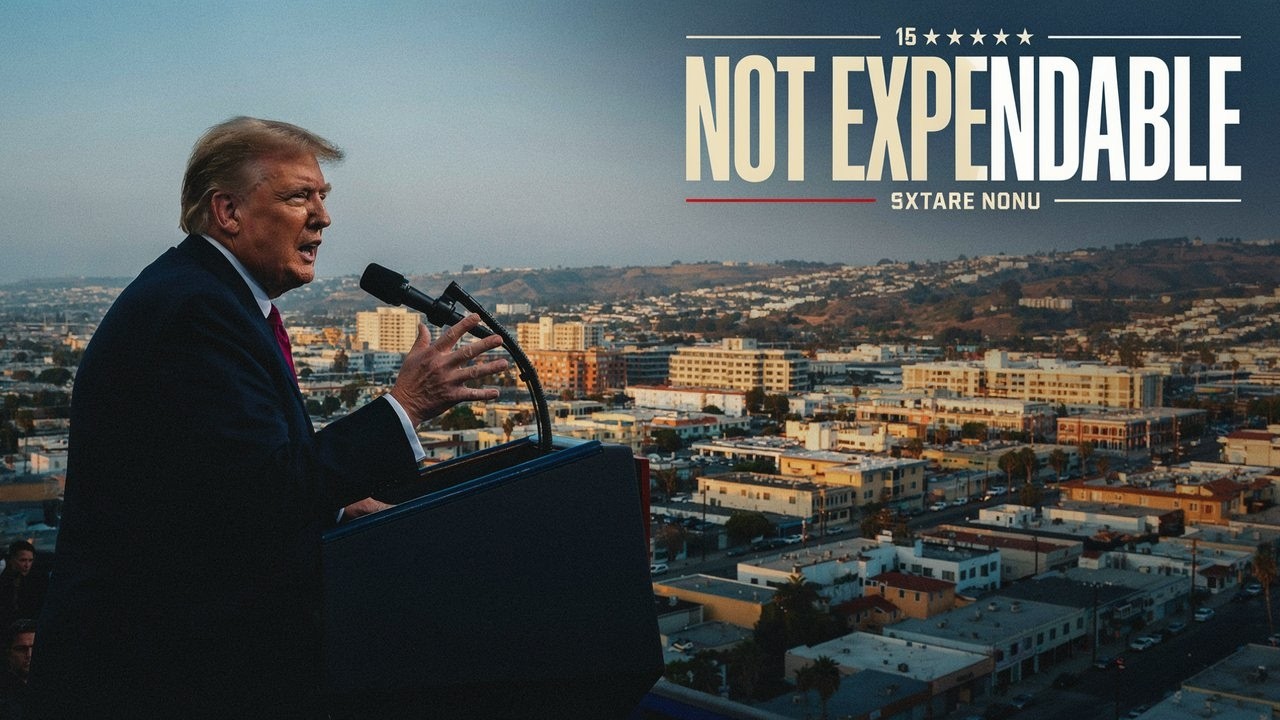
文字起こし · 読み込み中
英語の原文から翻訳されています。
ニュースの経過7日目
1 件のレポート77 社のメディア121 件の情報源11 本の動画
イラン戦争による経済的負担は米国の安全を守るための小さな代償だというドナルド・トランプ氏の主張をめぐり、さらに大きな問題が浮上した。彼の発言は、米国の都市を切り捨ててもよいものとして扱ったのか、という問題だ。トランプ氏は、ロサンゼルスとサンディエゴの両市に言及した発言がカリフォルニア州に予防的な脅威監視を命じさせ、同氏が支持した共和党候補からも批判を招いた後、両市を守ると明言した。 15 2 3
10月7日水曜日、サンアントニオのフリーマン・コロシアムで、トランプ氏は再び、いずれかの都市にミサイルが着弾するという仮定の可能性に言及し、こう述べた。「そんなことは起こさせない。私たちは都市を守る。国を守る」。この安心させる発言は10月8日に報じられたが、演説があったのはその前日だ。これは実質的な保証ではあるものの、撤回でも、新たな防衛措置でも、カリフォルニア州が監視を終了した証拠でもない。 26 27
この違いは重要だ。大統領が米国の都市を守ると言うこと自体は、取り立てて驚くことではない。今回は、戦時の物価上昇から都市が破壊されることへと発言が移り、さらに「小さな代償」という表現が繰り返されたため、そう言う必要が生じた。
論争に至る経緯
問題の発言があったのは、10月5日、ネブラスカ州グランドアイランドのフォナー・パークにあるピナクル・バンク・エキスポ・センターだった。トランプ氏はイラン戦争とその経済的負担、そしてイランの核兵器保有を阻止することについて話していた。主催者は演説を中部時間午後6時に予定していたが、問題となった発言の正確な時刻は確認されていない。 56 73 15
そしてもう一度、覚えておいてほしい。この戦争について言えば、それは単なる人工的なものだ。少し高くなっているだけだ。世界を安全に保ち、わが国を安全に保つための小さな代償だ。彼らは都市を破壊できる。ロサンゼルスを破壊させればいい。サンディエゴを破壊させればいい。それは――これは支払うべきごく小さな代償であり、もうすぐ終わる。」
ニューヨーク・タイムズが掲載した発言の全文は、都市への言及だけを切り取ったものや、その後の発言を除いて経済面の説明だけを取り出したものより、文脈を理解するうえで有用だ。最初の「代償」は戦時の負担を指していた。2度目は都市名を挙げた後に続いた。この順序から、批判者が壊滅的な犠牲を受け入れる発言だと受け止めた理由は分かるが、トランプ氏の内心の意図を決定的に示すものではない。 15 21
チャン氏が併せて述べた、イランには「核兵器も、海軍も、空軍も、資金もない」という主張は、ここでは独立に確認されていない。また、トランプ氏が紛争は「ほぼ事実上終わっている」、そして「どちらにしても」すぐ終わると予測したことも、結果を確定させたわけではない。参加者の一部は都市への言及を含めて歓声を上げたが、その反応はその場にいた全員の意見を示すものではない。 32 9 12
テキサス州で安心させる発言をする前、トランプ氏は翌日、ボルティモアから戻る際に記者から2度質問されても釈明せず、ホワイトハウスを後にしたとCNNは報じた。後の発言は、問題となった一節にはなかった、両市を守るとの明示的な約束を補うものだ。 4
監視は、陰謀が発見されたことを意味しない
ギャビン・ニューサム知事は10月6日、カリフォルニア州脅威評価センターに、潜在的な脅威を監視するよう指示し、外国勢力がトランプ氏の発言を誘いと受け取る可能性があると警告した。この指示で、具体的なイランの陰謀や攻撃が特定されたわけではない。CBSはカリフォルニア州の警戒システムの引き上げも報じたが、技術的な警戒レベル、期間、解除時期はいずれも確認されていない。 35 37 8
その後に公表された評価で、何らかの事実が判明したことも確認されていない。そのため、カリフォルニア州が差し迫った攻撃を発見したという主張も、監視で何も見つからなかったという主張も、同じく裏付けがない。予防措置としての命令は、どちらの主張も証明しない。 3 4
大統領の発言は、確認された情報機関の情報開示ではなかった。ガーディアン紙は、イランには米本土を直接攻撃するミサイル能力がないとする過去の国防評価を引用したが、当局者や評価の日付は明示しなかった。ザ・ヒル紙は、イランが実戦配備された核兵器も、米本土に到達可能な、検証済みの大陸間弾道ミサイルも保有していないと報じた。こうした留保は、あらゆる攻撃が不可能だと証明するものではない。一方で、仮定上の核シナリオを、確認済みの差し迫った脅威として示すことはできない。 13 11
ロサンゼルスのカレン・バス市長は、発言が市の安全を損なう恐れがあると述べた。サンディエゴのトッド・グロリア市長は、その前提をきっぱりと否定した。「サンディエゴは巻き添え被害ではありません。私たちは切り捨てられる存在ではありません。そして、決して『小さな代償』ではありません」。 13 102
人々の生活にかかわる問題を誇張する必要はない。ニューサム知事の報道室は、両市に1,000万人を超える住民がいると説明したが、地理的な区分を誤っていた。2025年7月1日時点の国勢調査推計では、ロサンゼルス市は3,869,089人、サンディエゴ市は1,406,106人だった。 13 75 76
主な事実
両郡におよそ1,300万人がいるというハビエル・ベセラ氏の説明は、郡の推計と一致する。市と郡は同じものではない。サンディエゴが海軍にとって重要なのも事実だが、その役割は限定的だ。サンディエゴ海軍基地は太平洋艦隊の水上艦艇の主要母港であり、ハワイにある太平洋艦隊司令部ではない。 13 79 41 55
政治的な影響であり、選挙での変化が測定されたわけではない
トランプ氏が支持する共和党の下院議員候補で、サンディエゴ郡監督委員を務めるジム・デズモンド氏は、発言に強く反対すると述べた。「米国の都市に切り捨ててよいところはなく、米国の家族が巻き添え被害として扱われては決してならない」。カリフォルニア州第48選挙区で同氏と争う民主党のマーニ・フォン・ウィルパート氏は、発言をひどく、恐ろしく、弾劾に値すると批判した。デズモンド氏の反対は共和党内の異論を示すものであり、すべての共和党員の立場を示すわけではない。 32 5 90
この演説が原因で選挙情勢が変化したという確認済みの証拠はない。フォン・ウィルパート氏が3ポイントリードしているとの報道は、SurveyUSAが8月27日から9月1日に実施した有権者見込み層の世論調査に基づくものだった。フォン・ウィルパート氏が45%、デズモンド氏が42%、未定が13%だった。報告された信頼区間は約5ポイントだった。この世論調査は問題の発言より前に実施されており、MS NOWが民主党優勢と評した選挙区の情勢評価も発言前のものだ。 87 5
同様に、トランプ氏の支持率を32%、不支持率を65%としたロイター/イプソスの世論調査は、4,506人の成人を対象に9月30日から10月5日に実施された。調査期間はネブラスカ州の集会が開かれた日に終了した。この調査で、問題の発言に対する反応を示すことはできない。 95
ニューサム知事とアレックス・パディヤ上院議員は合衆国憲法修正第25条の適用を求め、コリー・ブッカー上院議員は共和党の沈黙を批判した。10月8日時点で、これらの発言をめぐる第4節の宣言や弾劾手続きがあったとは確認されていない。ニューサム知事の「危険であり、反逆的とさえ言える」という非難は政治的な批判であり、法的な認定ではない。 52 8 5 3
第4節では、副大統領と、指定された行政機関の長官の過半数、または議会が設置する代替機関が、大統領に職務遂行不能の状態があるとする書面の宣言を提出する必要がある。これにより権限は「大統領代行」に移るが、大統領職そのものが移るわけではない。知事の要求や上院議員の投稿によって、この権限移譲が始まることはない。 103 104
確認できる影響は具体的だが、限定的である。大統領の不安をあおる発言、州による予防的な監視、党派を超えた異議、そしてその後に明示された保護の約束だ。監視によって対応可能な脅威が見つかったのか、いつ終了するのか、有権者の反応に変化があるのかは、未解決のままだ。安心させる発言は記録に加わるが、カリフォルニア州当局がそうした発言を求めた理由を消し去るものではない。
出典
放送各社の報道:ABC World News Tonight 1;CBSの続報 2;Guardianのライブ報道 3;CNN 4;MS NOW 5;ABC Live Prime 6;CTV 7;CBS Takeout 8;Independent 9;WRAL 10;Hill 11;Scripps 12;Guardianの初報 13。
発言と背景:CNN 14;New York Times 15;Union-Tribune 16;Los Angeles Times 17;NBC Los Angeles 18;Jerusalem Post 19;CBS Los Angeles 20;PolitiFact 21;集会に関する情報 22;Snopes 23;FactCheck.org 24;Forbes 25;Washington Post 26;NBC 27;People 28;Gulf News 29;Detroit News 30;Philadelphia Inquirer 31;Reuters 32;TribLive 33。
カリフォルニア州の反応:Miami Herald 34;Politico 35;IBTimes 36;Hill 37;Desert Sun 38;Guardian 45;Newsweek 46 52;Fox News 53;AP 67;Newsweekの続報 68;Nebraska.tv 69;CNA 70;NCIJ 71;IBTimesの続報 72;Nebraska Examiner 73;GMA 74;ニューサム知事の投稿 97;再投稿 98 99;グロリア市長の投稿、プロフィール、声明 100 101 102。
地理と人口:海軍基地に関する資料 39 40;海軍 41 55;Times of San Diego 42;国勢調査 43 50 51 54 75 76 77 78 79 80;FRED 44;太平洋艦隊に関する資料 47;カリフォルニア州財務局 48;人口データ探索ツール 49;Brookings 81;集会日程 56。
憲法に関する資料:議会および政府刊行物 57 58 59 60 63 65 103 104 115 116 117 119 120;Heritage 61;Cornell 62 64 66 121;Yale 105;修正条項に関する資料 118。
選挙報道:Union-Tribune 87;Ballotpedia 88;Axios 89;Politico 90;New York Times 91;Detroit News 92;Wealth Adviser 93;Just the News 94;CNBC TV18 95;Reutersの投稿 96;RealClearPolitics 106;Cook 107;Midterm Mondays 108。海軍関連の報道:Guardian 82;WRAL 83;Seattle Times 84;Hamilton Spectator 85;DefenseWatch 86;World Ports 109;USNI 110;Stars and Stripes 111;New York Times 112;Army Recognition 113;National Interest 114。
放送時の内容 48行
- Trump now promises to protect the cities he named in his disputed Iran remarks.
- Los Angeles and San Diego together have more than five million residents. His earlier language prompted California to order precautionary threat monitoring and drew objections from a Republican candidate he endorsed.
- What has actually changed: the president’s assurance, California’s security response, or the evidence of a threat?
- Trump has explicitly said the United States will protect both cities. That assurance does not retract his earlier words, announce a new defense measure, or establish that California has ended its monitoring.
- Trump named the cities on October 5. Governor Gavin Newsom ordered monitoring on October 6. Trump delivered his protective assurance on October 7, not October 8: the later date marks its publication, not the Texas speech.
- The reassurance came at Freeman Coliseum in San Antonio, during a rally for Republican Senate nominee Ken Paxton. Trump again invoked the hypothetical danger of a missile hitting San Diego or Los Angeles, then said he would prevent it.
- “We’re not going to let that happen. We protect our cities. We protect our country.” Those words add an explicit commitment to protection. They do not settle what Trump privately intended in the earlier passage.
- The earlier passage moved from higher wartime costs to a city being destroyed, then repeated the language of a small price. That sequence is why the dispute cannot be explained by quoting only the city names—or only the economic argument.
- Trump spoke at the Pinnacle Bank Expo Center at Fonner Park in Grand Island on October 5. The speech lasted nearly an hour and a half. His scheduled start was 6 p.m. Central; the disputed sentences’ exact clock time is unverified.
- Trump was discussing the Iran war, economic costs and preventing Iran from obtaining a nuclear weapon. He described costs as “a little bit high,” then said, “It’s a small price to pay for keeping the world safe, keeping our country safe.”
- He then changed the subject of the sentence to a city: “They can take out a city.” The city references followed immediately, with verbal restarts, before he again described a very small price.
- He said, “Let them take, let them take out Los Angeles; let them take out San Diego. That’s—this is a very small price to pay.” The wording names both cities. It does not establish a concrete policy to allow an attack.
- Shorter versions substitute “him” for “them” and omit the restarts; neither changes which cities he named. Some attendees clapped and cheered, including at the city references. That response does not establish the views of everyone at the rally.
- Trump wanted a “tremendous victory” to verify what the United States had done. He called the conflict “essentially almost over with” and predicted an end very soon, “one way or the other.” Those were assertions and predictions, not established outcomes.
- He also allowed that Iran might continue longer because of its “big threshold for pain.” He subsequently linked the war’s end to gas and gasoline prices and mentioned Venezuelan oil. None of that establishes that the conflict ended.
- The White House’s defense was a counterfactual: Trump meant the danger a nuclear-armed Iran would have posed, not an endorsement of attacks. Communications director Steven Cheung rejected the criticism. His name is Steven Cheung, not Stephen Chung.
- The administration also characterized the passage as separate thoughts. But the actual sequence remains: economic-cost language, city references, repeated price language. The sequence explains the competing interpretations; it cannot conclusively establish private intent.
- Cheung also asserted that Iran had “no nuclear, no navy, no air force, and no money.” Those sweeping claims are not independently established here. Trump initially gave no clarification when questioned twice the following day, leaving the White House and returning from Baltimore.
- No operational Iranian nuclear weapon or verified intercontinental ballistic missile capable of reaching the U.S. mainland is established. Earlier defense assessments described Iran as lacking a direct mainland missile capability, but their officials and dates were unspecified. That does not prove every attack impossible.
- The president’s language was not an established intelligence disclosure. A hypothetical nuclear danger is not proof of an operational weapon, a confirmed launch capability or an imminent attack.
- Newsom directed the State Threat Assessment Center to monitor possible threats on October 6. His concern was that foreign actors might interpret Trump’s language as an invitation. The directive identified no specific Iranian plot or attack.
- California’s alert system was also elevated, but no technical alert level, duration or termination is established. Nor is a subsequent assessment finding. Ordering monitoring does not mean a credible attack has been discovered—or that monitoring has found nothing.
- Newsom called Trump “deranged and dangerous,” then described the remarks as “dangerous, if not treasonous.” These were political denunciations, not a medical diagnosis or a legal finding of treason. His descriptions of occupation and an invitation to attack were also characterizations.
- Newsom demanded that Congress stand up and later called for the Twenty-fifth Amendment. Those demands matter politically, but they do not themselves transfer presidential powers.
- Los Angeles Mayor Karen Bass said the remarks could compromise her city’s safety and rejected treating residents as expendable. San Diego Mayor Todd Gloria said his city was not collateral damage, not expendable and never a small price to pay.
- Bass cited approximately 3.8 million Los Angeles residents and an earlier deployment of 4,000 National Guard troops and Marines. The troop figure was the deployment she invoked in criticism—not a new order or verified current force strength.
- The two cities have 5,275,195 residents combined, not more than 10 million. The July 1, 2025 estimates put Los Angeles city at 3,869,089 and San Diego city at 1,406,106. Newsom’s press office used the wrong combined-city figure.
- Those city estimates were released May 14, 2026, and support Bass’s approximate Los Angeles figure. Cities and counties are different geographies; switching between them more than doubles the combined population.
- Democratic gubernatorial nominee Xavier Becerra cited approximately 13 million residents in the two counties. That description is consistent with the county estimates: Los Angeles County had 9,694,934 residents and San Diego County 3,282,248, totaling 12,977,182.
- The county estimates were released March 26, 2026. A separate fiscal-2025 estimate, released in December 2025, puts San Diego County at 3,336,081. That is a different estimation series, not additional residents to add. Neither series validates more than 10 million in the two cities.
- Naval Base San Diego is a principal homeport for Pacific Fleet surface ships and a hub of Navy Region Southwest port operations. It is not Pacific Fleet headquarters. That headquarters is at Joint Base Pearl Harbor–Hickam in Hawaii.
- Navy Region Southwest’s headquarters at San Diego’s Broadway Complex is a different command. San Diego is a major naval hub; calling it the fleet’s headquarters conflates homeport and command headquarters.
- Trump-endorsed Republican candidate Jim Desmond said he vehemently disagreed with the comments. “No American city is expendable, and no American family should ever be treated as collateral damage.” He said protecting Americans and the homeland was the president’s first responsibility.
- Desmond’s Democratic opponent, San Diego City Council member Marni von Wilpert, called the comments appalling and terrifying and an impeachable offense. Her name is Marni, not Marnie. They face each other in California’s 48th Congressional District.
- Both advanced from the June 2 top-two primary. The district covers inland San Diego and Riverside counties. Darrell Issa did not seek reelection after the Proposition 50 redraw. Desmond’s statement establishes Republican dissent, not the views of every Republican.
- Senator Cory Booker criticized Republican silence. An earlier absence of public responses does not establish that other Republicans endorsed the remarks or stayed silent indefinitely. Senator Alex Padilla called for the Twenty-fifth Amendment; that was advocacy, not an invocation.
- Von Wilpert’s 45%, Desmond’s 42% and the 13% undecided were measured before the remarks. The likely-voter poll ran August 27 through September 1 and was published September 4. It cannot demonstrate a reaction to the October 5 speech.
- A secondary compilation gives a sample of 522. The reported credibility interval was approximately five percentage points, larger than the three-point lead. That lead does not establish a decisive advantage.
- The race was rated Lean Democratic, with a move from Toss-up described as months earlier, but the exact dated change is not independently established. Other assessments were Lean Democratic and Tilt Democratic. These are judgments, not election results or measured speech effects.
- Trump’s 32% approval and 65% disapproval were measured among 4,506 adults from September 30 through October 5. Approval was unchanged from September’s career-low reading. Fieldwork ended on the rally date, so this was not a post-remarks measurement.
- A separately reported registered-voter subset had 36% approval and 64% disapproval. Those denominators are not interchangeable. With the midterms about four weeks away, no verified post-remarks poll establishes that the comments changed voting intentions.
- No Section 4 declaration or impeachment proceeding over these remarks is established as of October 8. A governor’s demand, a senator’s post or a candidate’s accusation is not the constitutional action needed to begin a transfer of powers.
- Section 4 requires the vice president and a majority of the principal executive-department officers to send a written declaration of presidential inability to the Senate president pro tempore and House speaker. The vice president then immediately assumes presidential powers as Acting President.
- The amendment also permits another body created by Congress, but Congress has not created one. Section 4 concerns inability and transfers powers; it does not remove the president from office.
- If the president declares no inability, the vice president and required majority have four days to counter it. Congress then decides, assembling within 48 hours if not in session, with a 21-day decision period.
- That period runs from receipt of the subsequent declaration or the required assembly date. Continuing the Acting President’s exercise of powers requires two-thirds of both houses. Otherwise, the president resumes those powers.
- Impeachment is separate. The House can impeach by majority vote; Senate conviction and removal require two-thirds of senators present. Political condemnation is not a finding of inability, a completed impeachment or a transfer of presidential powers.
- The change is an explicit protective assurance following precautionary monitoring and bipartisan objections—not an established attack or new defense measure. Whether monitoring uncovered an actionable threat or will be stood down remains unresolved. No electoral effect caused by the remarks is established.
情報源
121 件の情報源74 社のメディア11 本の動画3 件の配信記事
Census.govcensus.gov10
- 最初の報道
- U.S. Census Bureau QuickFacts: Los Angeles city, California; San Diego city, California; San Francisco city, California; United States
- U.S. Census Bureau QuickFacts: Los Angeles County, California
- U.S. Census Bureau QuickFacts: Los Angeles County, California
- U.S. Census Bureau QuickFacts: San Diego County, California
- City and Town Population Totals: 2020-2025
- Vintage 2025 Total Population Estimates for Incorporated Places and Minor Civil Divisions; Housing Unit Estimates for the Nation, States and Counties
- Press Kit: Vintage 2025 Total Population and Components of Change Estimates for U.S. Counties, Puerto Rico Municipios, and Metropolitan and Micropolitan Statistical Areas
- Population and Housing Unit Estimates Datasets
- Slow Growth Impacts Nation’s Largest Counties Hardest
- www2.census.gov
congress.gov10
- Twenty-Fifth Amendment Section 3 | Constitution Annotated | Congress.gov | Library of Congress
- Amdt25.2.4 Presidential Succession and Debates over the Constitution’s Ratification
- www.congress.gov
- Overview of Twenty-Fifth Amendment, Presidential Vacancy and Disability | Constitution Annotated | Congress.gov | Library of Congress
- Twenty-Fifth Amendment Section 4 | Constitution Annotated | Congress.gov | Library of Congress
- The Twenty-Fifth Amendment: Sections 3 and 4—Presidential Disability | Congress.gov | Library of Congress
- Overview of Twenty-Fifth Amendment, Presidential Vacancy ...
- Presidential Disability Under the Twenty-Fifth Amendment
- U.S. Constitution - Article I | Resources | Constitution Annotated | Congress.gov | Library of Congress
- U.S. Constitution | Constitution Annotated | Congress.gov | Library of Congress
X (formerly Twitter)x.com6
- 最初の報道
- Exclusive: President Trump's approval rating fell to 32% — the lowest of his political career — as fellow Republicans soured on his handling of the cost of living amid the unpopular Iran war, a new Reuters/Ipsos poll found https://reut.rs/4xGPL6G
- After sending the National Guard and Marines to occupy California, Donald Trump is now saying our foreign enemies should “take out” Los Angeles and San Diego. He is deranged and dangerous.
- https://x.com/gavinnewsom/status/2107288831112466787?s=46&t=8ExwV-cWccbsYZ9_N5vuHw
- https://x.com/gavinnewsom/status/2107288831112466787
- Seriously, again? How many times do we have to say it? San Diego is not a prop. San Diego is not a target. San Diego is not your applause line. We are a proud military city full of real people. Stop using us in your reckless war talk.
- X User @MayorToddGloria
LII / Legal Information Institutecornell.edu4
The Guardiantheguardian.com4
- 最初の報道
- Republican Ken Paxton reportedly blames Iran war and high gas prices for campaign struggles as Trump heads to Texas – live
- Trump suggests Iran could ‘take out’ Los Angeles or San Diego
- Trump’s LA and San Diego comments ‘dangerous, if not treasonous’, says Newsom – US politics live | US politics
- USS Lincoln carrier to return to port in San Diego after record-breaking deployment – US politics live | US news
CBS Newscbsnews.com3動画2本
The Athleticnytimes.com3
ABC News2動画2本
GovInfogovinfo.gov2
- In case of the removal of the President from office or of his death or resignation, the Vice President shall be come President. Whenever there is a vacancy in the office of the Vice Presi dent, the President shall nominate a Vice President who shall take office upon confirmation by a majority vote of both Houses of Congress. Whenever the President transmits to the President pro tem pore of the Senate and the Speaker of the House of Representa tives his written declaration that he is unable to discharge the powers and duties of his office, and until he transmits to them a written declaration to the contrary, such powers and duties shall be discharged by the Vice President as Acting President. Whenever the Vice President and a majority of either the principal officers of the executive departments or of such other body as Congress may by law provide, transmit to the Presi dent pro tempore of the Senate and the Speaker of the House of Representatives their written declaration that the President is unable to discharge the powers and duties of his office, the Vice President shall immediately assume the powers and duties of the office as Acting President. Thereafter, when the President transmits to the President pro tempore of the Senate and the Speaker of the House of Rep resentatives his written declaration that no inability exists, he shall resume the powers and duties of his office unless the Vice President and a majority of either the principle officers of the
- [PDF] 25th Amendment US Constitution - GovInfo.gov
International Business Times UKibtimes.co.uk2
navy.mil2
arcgis.com1
armyrecognition.com1
Axiosaxios.com1
Ballotpediaballotpedia.org1
Brookingsbrookings.edu1
Central Nebraska Todaycentralnebraskatoday.com1
CNAchannelnewsasia.com1
CNBCTV18cnbctv18.com1
Cook Political Reportcookpolitical.com1
CTV News1動画1本
FactCheck.orgfactcheck.org1
fas.org1
Fox Newsfoxnews.com1
GlobalMilitary.netglobalmilitary.net1
Good Morning Americagoodmorningamerica.com1
Governor of Californiaca.gov1
Inquirer.cominquirer.com1
Just The Newsjustthenews.com1
KHGInebraska.tv1
Los Angeles Timeslatimes.com1
MS NOW1動画1本
NBC Los Angelesnbclosangeles.com1
NBC Newsnbcnews.com1
NCIJ Network |ncijnetwork.com1
Nebraska Examinernebraskaexaminer.com1
realclearpolitics.com1
Scripps News1動画1本
Snopessnopes.com1
Stars and Stripesstripes.com1
The Hamilton Spectatorthespec.com1
The Independent1動画1本
The Jerusalem Post | JPost.comjpost.com1
The National Interestnationalinterest.org1
The Seattle Timesseattletimes.com1
TheDefenseWatch.comthedefensewatch.com1
timesofsandiego.com1
TribLIVE.comtriblive.com1
USNI Newsusni.org1
Wealth Adviserwealthadviser.co1
worldports.org1
WRAL1動画1本
WRAL Newscastscapitolbroadcasting.com1
Yale Law Schoolyale.edu1
情報源マップ
この報道の根拠をたどります。マップで情報のつながりを確認し、下のリンクから記事で引用された情報源を開けます。
記事を読む間に情報源マップを読み込みます。
翻訳更新:
改訂履歴
- r1初公開。