科学 · Crew-13 抵达持续报道 · 第 1 篇,共 2 篇
Crew-13 不到8小时便抵达国际空间站。下一步是 Crew-12 返航。
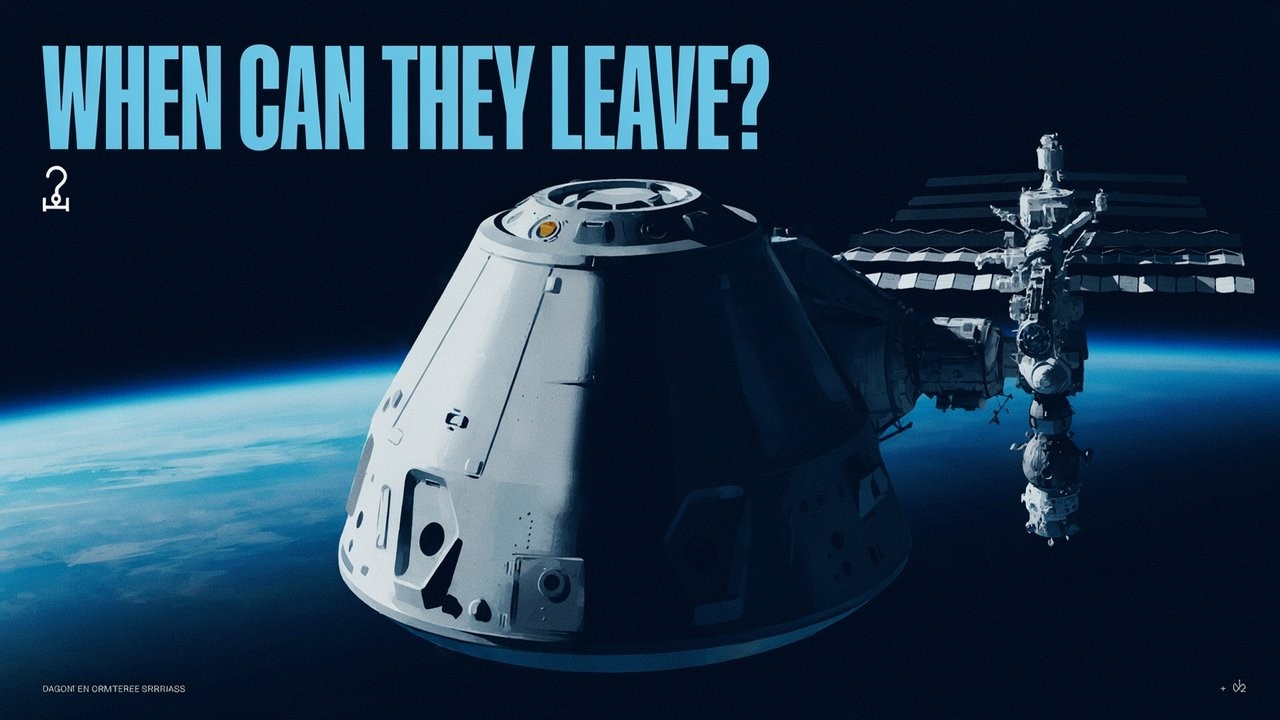
Dragon Grace 飞行7小时55分钟,将下一批科学乘组送上空间站。有关 Crew-12 最早可能于10月5日离站的报道仍以天气允许为前提。
原语言视频
文字实录 · 正在加载
译自英文原文。
持续报道第 3 天
2 篇报道28 家媒体69 个来源7 个视频
完整报道

国际空间站的运行依赖一批批乘组接续工作,维持实验室运转。NASA 的 Crew-13 现已作为接替乘组进驻空间站:4名宇航员已抵达,开始长期科学任务;与此同时,该机构计划在2030年底让空间站退役。他们的到来标志着一次换班,而即将离任的 Crew-12 宇航员仍在等待返程。 18 1 2
Dragon Grace 于2026年10月1日美国东部夏令时间晚上7:05对接 Harmony 节点的前向端口。当天上午11:10(EDT),飞船从地面发射升空,飞行历时7小时55分钟。NASA 随后确认,4名乘组成员均已进入空间站并加入第75次远征队。发射当天报道中所说的预期交会,如今已成为完成的抵达。 7 8 18
关键事实
C-SPAN 的 NPR 报道曾将飞行描述为约8小时;美联社的发射报道则转述了 NASA 更具体的预期,即飞行时间少于8小时。两者都符合实际结果。NASA 表示,良好的轨道条件使飞行时间接近可能达到的最快水平,因此可以称其为快速飞行,但不应宣称这是经过独立核实的历史最快纪录。 1 2 7
4名人员,两艘返程飞船
NASA 宇航员 Jessica Watkins 担任 Crew-13 指令长,NASA 同事 Luke Delaney 担任飞行员。加拿大航天局宇航员 Joshua Kutryk 和俄罗斯国家航天集团宇航员 Sergey Teteryatnikov 担任任务专家。这些是发射报道中提到的 Jessica、Luke、Josh 和 Sergey 的完整身份。 6 2
Watkins 于2017年入选 NASA 宇航员,这是她第二次飞往空间站。现有传记信息无法确定 Delaney、Kutryk 或 Teteryatnikov 此前是否执行过太空飞行。他们的指令长、飞行员和任务专家职务描述的是飞行角色,并不代表他们各自负责特定实验或维修任务。 6
这艘航天器也有飞行履历。Grace 是这艘 Dragon 飞船的名称,NASA 在发射前发布的舱门关闭公告中指出,这是该飞船第二次飞往国际空间站。这次重复使用与将它送入轨道的火箭助推器回收是两回事。 22
SpaceX 的 Falcon 9 火箭从佛罗里达州卡纳维拉尔角太空军基地的40号航天发射中心升空。ABC 新闻的发射解说称,其第一级的9台 Merlin 发动机合计最大推力为170万磅。第二级发动机关闭后,乘组进入预期轨道,Dragon 飞船与第二级分离。 8 3
ABC 还报道,火箭第一级已在卡纳维拉尔角的40号着陆区完成着陆。相同的数字可能掩盖一个重要区别:发射综合体是起飞地点,着陆区则是返回的助推器的目的地。助推器回收、进入轨道和对接是彼此独立的成果。此处提供的 NASA 公告证实了发射和抵达,但没有独立证实助推器着陆。 3 5 7
飞行途中,任务控制中心报告说,宇航员已安全进入轨道,并脱下了发射服。这是关于他们在飞行途中状况的令人安心的信息,并不代表他们已抵达空间站。NASA 后续发布的对接和进入空间站公告证实了这两项结果,但舱门开启和进入空间站的准确时间仍无从得知。 2 7 18
4月23日和5月1日公布的早期任务安排曾把发射时间定为不早于9月中旬。后来确定的具体发射日期是10月1日,火箭也在当天发射。计划中的最早时间窗口并非最后期限;这一时间先后顺序并不能证明9月发射的承诺未能兑现。 16 21 8
实验室工作从这里开始
预计 Crew-13 将在空间站生活和工作,最长可达6个月。这是计划中的驻留时间,并非固定的返程安排:没有确定具体的天数,也没有确定 Crew-13 的返程日期。NASA 将这次任务描述为一次长期科学远征。 1 16
研究议程涵盖乘组健康、太空中可靠的食品生产,以及深空探索技术。国际空间站国家实验室也将生物制造列为宇航员将参与的研究领域。这些都是实质性的研究方向,但仍属于拟开展的工作,并非已经完成的实验或已得到证实的效益。 14 17
空间站最终退役,意味着这项工作的时间有限。据 C-SPAN 报道,NASA 官员 Lori Glaze 在9月30日的新闻发布会上表示,计划于2030年底将空间站停用并使其脱离轨道。这仍是该机构的计划,并非已经完成的关闭行动,也不是精确安排在12月31日进行的操作。这也不意味着 Crew-13 的预期驻留时间表已获保证。 1
抵达已成定局,离站仍有条件
SpacePolicyOnline 报道称,交接完成后,Crew-12 最早可能于10月5日离站,前提是天气允许。这是二手报道所述的一种附带条件的离站可能性,并非 NASA 确认的脱离对接安排、返回地球日期或溅落时间。完整的返程时间表仍未确认。 19
目前的运行进展就是如此:接替乘组已抵达工作场所,但即将离任的乘组尚未完成返程。下一个里程碑不是再次发射,而是在条件获准后离站,并在天气适宜时返航。
来源
C-SPAN —《Washington Today》,2026年10月1日。 1
美联社 —《SpaceX launches 4 astronauts to the International Space Station》。 2
ABC 新闻 —《NASA’s SpaceX Crew-13 mission launches》。 3
NASA — NASA 的 SpaceX Crew-13 任务页面。 4
NASA —《NASA’s SpaceX Crew-13 Reaches Orbit》,美国东部夏令时间下午1:10举行的新闻发布会。 5
NASA —《Meet the Crew of NASA’s SpaceX Crew-13》。 6
NASA —《Dragon Docks Bringing SpaceX Crew-13 to Station》。 7
NASA —《NASA’s SpaceX Crew-13 Launches》。 8
合众国际社 —《NASA’s Crew-13 docks with ISS after record-fast flight》。 9
NASA — NASA 的 SpaceX Crew-13 任务博客。 10
路透社 —《SpaceX launches 13th long-duration astronaut crew to International Space Station》。 11
维基百科 — SpaceX Crew-13。 12
Spaceflight Now —《Fresh crew takes off for six-month stay aboard space station》。 13
NASA —《Crew-13 Research Advances Health, Food, and Deep-Space Science》。 14
NASA —《Live Streaming Coverage of NASA’s SpaceX Crew-13 Mission Begins》。 15
NASA —《NASA Shares SpaceX Crew-13 Assignments for Space Station Mission》,新闻稿。 16
国际空间站国家实验室 —《Astronauts Launching on NASA’s SpaceX Crew-13 Will …》 17
NASA —《Crew-13 Members Enter Station, Join Expedition 75》。 18
SpacePolicyOnline —《Crew-13 Arrives at ISS as Crew-12 Prepares to Depart》。 19
SpaceX — Crew-13 任务。 20
NASA —《NASA Shares SpaceX Crew-13 Assignments for Space Station Mission》,5月1日公告。 21
NASA —《Hatch Closed on Crew-13 SpaceX Dragon Spacecraft》。 22
Space.com —《SpaceX Crew-13 NASA launch live updates》。 23
NASA —《SpaceX Crew-13 Approaching Station Aboard Dragon》。 24
Space.com —《SpaceX Crew-13 astronauts dock at ISS less than 8 hours after launch in fastest American flight ever》。 25
播出原貌 10 行
- Dragon Grace carried four astronauts to the space station in under eight hours.
- The replacement crew is now aboard, preparing for a long-duration science mission and helping the outgoing astronauts finish a seven-month stay. What does their arrival settle, and what still stands between Crew-12 and its journey home?
- Dragon Grace docked at the International Space Station’s Harmony module forward port at 7:05 p.m. Eastern Daylight Time on October 1, 2026. Liftoff was at 11:10 that morning, making the journey seven hours and 55 minutes. All four crew members subsequently entered the station and joined Expedition 75. Docking and entry are completed milestones, not expectations. The exact times of hatch opening and station entry remain unavailable. An earlier in-flight update that the astronauts were safely in orbit and had removed their launch suits described their condition during the journey—not their arrival.
- Jessica Watkins commands the four-person crew. Luke Delaney is the pilot; both are NASA astronauts. Canadian Space Agency astronaut Joshua Kutryk and Roscosmos cosmonaut Sergey Teteryatnikov are mission specialists. Those are the full identities behind the first names Jessica, Luke, Josh and Sergey used during launch coverage. Watkins was selected as a NASA astronaut in 2017, and this is her second flight to the station. The other three astronauts’ prior-flight histories are not established, so they cannot be described as first-time space fliers. Their flight roles also do not establish which experiments or maintenance jobs each will perform.
- Nine Merlin engines powered Falcon 9’s first stage with a combined maximum thrust of 1.7 million pounds—not that amount from each engine. The rocket launched from Space Launch Complex 40 at Cape Canaveral Space Force Station in Florida. After the second-stage engine shut down, the crew reached its expected orbit and Dragon separated from that stage. The first stage completed a landing at Landing Zone 40 at Cape Canaveral. Despite the shared number, the launch complex and landing zone are different sites. Booster recovery, the astronauts’ orbital insertion and their later docking are three distinct milestones. Grace is this individual Dragon spacecraft’s name, and this was its second flight to the station.
- October 1 became the specific launch date after earlier planning placed the mission no earlier than mid-September. Assignment announcements on April 23 and May 1 used that earlier window. “No earlier than” sets an earliest possibility, not a deadline; the October launch does not establish that a promised September deadline was missed.
- The flight met the under-eight-hour transit forecast, even though docking happened five minutes after the expected clock time. The estimates of about eight hours and under eight hours fit the completed journey; they are not conflicting accounts of the arrival. The orbital conditions allowed a trip close to the fastest possible for this launch. That establishes a rapid transit, not an independently verified all-time speed record.
- Crew-13’s planned stay is up to six months, but there is no fixed return date or exact mission length in days. The work ahead includes investigations concerning crew health, reliable food production in space, technologies for deep-space exploration and biomanufacturing. These are prospective research areas, not completed experiments or demonstrated benefits. Specific experiment names, protocols, equipment and individual scientific assignments have not been established. Nor have particular inspections, repairs, servicing or equipment replacements. The station provides a working orbital laboratory; getting the crew there does not prove that any particular research result has already been achieved.
- The station itself is planned for decommissioning and removal from orbit at the end of 2030. That remains an agency plan, not a completed shutdown or deorbit, and it does not establish a precise December 31 operation. The longer-term plan also does not turn Crew-13’s intended six-month stay into a guaranteed schedule.
- Crew-12 could depart as soon as October 5, weather permitting, after a short handover. Crew-13 will help prepare that return as the outgoing crew wraps up its seven-month mission, but individual handover responsibilities have not been established. October 5 is a conditional departure possibility—not a confirmed undocking appointment, landing date or splashdown time. Arrival and station entry are settled; the full return timetable is not. Crew-13’s arrival puts the replacement team aboard, while Crew-12’s journey home still depends on the handover, departure clearance and suitable weather.
来源
25 个来源12 家媒体3 个视频
nasa.gov13
- NASA's SpaceX Crew-13
- NASA’s SpaceX Crew-13 Reaches Orbit, News Conference at 1:10 p.m. EDT - NASA
- Meet the Crew of NASA’s SpaceX Crew-13 - NASA
- Dragon Docks Bringing SpaceX Crew-13 to Station - NASA
- NASA’s SpaceX Crew-13 Launches - NASA
- NASA's SpaceX Crew-13 Mission
- Crew-13 Research Advances Health, Food, and Deep‑Space Science - NASA
- Live Streaming Coverage of NASA’s SpaceX Crew-13 Mission Begins - NASA
- NASA Shares SpaceX Crew-13 Assignments for Space Station Mission - NASA
- Crew-13 Members Enter Station, Join Expedition 75 - NASA
- NASA Shares SpaceX Crew-13 Assignments for Space Station Mission - NASA
- Hatch Closed on Crew-13 SpaceX Dragon Spacecraft - NASA
- SpaceX Crew-13 Approaching Station Aboard Dragon - NASA
ABC News11 个视频
- 首次报道于
- NASA’s SpaceX Crew-13 mission launches · 视频
Associated Press11 个视频
ISS National Labissnationallab.org1
spacepolicyonline.com1
SpaceXspacex.com1
UPIupi.com1
wikipedia.org1最先
- 首次报道于
- SpaceX Crew-13
来源地图
追溯本篇报道的依据。图谱展示其关联;下方链接可打开本文引用的来源。
来源图谱将在您阅读时加载。
译文更新于
修订记录
- r1首次发布。