
Health · Congo EbolaContinuing story · report 6 of 15
Congo Ebola Surges Past 4,600 Cases at Record Pace
More than 4,600 cases and 2,100 deaths by mid-August made this Bundibugyo-strain outbreak the fastest on record — and WHO warns it could eclipse West Africa.
Transcript · LOADING
Continuing storyDay 24
15 reports115 outlets215 sources14 videos
Full story- No dated events yet
 Update 11,000 Dead: DRC's Ebola Surge Outruns Any on Record
 Update 2Congo Opens Biggest Ebola Centre as Record Outbreak Nears 4,000 Cases
 Update 3Unpaid for Three Months as Ebola Deaths Pass 1,800
 Update 4DRC Ebola Surpasses 4,000 Cases as Virus Spreads to Five Provinces
 Update 5Ebola Spread Unseen for Months as Congo Deaths Pass 2,000
 Update 6Congo Ebola Surges Past 4,600 Cases at Record PaceYou are here
 Update 7Congo Ebola Is Now the Deadliest in Its History — and Still GrowingNewer
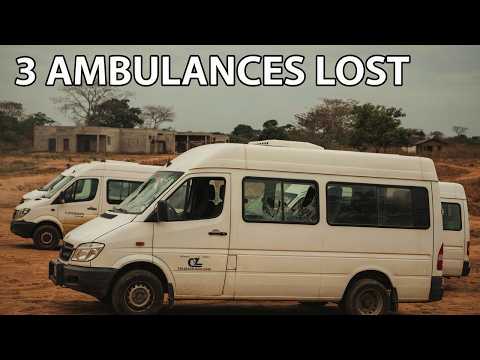 Update 8Congo Ebola Nears 5,000 Cases as Attack Cripples Response TeamsNewer
 Update 9Congo Ebola Deaths Double Pace as Outbreak Outruns ResponseNewer
 Update 1016,000 Ebola Doses Land in Congo — For the Wrong StrainNewer
 Update 11Ebola Spreads to 60 Zones as Vaccine's Match QuestionedNewer
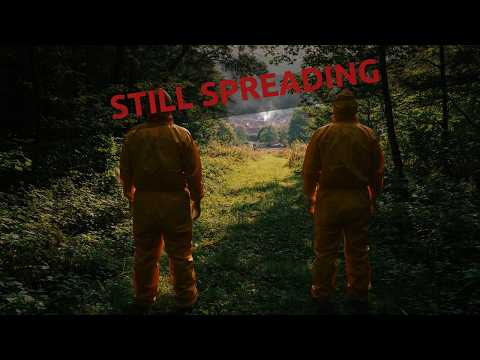 Update 123,000 Dead and No Vaccine: Ebola Outruns Help in Eastern CongoNewer
 Update 13Ebola fear keeps Congo families from maternity and child careNewer
 Update 14Two Ebola cases bring Congo’s outbreak to an eighth provinceNewer
 Update 15One nurse killed in attack on Congo Ebola respondersNewer
What changed since our last report
4 days later
Then
Ebola Spread Unseen for Months as Congo Deaths Pass 2,000Still open then
- No verified total for confirmed cases in the early undetected months.
- No verified trial design, enrollment, or results for cross-strain vaccine use.
We said we'd watch for
- Whether expanded sequencing sharpens the February origin and transmission map.
- Whether surveillance and care can catch contacts missed in spring.
Now
More than 4,600 cases and 2,100 deaths by mid-August made this Bundibugyo-strain outbreak the fastest on record — and WHO warns it could eclipse West Africa.
Now established
- More than 4,600 confirmed cases and at least 2,100 deaths reported by Aug. 14, at almost three times the pace of the outbreak a decade earlier.
- By Aug. 17, 2,325 people killed, making it the deadliest Ebola outbreak in DRC history.
- No approved treatment or vaccine exists for this rare Bundibugyo strain.
- Health workers were struggling by Aug. 15 as Ebola outpaced contact tracing in Ituri.
4,600 confirmed infections. At least 2,100 dead. That was the count in the Democratic Republic of the Congo on Aug. 14, 2026, and it had been reached at a speed public health officials said they had never seen before for Ebola — almost three times faster than the outbreak that devastated West Africa more than a decade ago. 2
In eastern Congo, a rare Bundibugyo-strain virus was moving faster than the response built to stop it, killing in numbers that within days would rewrite the country's own history of Ebola and raising a warning from the World Health Organization that the world could be watching the start of the deadliest Ebola outbreak ever recorded. 357
Three days before that Aug. 14 tally, the toll had already passed 2,000 dead, and the outbreak had already been described as the fastest-growing Ebola outbreak in history. 7 There was no approved treatment and no approved vaccine for this rare strain, a central reason containment was failing even as case-finding accelerated. 7
The comparison that gave the numbers their weight was West Africa in 2014 to 2016, when more than 11,000 people died in the largest and deadliest Ebola epidemic on record. 357 On Aug. 12, the WHO director-general warned that the Congo outbreak was on track to surpass that disaster in deaths, a judgment reported by The Associated Press and echoed in Australian Broadcasting Corporation reporting that the DRC outbreak was likely to become the worst in history. 35
Geography was expanding even as the toll climbed. On Aug. 13, the outbreak reached a sixth province, a marker of spread beyond an initial zone in the east and a sign that transmission chains were not being broken before they moved. 9 By the middle of August the focus of field reporting was Ituri province in the northeast, where surveillance teams were working town by town to find contacts before they became cases. 6
The Aug. 14 assessment that put confirmed cases above 4,600 with at least 2,100 deaths came from PBS News reporting, in a segment reported by William Brangham and Solveig Rennan Sandbulte that framed the crisis in explicitly historical terms. 2 The same day, Deutsche Welle reported fear in Kinshasa, described as "a city of millions," where hospitals were scrambling to prepare for a virus that still had no vaccine to stop it. 11
Contact tracing cannot keep up
What happens when Ebola moves faster than tracers was visible by Aug. 15. The Associated Press, in reporting by Constant Same Bagalwa and Mark Banchereau, described exhausted health workers struggling to keep up as the outbreak outpaced contact tracing. 6 In Nizi, in Ituri province, surveillance officer Gédéon Banga Ngbape was doing the painstaking work of contact tracing — finding everyone an infected person may have exposed, checking them daily, trying to isolate new illness before it seeded another household or clinic. 6
When tracing falls behind, isolation falls behind, and when isolation falls behind, families and clinics absorb transmission they cannot see. That sequence is why speed matters more than any single day's case count: each missed contact is not one missed case but a chain that can cross a village, a road, a provincial boundary before a team returns. 69
By Aug. 17, the national threshold fell. The WHO said the Bundibugyo outbreak was now the deadliest the DRC had ever faced, and local authorities reported 2,325 people killed, surpassing the country's previous national record for deaths in a single Ebola outbreak. 8 The Associated Press likewise reported more than 2,300 dead, confirming that the outbreak had become the deadliest on record in the country. 4
Two days later, in an explainer on Aug. 19, the AP described the event as one of the largest Ebola outbreaks ever recorded, a classification that placed Congo 2026 alongside West Africa not only in pace but in absolute size. 10
The absence of countermeasures is not a footnote here. It is the story. For the Zaire strain of Ebola, vaccines and antibody treatments changed the odds in recent years. For Bundibugyo, reporting through mid-August consistently noted there was still no approved vaccine and no approved treatment, leaving prevention of exposure and rapid isolation of the sick as the only defenses. 711
That leaves hospitals in places such as Kinshasa preparing for patients they can care for but not specifically treat, and field teams in the east trying to outrun a virus with notebooks, thermometers, protective equipment and speed. 611 When Deutsche Welle described hospitals scrambling in a city of millions, it captured the second phase of fear: what began as a rural and provincial emergency beginning to be imagined as an urban one. 11
The WHO warning that this could become the worst outbreak in history was therefore not a prediction that the record had already fallen. It was a warning about trajectory. With more than 2,100 dead by Aug. 14 and more than 2,300 dead by Aug. 17, the curve was still rising and the systems meant to bend it — surveillance, tracing, isolation — were described as outpaced. 2468
Known
- More than 4,600 confirmed cases and at least 2,100 deaths reported by Aug. 14, at almost three times the pace of the outbreak a decade earlier. 2
- By Aug. 17, 2,325 people killed, making it the deadliest Ebola outbreak in DRC history. 8
- No approved treatment or vaccine exists for this rare Bundibugyo strain. 7
- Health workers were struggling by Aug. 15 as Ebola outpaced contact tracing in Ituri. 6
Unknown
- The precise current chain of transmission across all six provinces and whether urban transmission has begun in Kinshasa.
- Whether experimental vaccines, treatments, or scaled diagnostic and staffing support will arrive in time to change the trajectory.
Next
- Whether contact tracing in Ituri and other eastern provinces can catch up to the virus before the next provincial jump.
- Whether the death toll continues toward the West Africa benchmark of more than 11,000 deaths.
Sources
11 sources7 outlets1 video
apnews.com4
- Congo's Ebola outbreak on track to surpass history's deadliest one, WHO says | AP News
- Congo’s fast-moving Ebola outbreak becomes the country's deadliest | AP News
- Congo’s fastest-growing Ebola outbreak reaches a sixth province | AP News
- Ebola outbreak in Congo is one of the largest ever recorded. Here's what to know | AP News
HeyDay News11 video
UN Newsun.org1
Source map
Follow the evidence behind this report. The map shows its connections; the links below open the sources cited in this article.
Source map loads as you read.
Revision log
- r1First published.