
Health · Ebola responder safetyContinuing story · report 15 of 15
One nurse killed in attack on Congo Ebola responders
WHO says another responder was severely injured while investigating an Ebola alert in Bafwasende. Whether the remaining team can continue safely is still unresolved.
Transcript · LOADING
Continuing storyDay 97
15 reports115 outlets215 sources14 videos
Full story- No dated events yet
 Update 11,000 Dead: DRC's Ebola Surge Outruns Any on Record
 Update 2Congo Opens Biggest Ebola Centre as Record Outbreak Nears 4,000 Cases
 Update 3Unpaid for Three Months as Ebola Deaths Pass 1,800
 Update 4DRC Ebola Surpasses 4,000 Cases as Virus Spreads to Five Provinces
 Update 5Ebola Spread Unseen for Months as Congo Deaths Pass 2,000
 Update 6Congo Ebola Surges Past 4,600 Cases at Record Pace
 Update 7Congo Ebola Is Now the Deadliest in Its History — and Still Growing
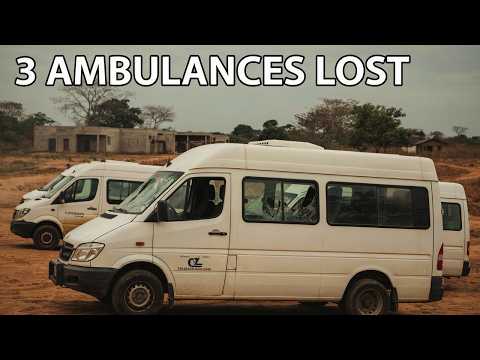 Update 8Congo Ebola Nears 5,000 Cases as Attack Cripples Response Teams
 Update 9Congo Ebola Deaths Double Pace as Outbreak Outruns Response
 Update 1016,000 Ebola Doses Land in Congo — For the Wrong Strain
 Update 11Ebola Spreads to 60 Zones as Vaccine's Match Questioned
 Update 123,000 Dead and No Vaccine: Ebola Outruns Help in Eastern Congo
 Update 13Ebola fear keeps Congo families from maternity and child care
 Update 14Two Ebola cases bring Congo’s outbreak to an eighth province
 Update 15One nurse killed in attack on Congo Ebola respondersYou are here
What changed since our last report
7 days later
Then
Two Ebola cases bring Congo’s outbreak to an eighth provinceWhat we said was still open
No independently verified case count, exact start date in May, specific strain identity, or location of the surge 40 kilometers away.
Still openThe ministry-attributed totals are not an independently verified case count, and the exact May start date and location of the previously reported surge remain unestablished. Al Jazeera now identifies the strain as Bundibugyo, but independent confirmation of that identification is not established here. 23
Which militias control blocked villages and what funding shortfalls limit staffing and supplies.
Still openThe available reporting does not identify which militias control the previously reported blocked villages or quantify the funding shortfalls affecting staff and supplies. It also does not establish a militia connection to this attack.
No Wapinda contact count, tracing-completion figure, isolation location, treatment-bed capacity, deployed-team size or specimen-transport timetable has been established.
Still openNo new Wapinda contact count, tracing-completion figure, isolation location, treatment-bed capacity, deployed-team size or specimen-transport timetable is established by this attack account.
Whether response teams can reach the surge zone 40 kilometers from Mangualu before chains seed further.
Still openWhether teams have reached the previously reported surge zone near Mangualu, and whether further transmission occurred there, remains unestablished.
Whether protection for health workers and basic clinic equipment arrive before more staff are lost.
Still openA local update showing when the patients fell ill, how they were exposed and whether all identified contacts are being followed.
Still openThe available reporting provides no new account of when the Wapinda patients fell ill, how they were exposed or whether all identified contacts are being followed.
Now
WHO says another responder was severely injured while investigating an Ebola alert in Bafwasende. Whether the remaining team can continue safely is still unresolved.
One nurse was killed while checking an Ebola alert in the Democratic Republic of the Congo. Another health worker was severely injured. Those are the reported casualties of an attack in Bafwasende—not the toll of the epidemic, but the loss inflicted on people sent to investigate a possible infection. The World Health Organization supplied the casualty account, carried in October 26 reports by Al Jazeera and The Associated Press. 2 3
The immediate human cost is clear. What happens to the response now is not: the available reporting establishes neither whether the remaining team can work safely nor whether the assault interrupted local care or Ebola-control work.
Key facts
The team was attacked in Bafwasende, in Tshopo province. A dispatch from the Congolese news agency ACP places the assault more specifically in the Kenge health area, in the Ligili neighbourhood. An Ebola alert means a possible infection needs investigation; it is not itself a confirmed diagnosis. Nothing established about this attack shows that either worker was infected. 2 7
The workers’ names and the injured responder’s subsequent condition have not been established. Nor is there a verified account identifying an individual attacker, a weapon or a motive. Al Jazeera and the AP report carried by The Seattle Times said local authorities had not commented on the assault or suspects when their October 26 accounts were published. That is a limit on what was known then, not evidence that authorities have remained silent since. 2 3
WHO Director-General Tedros Adhanom Ghebreyesus called for healthcare to be protected so that people protecting communities could work safely. Mohamed Yakub Janabi, WHO’s regional director for Africa, also condemned the attack and called for responders’ protection. Those appeals have not been accompanied, in the available reporting, by a dated protection measure for this team. 2
A weekend attack, an unresolved date
Even the precise day of the assault remains unsettled. The October 26 account from Al Jazeera places it on October 24; the AP account carried by The Seattle Times gives October 25. Both accounts describe Saturday. In 2026, October 24 was Saturday and October 25 was Sunday. 2 3
ACP’s dispatch, dated October 25, describes the attack as occurring on Sunday, without explicitly printing a numerical attack date in the available passage. That provides another description, not a definitive reconciliation. The complete original date wording in the AP and Al Jazeera articles could not be independently verified, so it is not clear where the discrepancy arose. Publication dates must not be substituted for the date of the assault. The defensible description is an attack reported over the October 24–25 weekend, with the exact day still requiring confirmation. 4 5 7
The outbreak behind the alert
The responders were working during an outbreak described as having begun in May. Congo’s health ministry figures carried in the October 26 reports put the national total at more than 9,800 Ebola cases and more than 4,700 deaths. Those figures convey the scale of the emergency; they do not describe the casualties of this assault. 2 3
Both totals are lower bounds, not exact counts. Their precise reporting cutoff and the split between suspected infections and laboratory-confirmed cases have not been established here. They should not be read as a fresh October 27 tally, or used to claim that the attack caused new infections or expanded the outbreak. 2 3
The regional response is also tightening. Uganda’s health minister announced a 21-day quarantine on October 25 for citizens returning after travel in Congo, according to Al Jazeera. The outlet reported that the outbreak had been recorded in four countries and identified the strain as Bundibugyo, for which there is no approved vaccine or specific treatment. 2
In our October 14 coverage, we reported that fear of Ebola was drawing families away from essential care: monthly deliveries at Masiki Health Center in Butembo had fallen from about 50 to as few as 15. On October 20, we reported two cases in Wapinda health zone, including one death, as the outbreak reached an eighth province. Those earlier reports concerned different places; they do not establish what happened to services in Bafwasende after this assault.
Our October 20 report also left open whether protection for health workers and basic clinic equipment would arrive before more staff were lost. This attack adds a lethal incident to that concern. It does not establish what protection or equipment this particular team had, or whether a specific intervention would have prevented the killing.
The next consequential update would say whether the remaining responders are working, what protection they have, and whether any care or outbreak-control activity was delayed. Condemnation states the obligation. It does not yet show that the people carrying it out are safe.
As aired 17 lines
- Attackers killed a nurse as the team investigated an Ebola alert.
- Another health worker was severely injured. The attack strikes at the people investigating possible infections during an outbreak with thousands of reported deaths.
- On October 20, we reported an unresolved concern about getting protection and basic equipment to health workers. Can the remaining responders now continue working safely?
- The World Health Organization says one nurse was killed and another health worker was severely injured. The team had gone to investigate an Ebola alert. An alert means a possible infection needs checking before a diagnosis can be confirmed.
- The team was attacked in Bafwasende, in the Democratic Republic of the Congo's Tshopo province. The more specific reported location is the Kenge health area, in the Ligili neighbourhood. Bafwasende and Tshopo are the correct place names.
- Who attacked the team, and why, is still unclear. Local authorities hadn't commented on the attack or suspects when the October 26 accounts were published.
- The attack's exact date is disputed between October 24 and October 25. Both dates have been paired with Saturday, but October 24 was Saturday and October 25 was Sunday. The attack was reported over that weekend; the precise day still needs confirmation.
- A further description places the attack on Sunday, without giving a numerical date. That doesn't settle the discrepancy.
- WHO Director-General Tedros Adhanom Ghebreyesus called for healthcare to be protected so people protecting communities can work safely. Mohamed Yakub Janabi, the WHO's regional director for Africa, also condemned the attack and called for responders' protection.
- The killing comes during an outbreak that began in May. The national figures show the scale of the emergency these workers were responding to.
- By October 26, the health ministry had reported more than 9,800 Ebola cases since May. Those figures don't give a clear split between suspected infections and cases confirmed by laboratory testing.
- The ministry had also reported more than 4,700 deaths across the national outbreak. Those are outbreak deaths across the country. The assault itself killed one nurse and left another health worker severely injured.
- Those national totals are lower bounds, and they shouldn't be treated as a fresh October 27 count.
- On October 14, we reported that monthly deliveries at Masiki Health Center in Butembo had fallen from about 50 to as few as 15. Families' fear of Ebola was pulling them away from other essential care.
- On October 20, we also reported two cases in Wapinda health zone, including one death, as the outbreak reached an eighth province. Today's attack adds a lethal incident to the safety concern we raised then.
- Uganda's health minister announced a 21-day quarantine on October 25 for citizens returning after travel in the Congo. The outbreak has been reported in four countries. The Bundibugyo strain has no approved vaccine or specific treatment.
- Whether the remaining Bafwasende responders can work safely is still unresolved. Nobody has announced a dated protection measure for this team. We also don't yet know whether the attack interrupted local care or Ebola-control work.
Sources
11 sources10 outlets1 video1 wire copy
Al Jazeeraaljazeera.com2
ABC Newsabcnews.com1
ACPacp.cd1First
Africa Monitoringafricamonitoring.com1
RX Noticiasrxnoticias.com1
SBS News11 video
- First reported
- Queensland Flood victim identified | 6am Bulletin 27 October 2026 · video
The Seattle Times — Localseattletimes.com1
UN Newsun.org1
- First reported
- Ebola: UN officials condemn killing of nurse in DR Congo
Source map
Follow the evidence behind this report. The map shows its connections; the links below open the sources cited in this article.
Source map loads as you read.
Revision log
- r1First published.